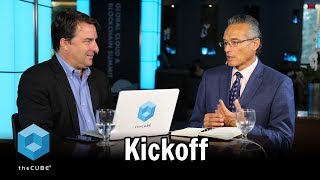
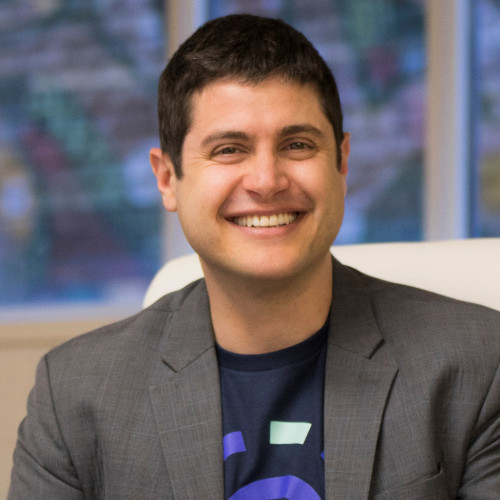
Jenna Pilgrim, CoFounder & COO at Network Effects, and Kesem Frank, Aion CoFounder & CEO at MavenNet, sit down with John Furrier and Dave Vellante for Global Cloud & Blockchain Summit 2018 from The Westin Harbour Castle in Toronto, Ontario.
#GBCS2018 #theCUBE
https://siliconangle.com/2018/08/22/mainstream-blockchain-growth-depends-access-interoperability-blockchainweek/
Mainstream blockchain growth depends on access and interoperability
Despite an uphill battle against stigmas of its risk and variability, blockchain’s popularity for its encrypted ledger method has grown tremendously over the past few years. In order to continue that trajectory and reach the mainstream market, leaders in the space are working to foster greater accessibility and real-world applications for the tech through broader community interoperability.
“We’re seeing a lot of collaboration as far as real-world applications go, because people are starting to understand that if a distributed network is going to work or be secure, it needs diversity and mass scale,” said Jenna Pilgrim (pictured, left), co-founder and chief operating officer of Network Effects.
Pilgrim and Kesem Frank (pictured, right), co-founder of Aion and chief executive officer of MavenNet, spoke with John Furrier (@furrier), host of theCUBE, SiliconANGLE Media’s mobile livestreaming studio, during the Global Cloud and Blockchain Summit in Toronto, Ontario. They discussed the transparent, decentralized economy blockchain hopes to deliver to the market.
A transparent, democratic market
Blockchain was designed to disrupt, but Pilgrim and Frank are working on integrations and translations to bridge the gap between legacy and distributed ledger systems for a more seamless transition — and overall healthier market.
“We care about blockchain in the context of enterprise because we think blockchain is a fundamentally better model of doing things. It introduces a much more transparent and democratic model of doing things,” Frank said.
To help build this new blockchain community on a foundation of interoperability, Frank co-founded Aion, an organization that offers a solution to help scale and facilitate communication between disparate decentralized networks.
“If you’re going to grow all these solutions that are centric around the use case, solve for different pain points and different stakeholders, you can’t really create the cohesive kind of ecosystem until they can all talk to each other,” Frank said.
That cohesive, decentralized baseline enables scale with lower latencies and transaction costs, as well as more effective security efforts through improved permission layer management.
“You’ll have multiple layers of how much information someone can see. If data is the new oil, then what’s emerging is for the first time we’re now able to trust data that we do not own,” Pilgrim said.
Achieving enterprise authorization for a blockchain production system requires proving tangible value, as well as finding innovative ways for the tech to work as a business solution. While core offerings may seem most ripe for modernization, they are often harder to disrupt and less likely to provide a quick return on investment.
“The real applications that we’re seeing from banks are in the sort of fringe operations. Something like payments is going to take a really long time to push through, because the legacy systems of payments is fundamental to what banks do,” Pilgrim said.
As it’s adopted by an increasing number of businesses, Pilgrim and Frank are searching for the next industry to drive blockchain forward. “If Bitcoin is the reason we’re all sitting here today, what is the next thing that drives change on a global scale? That’s what we’re trying collectively as an industry to figure out,” Frank concluded.
Watch the complete video interview below, and be sure to check out more of SiliconANGLE’s and theCUBE’s coverage of the Global Cloud and Blockchain Summit.
Forgot Password
Almost there!
We just sent you a verification email. Please verify your account to gain access to
Global Cloud & Blockchain Summit 2018 | Toronto. If you don’t think you received an email check your
spam folder.
Sign in to Global Cloud & Blockchain Summit 2018 | Toronto.
In order to sign in, enter the email address you used to registered for the event. Once completed, you will receive an email with a verification link. Open this link to automatically sign into the site.
Register For Global Cloud & Blockchain Summit 2018 | Toronto
Please fill out the information below. You will recieve an email with a verification link confirming your registration. Click the link to automatically sign into the site.
You’re almost there!
We just sent you a verification email. Please click the verification button in the email. Once your email address is verified, you will have full access to all event content for Global Cloud & Blockchain Summit 2018 | Toronto.
I want my badge and interests to be visible to all attendees.
Checking this box will display your presense on the attendees list, view your profile and allow other attendees to contact you via 1-1 chat. Read the Privacy Policy. At any time, you can choose to disable this preference.
Select your Interests!
add
Upload your photo
Uploading..
OR
Connect via Twitter
Connect via Linkedin
EDIT PASSWORD
Share
Forgot Password
Almost there!
We just sent you a verification email. Please verify your account to gain access to
Global Cloud & Blockchain Summit 2018 | Toronto. If you don’t think you received an email check your
spam folder.
Sign in to Global Cloud & Blockchain Summit 2018 | Toronto.
In order to sign in, enter the email address you used to registered for the event. Once completed, you will receive an email with a verification link. Open this link to automatically sign into the site.
Sign in to gain access to Global Cloud & Blockchain Summit 2018 | Toronto
Please sign in with LinkedIn to continue to Global Cloud & Blockchain Summit 2018 | Toronto. Signing in with LinkedIn ensures a professional environment.
Jenna Pilgrim, CoFounder & COO at Network Effects, and Kesem Frank, Aion CoFounder & CEO at MavenNet, sit down with John Furrier and Dave Vellante for Global Cloud & Blockchain Summit 2018 from The Westin Harbour Castle in Toronto, Ontario.
#GBCS2018 #theCUBE
https://siliconangle.com/2018/08/22/mainstream-blockchain-growth-depends-access-interoperability-blockchainweek/
Mainstream blockchain growth depends on access and interoperability
Despite an uphill battle against stigmas of its risk and variability, blockchain’s popularity for its encrypted ledger method has grown tremendously over the past few years. In order to continue that trajectory and reach the mainstream market, leaders in the space are working to foster greater accessibility and real-world applications for the tech through broader community interoperability.
“We’re seeing a lot of collaboration as far as real-world applications go, because people are starting to understand that if a distributed network is going to work or be secure, it needs diversity and mass scale,” said Jenna Pilgrim (pictured, left), co-founder and chief operating officer of Network Effects.
Pilgrim and Kesem Frank (pictured, right), co-founder of Aion and chief executive officer of MavenNet, spoke with John Furrier (@furrier), host of theCUBE, SiliconANGLE Media’s mobile livestreaming studio, during the Global Cloud and Blockchain Summit in Toronto, Ontario. They discussed the transparent, decentralized economy blockchain hopes to deliver to the market.
A transparent, democratic market
Blockchain was designed to disrupt, but Pilgrim and Frank are working on integrations and translations to bridge the gap between legacy and distributed ledger systems for a more seamless transition — and overall healthier market.
“We care about blockchain in the context of enterprise because we think blockchain is a fundamentally better model of doing things. It introduces a much more transparent and democratic model of doing things,” Frank said.
To help build this new blockchain community on a foundation of interoperability, Frank co-founded Aion, an organization that offers a solution to help scale and facilitate communication between disparate decentralized networks.
“If you’re going to grow all these solutions that are centric around the use case, solve for different pain points and different stakeholders, you can’t really create the cohesive kind of ecosystem until they can all talk to each other,” Frank said.
That cohesive, decentralized baseline enables scale with lower latencies and transaction costs, as well as more effective security efforts through improved permission layer management.
“You’ll have multiple layers of how much information someone can see. If data is the new oil, then what’s emerging is for the first time we’re now able to trust data that we do not own,” Pilgrim said.
Achieving enterprise authorization for a blockchain production system requires proving tangible value, as well as finding innovative ways for the tech to work as a business solution. While core offerings may seem most ripe for modernization, they are often harder to disrupt and less likely to provide a quick return on investment.
“The real applications that we’re seeing from banks are in the sort of fringe operations. Something like payments is going to take a really long time to push through, because the legacy systems of payments is fundamental to what banks do,” Pilgrim said.
As it’s adopted by an increasing number of businesses, Pilgrim and Frank are searching for the next industry to drive blockchain forward. “If Bitcoin is the reason we’re all sitting here today, what is the next thing that drives change on a global scale? That’s what we’re trying collectively as an industry to figure out,” Frank concluded.
Watch the complete video interview below, and be sure to check out more of SiliconANGLE’s and theCUBE’s coverage of the Global Cloud and Blockchain Summit.