In this Future of Data Platforms Summit interview, theCUBE’s Rob Strechay sits down with Dell Technologies leaders Geeta Vaghela and Vrashank Jain to discuss the rapid evolution of enterprise data platforms in the age of AI. The conversation highlights how Dell, in collaboration with NVIDIA and other partners, is building composable, open and secure architectures that unify structured and unstructured data while enabling next-generation AI and analytics.
Jain outlines three major industry shifts reshaping the data landscape: the explosion of unstructured and multimodal data, the rise of retrieval-ready design for LLMs and AI and the need for governance built in at enterprise scale. Vaghela expands on how Dell’s AI Data Platform (AIDP) brings together best-in-breed storage and data engines to support use cases such as RAG, multimodal AI and agentic applications – whether for established enterprises or emerging “neocloud” providers.
The discussion also delves into Dell’s strategy of leveraging open standards like Apache Iceberg to combat vendor lock-in, federated architectures to flatten silos without mass data movement and trusted data products as the new interface for AI agents and business users. Looking ahead, Vaghela and Jain describe how composability and interoperability will allow organizations to serve use cases faster, with Dell positioning its platform as the control plane for enterprise intelligence – where human decision-makers and AI agents can work side by side on trusted, governed data.
Forgot Password
Almost there!
We just sent you a verification email. Please verify your account to gain access to
Future of Data Platforms Summit. If you don’t think you received an email check your
spam folder.
In order to sign in, enter the email address you used to registered for the event. Once completed, you will receive an email with a verification link. Open this link to automatically sign into the site.
Register For Future of Data Platforms Summit
Please fill out the information below. You will recieve an email with a verification link confirming your registration. Click the link to automatically sign into the site.
You’re almost there!
We just sent you a verification email. Please click the verification button in the email. Once your email address is verified, you will have full access to all event content for Future of Data Platforms Summit.
I want my badge and interests to be visible to all attendees.
Checking this box will display your presense on the attendees list, view your profile and allow other attendees to contact you via 1-1 chat. Read the Privacy Policy. At any time, you can choose to disable this preference.
Select your Interests!
add
Upload your photo
Uploading..
OR
Connect via Twitter
Connect via Linkedin
EDIT PASSWORD
Share
Forgot Password
Almost there!
We just sent you a verification email. Please verify your account to gain access to
Future of Data Platforms Summit. If you don’t think you received an email check your
spam folder.
In order to sign in, enter the email address you used to registered for the event. Once completed, you will receive an email with a verification link. Open this link to automatically sign into the site.
Sign in to gain access to Future of Data Platforms Summit
Please sign in with LinkedIn to continue to Future of Data Platforms Summit. Signing in with LinkedIn ensures a professional environment.
Are you sure you want to remove access rights for this user?
Details
Manage Access
email address
Community Invitation
Geeta Vaghela & Vrashank Jain, Dell Technologies
In this Future of Data Platforms Summit interview, theCUBE’s Rob Strechay sits down with Dell Technologies leaders Geeta Vaghela and Vrashank Jain to discuss the rapid evolution of enterprise data platforms in the age of AI. The conversation highlights how Dell, in collaboration with NVIDIA and other partners, is building composable, open and secure architectures that unify structured and unstructured data while enabling next-generation AI and analytics.
Jain outlines three major industry shifts reshaping the data landscape: the explosion of unstructured and multimodal data, the rise of retrieval-ready design for LLMs and AI and the need for governance built in at enterprise scale. Vaghela expands on how Dell’s AI Data Platform (AIDP) brings together best-in-breed storage and data engines to support use cases such as RAG, multimodal AI and agentic applications – whether for established enterprises or emerging “neocloud” providers.
The discussion also delves into Dell’s strategy of leveraging open standards like Apache Iceberg to combat vendor lock-in, federated architectures to flatten silos without mass data movement and trusted data products as the new interface for AI agents and business users. Looking ahead, Vaghela and Jain describe how composability and interoperability will allow organizations to serve use cases faster, with Dell positioning its platform as the control plane for enterprise intelligence – where human decision-makers and AI agents can work side by side on trusted, governed data.
VP of Global Alliances & Solutions EngineeringWEKA
Vrashank Jain
Director of Product ManagementDell Technologies
In this Future of Data Platforms Summit interview, theCUBE’s Rob Strechay sits down with Dell Technologies leaders Geeta Vaghela and Vrashank Jain to discuss the rapid evolution of enterprise data platforms in the age of AI. The conversation highlights how Dell, in collaboration with NVIDIA and other partners, is building composable, open and secure architectures that unify structured and unstructured data while enabling next-generation AI and analytics.
Jain outlines three major industry shifts reshaping the data landscape: the explosion of unstructur...Read more
exploreKeep Exploring
What is the context and main topic of discussion in the latest episode of the Future of Data Platform Summit?add
What are the key considerations for implementing AI applications in enterprise environments, particularly regarding data governance and security?add
What are the key themes discussed regarding the collaboration between companies and the advancements in AI technologies?add
What are the potential shifts in data platforms and AI technology expected to occur in the next 12 to 24 months?add
>> Welcome back to the Future of Data Platform Summit. In this episode, I'm joined by Virshant Jain and Geeta Vaghela who are here with Dell Technologies, also representing some stuff that they're doing with NVIDIA as well. Welcome on board Virshant and Geeta.
Geeta Vaghela
>> Thank you for having us.>> Thanks, Rob.
Rob Strechay
>> Lovely to see you again.>> Great to have you both on again. Again, CUBE alumni. Again, really talking about data platforms and really helping us dive down into where you guys see it going and what is really happening because this market, as I've been kind of calling it, the hot data platforms summer that we've been going through here has really been reshaping things. But just from your guys' perspective, because you talked to a lot of customers all the time, what are the key trends in the data platform industry, particularly with the rise of AI and how are these trends shaping your vision and Dell Technology's vision of data platforms? Let's jump in here. >> Sure. Yeah, let me take that one. First off, thanks for having me, Rob. It's great to be back on theCUBE. Let me talk through some key trends that we're seeing, and Geeta feel free to add to that, but we're really seeing maybe three major shifts. The first one, I think is an explosion of the unstructured and multimodal data. We've always had unstructured data, but I think we now finally have the tools to start really using it and getting really good insights out of it. So we know organizations have to handle documents, media, sensor data, video feeds, but really the same efficiency that we've been doing on unstructured data for a long time. I would say the second one would be retrieval- ready by design. Whenever data is coming in, it has to be indexed, enriched, and queryable for LLMs and AI. So really those things are now starting to become more of an out-of-the-box feature rather than an afterthought. And the third one would be governance built in. So compliance, lineage, security just has to coexist with the performance at the enterprise scale because it is one thing to do a POC for an AI application that uses some data. It's a whole another world trying to move that into production with the right security in place. So a sort of related point to that is the fact that on- premise data remains critical. Many of customers, especially in regulated industries, they still need to keep their sensitive data on their own environment, but they want to use that because it's such high value in their AI application. So that makes secure high-performance on-prem platforms just as important as cloud-native ones. So I would say our vision really because of those trends is to unify the structured and unstructured data, make it AI ready by default and it securely and efficiently within the customer's enclaves at a really high performance. >> Yeah, I agree with Virshant completely on all of those different trends. I think what's even more evident is when we think customers, we are starting to see different types of customers. And what I mean by that is I think about two ends of a ruler. There's the enterprises who have been in data stewardship, security, looking at all of these things for many years, and then you've got this new breed called them, the neoclouds, GPU service providers, tier two CSPs, and they're quite different with what we're finding with their thinking process. So everything that Virshant said is true, however, within the framework and their entry point into their AI discussions comes from a different starting point. And I think Rob, that's really helping us think about the end-to-end journey, both from how do you go from test step to production, but how does this vary between different types of segments in the market based on what their outcome is. The enterprise already typically has a lot of data, so security and some of these best practices are already inbred in their environment that the neoclouds are starting often from the fresh. So before they even get to thinking about how do they build analytics as a layer on top of data, they've got to be thinking about getting the data, the crown jewels as we've historically talked about, to make AI accurate, reliable, and efficient. >> And Geeta, let's kind of dive in a little bit deeper here. What are the primary use cases you're addressing for organizations? And can you provide an overview of the Dell AI data platform? Because I know you have some strong partnerships with people like NVIDIA and others out there, and let's dive in on that.
Geeta Vaghela
>> Absolutely, Rob, and I think you said it well earlier when you talked about AIDP or the hot summer of AIDP because everybody's got their own permutation. The way we've thought about this has really been in conjunction and with a lot of input from NVIDIA. In fact, there of course hold a lot of mind- sharing in the market when it comes to AI. We've bought the strengths of Dell to bundle those together and really have a platform that we think solves today and tomorrow's challenges. And what I mean by that is we've seen a phenomenal pace of AI adoption being used in different kinds of use cases. RAG was huge, multimodal was important. We're getting to agentic, different forms of agentic. And I think what we are really recognizing is by building an open modular platform that is composable in nature, allows us to bring together a suite of best-in- breed storage technologies and best-in-breed data technologies. And so we're calling them the data engines and the storage engines. Specifically on the storage engines, when we think about the importance of those, they are the things that hold your data. So without that core data, it's very hard to add any value on top of. And so we're leveraging some of our core engines that have been in the market and had phenomenal growth and success with highly resilient, highly secure, highly performance storage engines like power scale and object scale, working with partners like NVIDIA to get those technologies certified and validated for an AI use case, and then coupling them with best in breed data engines, really to provide that end-to-end pipeline. So when we think of our customers using this, whether it be the enterprise or the neo clouds or anyone in between, and whether it's dev test or going all the way into production, the intention of our AI DP is to be composable enough and an open ecosystem so that they can combine best in breed technologies for various different outcomes. >> Yeah, I agree. I think what we're seeing is composability and there is no one answer, and I think especially where people have over time built up all of these data silos and have to bring that together as well. I think that really actually feeds into something I have for Virshant here is how do the partnerships and open standards shape your approach to enterprise data platforms? Because I know you guys have been working hard at this part as well. >> We have, yeah. And I've been on theCUBE talking about that for more than a year now. But yeah, our strategy, like you said, is really rooted in openness and collaboration. I mean, we focus on composability from the point of view that the customers should be able to choose and combine only the engines and services they really need rather than being locked into a rigid stack. But there's an even more important point than that, which is the composable engines have to be best of breed. What you don't want is a set of tools that all are packaged together, but they're all sort of half as good as they really need to be. And I don't know if customers today are willing to sacrifice superior functionality for something that's packaged in, but is really only half as good. So that's why we've been on this journey to really do best of breed partnerships, which means partnering with the best SQL engine out there, which is Starburst for federated queries. Partnering with Elastic Search, which is arguably one of the best vector databases out there for keyword search and vector search, and then bringing in Spark for that heavy duty processing. Customers do get the strongest engines available that are fully integrated, but they also get choice. And from an open perspective, we have embraced Iceberg and open APIs, and we're not in this business of dictating to customers what the right formats are. We think the industry has done that better than any one enterprise can do, and we want to continue to support that motion. So Iceberg for us is going to be first, and we have to ensure interoperability and protect customers from lock-in. And we've been on this data journey for decades. We all know vendor lock-in is one of the biggest concerns out there. So this sort of combination of best of breed technology, composability, and open standards backed by our enterprise- grade reliability, which is what we do every day, all day, really makes our platform both flexible but also really future-proof. >> Yeah, I think that's it is that you have to be able to provide that composability and provide different offerings because people are in different places in their journey. I was just talking to an organization this week where they were talking about that journey that they've been on with their data platforms and how they're doing integration and orchestration. And like you said, tying up the stack to things like governance and the metadata and bringing that all together is still... There's still a lot of complexity in that that you guys seem to be, again, partnering and building around to limit that complexity. One of the things I want to do here is I want to kind of look ahead. So where do you see the future of data platforms evolving over the next year, especially as agentic AI integrates with traditional AI, analytics, classical applications. It's really a whole mixing as we get into agentic bringing all of these different things together, which again, doesn't make anything easier for the data layer. So where do you go and see this? I'll throw it out to both of you.
Geeta Vaghela
>> Yeah. Geeta, do you want to start off? >> Yeah, sure. I think where we're really seeing the market going, Rob, is it's moving at a phenomenal pace. So I think thing number one is being able to serve use cases faster than we ever were before. And I think the foundation of what we're thinking about with this composable architecture allows us to do that. And exactly as we've been talking about the best in breed is really that future-proofing. Today we're talking about things that we can do with AI that we wouldn't have imagined five or 10 years ago. And so if we kind of throw the puck out forward, I think what we're expecting is the speed of needing to solve emerging use cases is a predominant one. There are certain parts within a data architecture that are about reliability, security. Those in my mind, the non-negotiables, while we see all this opportunity with AI comes with a tremendous risk when you're a data steward. So what we think about bringing together the best in breed technologies, we'll continue to do that because we do want to solve for today and the future, which our customers don't even necessarily know what that looks like yet. But I think what we're really trying to do is we've got decades of heritage within this space. So we've been data stewards and our teams have been building best in breed technologies for decades. And it's really to take that maturity that we've learned over the years and bringing it to a highly emerging market where sometimes speed can trip up some of the base constructs. And so it's really bringing those together and our vision is to continue to keep pace with the market, combine those best in breed technologies and maintain a composable infrastructure, leveraging those technologies together for specific outcomes as we see rag to agentic, to physical to et cetera. >> And for Virshant?>> Yeah, maybe I would just add just three things in here. I would say that I'm seeing three big shifts that are likely going to happen maybe in 12 months, maybe in 18 or 24. Number one, I'm seeing separate stacks moving to unified platforms. And when I say unified platforms, I don't mean again packaged it, I mean unified platforms with a choice of composability, but having a common control plane because enterprises don't want one system for analytics, another for AI, and another for business applications. They want a single backbone where all of these can coexist. Number two, I would say data access is really shifting to intelligent orchestration. Agentic AI will bring together reasoning, retrieval, and being able to take action, which means that these data platforms have to feed these agents with trusted versioned data products, think Iceberg, rate retrieval across unstructured content, think Elastic or federated queries into live enterprise databases. Think Starburst. And I would say the third big shift is infrastructure to maybe more management, meaning data platforms are not just meant to manage storage and queries. They're meant to coordinate how SQL and Spark and AI and vector databases, they all sort of work together in real time. So in short, I'm thinking the data platform becomes the control plane for enterprise intelligence. It's the trusted foundation where human decision makers and AI agents sort of live side by side and they work together hand in hand. >> Yeah, I think that's so true. I think when we talk to different organizations and we have a few on as part of the Future of Data Platform Summit here that will talk to the fact of how they're building out all of their pieces and how they look at it as well. And I think that's so key because it's really about the business outcomes that people are trying to drive with AI and with data, and I think they can't... It's funny, I was talking about this earlier in the week as well, the fact that it's like trying to change the engine on the plane while you're flying it, but it's actually not changing the engine. It's actually adding engines and adding it while you're flying and trying to then tie them in and sync them up and keep everything going because I think there's just a lot of variability in data and there's a lot of complexity that people have seen over the years. I really appreciate this. This has been, again, a great segment to frame up where Dell's at and where you're going with Dell Technologies and the kit you're bringing together with what you're building and what you're partnering on, so thank you both for coming on board.
Vrashank Jain
>> Thanks having us, Rob.>> And thank you for joining us for this episode of the Future of Data Platform Summit. In this episode where we talk to Dell Technologies and we're finding out more about their partnerships with people like NVIDIA, and really I want to throw out there to stay tuned in October, we're going to be diving a little bit deeper into the Dell AI data platform. So stay tuned and we'll see you soon.






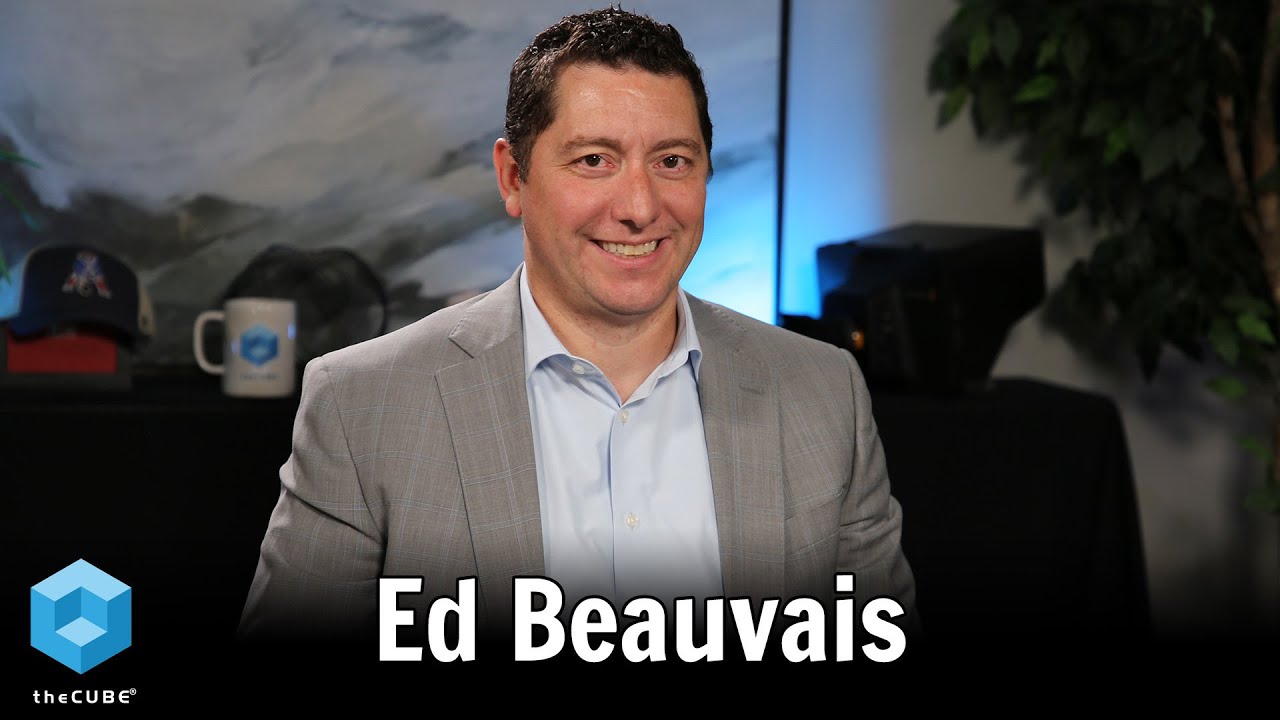





 Rob Strechay