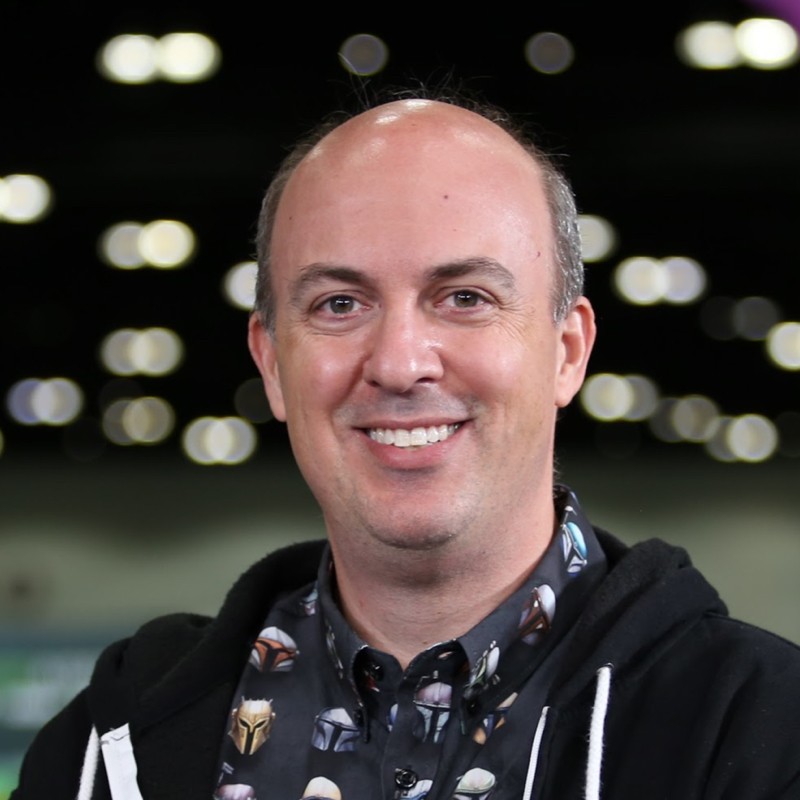
Enhanced video at http://vinja.tv/sD2wFqv0
01. Bob Wambach, VCE, Visits #theCUBE!. (00:20)
02. Please Tell Us About Yourself And Your Background. (00:46)
03. Where Are We With VCE As A Business And The Sisco Relationship. (01:34)
04. What Conversations Are You Having With Customers. (03:33)
05. What Is The Ongoing Relationship With VCE For Customers. (06:01)
06. Does The Idea Of Convergence Have To Work Up The Stack. (08:10)
07. What Is Holding Customers Back. (09:56)
08. Is There Any Reason We Can't Have An All VCE Data Centers. (12:43)
09. What Do We Expect To See From The Converge Platform Division In The Future. (13:57)
Track List created with http://www.vinjavideo.com.
--- ---
The secrets to easing cloud transitions #emcworld
by Gabriel Pesek | May 3, 2016
At this year’s EMC World conference, attendees are having the chance to network with some of the industry’s insiders and pick through their unique perspectives on the future of EMC’s involvement throughout modern tech work environments.
Bob Wambach, VP of marketing at VCE, EMC Converged Platforms Division, joined Stu Miniman (@stu) and Brian Gracely (@bgracely), cohosts of theCUBE, from the SiliconANGLE Media team, to discuss some of the changes he’s seen in the market, along with the shift in what customers expect from infrastructure management.
Customer connectivity
An early point made by Wambach in the conversation was that customers are trying to understand’where the industry. He emphasized that by recognizing this engagement on the part of the customer, rather than assuming a passive market, companies can reach much better results on both ends.
Wambach also recognized a higher pressure on providers: “… We’re being asked to be more agile … at the same time, how do you be more agile when your budgets are about the same?”
However, he seemed confident in VCE’s ability to manage this, particularly when looking at the market interest. “People increasingly want Infrastructure as a Service, and that’s something we do very well today, and looking forward, I think we’ll see more of the Platform as a Service as people look for ‘I don’t want to deal with management orchestration … I really want that stuff to just happen for me.’”
As Wambach put it, standardizing things that are labor-intensive, and then automating them “is the journey we’ve been on.”
Racking up and stabilizing clouds
Wambach explored more of those customer expectations. “As you look at customers now trying to set up environments … they’re using new technologies, but there’s not a lot of skills, so they bring in people and they build up a pilot and they get it to work … and it wasn’t built to be sustained, it wasn’t built to be augmented and evolved over time. The people that did it are in high demand, so they go off somewhere, and the customers are finding that even using some of this new stuff, that’s supposed to be an easy way to develop, is actually hard. So I think … this idea of convergence has to work up the stack.”
This was something he felt was increasingly being understood by the customer bases, and not just those who had been through such an experience. “It’s very common now for customers to say, ‘We’re really all in on this,’ because if you do a great job on part of your infrastructure … any further improvements on that are really dwarfed by the mess that’s in the 50 percent that you haven’t touched.”
Wambach’s expectations for the future included a rise in the use of racks to build development environments, with cloud-native workloads poised to overtake traditional workloads, but these expectations were tempered with a realistic look at current work environments. “Today, how you manage a cloud-native environment is actually different … from how we managed, say, an enterprise hybrid-cloud, because there’s really a lot of heavy lifting and brute force involved in managing an enterprise hybrid-cloud that has a lot of different traditional applications, and we can simplify things a lot in a native hybrid-cloud.”
Forgot Password
Almost there!
We just sent you a verification email. Please verify your account to gain access to
EMC World 2016 - Las Vegas. If you don’t think you received an email check your
spam folder.
In order to sign in, enter the email address you used to registered for the event. Once completed, you will receive an email with a verification link. Open this link to automatically sign into the site.
Register For EMC World 2016 - Las Vegas
Please fill out the information below. You will recieve an email with a verification link confirming your registration. Click the link to automatically sign into the site.
You’re almost there!
We just sent you a verification email. Please click the verification button in the email. Once your email address is verified, you will have full access to all event content for EMC World 2016 - Las Vegas.
I want my badge and interests to be visible to all attendees.
Checking this box will display your presense on the attendees list, view your profile and allow other attendees to contact you via 1-1 chat. Read the Privacy Policy. At any time, you can choose to disable this preference.
Select your Interests!
add
Upload your photo
Uploading..
OR
Connect via Twitter
Connect via Linkedin
EDIT PASSWORD
Share
Forgot Password
Almost there!
We just sent you a verification email. Please verify your account to gain access to
EMC World 2016 - Las Vegas. If you don’t think you received an email check your
spam folder.
In order to sign in, enter the email address you used to registered for the event. Once completed, you will receive an email with a verification link. Open this link to automatically sign into the site.
Sign in to gain access to EMC World 2016 - Las Vegas
Please sign in with LinkedIn to continue to EMC World 2016 - Las Vegas. Signing in with LinkedIn ensures a professional environment.
Are you sure you want to remove access rights for this user?
Details
Manage Access
email address
Community Invitation
Bob Wambach, VCE | EMC World 2016
Enhanced video at http://vinja.tv/sD2wFqv0
01. Bob Wambach, VCE, Visits #theCUBE!. (00:20)
02. Please Tell Us About Yourself And Your Background. (00:46)
03. Where Are We With VCE As A Business And The Sisco Relationship. (01:34)
04. What Conversations Are You Having With Customers. (03:33)
05. What Is The Ongoing Relationship With VCE For Customers. (06:01)
06. Does The Idea Of Convergence Have To Work Up The Stack. (08:10)
07. What Is Holding Customers Back. (09:56)
08. Is There Any Reason We Can't Have An All VCE Data Centers. (12:43)
09. What Do We Expect To See From The Converge Platform Division In The Future. (13:57)
Track List created with http://www.vinjavideo.com.
--- ---
The secrets to easing cloud transitions #emcworld
by Gabriel Pesek | May 3, 2016
At this year��s EMC World conference, attendees are having the chance to network with some of the industry’s insiders and pick through their unique perspectives on the future of EMC’s involvement throughout modern tech work environments.
Bob Wambach, VP of marketing at VCE, EMC Converged Platforms Division, joined Stu Miniman (@stu) and Brian Gracely (@bgracely), cohosts of theCUBE, from the SiliconANGLE Media team, to discuss some of the changes he’s seen in the market, along with the shift in what customers expect from infrastructure management.
Customer connectivity
An early point made by Wambach in the conversation was that customers are trying to understand’where the industry. He emphasized that by recognizing this engagement on the part of the customer, rather than assuming a passive market, companies can reach much better results on both ends.
Wambach also recognized a higher pressure on providers: “… We’re being asked to be more agile … at the same time, how do you be more agile when your budgets are about the same?”
However, he seemed confident in VCE’s ability to manage this, particularly when looking at the market interest. “People increasingly want Infrastructure as a Service, and that’s something we do very well today, and looking forward, I think we’ll see more of the Platform as a Service as people look for ‘I don’t want to deal with management orchestration … I really want that stuff to just happen for me.’”
As Wambach put it, standardizing things that are labor-intensive, and then automating them “is the journey we’ve been on.”
Racking up and stabilizing clouds
Wambach explored more of those customer expectations. “As you look at customers now trying to set up environments … they’re using new technologies, but there’s not a lot of skills, so they bring in people and they build up a pilot and they get it to work … and it wasn’t built to be sustained, it wasn’t built to be augmented and evolved over time. The people that did it are in high demand, so they go off somewhere, and the customers are finding that even using some of this new stuff, that’s supposed to be an easy way to develop, is actually hard. So I think … this idea of convergence has to work up the stack.”
This was something he felt was increasingly being understood by the customer bases, and not just those who had been through such an experience. “It’s very common now for customers to say, ‘We’re really all in on this,’ because if you do a great job on part of your infrastructure … any further improvements on that are really dwarfed by the mess that’s in the 50 percent that you haven’t touched.”
Wambach’s expectations for the future included a rise in the use of racks to build development environments, with cloud-native workloads poised to overtake traditional workloads, but these expectations were tempered with a realistic look at current work environments. “Today, how you manage a cloud-native environment is actually different … from how we managed, say, an enterprise hybrid-cloud, because there’s really a lot of heavy lifting and brute force involved in managing an enterprise hybrid-cloud that has a lot of different traditional applications, and we can simplify things a lot in a native hybrid-cloud.”