Enhanced video at http://vinja.tv/LrKGKKmb
01. Manuvir Das, EMC, visits #theCUBE!. (00:15)
02. Reviewing the Year with Manuvir Das. (00:40)
03. Update on Viper. (00:55)
04. Open Source Experience and Tracking the Revenue. (02:01)
05. EMC's OpenStack Participation and Update in OpenStack. (03:56)
06. EMC Addressing OpenStack Issues and the VMWare Partnership. (05:27)
07. Virtustream and Amazon-Like Services. (06:15)
08. Living in the Multi-Cloud World. (08:00)
09. Software Defined and the Customer Experience. (09:20)
10. Update on the Financial Model (Nutrino Example). (11:06)
Track List created with http://www.vinjavideo.com.
--- ---
The customer’s always right: Does ‘socialized’ IT help build better products? | #emcworld
by R. Danes | May 9, 2016
The next time you are negotiating a six-figure salary with a new developer, you might pause and wonder if you could just use free customer feedback to get the same value. One company has found that simply observing how customers interact with products is all it takes to build the next-generation release.
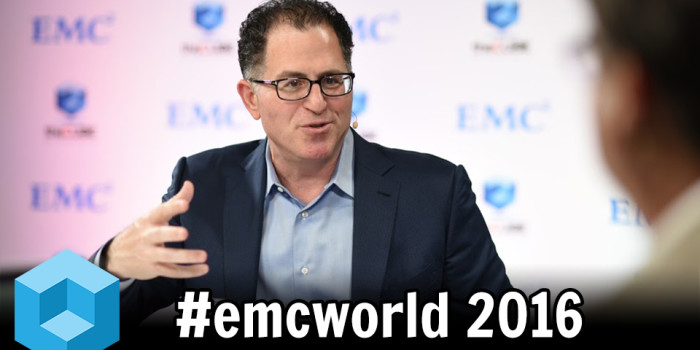
Manuvir Das, SVP of the Advanced Software Division at EMC, said that the general IT community using its open-source offerings have helped them conceive and improve its services. He told Stu Miniman (@stu) and Brian Gracely (@bgracely), cohosts of theCUBE, from the SiliconANGLE Media team, during EMC World 2016, “If you take the customers where you want to go, it will work out in the end.”
Das said that EMC’s open-source CoprHD (pronounced “copperhead”) was basically born out of community feedback on another open-source product, ViPR Controller. “If you look at the decisions we actually made, the way we did the licensing, all of that, we’ve done it as open as could possibly be,” he said. “So, yeah, somebody could take this and monetize it tomorrow. And good for them.”
Keeping options open in the cloud
Das spoke with hosts about the challenges of competing with public cloud providers like Amazon.
He claimed that EMC’s Virtustream can offer a “more dedicated hybrid model where customers have some equipment on-premise, some in the service provider’s data center, and it opens up some opportunities that you cannot get from a pure public cloud.”
Forgot Password
Almost there!
We just sent you a verification email. Please verify your account to gain access to
EMC World 2016 - Las Vegas. If you don’t think you received an email check your
spam folder.
In order to sign in, enter the email address you used to registered for the event. Once completed, you will receive an email with a verification link. Open this link to automatically sign into the site.
Register For EMC World 2016 - Las Vegas
Please fill out the information below. You will recieve an email with a verification link confirming your registration. Click the link to automatically sign into the site.
You’re almost there!
We just sent you a verification email. Please click the verification button in the email. Once your email address is verified, you will have full access to all event content for EMC World 2016 - Las Vegas.
I want my badge and interests to be visible to all attendees.
Checking this box will display your presense on the attendees list, view your profile and allow other attendees to contact you via 1-1 chat. Read the Privacy Policy. At any time, you can choose to disable this preference.
Select your Interests!
add
Upload your photo
Uploading..
OR
Connect via Twitter
Connect via Linkedin
EDIT PASSWORD
Share
Forgot Password
Almost there!
We just sent you a verification email. Please verify your account to gain access to
EMC World 2016 - Las Vegas. If you don’t think you received an email check your
spam folder.
In order to sign in, enter the email address you used to registered for the event. Once completed, you will receive an email with a verification link. Open this link to automatically sign into the site.
Sign in to gain access to EMC World 2016 - Las Vegas
Please sign in with LinkedIn to continue to EMC World 2016 - Las Vegas. Signing in with LinkedIn ensures a professional environment.
Are you sure you want to remove access rights for this user?
Details
Manage Access
email address
Community Invitation
Manuvir Das, EMC | EMC World 2016
Enhanced video at http://vinja.tv/LrKGKKmb
01. Manuvir Das, EMC, visits #theCUBE!. (00:15)
02. Reviewing the Year with Manuvir Das. (00:40)
03. Update on Viper. (00:55)
04. Open Source Experience and Tracking the Revenue. (02:01)
05. EMC's OpenStack Participation and Update in OpenStack. (03:56)
06. EMC Addressing OpenStack Issues and the VMWare Partnership. (05:27)
07. Virtustream and Amazon-Like Services. (06:15)
08. Living in the Multi-Cloud World. (08:00)
09. Software Defined and the Customer Experience. (09:20)
10. Update on the Financial Model (Nutrino Example). (11:06)
Track List created with http://www.vinjavideo.com.
--- ---
The customer’s always right: Does ‘socialized’ IT help build better products? | #emcworld
by R. Danes | May 9, 2016
The next time you are negotiating a six-figure salary with a new developer, you might pause and wonder if you could just use free customer feedback to get the same value. One company has found that simply observing how customers interact with products is all it takes to build the next-generation release.
Manuvir Das, SVP of the Advanced Software Division at EMC, said that the general IT community using its open-source offerings have helped them conceive and improve its services. He told Stu Miniman (@stu) and Brian Gracely (@bgracely), cohosts of theCUBE, from the SiliconANGLE Media team, during EMC World 2016, “If you take the customers where you want to go, it will work out in the end.”
Das said that EMC’s open-source CoprHD (pronounced “copperhead”) was basically born out of community feedback on another open-source product, ViPR Controller. “If you look at the decisions we actually made, the way we did the licensing, all of that, we’ve done it as open as could possibly be,” he said. “So, yeah, somebody could take this and monetize it tomorrow. And good for them.”
Keeping options open in the cloud
Das spoke with hosts about the challenges of competing with public cloud providers like Amazon.
He claimed that EMC’s Virtustream can offer a “more dedicated hybrid model where customers have some equipment on-premise, some in the service provider’s data center, and it opens up some opportunities that you cannot get from a pure public cloud.”