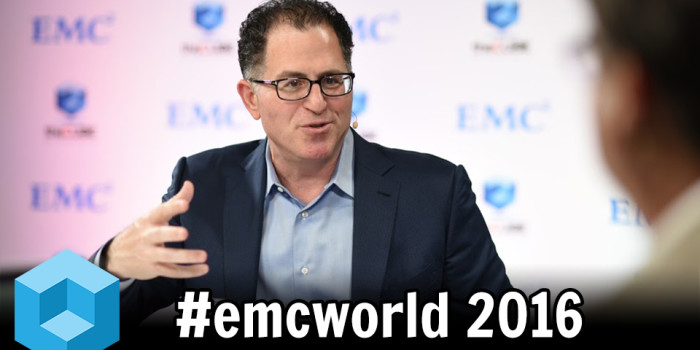
Enhanced video at http://vinja.tv/pD6q5WTH
01. Octavian Rotaru, Amdocs, visits #theCUBE!. (00:14)
02. Finding the Environment Right for the Customer. (00:33)
03. The Advantage of All-Flash. (02:50)
04. Looking at the Platform as a Symmetrix/Vmax Customer. (04:01)
05. The Importance of VMax for Amdocs. (06:10)
06. All-Flash for Internal and External Functions. (09:07)
07. Who's Not Excited About Flash?. (10:55)
Track List created with http://www.vinjavideo.com.
--- ---
A journey of storage; discovering the power of all-flash data systems| #emcworld
by Nelson Williams | May 3, 2016
The age of spinning disk storage solutions is drawing to a close. Solid-state flash arrays are taking over the data center, and with good reason. Flash can run faster, with a much smaller footprint than traditional storage solutions. Until recently, cost was a factor, but the price of flash goes down almost daily. Now, it’s almost the only option that makes sense.
To gain an understanding of one company’s journey into the world of flash, John Furrier (@furrier) and Dave Vellante (@dvellante), cohosts of theCUBE, from the SiliconANGLE Media team, talked with Octavian Rotaru, technology manager of technical architecture at Amdocs, Inc., during the EMC World 2016 conference in Las Vegas.
Going through the process
The discussion opened with a simple question: What’s working? Rotaru replied that there is no silver bullet — businesses still have to adjust their implementation to the requirements of each customer. Usually, they receive a set of requirements they must meet. They translate those requirements into a technical architecture that goes down to storage, network and everything else.
Each time they have to rightsize, Rotaru said. If they go too low, the system won’t deliver; but go too high, and the customer will wonder why they’re buying way more than they need.
Talking flash
Rotaru said he sees all-flash as a technology enabler for his workload. They’re looking at all-flash as a way to meet customer needs, while at the same time achieving efficiency through a reduced data footprint.
The team works on different projects and also provides architectures for existing customers. They started with all-flash in-house, but after discovering its benefits, they began rolling it out to customers who own their own infrastructure. Customers, are asking for it, and they want to go forward with all-flash, according to Rotaru.
Forgot Password
Almost there!
We just sent you a verification email. Please verify your account to gain access to
EMC World 2016 - Las Vegas. If you don’t think you received an email check your
spam folder.
In order to sign in, enter the email address you used to registered for the event. Once completed, you will receive an email with a verification link. Open this link to automatically sign into the site.
Register For EMC World 2016 - Las Vegas
Please fill out the information below. You will recieve an email with a verification link confirming your registration. Click the link to automatically sign into the site.
You’re almost there!
We just sent you a verification email. Please click the verification button in the email. Once your email address is verified, you will have full access to all event content for EMC World 2016 - Las Vegas.
I want my badge and interests to be visible to all attendees.
Checking this box will display your presense on the attendees list, view your profile and allow other attendees to contact you via 1-1 chat. Read the Privacy Policy. At any time, you can choose to disable this preference.
Select your Interests!
add
Upload your photo
Uploading..
OR
Connect via Twitter
Connect via Linkedin
EDIT PASSWORD
Share
Forgot Password
Almost there!
We just sent you a verification email. Please verify your account to gain access to
EMC World 2016 - Las Vegas. If you don’t think you received an email check your
spam folder.
In order to sign in, enter the email address you used to registered for the event. Once completed, you will receive an email with a verification link. Open this link to automatically sign into the site.
Sign in to gain access to EMC World 2016 - Las Vegas
Please sign in with LinkedIn to continue to EMC World 2016 - Las Vegas. Signing in with LinkedIn ensures a professional environment.
Are you sure you want to remove access rights for this user?
Details
Manage Access
email address
Community Invitation
Octavian Rotaru, Amdocs | EMC World 2016
Enhanced video at http://vinja.tv/pD6q5WTH
01. Octavian Rotaru, Amdocs, visits #theCUBE!. (00:14)
02. Finding the Environment Right for the Customer. (00:33)
03. The Advantage of All-Flash. (02:50)
04. Looking at the Platform as a Symmetrix/Vmax Customer. (04:01)
05. The Importance of VMax for Amdocs. (06:10)
06. All-Flash for Internal and External Functions. (09:07)
07. Who's Not Excited About Flash?. (10:55)
Track List created with http://www.vinjavideo.com.
--- ---
A journey of storage; discovering the power of all-flash data systems| #emcworld
by Nelson Williams | May 3, 2016
The age of spinning disk storage solutions is drawing to a close. Solid-state flash arrays are taking over the data center, and with good reason. Flash can run faster, with a much smaller footprint than traditional storage solutions. Until recently, cost was a factor, but the price of flash goes down almost daily. Now, it’s almost the only option that makes sense.
To gain an understanding of one company’s journey into the world of flash, John Furrier (@furrier) and Dave Vellante (@dvellante), cohosts of theCUBE, from the SiliconANGLE Media team, talked with Octavian Rotaru, technology manager of technical architecture at Amdocs, Inc., during the EMC World 2016 conference in Las Vegas.
Going through the process
The discussion opened with a simple question: What’s working? Rotaru replied that there is no silver bullet — businesses still have to adjust their implementation to the requirements of each customer. Usually, they receive a set of requirements they must meet. They translate those requirements into a technical architecture that goes down to storage, network and everything else.
Each time they have to rightsize, Rotaru said. If they go too low, the system won’t deliver; but go too high, and the customer will wonder why they’re buying way more than they need.
Talking flash
Rotaru said he sees all-flash as a technology enabler for his workload. They’re looking at all-flash as a way to meet customer needs, while at the same time achieving efficiency through a reduced data footprint.
The team works on different projects and also provides architectures for existing customers. They started with all-flash in-house, but after discovering its benefits, they began rolling it out to customers who own their own infrastructure. Customers, are asking for it, and they want to go forward with all-flash, according to Rotaru.