Enhanced video at http://vinja.tv/jnYKyM0q
01. Stella Low, Low, EMC, Visits #theCUBE!. (00:34)
02. Amy Posey, , Visits #theCUBE!. (00:35)
03. Women of the World: Panel Recap at #EMCWorld. (00:40)
04. What is a Neurofacilitator? #EMCWorld. (01:50)
05. Comparing Brain Functions Between Men & Women. (03:15)
06. Neuroscience Data: Driving Better Work Outcomes. (05:22)
07. Being Aware Of Bias In The Workplace. (09:14)
08. Work-Life Balance For Women In STEM Careers. (10:54)
09. Motivating Young Women Into Tech. (12:39)
10. Biggest Suprises In The Data?. (18:39)
11. Peakteams.com. (20:60)
Track List created with http://www.vinjavideo.com.
--- ---
Neuroscience and women in tech | #emcworld
by Elizabeth Kays | May 15, 2015
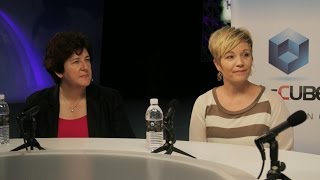
Stella Low and Amy Posey made a strong team in their EMC World 2015 interview with theCUBE about women in tech. As VP of Global Communications at EMC, Low has a vested interest in improving the way women are integrated into the company. And Posey brought extensive research to bear as a “neurofacilitator” for Peak Teams.
Turning data into useful applications anywhere
Given the vast amounts of research being done on the links between brain activity and behavior, Posey said, “What I do is I take that research and work with neuroscientists and neurobiologists at Stanford, Columbia, UCLA, and reach out and figure out how do we take that information and make it easier — facilitate. And I do it in the scope of leadership at organizations like EMC and other technology companies to … pull the data and figure out how do we make it into practical, useful applications for us at work, at home, wherever we are.”
Posey summed up some of the current research on the brain. “What’s interesting is looking at men and women’s brains,” she said. “We are more alike than dissimilar in looking at a brain. If you looked at a brain scan, one of a man and woman, you wouldn’t be able to tell the difference between the two. But they’re now finding and looking at different parts of the brain and different functions. So for instance, men have approximately 6% more gray matter than women … and women have more white matter than gray matter, about 9% more than men, and the white matter is what connects the brain and communicates both front to back and side to side.”
The differences in brain power
Although everyone is different, and brain differences don’t translate directly into behavior differences, it is possible to extrapolate some generalities, she said. Men may focus on solutions with more of a “silo” view, while women may think more broadly about a problem.
Low says this correlates well with the idea of female intuition.
“I think the biggest surprise for me was that we can now see, we’ve now proved, that intuition is a thing that women have,” she said. “And it’s about this kind of webbed thinking and connecting the dots, so we kind of store these memories deep inside, and then when we see something similar, we then make that connection. We call it intuition, but it’s actually a kind of ‘super-recall,’ if you like.”
But this research isn’t about saying whether men’s brains or women’s brains are better, she emphasizes. “It’s simply about if our brains are working differently, we both bring different things to the table, and how do you take both of those benefits and bring them forward into better outcomes.”
Removing barriers and providing opportunities
How do we achieve those better outcomes? Posey says deliberately countering biases, without demonizing the people who hold them, is crucial.
“Bias is essentially a shortcut that we use in our brains to take less energy,” she explained. “And it’s not a bad thing. It’s something we all do.”
But what helps overcome bias? “I think being able to do a couple of things: [being] aware that there are hundreds of biases and they’re both conscious and unconscious, [and acknowledging] that it exists but not legitimize it, not make [it] OK. The third piece is to counter it, and being able to counter bias by making sure that people have opportunities.”
This means more than just removing barriers to leadership and promotion. “Really be explicit in how you give people opportunities and let them know that they’re out there,” she says. “I think that’s really key.”
@theCUBE
#EMCWORLD
Forgot Password
Almost there!
We just sent you a verification email. Please verify your account to gain access to
EMC World 2015 | Las Vegas. If you don’t think you received an email check your
spam folder.
In order to sign in, enter the email address you used to registered for the event. Once completed, you will receive an email with a verification link. Open this link to automatically sign into the site.
Register For EMC World 2015 | Las Vegas
Please fill out the information below. You will recieve an email with a verification link confirming your registration. Click the link to automatically sign into the site.
You’re almost there!
We just sent you a verification email. Please click the verification button in the email. Once your email address is verified, you will have full access to all event content for EMC World 2015 | Las Vegas.
I want my badge and interests to be visible to all attendees.
Checking this box will display your presense on the attendees list, view your profile and allow other attendees to contact you via 1-1 chat. Read the Privacy Policy. At any time, you can choose to disable this preference.
Select your Interests!
add
Upload your photo
Uploading..
OR
Connect via Twitter
Connect via Linkedin
EDIT PASSWORD
Share
Forgot Password
Almost there!
We just sent you a verification email. Please verify your account to gain access to
EMC World 2015 | Las Vegas. If you don’t think you received an email check your
spam folder.
In order to sign in, enter the email address you used to registered for the event. Once completed, you will receive an email with a verification link. Open this link to automatically sign into the site.
Sign in to gain access to EMC World 2015 | Las Vegas
Please sign in with LinkedIn to continue to EMC World 2015 | Las Vegas. Signing in with LinkedIn ensures a professional environment.
Are you sure you want to remove access rights for this user?
Details
Manage Access
email address
Community Invitation
Stella Low & Amy Posey | EMC World 2015
Enhanced video at http://vinja.tv/jnYKyM0q
01. Stella Low, Low, EMC, Visits #theCUBE!. (00:34)
02. Amy Posey, , Visits #theCUBE!. (00:35)
03. Women of the World: Panel Recap at #EMCWorld. (00:40)
04. What is a Neurofacilitator? #EMCWorld. (01:50)
05. Comparing Brain Functions Between Men & Women. (03:15)
06. Neuroscience Data: Driving Better Work Outcomes. (05:22)
07. Being Aware Of Bias In The Workplace. (09:14)
08. Work-Life Balance For Women In STEM Careers. (10:54)
09. Motivating Young Women Into Tech. (12:39)
10. Biggest Suprises In The Data?. (18:39)
11. Peakteams.com. (20:60)
Track List created with http://www.vinjavideo.com.
--- ---
Neuroscience and women in tech | #emcworld
by Elizabeth Kays | May 15, 2015
Stella Low and Amy Posey made a strong team in their EMC World 2015 interview with theCUBE about women in tech. As VP of Global Communications at EMC, Low has a vested interest in improving the way women are integrated into the company. And Posey brought extensive research to bear as a “neurofacilitator” for Peak Teams.
Turning data into useful applications anywhere
Given the vast amounts of research being done on the links between brain activity and behavior, Posey said, “What I do is I take that research and work with neuroscientists and neurobiologists at Stanford, Columbia, UCLA, and reach out and figure out how do we take that information and make it easier — facilitate. And I do it in the scope of leadership at organizations like EMC and other technology companies to … pull the data and figure out how do we make it into practical, useful applications for us at work, at home, wherever we are.”
Posey summed up some of the current research on the brain. “What’s interesting is looking at men and women’s brains,” she said. “We are more alike than dissimilar in looking at a brain. If you looked at a brain scan, one of a man and woman, you wouldn’t be able to tell the difference between the two. But they’re now finding and looking at different parts of the brain and different functions. So for instance, men have approximately 6% more gray matter than women … and women have more white matter than gray matter, about 9% more than men, and the white matter is what connects the brain and communicates both front to back and side to side.”
The differences in brain power
Although everyone is different, and brain differences don’t translate directly into behavior differences, it is possible to extrapolate some generalities, she said. Men may focus on solutions with more of a “silo” view, while women may think more broadly about a problem.
Low says this correlates well with the idea of female intuition.
“I think the biggest surprise for me was that we can now see, we’ve now proved, that intuition is a thing that women have,” she said. “And it’s about this kind of webbed thinking and connecting the dots, so we kind of store these memories deep inside, and then when we see something similar, we then make that connection. We call it intuition, but it’s actually a kind of ‘super-recall,’ if you like.”
But this research isn’t about saying whether men’s brains or women’s brains are better, she emphasizes. “It’s simply about if our brains are working differently, we both bring different things to the table, and how do you take both of those benefits and bring them forward into better outcomes.”
Removing barriers and providing opportunities
How do we achieve those better outcomes? Posey says deliberately countering biases, without demonizing the people who hold them, is crucial.
“Bias is essentially a shortcut that we use in our brains to take less energy,” she explained. “And it’s not a bad thing. It’s something we all do.”
But what helps overcome bias? “I think being able to do a couple of things: [being] aware that there are hundreds of biases and they’re both conscious and unconscious, [and acknowledging] that it exists but not legitimize it, not make [it] OK. The third piece is to counter it, and being able to counter bias by making sure that people have opportunities.”
This means more than just removing barriers to leadership and promotion. “Really be explicit in how you give people opportunities and let them know that they’re out there,” she says. “I think that’s really key.”
@theCUBE
#EMCWORLD