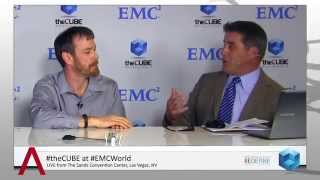
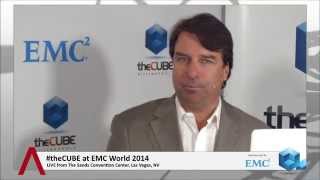
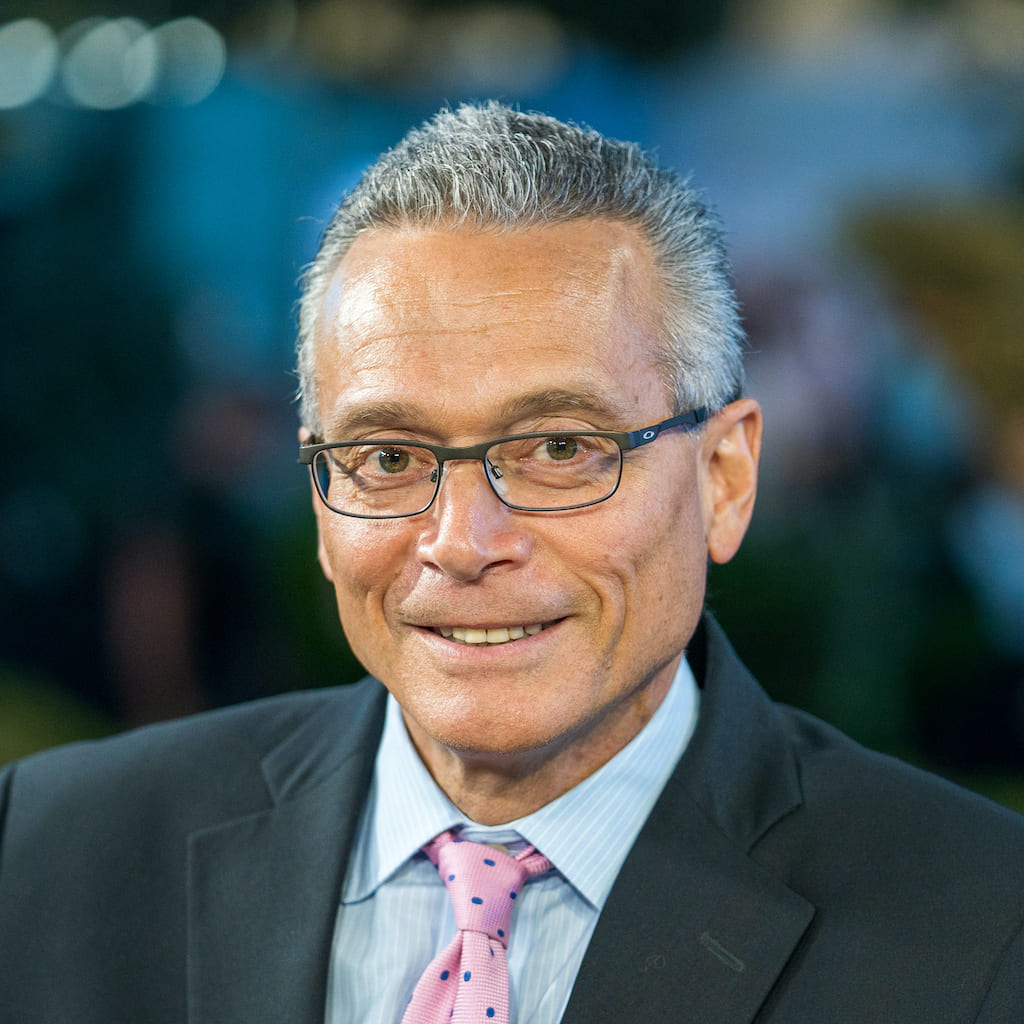
Don Sullivan, VMware, with Dave Vellante at EMC World 2014
@thecube
#emcworld
When server virtualization was first introduced, there was some resistance as a result of Fear, Uncertainty, and Disinformation, also known as FUD. Oracle was one of the biggest opponents to such changes, stating that it wouldn’t support it. Since the initial blowback, and thanks to articles such as Wikibon’s “Damn the Torpedoes, Virtualize Oracle ASAP,” adoption of such new technologies has greatly increased.
Speaking with Don Sullivan, staff engineer and database specialist with VMware, Dave Vellante of theCUBE at EMC World 2014 asked him about how VMware has helped to dispel some of the myths and fears that surround the cloud and virtualization. While the initial adoption rate was slow, it has increased greatly over recent years. And, it was while attending the recent Collaborate 14 – IOUG forum that Sullivan realized how far along Oracle had come since the early days. When he asked the question of how many of the Oracle people were actually virtualizing and using the vSphere, 50 percent to 75 percent raised their hands.
One of the obstacles to the early adoption of virtualization was all of the FUD that was put out about it. But that doesn’t seem to be the issue anymore, according to Sullivan. “If you had a legacy application that had a specific support statement that only supported specific types of infrastructure, you might run into that,” he said. But, for the most part, this is not the case today. A better understanding of how virtualization works has done wonders for the adoption of virtualization and cloud technology.
Sullivan also talked about some recent work VMware has done in conjunction with Cisco, EMC, and third-party tester Principal Technologies on some new reference architecture. Using commercial Cisco networking, the companies involved ran functional stress tests on Cisco B200 and 300 Blade servers using VNX. The end result of the testing revealed that the virtual rack nodes showed virtually no issues when placed under maximum stress, and with vSphere, hardware downtime is virtually eliminated.
Forgot Password
Almost there!
We just sent you a verification email. Please verify your account to gain access to
EMC World 2014 | Las Vegas. If you don’t think you received an email check your
spam folder.
In order to sign in, enter the email address you used to registered for the event. Once completed, you will receive an email with a verification link. Open this link to automatically sign into the site.
Register For EMC World 2014 | Las Vegas
Please fill out the information below. You will recieve an email with a verification link confirming your registration. Click the link to automatically sign into the site.
You’re almost there!
We just sent you a verification email. Please click the verification button in the email. Once your email address is verified, you will have full access to all event content for EMC World 2014 | Las Vegas.
I want my badge and interests to be visible to all attendees.
Checking this box will display your presense on the attendees list, view your profile and allow other attendees to contact you via 1-1 chat. Read the Privacy Policy. At any time, you can choose to disable this preference.
Select your Interests!
add
Upload your photo
Uploading..
OR
Connect via Twitter
Connect via Linkedin
EDIT PASSWORD
Share
Forgot Password
Almost there!
We just sent you a verification email. Please verify your account to gain access to
EMC World 2014 | Las Vegas. If you don’t think you received an email check your
spam folder.
In order to sign in, enter the email address you used to registered for the event. Once completed, you will receive an email with a verification link. Open this link to automatically sign into the site.
Sign in to gain access to EMC World 2014 | Las Vegas
Please sign in with LinkedIn to continue to EMC World 2014 | Las Vegas. Signing in with LinkedIn ensures a professional environment.
Are you sure you want to remove access rights for this user?
Details
Manage Access
email address
Community Invitation
Don Sullivan | EMC World 2014
Don Sullivan, VMware, with Dave Vellante at EMC World 2014
@thecube
#emcworld
When server virtualization was first introduced, there was some resistance as a result of Fear, Uncertainty, and Disinformation, also known as FUD. Oracle was one of the biggest opponents to such changes, stating that it wouldn’t support it. Since the initial blowback, and thanks to articles such as Wikibon’s “Damn the Torpedoes, Virtualize Oracle ASAP,” adoption of such new technologies has greatly increased.
Speaking with Don Sullivan, staff engineer and database specialist with VMware, Dave Vellante of theCUBE at EMC World 2014 asked him about how VMware has helped to dispel some of the myths and fears that surround the cloud and virtualization. While the initial adoption rate was slow, it has increased greatly over recent years. And, it was while attending the recent Collaborate 14 – IOUG forum that Sullivan realized how far along Oracle had come since the early days. When he asked the question of how many of the Oracle people were actually virtualizing and using the vSphere, 50 percent to 75 percent raised their hands.
One of the obstacles to the early adoption of virtualization was all of the FUD that was put out about it. But that doesn’t seem to be the issue anymore, according to Sullivan. “If you had a legacy application that had a specific support statement that only supported specific types of infrastructure, you might run into that,” he said. But, for the most part, this is not the case today. A better understanding of how virtualization works has done wonders for the adoption of virtualization and cloud technology.
Sullivan also talked about some recent work VMware has done in conjunction with Cisco, EMC, and third-party tester Principal Technologies on some new reference architecture. Using commercial Cisco networking, the companies involved ran functional stress tests on Cisco B200 and 300 Blade servers using VNX. The end result of the testing revealed that the virtual rack nodes showed virtually no issues when placed under maximum stress, and with vSphere, hardware downtime is virtually eliminated.