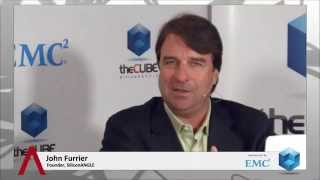
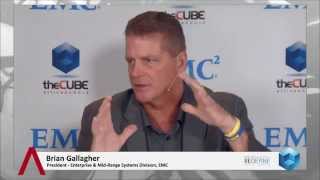
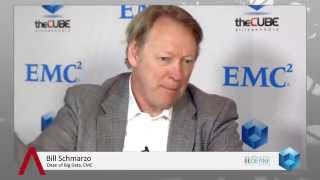
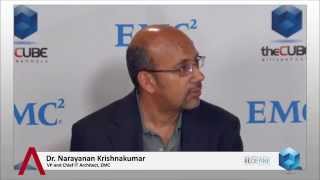
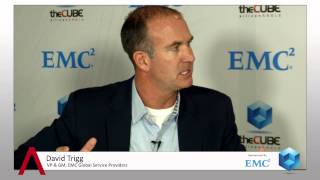
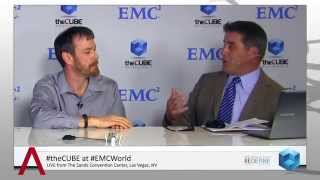
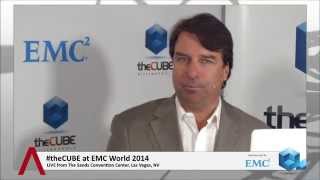
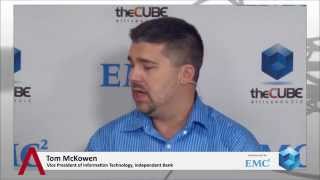
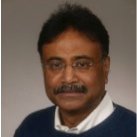
At the EMC World 2014 conference, theCUBE co-hosts John Furrier and Dave Vellente talked with Amitabh Srivastava, President of Advanced Software Division at EMC, to get his take on upcoming changes to the software industry. Throughout the interview, Srivastava stressed his belief that as hardware becomes more and more complex, "the one who makes it simple wins."
How Software Simplicity Complements Hardware Complexity
.
In one of his first questions, Furrier asked how Srivastava makes sense of the way the "maker movement" intersects with some of the low-level complexities, and how he sees software solving those issues. Srivastava respond, "the industry has to make sure is that the applications don't get affected by all the tinkering that is happening on the hardware side." For him, it's important to "separate the applications from the hardware layer," one of the prime functions of ViPR.
Srivastava believes that hardware can get more complicated, but that software is the "only way simplification is going to happen." So that even as hardware changes, applications may become faster because they're better suited for their specific workload.
Framing his question by touching on how drastically infrastructure is changing, mentioning hyperscale, Vellente wondered if Srivastava anticipated a similar transformation in applications: "Will enterprise apps start to look like consumer apps?" Srivastava explained that he believes there will be a wellspring of application advancements. That change, he noted, will begin in startups and, once enterprises have moved to platform three, create a "fundamental change" in enterprise applications.
How OpenStack and Cloud will Affect Storage Architectures
Next, Vellente asked Srivastava how he sees trends around OpenStack and the Cloud affecting storage architectures. Srivastava commented that the overall trend he sees is standardization: "talking with different arrays, with different characteristics, in a uniform way."
He used OpenStack's Cinder plug-in as an example, because "people can use the Cinder APIs to talk to all of the arrays," but also mentioned EMC's ViPR. He called it as "a step further," one that virtualizes instead of searching for a "uniform walk to talk." Connecting to his earlier point, Srivastava mentioned "That's the layer I was talking about...That's where the separation between the applications and the hardware [will be]."
Vellente pressed Srivastava on "the layer," wondering whether it causes "overhead, does it add inefficiency?" Srivastava responded that those very reasons were why "storage is the last to get visualized." But that they were why he and his company decided to split "the control and the data plane. So you can get all the virtualization, all the abstraction, all the management, just by being on the control plane, without affecting the data plane, so you do not impact the performance of these arrays or the key value they provide."
EMC Moving into a New Market
Focusing on ViPR, Vellente commented that EMC has a "pretty big TAM" to go after. In agreement, Srivastava said that tapping into the "commodity hardware" and "public clouds" market was indeed EMC's "focus with ECS and now ViPR." He commented that he believes they are "crucial technologies" that will allow them to access a market "growing at a much, much faster rate" than the "traditional market" where EMC has been very strong.
Vellente then asked Srivastava about his take on the hyperscale trend to highly customize hardware and create "super dense" computing. Srivastava explained that hardware architecture is contingent on it's intended purpose: "Depending upon which workloads you're talking about, hardware is going to evolve."
Linking to his earlier point, Srivastava stressed that he believes that as hardware grows more complex, the industry should use, "software as a mechanism of making it simpler." "You can have as much complexity [as you want] downstairs, it doesn't' matter" as long as said complexity is not " visible to the operations or the management."
The Future of Computer Science
.
When asked what trends he was watching in computer science, Srivastava stressed "distributed computing." He believes that there will be a huge need for people who can write distributed programs because the computer isn't going to work on a single process or machine, it's going to be distributed to thousands of nodes, multiple data centers [...]." He stressed that for computer science programs, "that's where the focus has to change, to adapt to where the industry is going [...]."
Forgot Password
Almost there!
We just sent you a verification email. Please verify your account to gain access to
EMC World 2014 | Las Vegas. If you don’t think you received an email check your
spam folder.
In order to sign in, enter the email address you used to registered for the event. Once completed, you will receive an email with a verification link. Open this link to automatically sign into the site.
Register For EMC World 2014 | Las Vegas
Please fill out the information below. You will recieve an email with a verification link confirming your registration. Click the link to automatically sign into the site.
You’re almost there!
We just sent you a verification email. Please click the verification button in the email. Once your email address is verified, you will have full access to all event content for EMC World 2014 | Las Vegas.
I want my badge and interests to be visible to all attendees.
Checking this box will display your presense on the attendees list, view your profile and allow other attendees to contact you via 1-1 chat. Read the Privacy Policy. At any time, you can choose to disable this preference.
Select your Interests!
add
Upload your photo
Uploading..
OR
Connect via Twitter
Connect via Linkedin
EDIT PASSWORD
Share
Forgot Password
Almost there!
We just sent you a verification email. Please verify your account to gain access to
EMC World 2014 | Las Vegas. If you don’t think you received an email check your
spam folder.
In order to sign in, enter the email address you used to registered for the event. Once completed, you will receive an email with a verification link. Open this link to automatically sign into the site.
Sign in to gain access to EMC World 2014 | Las Vegas
Please sign in with LinkedIn to continue to EMC World 2014 | Las Vegas. Signing in with LinkedIn ensures a professional environment.
Are you sure you want to remove access rights for this user?
Details
Manage Access
email address
Community Invitation
Amitabh Srivastava | EMC World 2014
At the EMC World 2014 conference, theCUBE co-hosts John Furrier and Dave Vellente talked with Amitabh Srivastava, President of Advanced Software Division at EMC, to get his take on upcoming changes to the software industry. Throughout the interview, Srivastava stressed his belief that as hardware becomes more and more complex, "the one who makes it simple wins."
How Software Simplicity Complements Hardware Complexity
.
In one of his first questions, Furrier asked how Srivastava makes sense of the way the "maker movement" intersects with some of the low-level complexities, and how he sees software solving those issues. Srivastava respond, "the industry has to make sure is that the applications don't get affected by all the tinkering that is happening on the hardware side." For him, it's important to "separate the applications from the hardware layer," one of the prime functions of ViPR.
Srivastava believes that hardware can get more complicated, but that software is the "only way simplification is going to happen." So that even as hardware changes, applications may become faster because they're better suited for their specific workload.
Framing his question by touching on how drastically infrastructure is changing, mentioning hyperscale, Vellente wondered if Srivastava anticipated a similar transformation in applications: "Will enterprise apps start to look like consumer apps?" Srivastava explained that he believes there will be a wellspring of application advancements. That change, he noted, will begin in startups and, once enterprises have moved to platform three, create a "fundamental change" in enterprise applications.
How OpenStack and Cloud will Affect Storage Architectures
Next, Vellente asked Srivastava how he sees trends around OpenStack and the Cloud affecting storage architectures. Srivastava commented that the overall trend he sees is standardization: "talking with different arrays, with different characteristics, in a uniform way."
He used OpenStack's Cinder plug-in as an example, because "people can use the Cinder APIs to talk to all of the arrays," but also mentioned EMC's ViPR. He called it as "a step further," one that virtualizes instead of searching for a "uniform walk to talk." Connecting to his earlier point, Srivastava mentioned "That's the layer I was talking about...That's where the separation between the applications and the hardware [will be]."
Vellente pressed Srivastava on "the layer," wondering whether it causes "overhead, does it add inefficiency?" Srivastava responded that those very reasons were why "storage is the last to get visualized." But that they were why he and his company decided to split "the control and the data plane. So you can get all the virtualization, all the abstraction, all the management, just by being on the control plane, without affecting the data plane, so you do not impact the performance of these arrays or the key value they provide."
EMC Moving into a New Market
Focusing on ViPR, Vellente commented that EMC has a "pretty big TAM" to go after. In agreement, Srivastava said that tapping into the "commodity hardware" and "public clouds" market was indeed EMC's "focus with ECS and now ViPR." He commented that he believes they are "crucial technologies" that will allow them to access a market "growing at a much, much faster rate" than the "traditional market" where EMC has been very strong.
Vellente then asked Srivastava about his take on the hyperscale trend to highly customize hardware and create "super dense" computing. Srivastava explained that hardware architecture is contingent on it's intended purpose: "Depending upon which workloads you're talking about, hardware is going to evolve."
Linking to his earlier point, Srivastava stressed that he believes that as hardware grows more complex, the industry should use, "software as a mechanism of making it simpler." "You can have as much complexity [as you want] downstairs, it doesn't' matter" as long as said complexity is not " visible to the operations or the management."
The Future of Computer Science
.
When asked what trends he was watching in computer science, Srivastava stressed "distributed computing." He believes that there will be a huge need for people who can write distributed programs because the computer isn't going to work on a single process or machine, it's going to be distributed to thousands of nodes, multiple data centers [...]." He stressed that for computer science programs, "that's where the focus has to change, to adapt to where the industry is going [...]."