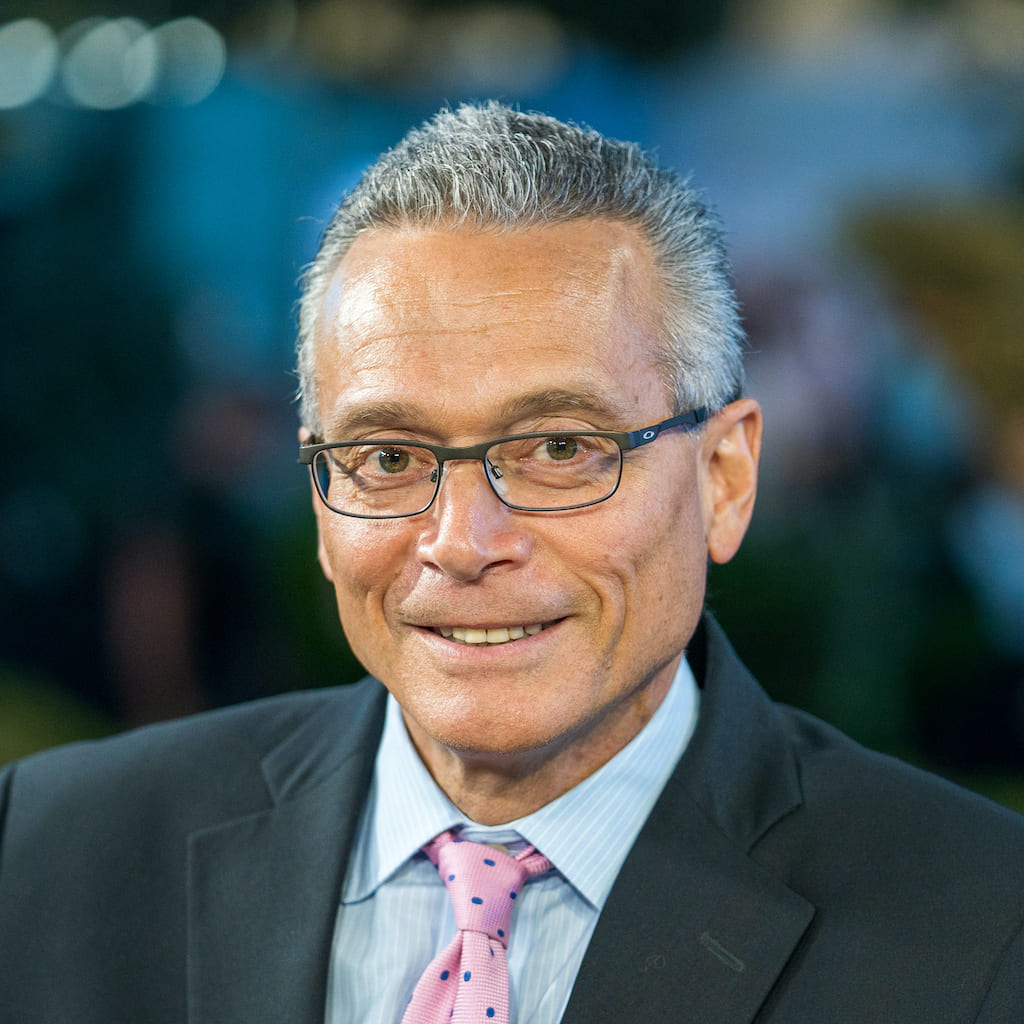
IT is in a transition towards being a service manager says Robert P. Mattie II, director of services integration at GlaxoSmithKline, "and cloud is a good start in the shift to services."
Business users are getting used to finding their own applications, either bought off-the-shelf, downloaded, or in the cloud as services, that they can set up in a minute or two and start addressing a business problem right away, often without talking to anyone from IT. Only later do they look to IT either to integrate the application with internal services, get help with a problem, or to take over managing the application.
"We're trying to get ahead of that curve by transforming to become more of a systems management organization and less of a custom systems designer," he said in the Cube in an interview webcast live on Siliconangle.TV from EMC World 2012. "I tell my people that in the future we will become less interested in the nuts and bolts of things and more in the services we wrap around them and the business needs those services address."
At GSK, he said, IT has already redefined its internal resources as services that it markets internally to users in a fairly mature services catalog and a one-stop-shopping model. Now it is shifting toward an on-demand model using consumerized applications and will probably shift to good-enough services where they can be used to increase the speed with which it can meet user requests. The day when users would automatically get a negative answer to requests from IT are going away.
"Where we are breaking ground right now is with an internal private cloud and with new technologies like apps for the iPad. An app store is in development."
GSK is committed to a hybrid cloud model, he said, partly because of the growing need for big data analysis. IT looks at cloud services as its first foray into that space, and he is at EMC World partly to learn more about big data. IT wants to provide back-end interfaces that allow end-users to access the data and apply whatever apps they find most useful for filling the business need.
Transformation, however, "is a multi-year journey," and EMC is involved both as a hardware vendor and a service provider, he said. One initiative of the GSK transformation is centralization of its data centers. It recently built a new global data center to replace multiple aging centers, reducing the total number from 55 to about 25 so far, with a goal of getting down to five. So far that has involved moving more than 1,000 devices. They are still migrating applications to the new data center and, wherever possible, retiring applications. EMC collaborated on the migration strategy.
So is EMC more of a hardware or a services company? "Where a service is good enough," he said, "EMC is a services company. Where we have proprietary services or data and absolutely care about the mission-critical aspect of those, EMC is a hardware company for us."
Read the full article,
"IT Shifting from Nuts and Bolts to Services, Says GlaxoSmithKline"
Forgot Password
Almost there!
We just sent you a verification email. Please verify your account to gain access to
EMC World 2012 | Las Vegas. If you don’t think you received an email check your
spam folder.
In order to sign in, enter the email address you used to registered for the event. Once completed, you will receive an email with a verification link. Open this link to automatically sign into the site.
Register For EMC World 2012 | Las Vegas
Please fill out the information below. You will recieve an email with a verification link confirming your registration. Click the link to automatically sign into the site.
You’re almost there!
We just sent you a verification email. Please click the verification button in the email. Once your email address is verified, you will have full access to all event content for EMC World 2012 | Las Vegas.
I want my badge and interests to be visible to all attendees.
Checking this box will display your presense on the attendees list, view your profile and allow other attendees to contact you via 1-1 chat. Read the Privacy Policy. At any time, you can choose to disable this preference.
Select your Interests!
add
Upload your photo
Uploading..
OR
Connect via Twitter
Connect via Linkedin
EDIT PASSWORD
Share
Forgot Password
Almost there!
We just sent you a verification email. Please verify your account to gain access to
EMC World 2012 | Las Vegas. If you don’t think you received an email check your
spam folder.
In order to sign in, enter the email address you used to registered for the event. Once completed, you will receive an email with a verification link. Open this link to automatically sign into the site.
Sign in to gain access to EMC World 2012 | Las Vegas
Please sign in with LinkedIn to continue to EMC World 2012 | Las Vegas. Signing in with LinkedIn ensures a professional environment.
Are you sure you want to remove access rights for this user?
Details
Manage Access
email address
Community Invitation
Robert Mattie - EMC World 2012 - theCUBE - #EMCWorld
IT is in a transition towards being a service manager says Robert P. Mattie II, director of services integration at GlaxoSmithKline, "and cloud is a good start in the shift to services."
Business users are getting used to finding their own applications, either bought off-the-shelf, downloaded, or in the cloud as services, that they can set up in a minute or two and start addressing a business problem right away, often without talking to anyone from IT. Only later do they look to IT either to integrate the application with internal services, get help with a problem, or to take over managing the application.
"We're trying to get ahead of that curve by transforming to become more of a systems management organization and less of a custom systems designer," he said in the Cube in an interview webcast live on Siliconangle.TV from EMC World 2012. "I tell my people that in the future we will become less interested in the nuts and bolts of things and more in the services we wrap around them and the business needs those services address."
At GSK, he said, IT has already redefined its internal resources as services that it markets internally to users in a fairly mature services catalog and a one-stop-shopping model. Now it is shifting toward an on-demand model using consumerized applications and will probably shift to good-enough services where they can be used to increase the speed with which it can meet user requests. The day when users would automatically get a negative answer to requests from IT are going away.
"Where we are breaking ground right now is with an internal private cloud and with new technologies like apps for the iPad. An app store is in development."
GSK is committed to a hybrid cloud model, he said, partly because of the growing need for big data analysis. IT looks at cloud services as its first foray into that space, and he is at EMC World partly to learn more about big data. IT wants to provide back-end interfaces that allow end-users to access the data and apply whatever apps they find most useful for filling the business need.
Transformation, however, "is a multi-year journey," and EMC is involved both as a hardware vendor and a service provider, he said. One initiative of the GSK transformation is centralization of its data centers. It recently built a new global data center to replace multiple aging centers, reducing the total number from 55 to about 25 so far, with a goal of getting down to five. So far that has involved moving more than 1,000 devices. They are still migrating applications to the new data center and, wherever possible, retiring applications. EMC collaborated on the migration strategy.
So is EMC more of a hardware or a services company? "Where a service is good enough," he said, "EMC is a services company. Where we have proprietary services or data and absolutely care about the mission-critical aspect of those, EMC is a hardware company for us."
Read the full article,
"IT Shifting from Nuts and Bolts to Services, Says GlaxoSmithKline"