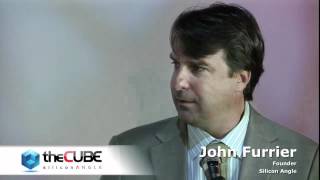
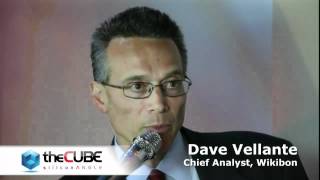
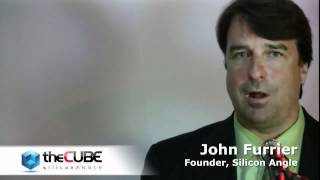
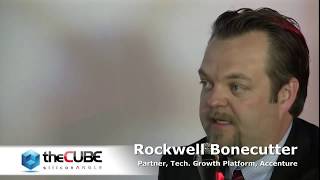
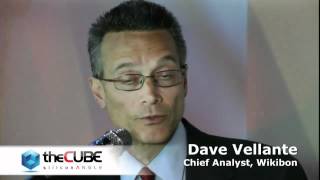
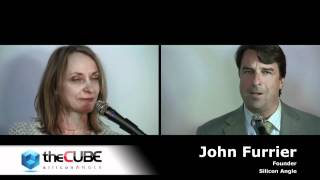
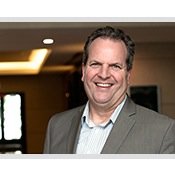
Nathan Biggs, John Furrier and Dave Vellante at EMC World 2011
Virtualizing Oracle applications on VMware offers great value in cost savings, greater flexibility, high availability, and a higher quality, lower cost life cycle, says Nathan Biggs, CEO of House of Brick, the leading consultant on virtualizing Oracle applications on VMware. But, they often hesitate, not for technical reasons but rather for political and emotional ones, and mainly because Oracle discourages its clients from using VMware and all but refuses to certify Oracle applications running on VMware.
Biggs dropped in at the SiliconAngle.tv Cube at VMworld 2011 to chat with SiliconAngle CEO John Furrier and Wikibon.org Co-Founder David Vellante on Tuesday, May 10. The big problem for Oracle users who want to virtualize, he said, is that the Oracle Virtual Machine (OVM) is immature. “We have clients who for certification or other reasons wanted to virtualize on Oracle Virtual Machine, and of course we helped them with that,” he said. “But they found that they weren’t getting the performance and other advantages they wanted, and they then asked us to help them get off OVM and onto VMware.”
But despite Oracle’s public statements to the contrary, it does certify applications on VMware, particularly in the pharmaceutical industry, where the U.S. Food and Drug Administration (FDA) put pressure on the vendor. Companies do “have to pay through the nose” for those certifications, Vellante said, but the fact that they do it at all is proof that Oracle’s attitude is driven by business rather than technology concerns. It wants to freeze the virtualization market at least for its applications until it can mature OVM because it wants to own as much of the software stack as it can. This vertical integration gives it both higher profits and more control over its clients.
Biggs suggests that Oracle users who are hesitant about VMware do a search for problems on Oracle applications running on VMware on My Oracle Support or METAlink to see how many were caused by VMware bugs. “We have not found any,” he says.
When users do experience problems with virtualized environments, Oracle requires that the customer move the application back onto an unvirtualized platform in part to prevent finger pointing. This also often concerns users, but Biggs says House of Brick has best practices that can help users convert an Oracle application in minutes rather than days. So he does not consider this a problem for users.
He does suggest that Oracle users start small, and that test and development is the perfect first area for virtualization because it provides a safe place to learn and offers greater flexibility. Once they are comfortable there, they might consider virtualizing one or more small Oracle applications that they can take to production but that are not mission-critical for the company and that do not require certification. He says that VMware virtualization will sell itself with the multiple advantages it will provide over a native environment.
Once customers get that experience they usually want to move to larger applications and eventually even virtualize their largest, most mission-critical applications. Even there, he says, most companies find ample advantages to justify virtualization.
Forgot Password
Almost there!
We just sent you a verification email. Please verify your account to gain access to
EMC World 2011 | Las Vegas. If you don’t think you received an email check your
spam folder.
In order to sign in, enter the email address you used to registered for the event. Once completed, you will receive an email with a verification link. Open this link to automatically sign into the site.
Register For EMC World 2011 | Las Vegas
Please fill out the information below. You will recieve an email with a verification link confirming your registration. Click the link to automatically sign into the site.
You’re almost there!
We just sent you a verification email. Please click the verification button in the email. Once your email address is verified, you will have full access to all event content for EMC World 2011 | Las Vegas.
I want my badge and interests to be visible to all attendees.
Checking this box will display your presense on the attendees list, view your profile and allow other attendees to contact you via 1-1 chat. Read the Privacy Policy. At any time, you can choose to disable this preference.
Select your Interests!
add
Upload your photo
Uploading..
OR
Connect via Twitter
Connect via Linkedin
EDIT PASSWORD
Share
Forgot Password
Almost there!
We just sent you a verification email. Please verify your account to gain access to
EMC World 2011 | Las Vegas. If you don’t think you received an email check your
spam folder.
In order to sign in, enter the email address you used to registered for the event. Once completed, you will receive an email with a verification link. Open this link to automatically sign into the site.
Sign in to gain access to EMC World 2011 | Las Vegas
Please sign in with LinkedIn to continue to EMC World 2011 | Las Vegas. Signing in with LinkedIn ensures a professional environment.
Are you sure you want to remove access rights for this user?
Details
Manage Access
email address
Community Invitation
Nathan Biggs | EMC World 2011
Nathan Biggs, John Furrier and Dave Vellante at EMC World 2011
Virtualizing Oracle applications on VMware offers great value in cost savings, greater flexibility, high availability, and a higher quality, lower cost life cycle, says Nathan Biggs, CEO of House of Brick, the leading consultant on virtualizing Oracle applications on VMware. But, they often hesitate, not for technical reasons but rather for political and emotional ones, and mainly because Oracle discourages its clients from using VMware and all but refuses to certify Oracle applications running on VMware.
Biggs dropped in at the SiliconAngle.tv Cube at VMworld 2011 to chat with SiliconAngle CEO John Furrier and Wikibon.org Co-Founder David Vellante on Tuesday, May 10. The big problem for Oracle users who want to virtualize, he said, is that the Oracle Virtual Machine (OVM) is immature. “We have clients who for certification or other reasons wanted to virtualize on Oracle Virtual Machine, and of course we helped them with that,” he said. “But they found that they weren’t getting the performance and other advantages they wanted, and they then asked us to help them get off OVM and onto VMware.”
But despite Oracle’s public statements to the contrary, it does certify applications on VMware, particularly in the pharmaceutical industry, where the U.S. Food and Drug Administration (FDA) put pressure on the vendor. Companies do “have to pay through the nose” for those certifications, Vellante said, but the fact that they do it at all is proof that Oracle’s attitude is driven by business rather than technology concerns. It wants to freeze the virtualization market at least for its applications until it can mature OVM because it wants to own as much of the software stack as it can. This vertical integration gives it both higher profits and more control over its clients.
Biggs suggests that Oracle users who are hesitant about VMware do a search for problems on Oracle applications running on VMware on My Oracle Support or METAlink to see how many were caused by VMware bugs. “We have not found any,” he says.
When users do experience problems with virtualized environments, Oracle requires that the customer move the application back onto an unvirtualized platform in part to prevent finger pointing. This also often concerns users, but Biggs says House of Brick has best practices that can help users convert an Oracle application in minutes rather than days. So he does not consider this a problem for users.
He does suggest that Oracle users start small, and that test and development is the perfect first area for virtualization because it provides a safe place to learn and offers greater flexibility. Once they are comfortable there, they might consider virtualizing one or more small Oracle applications that they can take to production but that are not mission-critical for the company and that do not require certification. He says that VMware virtualization will sell itself with the multiple advantages it will provide over a native environment.
Once customers get that experience they usually want to move to larger applications and eventually even virtualize their largest, most mission-critical applications. Even there, he says, most companies find ample advantages to justify virtualization.