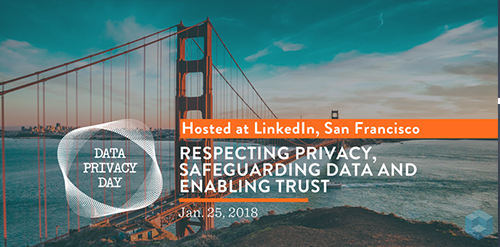
Eva Velasquez, President CEO, Identity Theft Resource Center sits down with Jeff Frick at Data Privacy Day 2018.
#DataPrivacy2018 #theCUBE
https://siliconangle.com/2018/02/05/equifax-breach-make-2018-tax-filing-little-interesting-thecube-privacyaware-womenintech/
Equifax breach could make 2018 tax filing a little more interesting
When it comes to data privacy and preventing identity theft, there may be nothing more useless today than an individual’s Social Security number. The problem has gotten so bad that Adrian Lamo, threat analyst and former hacker, posted a video on YouTube in which he freely gives out his own Social Security number.
Yet, the number is still widely used as a personal identifier, even though it was originally designed in 1936 as a way to simply track earnings of U.S. workers for Social Security benefits. The vulnerability of this process was underscored last year when an estimated 145.5 million Americans had their SSNs and other personal information stolen as part of the Equifax Inc. breach.
That breach represented a watershed moment in public consciousness surrounding the security, or lack thereof, of personal information. And many victim assistance organizations, such as the Identity Theft Resource Center, felt the brunt of consumer angst.
“It was the largest number of calls we’ve had in a month since we’ve been measuring our call volume,” said Eva Velasquez (pictured), president and chief executive officer of the Identity Theft Resource Center. “People were still very concerned.”
Velasquez visited the set of theCUBE, SiliconANGLE Media’s mobile livestreaming studio, during Data Privacy Day in San Francisco and spoke with host Jeff Frick (@JeffFrick). They discussed the impact of the Equifax breach on consumer privacy, rising concern surrounding child identity theft, a continued increase in data compromises, and potential solutions.
This week, theCUBE spotlights Eva Velasquez in our Women in Tech feature.
Experts advise to file taxes early
The theft of so many SSNs last year has led to concerns that the tax filings of U.S. citizens could be impacted as the deadline approaches in mid-April. The problem is that crooks don’t need much more than an SSN to file a bogus tax return. The Identity Theft Resource Center has been advising consumers to file early and beat thieves to the punch.
While credit or identity monitoring services may help prevent additional losses for a consumer, a study by the General Accounting Office published last year found that these services do not typically protect against tax fraud. To make matters worse, a recent report by CNN found that many SSNs are currently available in marketplaces on the dark web. One even touted its wares with the ominous sales pitch, “Get em befor tax seson [sic].”
“For a lot of us in this space, we may be feeling the fatigue more than the average consumer,” said Velasquez in assessing the fallout from the Equifax data theft.
Child identity kits for $300
The loss of protection surrounding so many personal identifying numbers is also raising concerns in the security community around child identity theft. The same CNN report showed that datasets of personal information for infants, complete with date of birth, mother’s maiden name and even an SSN, could be purchased for $300 in bitcoin.
This kind of information is attractive (and valuable) to criminals because it allows them to start with a clean credit history. This can cause real problems when the child reaches an age when he or she attempts to get a credit card or take out a loan.
“You have a four-year-old whose SSN is now having a credit profile built around it,” Velasquez said. “The biggest problem is we really haven’t modernized how we’re authenticating this information and data.”
The Identity Theft Resource Center has been tracking breaches since 2005. Last month, it issued a report that showed there have been 8,200 breaches and more than 1 billion records exposed since the Center began monitoring the statistics. Data breaches reached a new high in 2017 at 1,579.
There is one technology area that could drive these numbers even higher in the coming year, and it’s the “internet of things.’ The number of connected devices on the market is rising rapidly, especially in the home. It’s possible now to connect light bulbs, doorbells, thermostats, kitchen appliances and even pet food dishes.
Each device in the home creates data that is often accessed by the product maker. Hacking that database of information through the company that stores it or at the source could provide criminals with a treasure trove of personally identifying data.
“We have to think about the data that we’re creating that does comprise our identity,” Velasquez said.
...
Watch the complete video interview below, and be sure to check out more of SiliconANGLE’s and theCUBE’s coverage of Data Privacy Day.
Forgot Password
Almost there!
We just sent you a verification email. Please verify your account to gain access to
Data Privacy Day 2018. If you don’t think you received an email check your
spam folder.
In order to sign in, enter the email address you used to registered for the event. Once completed, you will receive an email with a verification link. Open this link to automatically sign into the site.
Register For Data Privacy Day 2018
Please fill out the information below. You will recieve an email with a verification link confirming your registration. Click the link to automatically sign into the site.
You’re almost there!
We just sent you a verification email. Please click the verification button in the email. Once your email address is verified, you will have full access to all event content for Data Privacy Day 2018.
I want my badge and interests to be visible to all attendees.
Checking this box will display your presense on the attendees list, view your profile and allow other attendees to contact you via 1-1 chat. Read the Privacy Policy. At any time, you can choose to disable this preference.
Select your Interests!
add
Upload your photo
Uploading..
OR
Connect via Twitter
Connect via Linkedin
EDIT PASSWORD
Share
Forgot Password
Almost there!
We just sent you a verification email. Please verify your account to gain access to
Data Privacy Day 2018. If you don’t think you received an email check your
spam folder.
In order to sign in, enter the email address you used to registered for the event. Once completed, you will receive an email with a verification link. Open this link to automatically sign into the site.
Sign in to gain access to Data Privacy Day 2018
Please sign in with LinkedIn to continue to Data Privacy Day 2018. Signing in with LinkedIn ensures a professional environment.
Are you sure you want to remove access rights for this user?
Details
Manage Access
email address
Community Invitation
Eva Velasquez, Identity Theft Resource Center | Data Privacy Day 2018
Eva Velasquez, President CEO, Identity Theft Resource Center sits down with Jeff Frick at Data Privacy Day 2018.
#DataPrivacy2018 #theCUBE
https://siliconangle.com/2018/02/05/equifax-breach-make-2018-tax-filing-little-interesting-thecube-privacyaware-womenintech/
Equifax breach could make 2018 tax filing a little more interesting
When it comes to data privacy and preventing identity theft, there may be nothing more useless today than an individual’s Social Security number. The problem has gotten so bad that Adrian Lamo, threat analyst and former hacker, posted a video on YouTube in which he freely gives out his own Social Security number.
Yet, the number is still widely used as a personal identifier, even though it was originally designed in 1936 as a way to simply track earnings of U.S. workers for Social Security benefits. The vulnerability of this process was underscored last year when an estimated 145.5 million Americans had their SSNs and other personal information stolen as part of the Equifax Inc. breach.
That breach represented a watershed moment in public consciousness surrounding the security, or lack thereof, of personal information. And many victim assistance organizations, such as the Identity Theft Resource Center, felt the brunt of consumer angst.
“It was the largest number of calls we’ve had in a month since we’ve been measuring our call volume,” said Eva Velasquez (pictured), president and chief executive officer of the Identity Theft Resource Center. “People were still very concerned.”
Velasquez visited the set of theCUBE, SiliconANGLE Media’s mobile livestreaming studio, during Data Privacy Day in San Francisco and spoke with host Jeff Frick (@JeffFrick). They discussed the impact of the Equifax breach on consumer privacy, rising concern surrounding child identity theft, a continued increase in data compromises, and potential solutions.
This week, theCUBE spotlights Eva Velasquez in our Women in Tech feature.
Experts advise to file taxes early
The theft of so many SSNs last year has led to concerns that the tax filings of U.S. citizens could be impacted as the deadline approaches in mid-April. The problem is that crooks don’t need much more than an SSN to file a bogus tax return. The Identity Theft Resource Center has been advising consumers to file early and beat thieves to the punch.
While credit or identity monitoring services may help prevent additional losses for a consumer, a study by the General Accounting Office published last year found that these services do not typically protect against tax fraud. To make matters worse, a recent report by CNN found that many SSNs are currently available in marketplaces on the dark web. One even touted its wares with the ominous sales pitch, “Get em befor tax seson [sic].”
“For a lot of us in this space, we may be feeling the fatigue more than the average consumer,” said Velasquez in assessing the fallout from the Equifax data theft.
Child identity kits for $300
The loss of protection surrounding so many personal identifying numbers is also raising concerns in the security community around child identity theft. The same CNN report showed that datasets of personal information for infants, complete with date of birth, mother’s maiden name and even an SSN, could be purchased for $300 in bitcoin.
This kind of information is attractive (and valuable) to criminals because it allows them to start with a clean credit history. This can cause real problems when the child reaches an age when he or she attempts to get a credit card or take out a loan.
“You have a four-year-old whose SSN is now having a credit profile built around it,” Velasquez said. “The biggest problem is we really haven’t modernized how we’re authenticating this information and data.”
The Identity Theft Resource Center has been tracking breaches since 2005. Last month, it issued a report that showed there have been 8,200 breaches and more than 1 billion records exposed since the Center began monitoring the statistics. Data breaches reached a new high in 2017 at 1,579.
There is one technology area that could drive these numbers even higher in the coming year, and it’s the “internet of things.’ The number of connected devices on the market is rising rapidly, especially in the home. It’s possible now to connect light bulbs, doorbells, thermostats, kitchen appliances and even pet food dishes.
Each device in the home creates data that is often accessed by the product maker. Hacking that database of information through the company that stores it or at the source could provide criminals with a treasure trove of personally identifying data.
“We have to think about the data that we’re creating that does comprise our identity,” Velasquez said.
...
Watch the complete video interview below, and be sure to check out more of SiliconANGLE’s and theCUBE’s coverage of Data Privacy Day.