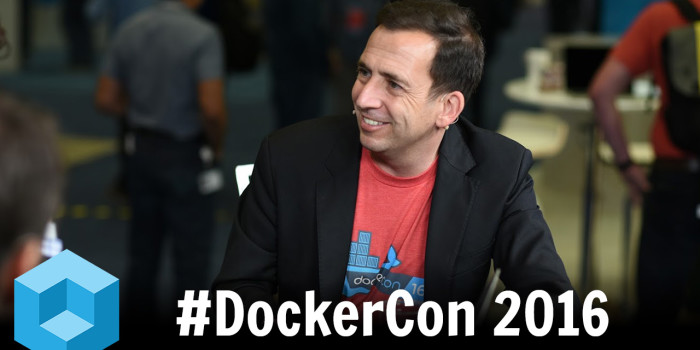
01. Ben Golub, Docker, Visits #theCUBE!. (00:19)
02. DockerCon Has Really Grown Over The Last Year. (00:50)
03. How Do You Balance Innovation And Commercialization. (01:42)
04. Are You Happy With The Global SI Right Now. (04:22)
05. What Is The Temperature Of Developers These Days. (05:09)
06. When Do You Get Down And Dirty On The Business Model. (06:46)
07. Do You Worry About The Competative Landscape. (08:52)
08. Is There A KPI That You Look To Internally. (11:32)
09. Who Is The Docker Buyer. (13:36)
10. What Are The Key Integration Points. (15:45)
11. What Are We Gonna Hear On Day 2. (18:13)
12. Give Us A Current Perspective Of Docker Business. (19:05)
Track List created with http://www.vinjavideo.com.
--- ---
The race to revenue: How will Docker pull ahead in profitability? | #DockerCon
by R. Danes | Jun 21, 2016
Open source can be a great avenue through which to enter the IT stage. If the first protocol of developing a fantastic tool is “Get it to market,” open source easily provides the fastest route. The user feedback is like a massive pool of developers and engineers pointing out bugs and polishing features for you at no cost. So, you see, the “free” factor is a two-way street. Alas, companies that start in open source sometimes face challenges to monetizing when the time comes.
Docker, a software containerization platform, has been a massive open-source success story, with recent reports claiming that some companies run 70 percent of their applications on Docker. Ben Golub, CEO of Docker, Inc., says that while he is thrilled to see what developers are doing with the tool regardless, it’s time for the company to get serious abut profitability.
Docker democracy
Golub told John Furrier (@furrier) and Brian Gracely (@bgracely), cohosts of theCUBE, from the SiliconANGLE Media team, during DockerCon 2016 that democratizing containers was what catapulted Docker to success. Now the company is looking to democratize orchestration and adoption of Docker in the enterprise.
He said the end result of democratization has been the liberation of developers to focus on innovation instead of technical or “plumbing” issues.
“The way you build an application with Docker is you sort of assemble it like you’re building something out of Legos,” he said. “Not only do we have people talking about doing things like protein folding to solve Parkinson’s using Docker, but it’s 13-year-olds and 10-year-olds who are doing it. It’s absolutely amazing,” he said.
Crunching numbers
“We still spend more money every month than we bring in, but the curves are going in the right direction,” Golub said, adding that revenue is growing much faster than expenses.
A major new source of revenue is the Docker Datacenter (DDC), which customers use to manage the supply chain of application development and deployment. As the use of Docker spreads through an organization, he said, “At some point, there’s a need to be able to manage it, and that’s when we come in, and generally speaking, we get called.”
Golub said Docker also has a revenue deal with HPE: Every server HPE ships, he explained, will have Docker’s commercial engine and support available at the click of a button.
#dockercon
#theCUBE
Forgot Password
Almost there!
We just sent you a verification email. Please verify your account to gain access to
DockerCon 2016 | Seattle. If you don’t think you received an email check your
spam folder.
In order to sign in, enter the email address you used to registered for the event. Once completed, you will receive an email with a verification link. Open this link to automatically sign into the site.
Register For DockerCon 2016 | Seattle
Please fill out the information below. You will recieve an email with a verification link confirming your registration. Click the link to automatically sign into the site.
You’re almost there!
We just sent you a verification email. Please click the verification button in the email. Once your email address is verified, you will have full access to all event content for DockerCon 2016 | Seattle.
I want my badge and interests to be visible to all attendees.
Checking this box will display your presense on the attendees list, view your profile and allow other attendees to contact you via 1-1 chat. Read the Privacy Policy. At any time, you can choose to disable this preference.
Select your Interests!
add
Upload your photo
Uploading..
OR
Connect via Twitter
Connect via Linkedin
EDIT PASSWORD
Share
Forgot Password
Almost there!
We just sent you a verification email. Please verify your account to gain access to
DockerCon 2016 | Seattle. If you don’t think you received an email check your
spam folder.
In order to sign in, enter the email address you used to registered for the event. Once completed, you will receive an email with a verification link. Open this link to automatically sign into the site.
Sign in to gain access to DockerCon 2016 | Seattle
Please sign in with LinkedIn to continue to DockerCon 2016 | Seattle. Signing in with LinkedIn ensures a professional environment.
Are you sure you want to remove access rights for this user?
Details
Manage Access
email address
Community Invitation
Ben Golub, Docker | DockerCon 16
01. Ben Golub, Docker, Visits #theCUBE!. (00:19)
02. DockerCon Has Really Grown Over The Last Year. (00:50)
03. How Do You Balance Innovation And Commercialization. (01:42)
04. Are You Happy With The Global SI Right Now. (04:22)
05. What Is The Temperature Of Developers These Days. (05:09)
06. When Do You Get Down And Dirty On The Business Model. (06:46)
07. Do You Worry About The Competative Landscape. (08:52)
08. Is There A KPI That You Look To Internally. (11:32)
09. Who Is The Docker Buyer. (13:36)
10. What Are The Key Integration Points. (15:45)
11. What Are We Gonna Hear On Day 2. (18:13)
12. Give Us A Current Perspective Of Docker Business. (19:05)
Track List created with http://www.vinjavideo.com.
--- ---
The race to revenue: How will Docker pull ahead in profitability? | #DockerCon
by R. Danes | Jun 21, 2016
Open source can be a great avenue through which to enter the IT stage. If the first protocol of developing a fantastic tool is “Get it to market,” open source easily provides the fastest route. The user feedback is like a massive pool of developers and engineers pointing out bugs and polishing features for you at no cost. So, you see, the “free” factor is a two-way street. Alas, companies that start in open source sometimes face challenges to monetizing when the time comes.
Docker, a software containerization platform, has been a massive open-source success story, with recent reports claiming that some companies run 70 percent of their applications on Docker. Ben Golub, CEO of Docker, Inc., says that while he is thrilled to see what developers are doing with the tool regardless, it’s time for the company to get serious abut profitability.
Docker democracy
Golub told John Furrier (@furrier) and Brian Gracely (@bgracely), cohosts of theCUBE, from the SiliconANGLE Media team, during DockerCon 2016 that democratizing containers was what catapulted Docker to success. Now the company is looking to democratize orchestration and adoption of Docker in the enterprise.
He said the end result of democratization has been the liberation of developers to focus on innovation instead of technical or “plumbing” issues.
“The way you build an application with Docker is you sort of assemble it like you’re building something out of Legos,” he said. “Not only do we have people talking about doing things like protein folding to solve Parkinson’s using Docker, but it’s 13-year-olds and 10-year-olds who are doing it. It’s absolutely amazing,” he said.
Crunching numbers
“We still spend more money every month than we bring in, but the curves are going in the right direction,” Golub said, adding that revenue is growing much faster than expenses.
A major new source of revenue is the Docker Datacenter (DDC), which customers use to manage the supply chain of application development and deployment. As the use of Docker spreads through an organization, he said, “At some point, there’s a need to be able to manage it, and that’s when we come in, and generally speaking, we get called.”
Golub said Docker also has a revenue deal with HPE: Every server HPE ships, he explained, will have Docker’s commercial engine and support available at the click of a button.
#dockercon
#theCUBE