IBM’s place in the expanding containers market | #DockerCon
by Nelson Williams | Jun 21, 2016
Applications must be portable. That’s the lesson modern businesses are learning as applications are freed from their silos and move to the Cloud. The challenge is adapting an application, especially an older one, to the modern, ever-changing environment. The answer lies in containers, a technology for running applications from any platform on any platform. The use of containers is reshaping the development community.
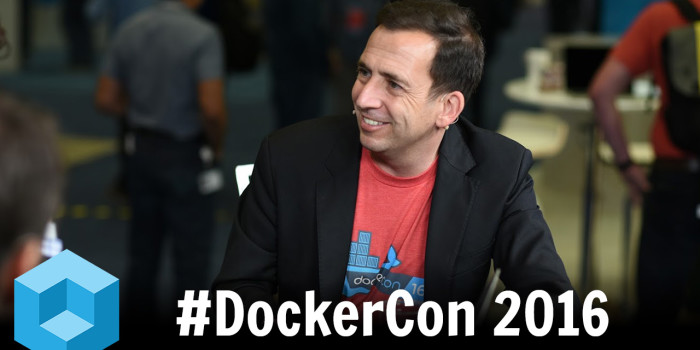
To gain some insight on the container revolution, John Furrier (@furrier) and Brian Gracely (@bgracely), cohosts of theCUBE, from the SiliconANGLE Media team, went to the DockerCon 2016 conference in Seattle, Washington. There, they sat down with Jason McGee, IBM Fellow and VP and CTO of the IBM Cloud Platform.
Meeting the Cloud as a spectrum
“One of the big things is the expansion of the cloud into a full-fledged platform,” McGee said, opening the discussion. He explained how this opened up the Cloud for a host of new technologies and systems. Specifically, he mentioned IBM’s own Watson and cognitive computing.
McGee pointed out that looking at the modern Cloud means watching a spectrum, from bare metal, to virtual machines, to containers. He described containers as being in the middle of this spectrum, because that’s where the bulk of application development was occurring. McGee also stated that a company has to bring APIs and services into the platform as well.
Bringing the Cloud to customers
The conversation moved on to the customer side of the discussion. Here, McGee spoke about hybrid Clouds, seeing them as the end state where everyone was going to be in. He explained that Docker offers portability across those environments, and how IBM was converting a lot of its middleware to take advantage of this.
McGee continued with how Watson and its capabilities were a big draw for customers. He also saw a lot of draw for IBM’s container service, which ran on a native interface so customers wouldn’t have to worry about setting it up. Briefly, McGee then covered microservices, mentioning they offer velocity but demand complexity in return. This complexity requires a framework and tools to manage.
“We’re working hard to make containers a core part of applications,” he said.
Forgot Password
Almost there!
We just sent you a verification email. Please verify your account to gain access to
DockerCon 2016 | Seattle. If you don’t think you received an email check your
spam folder.
In order to sign in, enter the email address you used to registered for the event. Once completed, you will receive an email with a verification link. Open this link to automatically sign into the site.
Register For DockerCon 2016 | Seattle
Please fill out the information below. You will recieve an email with a verification link confirming your registration. Click the link to automatically sign into the site.
You’re almost there!
We just sent you a verification email. Please click the verification button in the email. Once your email address is verified, you will have full access to all event content for DockerCon 2016 | Seattle.
I want my badge and interests to be visible to all attendees.
Checking this box will display your presense on the attendees list, view your profile and allow other attendees to contact you via 1-1 chat. Read the Privacy Policy. At any time, you can choose to disable this preference.
Select your Interests!
add
Upload your photo
Uploading..
OR
Connect via Twitter
Connect via Linkedin
EDIT PASSWORD
Share
Forgot Password
Almost there!
We just sent you a verification email. Please verify your account to gain access to
DockerCon 2016 | Seattle. If you don’t think you received an email check your
spam folder.
In order to sign in, enter the email address you used to registered for the event. Once completed, you will receive an email with a verification link. Open this link to automatically sign into the site.
Sign in to gain access to DockerCon 2016 | Seattle
Please sign in with LinkedIn to continue to DockerCon 2016 | Seattle. Signing in with LinkedIn ensures a professional environment.
Are you sure you want to remove access rights for this user?
Details
Manage Access
email address
Community Invitation
Jason McGee, IBM | DockerCon 16
IBM’s place in the expanding containers market | #DockerCon
by Nelson Williams | Jun 21, 2016
Applications must be portable. That’s the lesson modern businesses are learning as applications are freed from their silos and move to the Cloud. The challenge is adapting an application, especially an older one, to the modern, ever-changing environment. The answer lies in containers, a technology for running applications from any platform on any platform. The use of containers is reshaping the development community.
To gain some insight on the container revolution, John Furrier (@furrier) and Brian Gracely (@bgracely), cohosts of theCUBE, from the SiliconANGLE Media team, went to the DockerCon 2016 conference in Seattle, Washington. There, they sat down with Jason McGee, IBM Fellow and VP and CTO of the IBM Cloud Platform.
Meeting the Cloud as a spectrum
“One of the big things is the expansion of the cloud into a full-fledged platform,” McGee said, opening the discussion. He explained how this opened up the Cloud for a host of new technologies and systems. Specifically, he mentioned IBM’s own Watson and cognitive computing.
McGee pointed out that looking at the modern Cloud means watching a spectrum, from bare metal, to virtual machines, to containers. He described containers as being in the middle of this spectrum, because that’s where the bulk of application development was occurring. McGee also stated that a company has to bring APIs and services into the platform as well.
Bringing the Cloud to customers
The conversation moved on to the customer side of the discussion. Here, McGee spoke about hybrid Clouds, seeing them as the end state where everyone was going to be in. He explained that Docker offers portability across those environments, and how IBM was converting a lot of its middleware to take advantage of this.
McGee continued with how Watson and its capabilities were a big draw for customers. He also saw a lot of draw for IBM’s container service, which ran on a native interface so customers wouldn’t have to worry about setting it up. Briefly, McGee then covered microservices, mentioning they offer velocity but demand complexity in return. This complexity requires a framework and tools to manage.
“We’re working hard to make containers a core part of applications,” he said.