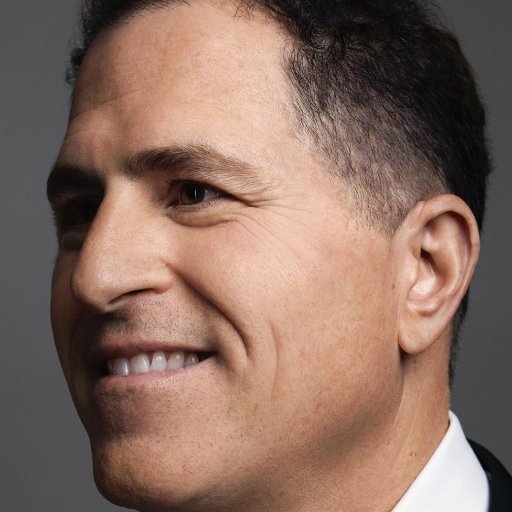
The IT world is changing, and Dell, because it does not have a huge legacy of hardware products to defend, is in a near-ideal position to capitalize, says Dell Computing founder and CEO Michael Dell. With no huge legacy of old technology to devend, it is in a perfect position to help customers more to advanced technologies like software-defined networking (SDN), virtualized data centers, and Cloud services.
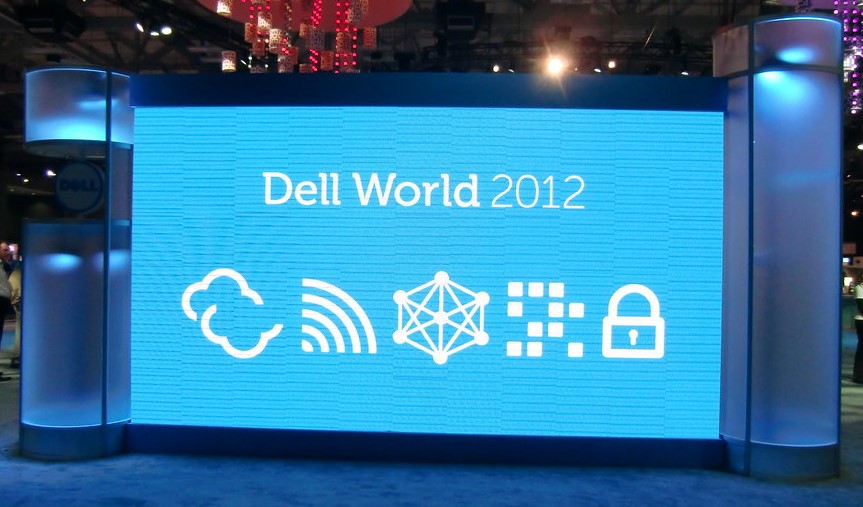
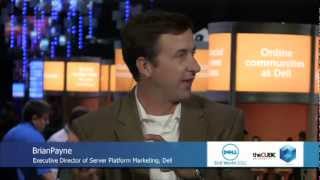
From the beginning of Dell’s enterprise business, the key to success was understanding the customer’s needs, Dell told SiliconAngle Founder/CEO John Furrier and Wikibon Co-Founder/CEO David Vellante in an interview in The Cube from Dell World 2012 December 12.
“We would show up with a new server that was incredibly powerful, with all kinds of performance, but if we didn’t know about the customer’s business, it didn’t matter.” As a result Dell has built a services organization that is 47,000 strong organized along vertical industries. “We really understand the key problems and challenges that our customers have.”
Today the market is moving upstream. The focus – and profits – are moving up the stack from hardware to software and services, and that depth of understanding of customer issues is paying off as those issues change. In software Dell has focused on consolidated management and end-to-end security, areas that are major focuses in IT going forward. And its services organization is focused on helping customers with the challenges they face in the new ares of harnessing virtualization and Cloud services.
At the same time, the hardware business should not be discounted too heavily. Many companies still have a ways to go in upgrading their hardware to x86 platforms, where Dell is a major player. That gives it a strong cash flow to support its transformation into more of a software and services company. It is one of only about 10 companies to have more than 1% of the $2 Trillion IT business – it actually as 2%.
.
“If you look at the key components that people need – memory, disk drives, screens, etc. – Dell has a lot of those and a world-class supply chain. What’s different is that in the enterprise the relationship with and knowledge of the customer is incredibly valuable.”
And in the larger picture, Dell says, the big problems facing the world – clean energy, medicine, transportation – are all problems that technology can solve. “IT used to be a back room activity. Now you can’t run a business if you are not agile at using technology. So I think the future of Dell is terrific.”
Dell’s close relationship with its customers benefits it in another way. The idea that the customers create more of the value in IT than the suppliers “was always true. Since the beginning of our company I remember our customers finding enormously creative ways to use our technology. There are way more of them, and they have far more insight into what they can do with the technology. We can extrapolate that to a higher level and provide building blocks they can assemble more rapidly, but the creativity comes from the customers.”
In the end-user/mobile area, which is very important to Dell historically, the company has a complete BYOB support suite to help customers manage multiple platforms. But he also believes that Windows 8 will capture a large percentage of the corporate market despite its late arrival. “We see a lot of interest in our Latitude 10 Windows 8 tablet that docks to become a full PC. That is a big deal for companies. Today they have a variety of non-Windows tablets and Windows laptops and they have to try to make those work together.” That problem goes away when a company moves to a Windows 8 mobile strategy.
“In nine months there will be hundreds of millions of Windows 8 touch machines in businesses,” he predicted.
Forgot Password
Almost there!
We just sent you a verification email. Please verify your account to gain access to
Dell World 2012 | Austin. If you don’t think you received an email check your
spam folder.
In order to sign in, enter the email address you used to registered for the event. Once completed, you will receive an email with a verification link. Open this link to automatically sign into the site.
Register For Dell World 2012 | Austin
Please fill out the information below. You will recieve an email with a verification link confirming your registration. Click the link to automatically sign into the site.
You’re almost there!
We just sent you a verification email. Please click the verification button in the email. Once your email address is verified, you will have full access to all event content for Dell World 2012 | Austin.
I want my badge and interests to be visible to all attendees.
Checking this box will display your presense on the attendees list, view your profile and allow other attendees to contact you via 1-1 chat. Read the Privacy Policy. At any time, you can choose to disable this preference.
Select your Interests!
add
Upload your photo
Uploading..
OR
Connect via Twitter
Connect via Linkedin
EDIT PASSWORD
Share
Forgot Password
Almost there!
We just sent you a verification email. Please verify your account to gain access to
Dell World 2012 | Austin. If you don’t think you received an email check your
spam folder.
In order to sign in, enter the email address you used to registered for the event. Once completed, you will receive an email with a verification link. Open this link to automatically sign into the site.
Sign in to gain access to Dell World 2012 | Austin
Please sign in with LinkedIn to continue to Dell World 2012 | Austin. Signing in with LinkedIn ensures a professional environment.
Are you sure you want to remove access rights for this user?
Details
Manage Access
email address
Community Invitation
Michael Dell, Dell | Dell World 2012
The IT world is changing, and Dell, because it does not have a huge legacy of hardware products to defend, is in a near-ideal position to capitalize, says Dell Computing founder and CEO Michael Dell. With no huge legacy of old technology to devend, it is in a perfect position to help customers more to advanced technologies like software-defined networking (SDN), virtualized data centers, and Cloud services.
From the beginning of Dell’s enterprise business, the key to success was understanding the customer’s needs, Dell told SiliconAngle Founder/CEO John Furrier and Wikibon Co-Founder/CEO David Vellante in an interview in The Cube from Dell World 2012 December 12.
“We would show up with a new server that was incredibly powerful, with all kinds of performance, but if we didn’t know about the customer’s business, it didn’t matter.” As a result Dell has built a services organization that is 47,000 strong organized along vertical industries. “We really understand the key problems and challenges that our customers have.”
Today the market is moving upstream. The focus – and profits – are moving up the stack from hardware to software and services, and that depth of understanding of customer issues is paying off as those issues change. In software Dell has focused on consolidated management and end-to-end security, areas that are major focuses in IT going forward. And its services organization is focused on helping customers with the challenges they face in the new ares of harnessing virtualization and Cloud services.
At the same time, the hardware business should not be discounted too heavily. Many companies still have a ways to go in upgrading their hardware to x86 platforms, where Dell is a major player. That gives it a strong cash flow to support its transformation into more of a software and services company. It is one of only about 10 companies to have more than 1% of the $2 Trillion IT business – it actually as 2%.
.
“If you look at the key components that people need – memory, disk drives, screens, etc. – Dell has a lot of those and a world-class supply chain. What’s different is that in the enterprise the relationship with and knowledge of the customer is incredibly valuable.”
And in the larger picture, Dell says, the big problems facing the world – clean energy, medicine, transportation – are all problems that technology can solve. “IT used to be a back room activity. Now you can’t run a business if you are not agile at using technology. So I think the future of Dell is terrific.”
Dell’s close relationship with its customers benefits it in another way. The idea that the customers create more of the value in IT than the suppliers “was always true. Since the beginning of our company I remember our customers finding enormously creative ways to use our technology. There are way more of them, and they have far more insight into what they can do with the technology. We can extrapolate that to a higher level and provide building blocks they can assemble more rapidly, but the creativity comes from the customers.”
In the end-user/mobile area, which is very important to Dell historically, the company has a complete BYOB support suite to help customers manage multiple platforms. But he also believes that Windows 8 will capture a large percentage of the corporate market despite its late arrival. “We see a lot of interest in our Latitude 10 Windows 8 tablet that docks to become a full PC. That is a big deal for companies. Today they have a variety of non-Windows tablets and Windows laptops and they have to try to make those work together.” That problem goes away when a company moves to a Windows 8 mobile strategy.
“In nine months there will be hundreds of millions of Windows 8 touch machines in businesses,” he predicted.