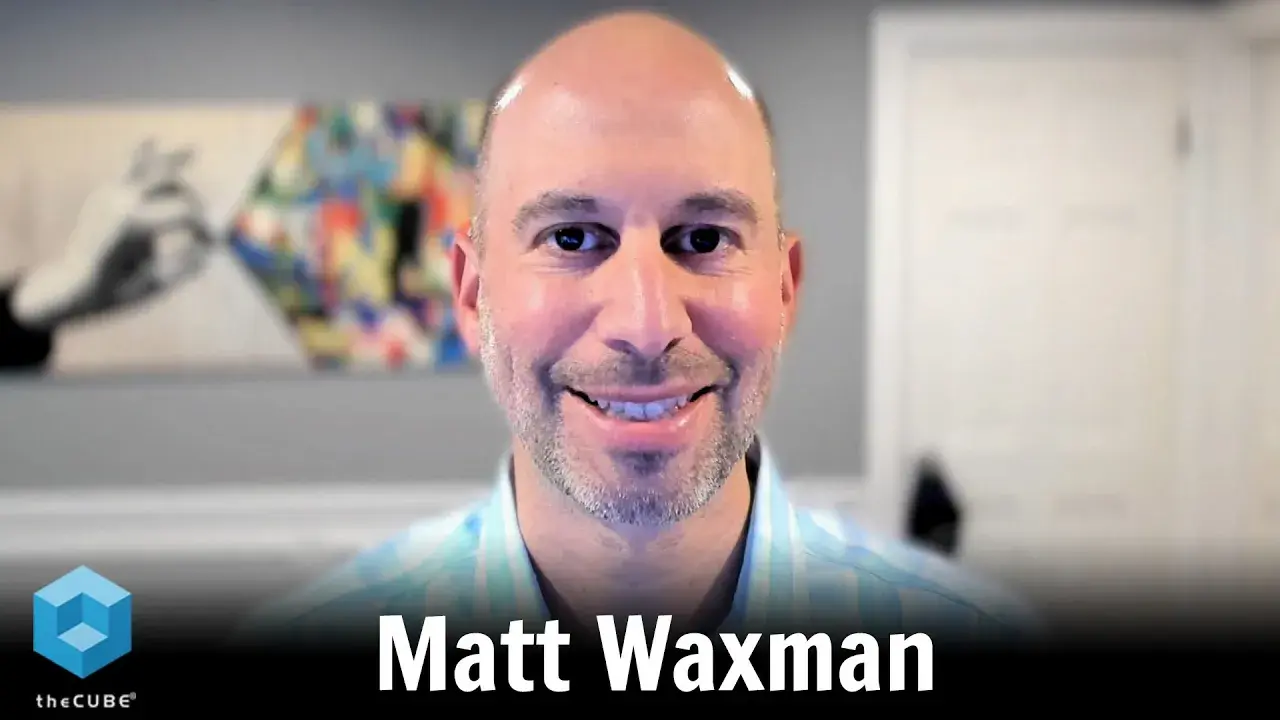
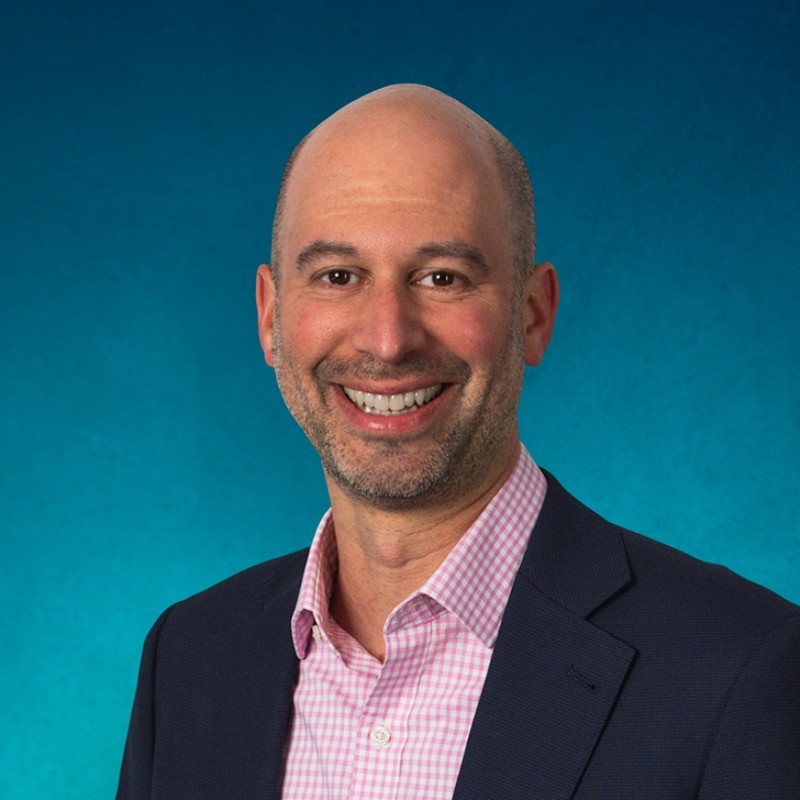
Join Christophe Bertrand, principal analyst at SiliconANGLE and theCUBE Research, as they host a compelling conversation with Matt Waxman, vice president of product management at Arctera, during the Data Protection and Artificial Intelligence Summit. This insightful discussion delves into the evolving landscape of AI infrastructure and data management, highlighting Arctera's role in navigating these complex challenges.
In this engaging dialogue, Matt Waxman shares their expertise on data protection, compliance, and resilience practices at Arctera, a dynamic data management company. Waxman and Bertrand explore the balance between leveraging AI as a transformative force and addressing the fears and challenges associated with this rapidly advancing technology. theCUBE Research provides a platform for in-depth analysis, guided by experts such as Waxman who are at the forefront of industry innovation.
Key takeaways from the discussion focus on Arctera's comprehensive approach to data compliance, resilience, and protection, which are crucial for safeguarding mission-critical applications against cyber threats. According to Waxman, AI's dual role as a tool and a challenge necessitates a layered approach to data security, ensuring swift recovery capabilities and proactive anomaly detection. Additionally, the dialogue touches on Arctera's future strategies, emphasizing AI as a key feature in enhancing data management solutions.
Forgot Password
Almost there!
We just sent you a verification email. Please verify your account to gain access to
Data Protection & AI Summit. If you don’t think you received an email check your
spam folder.
In order to sign in, enter the email address you used to registered for the event. Once completed, you will receive an email with a verification link. Open this link to automatically sign into the site.
Register For Data Protection & AI Summit
Please fill out the information below. You will recieve an email with a verification link confirming your registration. Click the link to automatically sign into the site.
You’re almost there!
We just sent you a verification email. Please click the verification button in the email. Once your email address is verified, you will have full access to all event content for Data Protection & AI Summit.
I want my badge and interests to be visible to all attendees.
Checking this box will display your presense on the attendees list, view your profile and allow other attendees to contact you via 1-1 chat. Read the Privacy Policy. At any time, you can choose to disable this preference.
Select your Interests!
add
Upload your photo
Uploading..
OR
Connect via Twitter
Connect via Linkedin
EDIT PASSWORD
Share
Forgot Password
Almost there!
We just sent you a verification email. Please verify your account to gain access to
Data Protection & AI Summit. If you don’t think you received an email check your
spam folder.
In order to sign in, enter the email address you used to registered for the event. Once completed, you will receive an email with a verification link. Open this link to automatically sign into the site.
Sign in to gain access to Data Protection & AI Summit
Please sign in with LinkedIn to continue to Data Protection & AI Summit. Signing in with LinkedIn ensures a professional environment.
Are you sure you want to remove access rights for this user?
Details
Manage Access
email address
Community Invitation
Matt Waxman, Arctera
Join Christophe Bertrand, principal analyst at SiliconANGLE and theCUBE Research, as they host a compelling conversation with Matt Waxman, vice president of product management at Arctera, during the Data Protection and Artificial Intelligence Summit. This insightful discussion delves into the evolving landscape of AI infrastructure and data management, highlighting Arctera's role in navigating these complex challenges.
In this engaging dialogue, Matt Waxman shares their expertise on data protection, compliance, and resilience practices at Arctera, a dynamic data management company. Waxman and Bertrand explore the balance between leveraging AI as a transformative force and addressing the fears and challenges associated with this rapidly advancing technology. theCUBE Research provides a platform for in-depth analysis, guided by experts such as Waxman who are at the forefront of industry innovation.
Key takeaways from the discussion focus on Arctera's comprehensive approach to data compliance, resilience, and protection, which are crucial for safeguarding mission-critical applications against cyber threats. According to Waxman, AI's dual role as a tool and a challenge necessitates a layered approach to data security, ensuring swift recovery capabilities and proactive anomaly detection. Additionally, the dialogue touches on Arctera's future strategies, emphasizing AI as a key feature in enhancing data management solutions.
In this interview from the Data Protection + AI Summit, Matt Waxman, chief product officer at Arctera, joins theCUBE Research’s Christophe Bertrand to unpack why securing data in the AI era demands a multi-layered approach. Waxman explains how Arctera, launched six months ago on modernized Veritas foundations, anchors its portfolio on three pillars – data compliance, data resilience and data protection – to shield mission-critical workloads including emerging AI systems.
The conversation dives into layered cyber resiliency, early anomaly detection thr...Read more
exploreKeep Exploring
What is Arctera and what has its journey been like since its inception?add
What are the three offerings that are currently being taken to market?add
What are the key components of an effective cyber resilience plan?add
What are the key considerations for protecting data and ensuring compliance in the use of AI for product development?add
What considerations should be taken into account when integrating AI into products?add
>> Hello everyone, and welcome back to the Data Protection and AI Summit. My name is Christophe Bertrand. I'm a principal analyst here at theCUBE Research. I'm joined today by Matt Waxman with the Chief Product Officer on Arctera. Matt, welcome.
Matt Waxman
>> Hey, Christophe, good to see you again. Thanks for having me.
Christophe Bertrand
>> It's a pleasure to have you. A few months ago we had a conversation about Arctera and some changes actually. Well, it's kind of a new company, but not really a new company. So can you tell us more about what you do and about Arctera?
Matt Waxman
>> Yeah, I'd love to. Well, it has been six months since Arctera has come into existence, and it has been a whirlwind. It's been a fantastic journey with our customers during that time. A quick recap, who we are. Arctera is a data management company. We focus on protecting the most mission-critical data in the world, providing resilience for that, and also ensuring compliance. And I know we'll talk about this some more today, but there is quite the confluence of activity around those three areas these days. So it's an exciting time to be at Arctera.
Christophe Bertrand
>> Yes. And really when you think about all of the type of challenges that customers are facing, well, obviously we're in the era of AI, you focus on a lot of infrastructure related topics around data protection, compliance, governance. I'd love to get your take on what you're seeing in the market in terms of these challenges that customers are expressing to you and maybe some examples of what you do to help them in this changing world where AI is a friend, a foe, and an objective.
Matt Waxman
>> Yeah, it is such an amazing topic. I think we live in such interesting times. The confluence of both the excitement of the opportunity around AI and also a lot of fear that's out there around it. So I kind of view it as today we're right in the middle of a tornado of all the activities that are going on. You have things like people embracing agentic AI, and at the same time companies being very concerned about what information is shared into public LLMs or into even other models that are leveraged inside of products and technology. And then the other side of the coin is vendors like ourselves get to leverage AI as another capability to really improve productivity for our customers and make it easier to consume these solutions. So it's a pretty exciting time, but it's very dynamic. There's a lot moving literally every day, every week, it's changing.
Christophe Bertrand
>> So Matt, let's talk about Arctera's portfolio as we think about AI as both a friend and a foe in many ways. So bring us up to speed on the portfolio and then I want to double-click on mapping to how you really help with this nascent AI infrastructure. What about the portfolio? I believe you have three offerings that you are really at this point taking to market.
Matt Waxman
>> Correct. Correct. We strongly believe in the rule of three, so you'll hear us talk about things always in that pattern. But our technology is built on legendary platforms that many will know from Veritas in the years past. But we've been on a journey to modernize those platforms. And so they're now all very much suited towards cloud, cloud-native infrastructure, AI, cyber resilience, all those sorts of use cases. So the three offerings and solutions that we have are focused on data compliance. So think about how do you ensure that your data is being upheld to the highest standards in terms of regulatory requirements? How can you surveil your digital communications that are going on within your organization or even outside your organization? The second part of our portfolio is around data resilience. So this is how do you ensure those mission-critical applications, by the way, including AI, are highly available despite the ongoing threat of cyber and other things that are going on. And then the third is around data protection, ensuring that you can recover your data when you need to, when things go bump in the night, as we like to say. So those are the three favorite children, if you will, in the Arctera portfolio.
Christophe Bertrand
>> Yes. And actually it's a great fit for protecting AI infrastructure in many ways because you come at it from multiple angles. So maybe we can double-click in a couple of areas. I mean, I heard you mention providing essentially an available environment, protected environment. So if I look at AI as a foe, AI as an enemy, and I like to think about AI that way, it's both, again, a foe and a friend, but also an outcome. Now, what are you doing for cyber resiliency? Can you break that down for us at a high level? And specifically as we know cyber attackers are now AI powered. So how do you approach cyber resiliency? And if you have some examples of how you've helped some customers, that'd be great.
Matt Waxman
>> Yeah. Well look, I think anything in the cyber space you have to think of as a layered approach. This is the tried and true approach to cyber defense for years now. You think about a cyber resilience plan, you got to think about how you're going to ensure that your data is available when you need it. But then you're layering protection on top of that, integration with your application integration, with your endpoints integration into your security operation, so on and so forth. So we really focus on ensuring that customers, when the bad things happen, can recover as quickly as possible, but also play into the space of helping to better detect anomalous activity. So for example, if you look at something like data compliance, we actually understand through our ability to discover the data in a customer's environment, classify it, look at usage patterns, that can become early warning, early detection signals to actually help you better prepare yourself for a potential attack. So we play in multiple ends of the spectrum here, but it's very much a layered approach. And the last thing I'd say there is that we ultimately believe that there are going to be multiple ways to recover your data. You need to, it's sort of the belt and suspenders, if you will, approach. The fastest way to be able to recover your infrastructure if you're attacked with ransomware or an exfiltration or those types of things is recovering based on primary infrastructure because it's the highest performant infrastructure you've got. So that's where our data resilience solution comes into play. The suspenders is having your backups in place because you need those as well. So we've got that covered in the portfolio too.
Christophe Bertrand
>> Right. And in the context of AI, we talked about protecting AI infrastructure. Well, it's kind of like any other workload in many ways. You have to protect the various components and certainly you have those elements in place to do that. And the other aspect that was interesting is you talked about compliance, obviously there's a big compliance and governance angle to being able to leverage data for AI, of course, there has to be secure, of course it has to be uncompromised, but it also has to be compliant. So there are lots of dimensions here that I think are at play that you can help with. But I'm also curious about the other side of the coin. How do you leverage AI in your products? You're chief product officer, so that's probably a hot topic these days. So how do you leverage, I would say, ML and AI in your current offerings? And candidly, what do you see moving forward? Without divulging any secrets here for your roadmap, where do you see the products evolving? Is AI becoming key to your feature set?
Matt Waxman
>> So it's a big question. We do, you're right, spend a lot of time talking about this and working on projects and delivering some pretty cool capabilities as well in this space. And the thing that we think about is that it's easy to fall into the hype of AI whitewashing, just apply AI everywhere. And I think a way to think about it in this context of how do you use it in your products is it's effectively another library. We use various libraries in our products when you build platforms. Search is a great example of this. People aren't necessarily building homegrown search. They're picking up a library that they can use for that. So there are great AI libraries now, thought about it in that context. So the end goal is not just to provide AI for the sake of AI, it's to solve a customer's problem in a faster, simpler, quicker way. And so that's the way we've been approaching it. And if you take the example of data compliance, as you mentioned, one of the big challenges there is you are bombarded with an enormous amount of data. So if you think about collecting every bit of communications data inside an enterprise, you have emails, you have Teams messages, Slack messages, you have zoom transcripts, you have on and on and on and on. If you're trying to find the breadcrumbs that take you through a potential compliance issue in there, the state of the art used to be that you would spend a lot of time reading through those things. AI now becomes a great tool to be able to accelerate that. So that's the way that we've approached it. We've embedded AI into our products to do things like that. So it's search and then there's sort of the super search of help me find the needle in the haystack. And that's where we're leveraging AI, amongst many other use cases as well.
Christophe Bertrand
>> And I can see also the benefit of some AI processes around automation or supporting decision making, of course support, knowledge bulletins, et cetera. So if you think about AI as your friend, in this case, a library or set of libraries to help make individuals more efficient operationally, how do you think it's going to evolve with agentic AI? Do you see a time when you will be leveraging agents in your architecture and to what extent can you guarantee that they are going to do what you want them to do? Because it's a big liability potentially if something, an agent makes a decision for you, especially in the context of data protection.
Matt Waxman
>> Right. Yeah. Well, I'll relay the conversations that we're having with customers around this topic. There's going to be a journey, again, back to my pattern of three, I'll say a three-stage journey to agentic AI. The first is effectively what we see today mostly, which is assistance. Helping people get stuff done in an easier way, accelerating their work, so forth. The next phase will be really automating, but with a human in the loop. Because to your point, you're not going to trust the systems yet to run fully autonomously. Certainly in some industries like financial services, they're not going to do that for quite a while. And then ultimately the third phase is you get to effectively, your agents have become your mission-critical application itself. And so when you think about that journey and that phase, when you get to the point that your agent is the application, you start to think about how do you provide resilience and protection and compliance for the agent itself just like you would for any traditional database as we think about it today. And so that'll take some time to come to fruition, but as customers are starting to embark on this journey, these are the types of conversations that we're having is you want to ensure that you're building in such a way that you can always provide that level of those three things across your agentic journey.
Christophe Bertrand
>> Right. So that's very interesting because one of, if you think about the stages that people are going through now, we're still, I think in the era of trying to get the infrastructure right. Getting everything protected, that's what you do every day, making sure the workloads are protected, that the data is protected, recoverable, available, because there's actually no AI as an outcome for the business without the data, which is really central to everything. So you cover that. You cover the compliance piece because you cannot really use just any data for AI. You have to make sure the data is actually compliant. That's a hot topic these days in governance. So this is another area where you come in. But what I'm hearing you say, which is very exciting, is as you use AI in your own solution, again to optimize processes, workflows, make things more operationally efficient, you're already thinking about protecting the agent framework itself and also putting some sort of guardrails around the use of agents and AI in your own product so that it does not in turn become a problem for the user. Which I think that the thinking being so ahead is absolutely key. So I'm very, very excited about that. Because yeah, you need to trust the data. I think you definitely are doing a lot of work on this topic, which is where we are now. But at some point you're going to have to trust the AI and it feels like you're really trying to do that as a design point in your solution. So look, we've covered a lot of ground. I know that some of this is a bit forward-looking. But if you're not thinking about these things now as an end user, you're going to make things go funny, you're going to have problems.
Matt Waxman
>> Right. Well, and I think this is part of what we see a lot of, including our own organization just to be vulnerable here, is that what I would call shadow AI. That the reality is that most employees in an organization, or at least some depending on what type of organization are using some form of AI, they may be using personal accounts outside the walls of IT. And so how do you start to govern that information? Because how do you know there isn't sensitive information that's actually leaving the confines of your IP and your firewall and the rest of that environment? That's very much a compliance and governance challenge that exists.
Christophe Bertrand
>> Absolutely. I've mentioned it multiple times, it's really this sort of perfect storm. You have obviously cyber risk, cyber attackers, AI-powered cyber attackers now affecting a lot of processes and of course the data, the business itself. You have governance issues and compliance issues because of these attacks, but also initiatives around building AI infrastructure, which itself needs to be protected and needs to be compliant. So it's almost a perfect loop here. And it's great to see that you're thinking about all of these components in your offering. So if I were to ask you to think about our viewers, they're starting to invest in AI. They are asking themselves, how do I really protect my infrastructure? How do I leverage AI the best in my data protection tools? What advice would you have for them? Is there a secret trick here that maybe you can share with us?
Matt Waxman
>> One of the things that I've been observing in a lot of these conversations that I've been in is that we have built IT around the notion that software is deterministic. And so when you evaluate a vendor as an example, you're running it through your security scans and your checklists and so on and so forth that are all very important to do. But it's sort of built around the notion that that is static, that the software that you're acquiring is going to be the same software at least for quite a long period of time. That's not the case with AI. So what you bring in terms of a model is self-learning and it's going to adjust over time. And so what you assessed on day one could be very different than day 10 even in there. So one of the things I think to think about is think about AI, this isn't AI taking over the world, but think about AI as if it were a human. In the sense of we all have employees in our companies that go through a process of vetting and interviewing and so forth when it comes to things like compliance and so forth. How could you treat the AI engines in a similar way? How can you interview them to sense their behavior of where they're going to go and not just rely on a checklist approach that happens one time at the point of purchase? And so I think that's going to change the dynamics quite a bit. And I think every organization out there needs to start thinking about that because I think the old ways of doing it are quickly going to become ineffective for evaluating just the speed and the way it's so dynamic with AI.
Christophe Bertrand
>> Right. And actually it's a very interesting topic because I'm thinking about the fact that essentially the technology you have in many ways is a way to go back in time, go back in time before an attack, which is where we are now. But now you think about all of these models that are going to need training, all of these agents that are going to be making decisions, you're going to have to audit all of that and keep a trail of it. You're going to have to be able to rebuild the environment should anything come up. And we haven't even discussed any prompt injections that you could end up being exposed to. So how do you rebuild your AI environment or rebuild the model before it was potentially altered in a way that is not acceptable or maybe just discard a model that has evolved in a way that you don't like and go back to something else? Well, all of this is essentially very much what you are already doing. It's just the context is shifting, and you're right, it's shifting at very high speeds.
Matt Waxman
>> Yeah. I think an example of that, you said before, maybe I won't share roadmap, but I'll give a sense of some of the things that we're working on, is we're working on taking our platform and extending it in such a way that you could think of it filtering, intercepting the traffic that's going to, pick your favorite public LLM that's out there. And when you think about that concept of filtering between a prompt and what actually hits the model, you can start augmenting it with all of this, classify the information, the data that's going in, understand or potentially block a certain information that's going in or even coming out of the model. So that's the direction we're headed in. And it has very broad applicability because again, it's not any one vertical in the industry. Everyone is going to embrace and is embracing AI these days.
Christophe Bertrand
>> I think this is a very interesting topic that I'd love to talk to you about more because I think it's essential. It's absolutely essential. You have to be able to be in control. The liability, the business risk, it's just amazing what could happen if you don't pay attention, you don't control the data, what's going out, what's being produced, and are also ethical considerations in the process. Well, it sounds like you're in a great space probably for a long time. It's only the beginning. There's plenty more to do. So Matt, I'd like to thank you so much for joining us. It was a great conversation and I'm sure we'll hear a lot more about Arctera in the next few months.
Matt Waxman
>> Likewise. Thanks Christophe, and thanks for the opportunity.
Christophe Bertrand
>> And to our viewers, thank you so much for joining us for this session. My name is Christophe Bertrand, principle analyst at theCUBE Research. Stay tuned.