Understanding the Intersection of Data Protection and artificial intelligence
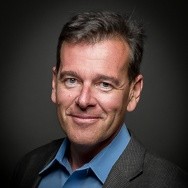
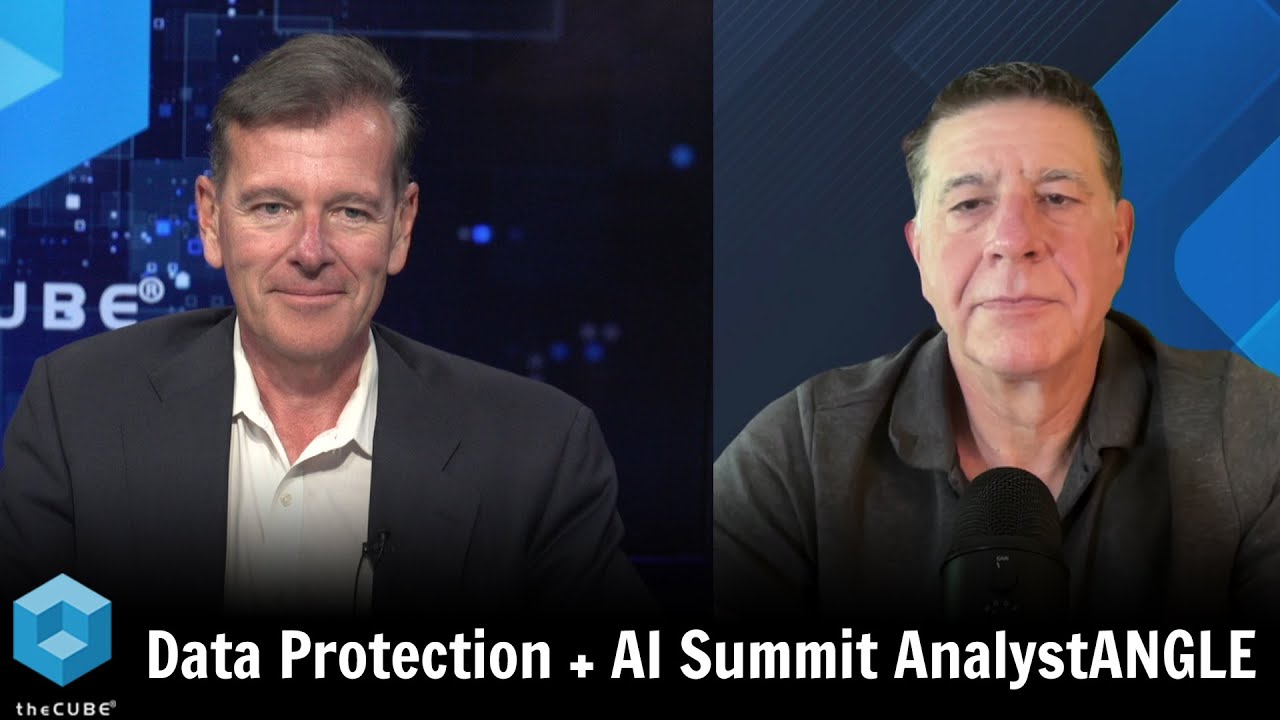
In this enlightening discussion, Kenneth Bachman, director at Dell Technologies' global technology office, delves into the intricate relationships between data protection, cyber resiliency, and artificial intelligence (AI). Rejoined by Jon Keller, chief technology officer at Technologent, these experts revisit their insightful dialogue from the DP&AI Summit, offering a nuanced exploration of how AI can both bolster and challenge cybersecurity efforts.
Bachman spearheads discussions on advancements in data protection and cyber resiliency within Dell Technologies. Alongside Keller of Technologent, this session highlights their collaborative efforts to integrate AI with cybersecurity, a thematic continuation from their previous summit focused on cyber resilience. Their conversation, hosted by theCUBE Research, spans the challenges and opportunities AI presents in safeguarding digital infrastructure.
Bachman emphasizes the pressing need for skilled labor to manage sophisticated AI environments, detailing the integration of AI with Dell's PowerProtect Data Manager through partnerships such as Technologent's AI Assistant. Keller provides a closer look at Technologent’s role as Dell’s Global Titanium Partner, illustrating their journey in offering AI-backed solutions across various business domains, emphasizing compliance and cyber resiliency.
Highlighting the urgency of robust AI deployments, Keller underscores the complexity AI brings to data protection. They discuss Technologent's strategies for navigating large-scale AI environments, advocating for proactive measures and strategic partnerships to address the evolving threat landscape. The dialogue reveals crucial insights, shaping a comprehensive perspective on incorporating AI into enterprise security strategies.
Forgot Password
Almost there!
We just sent you a verification email. Please verify your account to gain access to
Data Protection & AI Summit. If you don’t think you received an email check your
spam folder.
In order to sign in, enter the email address you used to registered for the event. Once completed, you will receive an email with a verification link. Open this link to automatically sign into the site.
Register For Data Protection & AI Summit
Please fill out the information below. You will recieve an email with a verification link confirming your registration. Click the link to automatically sign into the site.
You’re almost there!
We just sent you a verification email. Please click the verification button in the email. Once your email address is verified, you will have full access to all event content for Data Protection & AI Summit.
I want my badge and interests to be visible to all attendees.
Checking this box will display your presense on the attendees list, view your profile and allow other attendees to contact you via 1-1 chat. Read the Privacy Policy. At any time, you can choose to disable this preference.
Select your Interests!
add
Upload your photo
Uploading..
OR
Connect via Twitter
Connect via Linkedin
EDIT PASSWORD
Share
Forgot Password
Almost there!
We just sent you a verification email. Please verify your account to gain access to
Data Protection & AI Summit. If you don’t think you received an email check your
spam folder.
In order to sign in, enter the email address you used to registered for the event. Once completed, you will receive an email with a verification link. Open this link to automatically sign into the site.
Sign in to gain access to Data Protection & AI Summit
Please sign in with LinkedIn to continue to Data Protection & AI Summit. Signing in with LinkedIn ensures a professional environment.
Are you sure you want to remove access rights for this user?
Details
Manage Access
email address
Community Invitation
Kenneth Bachman, Dell & Jon Keller, Technologent
Understanding the Intersection of Data Protection and artificial intelligence
In this enlightening discussion, Kenneth Bachman, director at Dell Technologies' global technology office, delves into the intricate relationships between data protection, cyber resiliency, and artificial intelligence (AI). Rejoined by Jon Keller, chief technology officer at Technologent, these experts revisit their insightful dialogue from the DP&AI Summit, offering a nuanced exploration of how AI can both bolster and challenge cybersecurity efforts.
Bachman spearheads discussions on advancements in data protection and cyber resiliency within Dell Technologies. Alongside Keller of Technologent, this session highlights their collaborative efforts to integrate AI with cybersecurity, a thematic continuation from their previous summit focused on cyber resilience. Their conversation, hosted by theCUBE Research, spans the challenges and opportunities AI presents in safeguarding digital infrastructure.
Bachman emphasizes the pressing need for skilled labor to manage sophisticated AI environments, detailing the integration of AI with Dell's PowerProtect Data Manager through partnerships such as Technologent's AI Assistant. Keller provides a closer look at Technologent’s role as Dell’s Global Titanium Partner, illustrating their journey in offering AI-backed solutions across various business domains, emphasizing compliance and cyber resiliency.
Highlighting the urgency of robust AI deployments, Keller underscores the complexity AI brings to data protection. They discuss Technologent's strategies for navigating large-scale AI environments, advocating for proactive measures and strategic partnerships to address the evolving threat landscape. The dialogue reveals crucial insights, shaping a comprehensive perspective on incorporating AI into enterprise security strategies.
Director, Global Technology OfficeDell Technologies
search
Christophe Bertrand
>> Hello, everyone, and welcome back to the Data Protection and AI Summit. A few weeks ago, we ran another summit focused on cyber resiliency, and we had a great conversation with Jon Keller from Technologent and Kenneth Bachman from Dell Technologies, and it really inspired us to do this summit of data protection and AI. So this is what we talked about. This is the session we had a few weeks ago. Great conversation around the relationship between data protection and AI and what Dell and Technologent bring to the table for it. I'm joined today by two great speakers in this segment. There are experts in this amazing topic of cyber resiliency, and now we're going to talk about AI and combine things. AI for cyber resiliency, cyber resiliency for AI. Joining me today for this segment are two speakers. One is from Technologent, Jon Keller, and he's a chief technology officer, a Dell partner. We'll go to you in a second, Jon. And then Kenneth Bachman, who is the Global Technology Office Director for Dell Technologies. So Jon, let's start with you. You're a Dell partner, you're the CTO of Technologent. What do you do and what do you do with Dell as a partner?
Jon Keller
>> Yeah. Thanks for that, Chris. Jon Keller, as you said. I've been with Technologent for the last 12 years. For the last two years, we have been growing our generative AI practice, especially with one of our key partners, Dell. We are a Global Titanium Partner with Dell, woman-owned out of the state of California. And really what we do is we bring the business value and map that to the technology and then deploy that on behalf of our customers, consulting heavily with their teams and with great partners like Dell.
Christophe Bertrand
>> Thank you, Jon. Kenneth, what about you?
Kenneth Bachman
>> Yeah, hey. Thank you. Yeah. So I lead Dell's global technology office very specifically in the area of data protection and cyber resiliency. Been with Dell for a little over 12 years now, but have been around data protection and cyber resiliency for north of a couple decades now at this point. So I've been along that long journey of where we've come from in terms of moving from tape into the modern world, and certainly have seen all the threats, landscapes and things evolve over time.
Christophe Bertrand
>> Well, thank you, Kenneth. And, yeah. I've been in this business also for a minute or two, so we probably share a number of stories in common. But the world is changing. I mean, you just brought this up. The landscape is changing, data protection is really transforming into cyber protection. And now we have AI, AI both as a tool and also as a workload, so this is really an area of very high interest, not only for myself as an analyst, but I think for our viewers asking themselves how to leverage the technology and how to protect the investment they're making in their organizations. So just to start, I'd like to ask each of you to share your perspective on the biggest AI challenges organizations face today when it comes to cybersecurity. Let's start with you, Jon.
Jon Keller
>> Yeah. I'll start with the fact that in the last 18 to 24 months, a lot of organizations have tried to deploy generative applications. You'll see that the failure rate's pretty high in the initial wave. It's in the 80 to 90 percentile. I attribute that a lot to the complexity of deploying those AI systems for people that really haven't done that prior in their career. And then transitioning that to GRC, governance risk compliance, along with the cybersecurity challenges as well, so it's a vast new landscape with a lot of new skillsets, and that brings us to a shortage of skilled workers, right? So starting in 2018, the World Economic Forum said there's roughly 1.3 to 3.6 depending on how you combine all the technology sectors. In this case, cybersecurity, AI, and generalist IT together, a shortage of skills in the world, right? And that number has been growing in double digits CAGR every single year. So you can reflect on that, and that was before the introduction of generative AI and all the challenges that are coming along with that. By 2030, the same World Economic Forum says 90% of the workforce is going to have to retool their skillsets to be more AI, more technology, more cyber-resilience friendly. So that's a big lift, and we're not going to get there without the assistance of really good tools and automation and AI itself, right?
Christophe Bertrand
>> And it's great to hear you quote numbers. Normally, I'm the one doing that, so thank you for doing part of my job here. But I think you bring up a very good point about the interdisciplinary challenge that AI and AI implementation in general offers here because you have to be good at everything and good at AI too. So now let's turn to you, Kenneth. What do you see as the biggest challenges for AI right now?
Kenneth Bachman
>> Yeah, sure. So specifically in the area of cyber resiliency and cybersecurity, I think one of the challenges that we see is that in actually many respects, these platforms are very similar to other platforms that we deal with on an everyday basis, right? So just like every other technology platform in a customer's infrastructure, they often perform critical functions for the business, and therefore they need to be resilient, they need to be protected, et cetera. Now, while that's true, I think what's alarming is that in most cases, there aren't a lot of conversations that I've been a part of, and I meet with customers every day, where the thrust of the conversation is, "How do I protect my AI infrastructure," right? There's still a lot of conversations around cyber resiliency in the general case, but AI doesn't particularly seem to be a focus there. So that's a bit alarming to me. Now, while I said these platforms are similar, we also have to recognize they're also very different, and they're different in the sense that they're far more complex, there's far more moving parts, and that presents a unique set of challenges from a data protection and cyber resiliency point of view, which lend itself ultimately just to the high failure rate, which has been described by Jon earlier.
Christophe Bertrand
>> Right. And I will add to this that what you bring up is very key. There's also this dimension that Jon brought up of compliance because obviously can't redo AI, let's talk about gen AI for a second, without having some level of compliance in place, which means you have to do all of that work upfront and you have to be compliant then in the execution, which typically means a lot of cyber resiliency type of commitments from an operational standpoint. So the other point is, and we've heard this many times before from a number of interviews we've conducted here at theCUBE, is it's hard to figure out the ROI for AI internally. Yet we know the technology is very powerful, so if on top of that, if you can't protect it, you've got a big problem. So I'd like to now turn my attention to you, Jon, and to Technologent. You're a Dell Titanium Partner, which is a very special type of partner level. Tell me about what Technologent does, you kind of covered it at a high level, but maybe let's double-click on that a little more, and how you're helping clients in this age of AI?
Jon Keller
>> Yeah. Thanks for that. So Technologent, as I mentioned earlier, we're a full-service IT value-added integrator. We have four main technology pillars. That's the data management, cybersecurity, modern cloud, which covers all things hybrid, on-prem, off-prem, and then digital automation, which is also how we scoop up the automation and hyper-automation that comes along with AI. It is through that pillar. We try to focus heavily on the outcomes and maps of technology. We have fun doing that. It's solving puzzles. It's really what all of our engineers, architects, like to do, right? But if there isn't a business value that we're mapping to, to your point around ROI, we're not extracting exactly against the customer or the company's goals to rolling out the technology. Then we're creating expensive toys. That's how it's viewed, right? So we have to really commit to their success, commit to everybody we work with the champion and as successful as they can in their organization, and really transform their IT for the future. And AI is just another tool that allows that to happen, and when deployed properly with the governance risk compliance, with the cybersecurity guardrails, helping organizations build a center of excellence for AI, helping organizations do a governance council for AI, and really helping each line of business retool, as we mentioned earlier, to be able to take advantage of that in a way that's helpful for the business, because at the end of the day, that's when the business will invest and that's when they'll be most successful. So that's what we like to do as applied to AI, but that's every line of business, every type of technology. That's been our approach for 20-something years that we've been in existence now. And great partnership with Dell, as I mentioned earlier. Global Titanium, it's challenging to maintain, but it's really well worth it because it allows us to come in with a partner like Dell that has global recognition in their name brand and make sure that we're deploying Dell solutions in a way that help the customers, as I mentioned.
Christophe Bertrand
>> Right. And I think you brought up an interesting point earlier, which I also mentioned, the skillsets. You're really bridging that gap in an area where skillsets are sorely lacking, whether cybersecurity to begin with, architecture in general. We've seen that through multiple research efforts through the years from many sources. And of course, AI, it's brand new, and it's not just going to be data scientists that are going to deploy. It's a lot of IT folks. So a very interesting, again, time for a value-added integrator. I noted how you describe yourself. I think it's a great term. Let's talk about Dell a little bit now, and Kenneth, I'm going to turn to you here, on the Dell AI Factory. And if you could define what it is, and it's been described as a key resource for advancing AI capabilities, so can you explain what it actually is, and why is it such a game changer? What is the differentiation?
Kenneth Bachman
>> Yeah, sure. Thanks. Let's start with really framing out two key challenges which have slowed or prevent complications for customers in terms of the adoption of AI. One is answering the question of how am I going to use AI? So what business problem do I want to solve? What new technology or capability do I want to bring to market that's going to differentiate my business or service from everyone else in the marketplace? So that's one. Two is the part that a lot of people struggle with, which is the how do I actually deploy this? As we mentioned earlier, it's complex technology. There's not a whole lot of skilled labor in this area, and since the architecture's very different than things we've deployed in the past, that presents a lot of challenges for folks. So the Dell AI Factory, in its simplest context, is AI in a box. It's all the software infrastructure, everything a customer needs to very quickly and easily stand up an AI platform and to be immediately ready to go and execute. And the aim of this, and the real value here is that when we look at it in the context of those two key obstacles for customers achieving success, it really solves for the second piece of that, the how do I actually go execute and build the thing? And it allows customers to spend all of their time and energy, or at least the vast majority of it, answering the first question, which is, what business problem do I want to solve, what values that can then deliver to my business and so forth? And if they can stay focused there and allow something as simple as the AI factory coupled with services delivered by Technologent to actually go solve the technology piece of the problem for them, then they stand to be far more successful in terms of execution against these projects.
Christophe Bertrand
>> Right. So this makes a lot of sense. I get it. This is the perfect intersection. You provide AI in a box, and then Technologent will really help the customers focus on business and get the implementation done, and also keep an eye on ROI. Look, I've heard this AI in a box or in a box concept many times. So I'm going to ask you, Jon, as a partner, you've been very key in the efforts around the Dell AI Factory here. Is it really in a box? Can you tell our viewers more about your activities with the AI factory and what type of customer experiences you've actually been able to go through, what you've seen in action?
Jon Keller
>> Yeah. Thanks for that. So, yeah. Definitely the AI factory is in a box. It's literally, it tells you every U, it tells you every power consumption, it tells you everything that you need to know for placing it in a floor in a colo or a data center. And as Kenneth mentioned, it comes with the proper software from NVIDIA, from the other partners. They have a secure portal for acquiring foundational models that deploy directly into the AI factory, so it's a huge time accelerant for deploying those models. So typically, what we like to focus on is that integration, helping customers set up their MVPs or POCs or POVs, and we'll do that a lot in our own AI factory, in our own lab, with Dell Technologies. But if the customers want that, they have to, at the end of the day, procure something, and ideally, it'd be AI factory and they're up and running because it, again, can be there shipped, delivered, working within days of being on-prem. And then it's a matter of going back to the GRC, the governance, risk compliance, and cybersecurity as well, that's all part of the integration. Dell has the blueprints for all of that surrounding their infrastructure and how the AI deploys, so we really like that accelerant. On top of that, when that AI Factory is then delivered, we partner with Dell and help solve that problem of how do I protect this now brand new workload that is very complex to people outside of that platform engineer and data science realm? And a lot of times, those engineers don't have the hands-on skills to do data protection. That's not something that they focused on in their career. So we partnered with Dell on transitioning and building a AI assistant for their Dell PowerProtect Data Manager Platform. So the Data Manager Platform now has an AI assistant that can be deployed on top of it using their well-formed rest APIs, their data availability, and their automations to deliver full protection and cyber resilience and make it safe and audible for the platform itself.
Christophe Bertrand
>> You said something very interesting here, the AI assistant. I'd like to double click on that, and actually, Kenneth, ask you, what is it exactly? Can you tell me more about the assistant? And more importantly, can you break it down for us? How does it help organizations in securing their systems and their AI factory?
Kenneth Bachman
>> Yeah. Thank you. So really, the aim of the AI assistant and our partnership with Technologent around it was to bring data protection to AI, right? It's fairly common in the marketplace today for vendors in the marketplace to build AI capabilities into their data protection platform. That certainly yields certain operational efficiencies and benefits, makes it easier to find support documentation answers to questions, and solve problems and so forth. The real challenge that customers face, however, is how do I actually protect an AI platform? It isn't straightforward and easy. As I mentioned earlier, there are a lot of moving parts in these architectures from the data that sits in front of it, to the models, and the platform itself, to the inquiries and responses and things that may be relevant from a regulatory nature over time. So what was critical really is sorting out how do I actually make data protection and cyber resiliency accessible for every AI platform, so building integration with our PowerTech Data Manager Platform with the Dell AI Factory? And then the AI assistant enables the AI operator or admin to perform all the functions that they need in an automated fashion in a way that they're very much accustomed to with the platform itself, simply asking, "Is my AI factory protected?" And then getting an answer that, "Yes, it is," or, "No, it isn't."
When was my last successful protection copy of my platform? What can I restore? There's any number of different activities that that AI operator can perform and literally do so in the context that they are very much accustomed to operating in every single day. So that was the real goal and mission here, was making it easy, making it accessible, and then literally integrating it as a core part of the AI architecture itself.
Christophe Bertrand
>> Right. So I'm going to double-click on what you just said here because it might help our viewers understand, okay, how big is an AI environment? What am I dealing with? How many moving parts are there? You said it's complex. I think it's early stages in terms of AI anyway, so what are we talking about? How much data, how many systems, subsystems, databases? I mean, what have you seen? I'll start with you, Kenneth, and then, Jon, I'll ask you for your perspective. Put this in context for us, please.
Kenneth Bachman
>> Yes. These systems can certainly be small, right? So some of our customers are starting with projects or experiments, if you will, and in those circumstances, they can be quite small. But at full-scale implementation, these things can have data in front of these platforms that are petabytes or exabytes in size, which is obviously challenging. The platforms themselves can scale out to many, hundreds, thousands of nodes in these systems. And obviously, at that scale, then you're talking literally data center scale at this point, then that's a lot of complexity to manage in terms of all the various different parts. Jon can certainly speak to all of the interworkings of the platform itself and all of the different databases and components that come together, but in a nutshell, like I said, there's definitely a lot to these systems, and one of my great concerns in the end here is how do you keep that safe and auditable at the end of the day?
Christophe Bertrand
>> So Jon, what's your take? What have you seen in terms of customer deployments? I mean, small, I get. Everybody's doing a POC, they're trying out AI, that's great, but everything's fun and games until you add at scale to the sentence. So what's been your experience, and what have you done to help them?
Jon Keller
>> Yeah, great question. So as you mentioned, it does usually start small. It's experiment phase, and the ones that have succeeded and the ones that we worked with, they immediately get big. And the reason why they get big is because you have to add in the logging, the auditing. These things create their own logs as well. They create prompt chains that you want to be able to save and audit in the future. You're going to mix in things like graph databases and vector databases and streaming sources of data that may not originally been in scope in the project. So as Kenneth mentioned, and he's spot on, they just continue to create challenges on the sprawl of the data and how interconnected it can be. And that's why you actually need something that simplifies the ability to protect everything and make sure that when it comes back, when you have a compliance audit that you have to satisfy, that you have everything in place. And then maybe you have a cyber event that affects your overall organization, you're going to want to look at air gap solutions. And if this becomes an integral part of your production, just like any app, you want to make sure it's back up and running with a good RPO and good RTO as well. So there's probably no limit on the upper ends of the scale on how the data can grow. It's how we intelligently back everything up, protect it, make sure it's auditable, and make it seamless for those individuals that are rolling these applications out. If we make it hard, it's probably going to bite a lot of businesses in not a great way, so we want to make sure that we integrate it in a very intuitive way using natural language processing, understanding, and then make the tools match what they're used to.
Christophe Bertrand
>> Right. It's in many ways, you're going to need AI to protect AI, so we kind of touched upon that, so AI for AI. I think one of the things that's very obvious to me is AI as a workload, and we're going to call it a workload because it's maybe easier to understand, is actually a big deal. It's clearly a skillset challenge. It is a lot of data. It is also a lot of value, value for the business, but more importantly, it's also value for the people who may want to attack you. So you've just actually, by implementing AI, potentially added to your exposure. That surface has expanded. So I just want to point that out. It's all coming together unfortunately as a perfect storm. So for all of you watching this, I think having all the tools in place with a lot of seamless deployment capabilities is going to be critical. Having access to skillsets is going to be even more critical given that AI is not going away and cyber attackers are not going away either. And by the way, compliance is not going away either, so you've got that perfect storm. So I'd like to turn back to both of you, and maybe we'll start with you, Kenneth. What advice would you have? What sort of closing words would you have for our viewers as they think about embarking on AI projects and protecting those environments? So last few words from you?
Kenneth Bachman
>> Yeah. Well, I think the obvious answer here is focus on the right priorities and allow the technologists to do the things that technologists do. So if it's approachable for a business, then I would certainly encourage everyone to look at an AI factory as a great starting point, because as we discussed earlier, it gets you off the ground and running within days and solves the technology piece of the problem, and it allows the business to stay squarely focused on one of the other really complicated problems, which is what problem do I need to solve? Because there's so many companies that focus on just the wrong problems. It just seems like something cool to do, but they don't really know what problem to solve and what problems are going to produce the most value for the business. And that kind of gets lost because they spend an inordinate amount of time focused on standing up a technology stack and trying to put all the pieces of Humpty Dumpty together to actually make the thing work, right? So to the extent that you can avoid that technology complication and hit the easy button, then I would certainly recommend that. I'd also recommend that there's a focus early on in terms of data protection and cyber resiliency. As you aptly pointed out, this is a great opportunity for the bad guys to attack a platform. We mentioned the complexity of the architecture of the platform multiple times here. That means there are multiple different attack vectors around the platform. It can be as simple as poisoning the data on the front end of a model, which ultimately makes the outcome of the AI itself something which is unusable or unpredictable or non-compliant. It's super easy to inadvertently feed private data or things into a model inadvertently, which then exposes you to compliance and resiliency concerns. So there's any number of different challenges here that I think customers need to have focus early on around data protection and cyber resiliency, rather than standing up a platform, getting it running, and then circling back later, and only then considering what the implications of that are in terms of cyber resiliency. So lastly, again, I would really focus on the safe and audibility of the platform, putting the right tools in the right people's hands, right? It's a real challenge for someone whose primary skillset is building an AI platform to then go learn data protection technology, so learning how do I construct a data protection policy? How do I define all the workflows and things? That's a whole entirely different skillset unto itself. So I would encourage customers to look at something like the AI assistant that Technologent has built with us because that really stitches things together and brings data protection directly to the AI platform.
Christophe Bertrand
>> Thank you. And Jon, what is your advice? What are your sort of last few words here?
Jon Keller
>> Yeah. And we do a lot of scaring of our potential end clients by talking about how complex and how hard things can be. My advice is actually go for it. My advice is focus on these things that are going to bring your business to the future. We're only going to improve things like adding predictive analytics to stay ahead of these emerging threats and enabling real-time auditing and real-time security monitoring. With that integration with the AI assistant and all the hard work that Dell's done with their AI factory and all their solutions that surround it, and really the data protection platform that they provide and the platform for the AI assistant, we're able to create that smooth pathway or that smooth road for them to move forward. Ask for help. There's a lot of great help in the ecosystem. And then we're going to automate a lot of functions that may have been difficult and hard in the past and give you access through natural language understanding, natural language processing. You can speak to it just like you would the Starship Enterprise in science fiction, and it's going to do actions for you on your behalf. As long as that's part of your role-based access control and your organization says that's part of your governance that you're allowed to do, it will be able to do it for you. So bridging that skill gap's going to be a combination of education and rolling out platforms like this to move into the future. So once again, it's AI for your AI and it's AI for your organization to move forward. And so happy to entertain this some more. It's been a pleasure talking to you today as well.
Christophe Bertrand
>> Well, thank you very much to both of you, and bringing Star Trek into the conversation, that's very smooth. That's really good. So thank you, gentlemen, for joining us today.
Kenneth Bachman
>> Yeah. Thank you much. Appreciate it.
Christophe Bertrand
>> Well, this was a great conversation. I love what we discussed a few weeks ago, but there's more in the Data Protection and AI Summit, so stay tuned.
>> Hello, everyone, and welcome back to the Data Protection and AI Summit. A few weeks ago, we ran another summit focused on cyber resiliency, and we had a great conversation with Jon Keller from Technologent and Kenneth Bachman from Dell Technologies, and it really inspired us to do this summit of data protection and AI. So this is what we talked about. This is the session we had a few weeks ago. Great conversation around the relationship between data protection and AI and what Dell and Technologent bring to the table for it. I'm joined today by two great speakers in this segment. There are experts in this amazing topic of cyber resiliency, and now we're going to talk about AI and combine things. AI for cyber resiliency, cyber resiliency for AI. Joining me today for this segment are two speakers. One is from Technologent, Jon Keller, and he's a chief technology officer, a Dell partner. We'll go to you in a second, Jon. And then Kenneth Bachman, who is the Global Technology Office Director for Dell Technologies. So Jon, let's start with you. You're a Dell partner, you're the CTO of Technologent. What do you do and what do you do with Dell as a partner?
Jon Keller
>> Yeah. Thanks for that, Chris. Jon Keller, as you said. I've been with Technologent for the last 12 years. For the last two years, we have been growing our generative AI practice, especially with one of our key partners, Dell. We are a Global Titanium Partner with Dell, woman-owned out of the state of California. And really what we do is we bring the business value and map that to the technology and then deploy that on behalf of our customers, consulting heavily with their teams and with great partners like Dell.
Christophe Bertrand
>> Thank you, Jon. Kenneth, what about you?
Kenneth Bachman
>> Yeah, hey. Thank you. Yeah. So I lead Dell's global technology office very specifically in the area of data protection and cyber resiliency. Been with Dell for a little over 12 years now, but have been around data protection and cyber resiliency for north of a couple decades now at this point. So I've been along that long journey of where we've come from in terms of moving from tape into the modern world, and certainly have seen all the threats, landscapes and things evolve over time.
Christophe Bertrand
>> Well, thank you, Kenneth. And, yeah. I've been in this business also for a minute or two, so we probably share a number of stories in common. But the world is changing. I mean, you just brought this up. The landscape is changing, data protection is really transforming into cyber protection. And now we have AI, AI both as a tool and also as a workload, so this is really an area of very high interest, not only for myself as an analyst, but I think for our viewers asking themselves how to leverage the technology and how to protect the investment they're making in their organizations. So just to start, I'd like to ask each of you to share your perspective on the biggest AI challenges organizations face today when it comes to cybersecurity. Let's start with you, Jon.
Jon Keller
>> Yeah. I'll start with the fact that in the last 18 to 24 months, a lot of organizations have tried to deploy generative applications. You'll see that the failure rate's pretty high in the initial wave. It's in the 80 to 90 percentile. I attribute that a lot to the complexity of deploying those AI systems for people that really haven't done that prior in their career. And then transitioning that to GRC, governance risk compliance, along with the cybersecurity challenges as well, so it's a vast new landscape with a lot of new skillsets, and that brings us to a shortage of skilled workers, right? So starting in 2018, the World Economic Forum said there's roughly 1.3 to 3.6 depending on how you combine all the technology sectors. In this case, cybersecurity, AI, and generalist IT together, a shortage of skills in the world, right? And that number has been growing in double digits CAGR every single year. So you can reflect on that, and that was before the introduction of generative AI and all the challenges that are coming along with that. By 2030, the same World Economic Forum says 90% of the workforce is going to have to retool their skillsets to be more AI, more technology, more cyber-resilience friendly. So that's a big lift, and we're not going to get there without the assistance of really good tools and automation and AI itself, right?
Christophe Bertrand
>> And it's great to hear you quote numbers. Normally, I'm the one doing that, so thank you for doing part of my job here. But I think you bring up a very good point about the interdisciplinary challenge that AI and AI implementation in general offers here because you have to be good at everything and good at AI too. So now let's turn to you, Kenneth. What do you see as the biggest challenges for AI right now?
Kenneth Bachman
>> Yeah, sure. So specifically in the area of cyber resiliency and cybersecurity, I think one of the challenges that we see is that in actually many respects, these platforms are very similar to other platforms that we deal with on an everyday basis, right? So just like every other technology platform in a customer's infrastructure, they often perform critical functions for the business, and therefore they need to be resilient, they need to be protected, et cetera. Now, while that's true, I think what's alarming is that in most cases, there aren't a lot of conversations that I've been a part of, and I meet with customers every day, where the thrust of the conversation is, "How do I protect my AI infrastructure," right? There's still a lot of conversations around cyber resiliency in the general case, but AI doesn't particularly seem to be a focus there. So that's a bit alarming to me. Now, while I said these platforms are similar, we also have to recognize they're also very different, and they're different in the sense that they're far more complex, there's far more moving parts, and that presents a unique set of challenges from a data protection and cyber resiliency point of view, which lend itself ultimately just to the high failure rate, which has been described by Jon earlier.
Christophe Bertrand
>> Right. And I will add to this that what you bring up is very key. There's also this dimension that Jon brought up of compliance because obviously can't redo AI, let's talk about gen AI for a second, without having some level of compliance in place, which means you have to do all of that work upfront and you have to be compliant then in the execution, which typically means a lot of cyber resiliency type of commitments from an operational standpoint. So the other point is, and we've heard this many times before from a number of interviews we've conducted here at theCUBE, is it's hard to figure out the ROI for AI internally. Yet we know the technology is very powerful, so if on top of that, if you can't protect it, you've got a big problem. So I'd like to now turn my attention to you, Jon, and to Technologent. You're a Dell Titanium Partner, which is a very special type of partner level. Tell me about what Technologent does, you kind of covered it at a high level, but maybe let's double-click on that a little more, and how you're helping clients in this age of AI?
Jon Keller
>> Yeah. Thanks for that. So Technologent, as I mentioned earlier, we're a full-service IT value-added integrator. We have four main technology pillars. That's the data management, cybersecurity, modern cloud, which covers all things hybrid, on-prem, off-prem, and then digital automation, which is also how we scoop up the automation and hyper-automation that comes along with AI. It is through that pillar. We try to focus heavily on the outcomes and maps of technology. We have fun doing that. It's solving puzzles. It's really what all of our engineers, architects, like to do, right? But if there isn't a business value that we're mapping to, to your point around ROI, we're not extracting exactly against the customer or the company's goals to rolling out the technology. Then we're creating expensive toys. That's how it's viewed, right? So we have to really commit to their success, commit to everybody we work with the champion and as successful as they can in their organization, and really transform their IT for the future. And AI is just another tool that allows that to happen, and when deployed properly with the governance risk compliance, with the cybersecurity guardrails, helping organizations build a center of excellence for AI, helping organizations do a governance council for AI, and really helping each line of business retool, as we mentioned earlier, to be able to take advantage of that in a way that's helpful for the business, because at the end of the day, that's when the business will invest and that's when they'll be most successful. So that's what we like to do as applied to AI, but that's every line of business, every type of technology. That's been our approach for 20-something years that we've been in existence now. And great partnership with Dell, as I mentioned earlier. Global Titanium, it's challenging to maintain, but it's really well worth it because it allows us to come in with a partner like Dell that has global recognition in their name brand and make sure that we're deploying Dell solutions in a way that help the customers, as I mentioned.
Christophe Bertrand
>> Right. And I think you brought up an interesting point earlier, which I also mentioned, the skillsets. You're really bridging that gap in an area where skillsets are sorely lacking, whether cybersecurity to begin with, architecture in general. We've seen that through multiple research efforts through the years from many sources. And of course, AI, it's brand new, and it's not just going to be data scientists that are going to deploy. It's a lot of IT folks. So a very interesting, again, time for a value-added integrator. I noted how you describe yourself. I think it's a great term. Let's talk about Dell a little bit now, and Kenneth, I'm going to turn to you here, on the Dell AI Factory. And if you could define what it is, and it's been described as a key resource for advancing AI capabilities, so can you explain what it actually is, and why is it such a game changer? What is the differentiation?
Kenneth Bachman
>> Yeah, sure. Thanks. Let's start with really framing out two key challenges which have slowed or prevent complications for customers in terms of the adoption of AI. One is answering the question of how am I going to use AI? So what business problem do I want to solve? What new technology or capability do I want to bring to market that's going to differentiate my business or service from everyone else in the marketplace? So that's one. Two is the part that a lot of people struggle with, which is the how do I actually deploy this? As we mentioned earlier, it's complex technology. There's not a whole lot of skilled labor in this area, and since the architecture's very different than things we've deployed in the past, that presents a lot of challenges for folks. So the Dell AI Factory, in its simplest context, is AI in a box. It's all the software infrastructure, everything a customer needs to very quickly and easily stand up an AI platform and to be immediately ready to go and execute. And the aim of this, and the real value here is that when we look at it in the context of those two key obstacles for customers achieving success, it really solves for the second piece of that, the how do I actually go execute and build the thing? And it allows customers to spend all of their time and energy, or at least the vast majority of it, answering the first question, which is, what business problem do I want to solve, what values that can then deliver to my business and so forth? And if they can stay focused there and allow something as simple as the AI factory coupled with services delivered by Technologent to actually go solve the technology piece of the problem for them, then they stand to be far more successful in terms of execution against these projects.
Christophe Bertrand
>> Right. So this makes a lot of sense. I get it. This is the perfect intersection. You provide AI in a box, and then Technologent will really help the customers focus on business and get the implementation done, and also keep an eye on ROI. Look, I've heard this AI in a box or in a box concept many times. So I'm going to ask you, Jon, as a partner, you've been very key in the efforts around the Dell AI Factory here. Is it really in a box? Can you tell our viewers more about your activities with the AI factory and what type of customer experiences you've actually been able to go through, what you've seen in action?
Jon Keller
>> Yeah. Thanks for that. So, yeah. Definitely the AI factory is in a box. It's literally, it tells you every U, it tells you every power consumption, it tells you everything that you need to know for placing it in a floor in a colo or a data center. And as Kenneth mentioned, it comes with the proper software from NVIDIA, from the other partners. They have a secure portal for acquiring foundational models that deploy directly into the AI factory, so it's a huge time accelerant for deploying those models. So typically, what we like to focus on is that integration, helping customers set up their MVPs or POCs or POVs, and we'll do that a lot in our own AI factory, in our own lab, with Dell Technologies. But if the customers want that, they have to, at the end of the day, procure something, and ideally, it'd be AI factory and they're up and running because it, again, can be there shipped, delivered, working within days of being on-prem. And then it's a matter of going back to the GRC, the governance, risk compliance, and cybersecurity as well, that's all part of the integration. Dell has the blueprints for all of that surrounding their infrastructure and how the AI deploys, so we really like that accelerant. On top of that, when that AI Factory is then delivered, we partner with Dell and help solve that problem of how do I protect this now brand new workload that is very complex to people outside of that platform engineer and data science realm? And a lot of times, those engineers don't have the hands-on skills to do data protection. That's not something that they focused on in their career. So we partnered with Dell on transitioning and building a AI assistant for their Dell PowerProtect Data Manager Platform. So the Data Manager Platform now has an AI assistant that can be deployed on top of it using their well-formed rest APIs, their data availability, and their automations to deliver full protection and cyber resilience and make it safe and audible for the platform itself.
Christophe Bertrand
>> You said something very interesting here, the AI assistant. I'd like to double click on that, and actually, Kenneth, ask you, what is it exactly? Can you tell me more about the assistant? And more importantly, can you break it down for us? How does it help organizations in securing their systems and their AI factory?
Kenneth Bachman
>> Yeah. Thank you. So really, the aim of the AI assistant and our partnership with Technologent around it was to bring data protection to AI, right? It's fairly common in the marketplace today for vendors in the marketplace to build AI capabilities into their data protection platform. That certainly yields certain operational efficiencies and benefits, makes it easier to find support documentation answers to questions, and solve problems and so forth. The real challenge that customers face, however, is how do I actually protect an AI platform? It isn't straightforward and easy. As I mentioned earlier, there are a lot of moving parts in these architectures from the data that sits in front of it, to the models, and the platform itself, to the inquiries and responses and things that may be relevant from a regulatory nature over time. So what was critical really is sorting out how do I actually make data protection and cyber resiliency accessible for every AI platform, so building integration with our PowerTech Data Manager Platform with the Dell AI Factory? And then the AI assistant enables the AI operator or admin to perform all the functions that they need in an automated fashion in a way that they're very much accustomed to with the platform itself, simply asking, "Is my AI factory protected?" And then getting an answer that, "Yes, it is," or, "No, it isn't."
When was my last successful protection copy of my platform? What can I restore? There's any number of different activities that that AI operator can perform and literally do so in the context that they are very much accustomed to operating in every single day. So that was the real goal and mission here, was making it easy, making it accessible, and then literally integrating it as a core part of the AI architecture itself.
Christophe Bertrand
>> Right. So I'm going to double-click on what you just said here because it might help our viewers understand, okay, how big is an AI environment? What am I dealing with? How many moving parts are there? You said it's complex. I think it's early stages in terms of AI anyway, so what are we talking about? How much data, how many systems, subsystems, databases? I mean, what have you seen? I'll start with you, Kenneth, and then, Jon, I'll ask you for your perspective. Put this in context for us, please.
Kenneth Bachman
>> Yes. These systems can certainly be small, right? So some of our customers are starting with projects or experiments, if you will, and in those circumstances, they can be quite small. But at full-scale implementation, these things can have data in front of these platforms that are petabytes or exabytes in size, which is obviously challenging. The platforms themselves can scale out to many, hundreds, thousands of nodes in these systems. And obviously, at that scale, then you're talking literally data center scale at this point, then that's a lot of complexity to manage in terms of all the various different parts. Jon can certainly speak to all of the interworkings of the platform itself and all of the different databases and components that come together, but in a nutshell, like I said, there's definitely a lot to these systems, and one of my great concerns in the end here is how do you keep that safe and auditable at the end of the day?
Christophe Bertrand
>> So Jon, what's your take? What have you seen in terms of customer deployments? I mean, small, I get. Everybody's doing a POC, they're trying out AI, that's great, but everything's fun and games until you add at scale to the sentence. So what's been your experience, and what have you done to help them?
Jon Keller
>> Yeah, great question. So as you mentioned, it does usually start small. It's experiment phase, and the ones that have succeeded and the ones that we worked with, they immediately get big. And the reason why they get big is because you have to add in the logging, the auditing. These things create their own logs as well. They create prompt chains that you want to be able to save and audit in the future. You're going to mix in things like graph databases and vector databases and streaming sources of data that may not originally been in scope in the project. So as Kenneth mentioned, and he's spot on, they just continue to create challenges on the sprawl of the data and how interconnected it can be. And that's why you actually need something that simplifies the ability to protect everything and make sure that when it comes back, when you have a compliance audit that you have to satisfy, that you have everything in place. And then maybe you have a cyber event that affects your overall organization, you're going to want to look at air gap solutions. And if this becomes an integral part of your production, just like any app, you want to make sure it's back up and running with a good RPO and good RTO as well. So there's probably no limit on the upper ends of the scale on how the data can grow. It's how we intelligently back everything up, protect it, make sure it's auditable, and make it seamless for those individuals that are rolling these applications out. If we make it hard, it's probably going to bite a lot of businesses in not a great way, so we want to make sure that we integrate it in a very intuitive way using natural language processing, understanding, and then make the tools match what they're used to.
Christophe Bertrand
>> Right. It's in many ways, you're going to need AI to protect AI, so we kind of touched upon that, so AI for AI. I think one of the things that's very obvious to me is AI as a workload, and we're going to call it a workload because it's maybe easier to understand, is actually a big deal. It's clearly a skillset challenge. It is a lot of data. It is also a lot of value, value for the business, but more importantly, it's also value for the people who may want to attack you. So you've just actually, by implementing AI, potentially added to your exposure. That surface has expanded. So I just want to point that out. It's all coming together unfortunately as a perfect storm. So for all of you watching this, I think having all the tools in place with a lot of seamless deployment capabilities is going to be critical. Having access to skillsets is going to be even more critical given that AI is not going away and cyber attackers are not going away either. And by the way, compliance is not going away either, so you've got that perfect storm. So I'd like to turn back to both of you, and maybe we'll start with you, Kenneth. What advice would you have? What sort of closing words would you have for our viewers as they think about embarking on AI projects and protecting those environments? So last few words from you?
Kenneth Bachman
>> Yeah. Well, I think the obvious answer here is focus on the right priorities and allow the technologists to do the things that technologists do. So if it's approachable for a business, then I would certainly encourage everyone to look at an AI factory as a great starting point, because as we discussed earlier, it gets you off the ground and running within days and solves the technology piece of the problem, and it allows the business to stay squarely focused on one of the other really complicated problems, which is what problem do I need to solve? Because there's so many companies that focus on just the wrong problems. It just seems like something cool to do, but they don't really know what problem to solve and what problems are going to produce the most value for the business. And that kind of gets lost because they spend an inordinate amount of time focused on standing up a technology stack and trying to put all the pieces of Humpty Dumpty together to actually make the thing work, right? So to the extent that you can avoid that technology complication and hit the easy button, then I would certainly recommend that. I'd also recommend that there's a focus early on in terms of data protection and cyber resiliency. As you aptly pointed out, this is a great opportunity for the bad guys to attack a platform. We mentioned the complexity of the architecture of the platform multiple times here. That means there are multiple different attack vectors around the platform. It can be as simple as poisoning the data on the front end of a model, which ultimately makes the outcome of the AI itself something which is unusable or unpredictable or non-compliant. It's super easy to inadvertently feed private data or things into a model inadvertently, which then exposes you to compliance and resiliency concerns. So there's any number of different challenges here that I think customers need to have focus early on around data protection and cyber resiliency, rather than standing up a platform, getting it running, and then circling back later, and only then considering what the implications of that are in terms of cyber resiliency. So lastly, again, I would really focus on the safe and audibility of the platform, putting the right tools in the right people's hands, right? It's a real challenge for someone whose primary skillset is building an AI platform to then go learn data protection technology, so learning how do I construct a data protection policy? How do I define all the workflows and things? That's a whole entirely different skillset unto itself. So I would encourage customers to look at something like the AI assistant that Technologent has built with us because that really stitches things together and brings data protection directly to the AI platform.
Christophe Bertrand
>> Thank you. And Jon, what is your advice? What are your sort of last few words here?
Jon Keller
>> Yeah. And we do a lot of scaring of our potential end clients by talking about how complex and how hard things can be. My advice is actually go for it. My advice is focus on these things that are going to bring your business to the future. We're only going to improve things like adding predictive analytics to stay ahead of these emerging threats and enabling real-time auditing and real-time security monitoring. With that integration with the AI assistant and all the hard work that Dell's done with their AI factory and all their solutions that surround it, and really the data protection platform that they provide and the platform for the AI assistant, we're able to create that smooth pathway or that smooth road for them to move forward. Ask for help. There's a lot of great help in the ecosystem. And then we're going to automate a lot of functions that may have been difficult and hard in the past and give you access through natural language understanding, natural language processing. You can speak to it just like you would the Starship Enterprise in science fiction, and it's going to do actions for you on your behalf. As long as that's part of your role-based access control and your organization says that's part of your governance that you're allowed to do, it will be able to do it for you. So bridging that skill gap's going to be a combination of education and rolling out platforms like this to move into the future. So once again, it's AI for your AI and it's AI for your organization to move forward. And so happy to entertain this some more. It's been a pleasure talking to you today as well.
Christophe Bertrand
>> Well, thank you very much to both of you, and bringing Star Trek into the conversation, that's very smooth. That's really good. So thank you, gentlemen, for joining us today.
Kenneth Bachman
>> Yeah. Thank you much. Appreciate it.
Christophe Bertrand
>> Well, this was a great conversation. I love what we discussed a few weeks ago, but there's more in the Data Protection and AI Summit, so stay tuned.