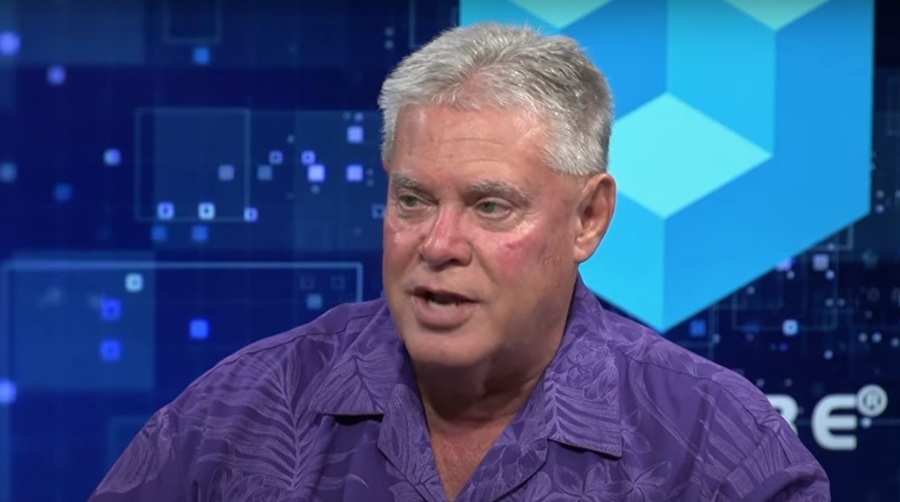
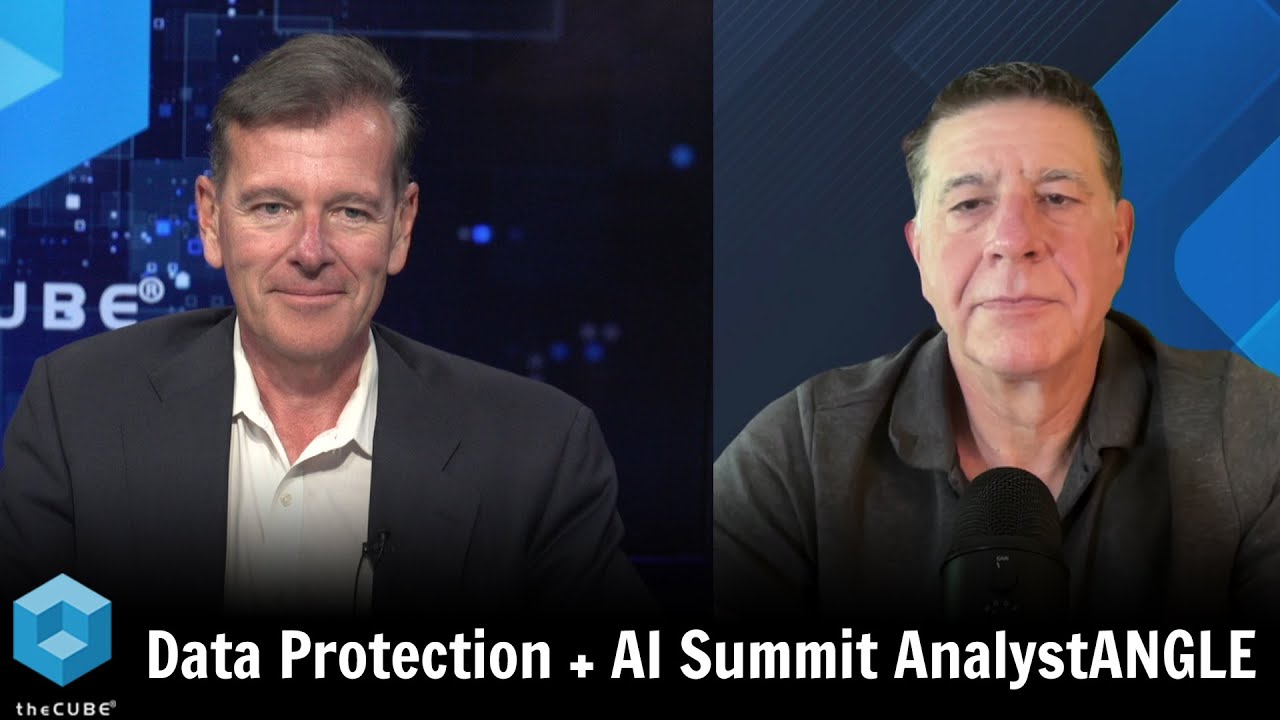
Eric Herzog, chief marketing officer of Infinidat Ltd., joins theCUBE’s Christophe Bertrand at the Data Protection & AI Summit to explore how artificial intelligence is reshaping modern data protection strategies. With deep expertise in enterprise storage and security, Herzog offers a behind-the-scenes look at how Infinidat is integrating AI and machine learning into its flagship InfiniBox platform.
The conversation highlights the power of real-time protection, especially for primary storage environments where AI workloads introduce new vulnerabilities. Herzog also discusses Infinidat’s collaboration with Index Engines to deliver proactive cyber threat detection, emphasizing faster recovery times and stronger threat mitigation.
Key topics include compliance challenges, evolving attack surfaces and the role of advanced AI in accelerating detection and response. Herzog highlights how a modernized approach to data resilience can significantly alter the odds for enterprises navigating today’s threat landscape.
Forgot Password
Almost there!
We just sent you a verification email. Please verify your account to gain access to
Data Protection & AI Summit. If you don’t think you received an email check your
spam folder.
In order to sign in, enter the email address you used to registered for the event. Once completed, you will receive an email with a verification link. Open this link to automatically sign into the site.
Register For Data Protection & AI Summit
Please fill out the information below. You will recieve an email with a verification link confirming your registration. Click the link to automatically sign into the site.
You’re almost there!
We just sent you a verification email. Please click the verification button in the email. Once your email address is verified, you will have full access to all event content for Data Protection & AI Summit.
I want my badge and interests to be visible to all attendees.
Checking this box will display your presense on the attendees list, view your profile and allow other attendees to contact you via 1-1 chat. Read the Privacy Policy. At any time, you can choose to disable this preference.
Select your Interests!
add
Upload your photo
Uploading..
OR
Connect via Twitter
Connect via Linkedin
EDIT PASSWORD
Share
Forgot Password
Almost there!
We just sent you a verification email. Please verify your account to gain access to
Data Protection & AI Summit. If you don’t think you received an email check your
spam folder.
In order to sign in, enter the email address you used to registered for the event. Once completed, you will receive an email with a verification link. Open this link to automatically sign into the site.
Sign in to gain access to Data Protection & AI Summit
Please sign in with LinkedIn to continue to Data Protection & AI Summit. Signing in with LinkedIn ensures a professional environment.
Are you sure you want to remove access rights for this user?
Details
Manage Access
email address
Community Invitation
Eric Herzog, Infinidat
Exploring the Intersection of Data Protection and AI Technologies
Eric Herzog, the chief marketing officer of Infinidat, provides expert insights on innovative strategies in data protection at the Data Protection + AI Summit hosted by theCUBE Research. Led by Christophe Bertrand, principal analyst at theCUBE Research, this conversation delves into the potential of AI in transforming traditional data security methods.
In this video, Herzog shares expertise on leveraging AI to enhance data protection strategies. They discuss how Infinidat's InfiniBox technology uses AI and machine learning for efficient data management and how their collaboration with Index Engines enables proactive cyber threat detection. Hosted by theCUBE Research, the conversation highlights the intersection of AI and data storage, addressing the evolving landscape of data protection in response to growing AI adoption.
Key takeaways from the discussion include Herzog's perspective on AI workloads' vulnerabilities, emphasizing the need for real-time protection on primary storage. The conversation also discusses compliance challenges and the importance of advanced data protection strategies in mitigating the risks associated with AI usage. According to Herzog, integrating AI and machine learning technologies into data protection processes offers significant improvements in recovery times and threat detection efficiency.
play_circle_outlineEnhancing Operational Efficiency: InfiniBox AI-Powered Storage Solutions for Smarter Data Management and Optimization
replyShare Clip
play_circle_outlineCollaboration with Index Engines enhances cyber detection capabilities using AI technology.
replyShare Clip
play_circle_outlineStrengthening AI Compliance: The Shift to Private Clouds and Data Repatriation for Enhanced Security and Governance
replyShare Clip
play_circle_outlineEmpowering IT Professionals: Essential Education on AI's Impact and Cybersecurity Strategies for Data Protection and Storage Solutions
replyShare Clip
play_circle_outlineData protection and AI integration leads to next-generation data security solutions.
replyShare Clip
play_circle_outlineBusinesses must consider data integrity to avoid operational disruptions and losses.
Eric Herzog, chief marketing officer of Infinidat Ltd., joins theCUBE’s Christophe Bertrand at the Data Protection & AI Summit to explore how artificial intelligence is reshaping modern data protection strategies. With deep expertise in enterprise storage and security, Herzog offers a behind-the-scenes look at how Infinidat is integrating AI and machine learning into its flagship InfiniBox platform.
The conversation highlights the power of real-time protection, especially for primary storage environments where AI workloads introduce new vulnerabilities...Read more
exploreKeep Exploring
What are the benefits and functionalities of the InfiniBox technology in managing data placement?add
What new technology is being introduced on September 9th, and how does it relate to AI and ML in the context of storage and cybersecurity?add
What are the reasons behind the trend of data repatriation in organizations, particularly related to security and the use of proprietary data in AI applications?add
What do surveys reveal about the preparedness of CIOs and CISOs for cyber attacks and their considerations regarding AI in data storage and protection?add
What is the concept of next generation data protection in relation to AI and primary storage?add
What are the key reasons for the importance of on-premises data storage in the context of AI processes and data governance?add
>> Hello and welcome back to the Data
Protection and AI Summit. My name is Christophe Bertrand, Principal Analyst at theCUBE Research. I am joined today by Eric
Herzog, is the CMO at Infinidat. Eric, great to have you back.
Eric Herzog
>> Thank you. We love being with theCUBE. You guys do great stuff, not
only for vendors such as us, but really what you do
to help the end users and the channel partners that
also support those end users. theCUBE is very valuable
from an end user perspective and what the enterprise is like
to hear about from you guys.
Christophe Bertrand
>> Well, thank you. And we have quite a bit to cover a pretty vast
topic that we're trying to cover 360 here. So let's talk about
data protection and AI. When I say data protection and AI, what does this evoke
for you? What does this mean?
Eric Herzog
>> So it means a couple things. A is leveraging AI technology into what I'll call next
generation data protection. It's not just about
backups anymore, which is what data protection
historically has been. It's about primary storage as well, and protecting the data there
on primary in real time, not waiting till the backup is there, and also that you need to have
a cyber mentality built in. Second thing is AI workloads. The more AI workloads you
use, not only are they hard to get going and how do you do it, and there's compliance
issues and regulatory and legal issues independent of that, but then the more you're
using it, you can't have that compromised just the way
you can't have your Oracle database compromised, your
SAP, your large file systems. You can't have that AI workload because essentially it may be AI, but it's just as if you have
someone running your supply chain and it's a human today and you start switching AI, you're still running
supply chain information. So if the AI gets hacked, guess what? It's still wrong and the screws don't go to the right factory at the right time. So that's bad too. So AI
workloads shouldn't be, "Oh, well it's AI, we don't
need cyber or any... " It's crazy. It's just another workload,
just happens to use AI.
Christophe Bertrand
>> Right, absolutely. So that's
one of the interesting points that you're making here, and we'll cover both
dimensions, I think, in detail. Let's start with the feature
set that you can augment with AI, especially in
the context of storage. You've done a lot of work
in what is ML and AI. Can you walk us through what you've done and maybe be specific about it? How does it help me as an IT professional or storage professional? What do you do that is really different
from maybe a few years ago? I come from a background
of storage just like you and well, many years ago this
would've been a pipe dream and here we are. So tell us more about that.
Eric Herzog
>> So we use it in two ways. On the primary storage,
our InfiniBox technology, what we do is we leverage AI and ML to manage data placement. So think of it as the way to tier data and what happens when you
do that, it allows you to more effectively use
things like a DRAM cache, our neural cache technology
is over 20 patents. So what that allows us to do is most time, particularly when you use a flash array, as you fill it slows down. Okay, so what do you do? You have to buy another flash
array to run more workloads. With us, that doesn't happen. So that's all done with our
capability of using AonML to manage the data placement. This goes on DRAM, this
goes on flash in the case of our hybrid, because
we still do have a hybrid as well as an all flash. It goes out to that to there. And we have some other technology
we'll be introducing on September 9th that will
expand that portfolio, again using our neural
cache AI and ML technology. Second thing we do is we partner with a company called Index Engines. Our product is called
InfiniSafe Cyber Detection. We've done some joint
development with them. And what that does is allow you to use AI and ML technology to
scan elements of storage. It could be a snapshot,
it could be a file system, could be a volume, could
be a VMware datastore. So that way you can scan it and it allows you to do two things, one, it could be an early warning system. You're scanning certain
snapshots every other day, and when it sees something in
InfiniSafe Cyber Detection, you can automatically send
messages over to your SIEM or source software or if you have a security
operation center. So storage actually can
be proactive in helping identify threats. Okay. The second is you've
had a threat, so you now need to get recovery and you
need to recover quickly. So we cover a quick recovery
we have, immutable snapshots, we can recover primary storage in a minute or less, no matter how
big it could be 4, 5, 8, 10 petabytes in a minute or less. But you still have to make
sure it's a known good copy where InfiniSafe Cyber Detection with our partner Index
Engines allows you to take candidates, put it in a
fence forensic environment, and this is after an attack now and scan. So in this case, the AI would be used as an early warning system,
or if you don't do that, and that's okay, you pick what you want to do with the software. You could use Cyber Detection and use it as the capability of scanning in a fence forensic environment. Otherwise, you have to do it the old way, which is you call up the
Oracle guys, the SAP guys, "Could you take a look at this? Let's see if there's
malware around somewhere. " And that's much more time- consuming than using the
AonML technology in InfiniSafe Cyber Detection with our
partner Index Engines. Way more time-consuming if you
do it the old-fashioned way.
Christophe Bertrand
>> And actually we have a
great conversation lined up with Index Engines, so we'll talk about that in this context. So let's double click on
a couple of things here. Definitely two sides of the same coin. Look, everybody's saying AI is going to be creating a lot of data. There's no question about that. It's going to generate its own. So I'm sure you're seeing already, in some of the use cases you
are dealing with, a lot of organizations deploying
a lot more data for AI. Do you think today that
that data is actually safe and usable for AI? Are they doing the right thing? And what do you do to really help? Because we're talking about
something here that's at scale and will grow overall in this
market in the next five years to hundreds of zettabytes
potentially of new data. Where's that all going to go? How are you going to manage that? How do you make it safe?
Eric Herzog
>> So I would view AI as just
another type of workload. It's another type of application
software. It's finance. Oh, you're not using Oracle or maybe using AI to
manage the Oracle or SAP or your SQL databases and then run the right
financial analysis on accounts payable, accounts receivable,
all the stuff you have to do. Your supply chain, same
thing, it's a database. And by the way, that database
often is also cross-referenced with physical files to show,
the screw, the bolt, the nut, the this, the that, so that you order the right things, right? So AI is just another workload. So it is subject to attack the same way
the Oracle database is, the same way any of your snapshots are, the same way your volumes
are, your file systems. There's no difference. It's still data. So while AI is running
it versus a human running that data in Oracle
environment, you have AI doing that work instead, you're
still running the data in that Oracle environment to get
the right screws, the nuts, and bolts to all your
factories all over the world. So the only difference is using
AI to automate, think of AI as true automation and maybe making some decisions that an automation software
would present to an end user and say, "Here's the three
choices, I think the screws need to go to Paducah, Kentucky,
these ones need to go to Tokyo, and these ones need to go to Johannesburg. " So how you do that,
the human recommends it, or AI recommends it for you. But that means if the data is compromised, it's the same thing. It's still that Oracle database that AI is running instead of the human. So that's what matters is making sure that AI is just another workload and the data that goes into
that workload is subject to attack, just like the
data going into your SAP environment or into any other
environment you're managing as an enterprise IT person, or of course the enterprise security team needs to be concerned about. It's the same thing, just
AI is the incredible amount of automation and some intelligence
around that automation. That's all it is. It is not immune to the attack. Data is data.
Christophe Bertrand
>> Absolutely. That's
really the main point here. That's why we have this
summit to talk about how you protect data in this
age of AI, how you leverage AI as a friend and defend it
instead when it's a foe, when it's actually AI
powered cyber attacks. Couple of things, we haven't talked about compliance and governance yet. I think governance is a bigger topic, but just when you think
about compliance, earlier, we were talking about
the number of regulations that exist today, just in general terms. There are lots of them, and now
there are some specific also AI regulations. Now in reality, I expect that
a lot of the AI workloads, to use your term, applications workloads, will not be in the cloud
that for some maybe legal, maybe compliance, maybe
governance, some organizations and many enterprises will
actually run on-prem, which is really where you come in. Now, all they could run in a
private cloud type of scenario, but storage is going to become more and more critical, especially
on-prem in a very weird twist of history here. What's your take on that? Do you see that already happening? What do you think?
Eric Herzog
>> We see what's often referred
to in the IT press as well as the storage press,
as data repatriation. So first of all, from an AI perspective, there's lots of concerns. If you're using chatbots that
are open source, if you use that and you're publicly traded,
you just exposed your IP. Let's say I'm not, I'm
a little tiny startup, I got these wiz kids developing
the newest Hinkelmeyer and we're going to rule the world, and we're going to make billions and our investors are
going to make billions. Well, if they use an open
source chatbot, guess what? All the big competitors just figure out how did you Hinkelmeyer. Because we told them because legally they can access that data. So the reason for data
repatriation are things built around security, in the
AI world, being able to use your proprietary
data confidentially. And by the way, private cloud
is basically a private cloud. It's the version of Oracle Cloud or Amazon Cloud or Google Cloud. That's your own, right? And
you don't expose it publicly. So if you're using that way, you want to use your own proprietary
data for AI workloads. So that is a huge, huge issue. So more and more people
will start doing AI as all this legal and regulatory and compliance issues get resolved. But we see customers, our customers, because we mostly sell the
global Fortune 1000, we see a lot of our customers already playing with it, but they're not using an
open market chatbot, right? They are now LLMs and SLMs, vector databases that you can get from software
companies that are just for you, your company, not
open source like the chat GPT, which is open source, or
you do it yourself, right? Some of the larger, the Fortune 200, they got a lot of software guys. So they may be developing their own and then they use their
own proprietary data to get sure the supply chain is right or the finance is right, whatever
application they're using, that it is the right data
and it's proprietary to them. They don't have to worry as
much about hallucinations and they clearly don't have to
worry about the legal issues of using open source AI technology, which means you just could
steal stuff without really realizing you're stealing it. Also, someone could steal
your stuff without you knowing that you really just exposed it. So AI is really, the takeoff
of AI hasn't hit yet, as the compliance regulatory and legal issues get
done, data repatriation or using it in the private
cloud will get even more important because you don't
want this data exposed. And so from a storage guy
perspective, it's great and obviously have our
own AI RAG technology, a retrieval augmented
generation, which works not only with our own storage, but actually works with
our competitors as long as it exposes an NFS protocol,
which all the databases do, and obviously all the files do. So you could use our storage
in a competitor's storage with our AI RAG to get that
right proprietary data. But you have to make sure you
understand what you're doing with the data, why
you're doing it that way, and again, several times
I've been to some events where literally there's
all day session on AI and over half of it is
a bunch of attorneys and regulators talking to
a bunch of IT guys about, "Okay, blah, blah, blah. If you do this, someone will sue you. If you do that, you're
giving your IP away for free. " And IP isn't just in high-tech. If I develop the best running
shoe in history of the world, it may be only a running shoe, but if it's the best
in the world, I'm going to make billions, right? I mean, that's what Nike did, right? So I don't want people to steal that, and I have designers that
use computers to design running shoes or tennis shoes or tennis rack, anything, cars, whatever. So it is a real issue
of protecting your IP.
Christophe Bertrand
>> Right. And this is really
where we talk in a broader term of data protection, not just
protecting from destruction, but actually there is that risk too, because what you've described
makes perfect sense. I think we'll talk more about this in our governance summit in the edge of AI in the September timeframe with my colleague, Scott Hebner. We will cover all of these topics and regulations, which will
make for an interesting time. We'll make it interesting,
not boring it can be. But the point is this, the thing you've just touched upon very important topics here. The one thing that strikes
me is that it doesn't appear to me that people are thinking as they are building this data infrastructure
about protecting the data the way they should, not just from leaking or being poorly used, that's
a big issue, not arguing that point, it feels to me
like the fundamental work, just like any workload,
has to be the protection, the protection in the
context of recoverability, the protection in the
context of immutability. We're hearing every day
now of prompt injections where people go essentially
attack the AI software itself, potentially causing
a risk of data destruction or all sorts of other issues
which are so far-reaching. We also live in a world
where geopolitically, things are not that great. There are lots of attackers from areas that are also being physically attacked and physically attacking others. So all of this is starting
to combine into placing the storage and the data in
first line of attack. So with that in mind, do you think that today your clients understand that AI by design is actually data
that's protected by design? Are we there yet? Is there
a lot of education to do?
Eric Herzog
>> So there's still a
lot of education to do. If you look at even regular
storage, regular data, and you look at surveys of CIOs and CISOs, they freely
admit in many of the surveys that are out there from
industry analyst firms or sometimes from the financial press, they're not really
prepared for a cyber attack and they haven't even thought
about AI because it's new. So if you think of AI,
like it's Oracle, it's SAP, it's going to be on your primary storage. The next generation of data protection is where the difference comes in. It's about protecting data
on primary, AI's on primary. By the way, you still should
be backing up your AI workload when it's done, right,
you're running it constantly. So great, you have to back up
the fact that you're supposed to ship the screws because
you just did a run of your supply chain and you do runs of supply chain big
companies every single day. Well, guess what? If it
was done with Oracle, they back up the Oracle database. So now you back up the AI. So that's okay, that's
the data protection in the traditional way, but you want to be protecting it in
real time while it's happening on the primary side. So the next generation data
protection is about protecting data primarily from cyber with
a cyber recovery angle to it for a traditional backup workloads, but also for primary
storage, making it immutable, scanning it on a regular basis, which is what our InfiniSafe Cyber Detection does, is scan on a regular basis, making sure you separate
the management plane and the data plane, making sure that if you do have an attack, you can create a fenced environment because you need to find a known good copy before you do that recovery,
you want to make sure that you have incredible recovery times. We guarantee SLAs on primary storage and on secondary backup. On primary storage, we
will recover no matter how big the dataset size is. It could be four petabytes, 10 petabytes, 20 petabytes, one minute or less. And in fact, because I'm
old school, I believe that if you can't demo your software live, your software is not very good. And when I started in this business, you demoed it live at a trade
show or at a lunch and learn or at a seminar. No one was videoing it and
then showing it. Don't do that. It was bad. So guess what?
I still do it that way. I make my teams do it live. We recovered four petabytes
in four seconds live, four petabytes in four seconds on primary. You also want to be able to
have rapid recovery on secondary because what if there's no
good copies on the primary side, you're no good copy. You do find in a backup repository. So you've got to bring
that repository available to click the button so that
Commvault, Veeam, Veritas, IBM Protect, Zerto, whatever is your backup software
choice can actually do the recovery, right? So you've got to do it both ways. In that case, we guarantee the recovery in 20 minutes or less. And when we did the live webinar, because I'm a crazy old
geese bag, guess what we did? 25 and a half petabytes in 12
minutes. Now that is rapid. So you've got to make sure
that that is built in. And as I mentioned
earlier, a lot of the CISOs or the CIOs don't think of storage as part of a comprehensive cybersecurity strategy. So you want to make sure that you do that. You're protecting the edge,
you're protecting the servers, you're protecting the apps,
you're using your SIEM or source software, you've got a SOC. Remember the days whenever we used to have a knock when we were
younger, when I had brown hair? Now they have SOCs,
Security Operations Center. That's what they do these days. So you want to make sure
that that is all monitoring and you want to make sure that the storage is part of that component. Whether the SIEM or source
software tells the storage, "Hey, I sense a threat. " And the storage starts
doing things immediately to shrink down that threat window, or the storage is scanning,
let's say, once a week, every twice a week, and senses something and then sends a note over to the SOC and says, "Hey, these two storage
arrays on these snapshots, something is flaky. " And with our cyber
detection, which we do with our partner, Index Engine, it's 99. 99% validated by analysts as accurate. So it could be a false
positive, but it's pretty low. So instead of being reactive,
which by the way, InfiniSafe Cyber Detection do, put in
a fence forensic environment and start a scan after
you've been attacked. But the other way is as
an early warning system. So storage can be part of a very comprehensive
cybersecurity strategy, clearly for recovery, both the speed and scanning, but you can also be proactive
and communicate with SIEMs or SOC if you scan on a regular basis.
Christophe Bertrand
>> And by the way, what you're describing, and we'll cover that
more with Index Engines, is actually AI powered.
Eric Herzog
>> Yes.
- So this is AI coming to the rescue of AI infrastructure attacked by AI powered cyber attackers. So that's why it felt so important
to cover this topic of AI and data protection to me, because there is so much
going on at the same time. It is very confusing. As I said a couple of times, I think we're seeing the
convergence of multiple markets and technologies that are
really changing the way organizations organize from
an IT and security standpoint, but also a data management standpoint. We're seeing this new workload
called AI, which is massive, potentially, will be life changing, will certainly augment a lot of processes, will also make decision or decisions on its own, I
should say, through agents. Agentic AI is a thing. It
will happen. It's happening. Now, is it happening enough? Probably not to show true
good ROI, but it will soon. It's only a matter of time. What I like about our discussion
is I think you've really positioned the fact that data and data that is on storage on-prem is actually fundamental. It's fundamental to AI processes. It's fundamental to the
protection of the data that allows you to run AI processes. And I think people are going to realize that it is fundamental to their governance and to limit their business risk. Now, I'm not saying
there won't be any cloud- based solutions as well. Absolutely, it's going to be hybrid. We know that's the way of the world. But I do believe for all the
reasons you've mentioned, there is going to be a
resurgence of on-prem, at- scale storage. If I were to summarize, what I heard is, and it's very important for the protection and the recovery piece of data, the fact that you can do things in
seconds with very smart snapshots and great use of placement of data and what you described
earlier, some AI in there as well, changes the game. The fact that you can do this
constant testing with the help of partners like Index Engines is also very key change the game. It makes AI possible. And it sounds like it should be obvious because it's about the data, but I think a lot of people
are looking at the shiny objects, but they're not
looking at the fundamental infrastructure, which is what I think you've described really well.
Eric Herzog
>> Again, garbage in, garbage out. So a human running Oracle databases, if the data coming in is
garbage, it's data coming out with a human being standing there. So if you have an AI agent doing the work and it's garbage in the data, garbage out, it's still garbage. So an AI hallucination, quite honestly, is like a human making a mistake. In my mind, it's just the same. So you have to realize
that AI is, if you will, automation on steroids. Really automating it. Incredibly automating and allowing that automation to make some decisions on its own. Okay, great. But again,
if the data underneath that automation is lousy,
then the result is lousy.
Christophe Bertrand
>> And what if there's no
data? What if somebody, again-
Eric Herzog
>> Ransomware or malware? Then you just totally ruined it. And if you're using it, for
example, for supply chain, you're not shipping and
the factory goes down. So you're thinking, "Oh,
my data center's down. I don't like it. But yeah, I
get it that up in a day or two. " But all the factories are
down. They don't have screws, they don't have tires,
they don't have hubcaps, all the stuff you need if
you're a car manufacturer or if you're making drugs or whatever you're making,
you could be making, again, paper products. You have to get the paper, right, you got to put it in the roll. Then there's always the
thing in the middle, right? For your paper towels. Then they have to put it into packaging. Then if you get the big box
that's packaged up when you go to the grocery store, that
all is done robotically and all done by computer. So if you don't have the right
wrap there, you've got all of those paper towels just sitting there because you can't ship
them as just paper towels. You have to put them in the plastic wrap and then put them in packaging
to get to the grocery store or to Costco or wherever
you're trying to get it. And so AI just is automating that process. If the AI data is attacked,
the only thing it's done is you get to say it's AI. It's the same problems if it was attacked with a human deciding when
to get the plastic over to the paper factory, it's the same thing. Just AI now is messed up
too, just as if a human was. So it's all about the data. The core is the data, which is why you need next
generation data protection on your primary storage,
which is what AI would use. And you need next generation
data protection on your backup as well, just in case you
can't recover from primary, you got to recover from backup. I need to make sure that
they're clean using AI and ML technology with our
cyber protection technology that we've done jointly
within Index Engines.
Christophe Bertrand
>> Eric, what a great summary. I could not have done it better. So I'd like to thank you very
much for your time today. This was great. I think we
covered a lot of ground, and obviously, I want our viewers to also think about taking a
look at this great session we have with the Index Engines as well.
Eric Herzog
>> Yeah, that is going to be very good because it delves deeper into using AI for the good guys versus
AI for the bad guys.
Christophe Bertrand
>> Exactly.
- And the bad guys use AI to, trust me, everyone's using AI, right? Everyone uses a pen. Everyone uses computers,
including bad guys. So the reality is that session is going to talk about using AI for
good, to defend your data, defend your enterprise, versus
what the bad guys are trying to do with the exact same,
by the way, technology.
Christophe Bertrand
>> Perfect. And I can assure
our viewers, we are real. The shirt is real.
Eric Herzog
>> Yes.
- It is by design.
Eric Herzog
>> We are not AI generated.
Christophe Bertrand
>> We are not AI generated.
They couldn't do that. Well, Eric, thank you so much.
Eric Herzog
>> Great. Thank you.
Love being with theCUBE and appreciate all the stuff
you do, not only for us, but really our end users have
made some really nice comments to us about, we saw this on theCUBE. They gave us real information,
particularly due the summits where you have a whole bunch of stuff, when you do just the one-offs, like sometimes you guys
do at the trade shows, those are nice, but you
have all the, in this case, you have a focused summit topic, and customers, they see
one thing, then another, and they're all really that key topic. Customers love that. That's
what they've told us.
Christophe Bertrand
>> Thank you so much. I'm going to hire you as my agent for promotions.
Thank you, Eric.
Eric Herzog
>> Thank you.
- And to our viewers, stay tuned. There's more coming up.