Exploring Data Protection Solutions at the Data Protection & AI Summit
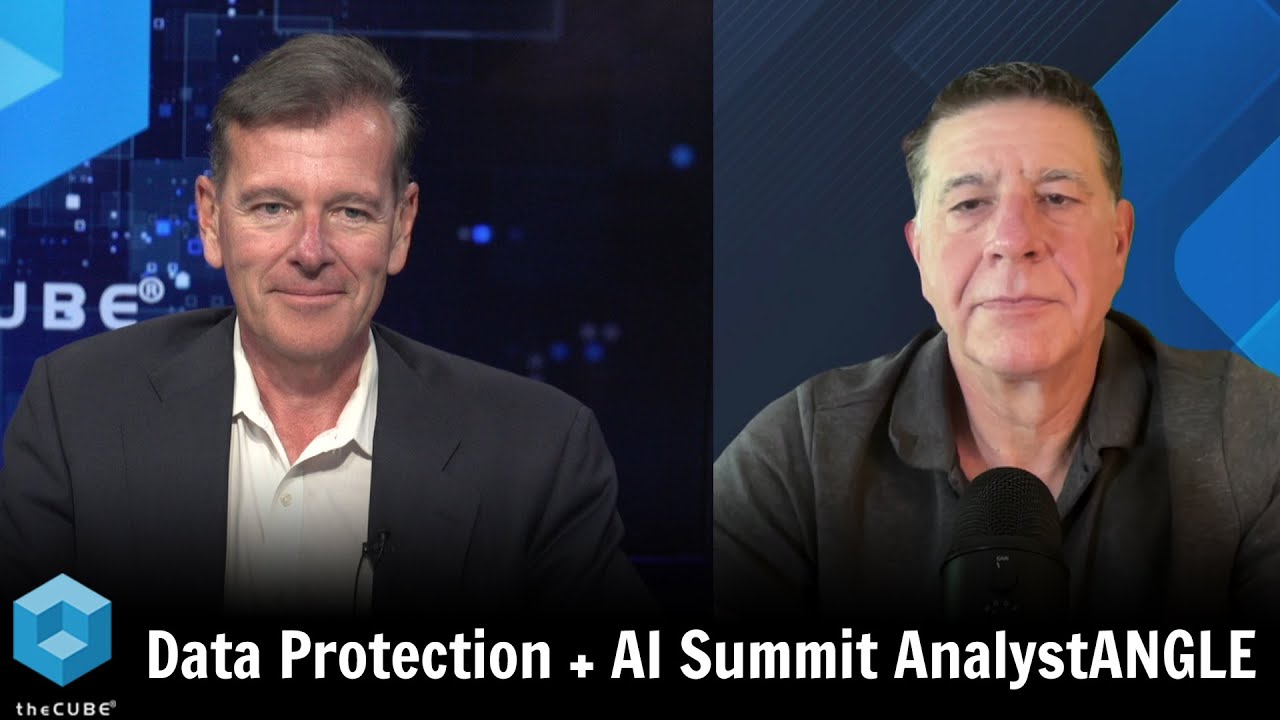
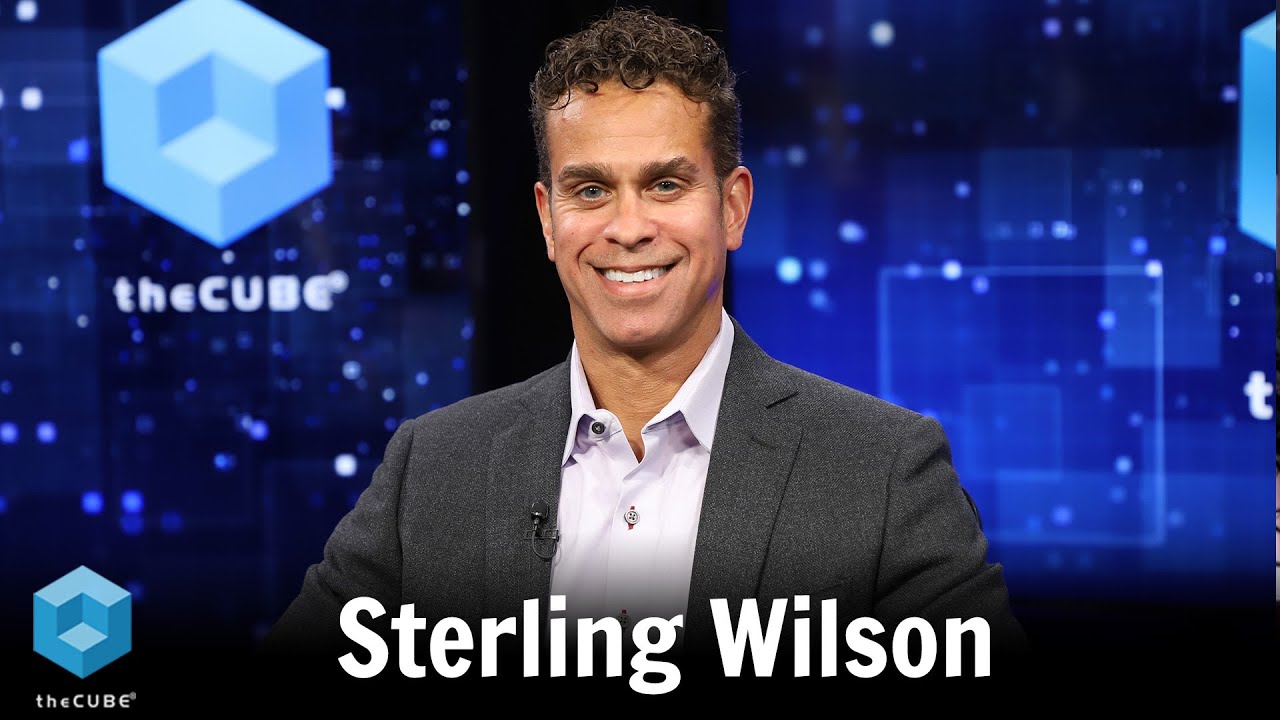
Sterling Wilson, field Chief Technology Officer at Object First, shares insights on safeguarding artificial intelligence workloads at the Data Protection & AI Summit. Christophe Bertrand, principal analyst at theCUBE Research, hosts the discussion, examining how Object First’s solutions fortify AI data security and ensure trustworthiness.
In this session, Wilson discusses the critical components of AI data protection, emphasizing the importance of immutability and secure data handling. The conversation with Bertrand explores the tools and strategies required to safeguard AI infrastructures against potential cyber threats and ensure business resilience. Viewers gain insights into how Object First, in collaboration with Veeam, structures its approach to protecting AI workloads.
The video highlights the importance of understanding AI as both a potential risk and an asset in data management. Key takeaways include the emphasis on having a solid resilience plan, ensuring data trust through comprehensive security measures, and the necessity for IT professionals to evolve with the increasing convergence of data protection, AI, and security protocols, as discussed by Wilson and Bertrand.
Forgot Password
Almost there!
We just sent you a verification email. Please verify your account to gain access to
Data Protection & AI Summit. If you don’t think you received an email check your
spam folder.
In order to sign in, enter the email address you used to registered for the event. Once completed, you will receive an email with a verification link. Open this link to automatically sign into the site.
Register For Data Protection & AI Summit
Please fill out the information below. You will recieve an email with a verification link confirming your registration. Click the link to automatically sign into the site.
You’re almost there!
We just sent you a verification email. Please click the verification button in the email. Once your email address is verified, you will have full access to all event content for Data Protection & AI Summit.
I want my badge and interests to be visible to all attendees.
Checking this box will display your presense on the attendees list, view your profile and allow other attendees to contact you via 1-1 chat. Read the Privacy Policy. At any time, you can choose to disable this preference.
Select your Interests!
add
Upload your photo
Uploading..
OR
Connect via Twitter
Connect via Linkedin
EDIT PASSWORD
Share
Forgot Password
Almost there!
We just sent you a verification email. Please verify your account to gain access to
Data Protection & AI Summit. If you don’t think you received an email check your
spam folder.
In order to sign in, enter the email address you used to registered for the event. Once completed, you will receive an email with a verification link. Open this link to automatically sign into the site.
Sign in to gain access to Data Protection & AI Summit
Please sign in with LinkedIn to continue to Data Protection & AI Summit. Signing in with LinkedIn ensures a professional environment.
Are you sure you want to remove access rights for this user?
Details
Manage Access
email address
Community Invitation
Sterling Wilson, Object First - In Depth Discussion
Exploring Data Protection Solutions at the Data Protection & AI Summit
Sterling Wilson, field Chief Technology Officer at Object First, shares insights on safeguarding artificial intelligence workloads at the Data Protection & AI Summit. Christophe Bertrand, principal analyst at theCUBE Research, hosts the discussion, examining how Object First’s solutions fortify AI data security and ensure trustworthiness.
In this session, Wilson discusses the critical components of AI data protection, emphasizing the importance of immutability and secure data handling. The conversation with Bertrand explores the tools and strategies required to safeguard AI infrastructures against potential cyber threats and ensure business resilience. Viewers gain insights into how Object First, in collaboration with Veeam, structures its approach to protecting AI workloads.
The video highlights the importance of understanding AI as both a potential risk and an asset in data management. Key takeaways include the emphasis on having a solid resilience plan, ensuring data trust through comprehensive security measures, and the necessity for IT professionals to evolve with the increasing convergence of data protection, AI, and security protocols, as discussed by Wilson and Bertrand.
Sterling Wilson, Object First - In Depth Discussion
Christophe Bertrand
Principal AnalystSiliconANGLE & theCUBE
HOST
Sterling Wilson
Field CTOObject First
In this conversation from the Data Protection + AI Summit, Sterling Wilson, Field CTO at Object First, joins theCUBE Research’s Christophe Bertrand to examine how zero-trust storage and immutable backups safeguard emerging AI workloads. Wilson outlines why artifact stores, model versions and training states demand the same rigorous protection as traditional data, yet face higher stakes when compromised. He details how Object First’s Ootbi appliance, optimized for Veeam, keeps AI data on-prem for rapid recovery while enforcing the 3-2-1 rule, verifiable immuta...Read more
exploreKeep Exploring
What are the key considerations for Veeam customers adopting AI workloads?add
What are the reasons for protecting data and ensuring its immutability in the context of threats from malicious actors?add
What are the benefits of using on-premises appliances for data management compared to cloud models?add
What are the components of AI architectures, and what measures should be taken to protect them, as well as how does this contribute to the overall security of AI infrastructure?add
What are the current developments and implementations of AI in data backup solutions?add
What is essential for building trust in public AI data sets, and what roles do infrastructure and governance play in that process?add
Sterling Wilson, Object First - In Depth Discussion
search
Christophe Bertrand
>> Hello and welcome back to the Data Protection and AI Summit. My name is Christophe Bertrand, principal Analyst at theCUBE Research, and we're going to double-click and go in a lot more depth with Sterling Wilson on what Object First, great new company we recently introduced you to, can do and will do to protect AI workloads. Look, AI is definitely upon us. I think it's still early stages. It's nascent. Some of the speakers we've had here think it's just like any other workload. It's software essentially, and it has data and well, it's got some interesting things going on with it with agents and we'll talk about that. But maybe you could, as your role as a Field CTO for Object First, tell us what do you think the components are that people should really think about? Because this is kind of new for many folks and a lot of IT folks are sort of maybe caught by surprise at times.
Sterling Wilson
>> Yeah. We've noticed that there are a lot of Veeam customers now that are adopting AI workloads. And not just the workloads, they're building the AIs for their specific solution or product, whether they're in healthcare, financial industry. These models take time to train. These models take care and feeding to place the proper data into it. And at the root level, you must secure that data to be able to trust your model. So what we see here today is, and I think you already called it, it's data. At the bottom line, at the end of the day, it is data. They're data sets we have to control, but the risk of having data that you can't trust, the risk of what AI can bring if you don't have immutability around your data or security around your data or zero access to your data, the risks are monumentally larger than what they would be in a normal flat file that you're backing up as well. So while the data sets can look the same, it is broken down into certain things that we really have to pay more attention to. Artifact stores, for one example. And of course, the artifact store is really where you save all of those models. It's where you go to view the different versions of your model, and more importantly, if you want to bring your model back to a previous set to run a set of circumstances for an exact same output, again, that is where you go. So an artifact store will be a wonderful example of something that AI has brought to us that we need to make sure that we maintain its integrity.
Christophe Bertrand
>> Right. And I remember when containers were the new thing and all of a sudden people were running around trying to figure out how to back up these weird things that would come up and disappear and where was the traceability, the auditability, and how did you connect all of that to persistent storage? So slightly different topic, but very similar in a way because now what we're dealing with is a new workload, a new type of workload, which comes with a lot of responsibility when you think about the outcomes that it's supposed to generate from a business standpoint. Now, you mentioned artifacts, stores, catalogs, versions. Let's talk about that. Why would you have to protect this and why does it have to be immutable?
Sterling Wilson
>> Yeah. When you think about how nefarious actors work, they either want to steal your data, they either want to hold your data for a ransom or they want to do something nefarious to your company by injecting something into that data. These models ultimately are going to be responsible for everything from our traffic modeling to how we perform surgeries, to how we build architectures. So why would someone want to do that? It would really depend on where the threat actor sits in it, but what the threat actors are going to go for is the very root of the foundational blocks of that AI, and that is really what we try to focus on protecting, wrapping that data with immutability, making sure that they can trust it, and using of course the best-of-breed solution Veeam for moving that data to a secure appliance.
Christophe Bertrand
>> Right. And let's talk about your appliances just real quick. Obviously on-prem can be managed by someone else, but definitely the model is not a cloud model, it's an on-prem model. You control the data, it's right there. It's faster to restore because it's on-prem. You've got it under control, it's literally under lock. Our research actually shows that the backup infrastructure is number one in line for attacks. And by the way, same research also shows that what keeps people awake at night in number three, I think of all of the risks, well, it's AI fueled attacks. So AI is this interesting topic because it's both friend and foe, so it's great to see what Ootbi, which is the name of the product does to do that With Veeam. I was preparing this and I was looking at some notes that I took earlier. So let's talk about preserving the training states, because AI comes with a very different workflow, different stages of how it creates value, how it builds up in a sense. What about training stages? What are these and how do you protect them and how does that play into the overall protection of the AI infrastructure that you can help deliver?
Sterling Wilson
>> When you're looking at these AI architectures and you're looking at the different stages of actually building the model, and we've already kind of called out to it, they are the different particular pieces. There's the databases, there're those artifact stores that we just talked about, but then they are also the different models themselves and so there are different facets of this that sort of sit outside of the data protection piece, but they all involved with the encryption. Watching your AI pipeline, looking at where the components for the AIs come from. You want to make sure that AI is working for us as much as AI, it can be working against us. These models, when they're used for attacks, they sit inside of the architectures and they really wait. And to go back to really one of the facets of what we bring to the table, we are on-premises storage. We still believe very much in cloud, and we know that everyone is still leveraging cloud. We believe that when you've undergone an attack and you need to bring those models back online right away, even going back to a previous selection of a model through one of those stores, on-premises is going to be your fastest and most reliable way to bring that back. So we work in concert with the cloud to make sure you have a 3, 2, 1, and in our world that is three different copies on at least two different types of media and of course one that you can maintain that is verifiably ready to be brought back.
Christophe Bertrand
>> Right. So I mean essentially AI is an attack vector itself, right?
Sterling Wilson
>> Yes.
Christophe Bertrand
>> You mentioned agents earlier and of course AI agents potentially sitting outside or inside the organization looking for a way to breach. So I think this is very interesting, this sort of weird relationship that there is between AI as a friend and AI as a foe, as I like to say very often. So let's look at maybe the other side of the coin a little bit. How can AI help with resilience? What's your take on it and more importantly, you're Field CTO, you've probably seen some interesting things. I think a lot of people are getting started. What are you hearing and what are some hurdles maybe? So let's talk about that and AI as a friend.
Sterling Wilson
>> Yeah, exactly. Full disclosure, I think we're still getting there on AI. I think many of the AI implementations we see today really revolve more around machine learning than they do actual AI, but we are starting to see certain facets of AI really bring its head up. From our side of the fence or the good guy side wanting to help protect that data, we're starting to see certain solutions provide ways for AI to look over their data sets. For instance, Veeam will be offering an entropy, which is an inline API driven way, a secure way for those AI models to look over the backup data sets so that it's a secure way that they can watch, they can make sure isn't being taken over, but still provide AI the ability to put their AI goodness over the data backup sets. Now in the future, that's going to help backup admins model their architecture in different ways, find holes in their scenario and even do really cool things like look DSPM, look around their architectures for PPI and different things of the sort. So they're learning to leverage those AI facets in some ways, I believe we're starting to see it come into the solutions. And once again, the most important part of all of this is being able to trust those AI models you have. That is what Object First and Ootbi bring to the mix, is that when you take those AI models, all of those different facets, and save them somewhere where you can trust that model, that's going to be on an object first Ootbi, because of our zero trust data resilience.
Christophe Bertrand
>> Right. And what you mean by that is that because it's immutable, you're protecting the data, the metadata, the state of the AI machine, for lack of a better term, because all it is, again, is a new workload. You can essentially, with the help of Veeam, for data movement, deliver a trusted version of the AI environment prior to an attack, should an attack or prompt injection or anything happen to the actual data. So I think that's very important. Now I'd like to come back to the AI as a friend piece where, what do you see as the future for maybe more automation where AI can help from a feature standpoint, both on the Veeam side but also on the Ootbi Object First side, provide this at scale, this ability to, well, let's talk about this test maybe for attacks in a way that's non-disruptive, demonstrate protection for compliance and really optimize the life of your clients in a sense, because there's only going to be more data and how do they scale operationally?
Sterling Wilson
>> You're absolutely right. The key really is going to be early detection, having solutions that are going to be able to tell when an attack is imminent, when an attack has already happened, when something may have already been compromised. So when we're talking about these solutions, the ability to use AI to watch inline ingress and egressive data, watch certain types of things going on in the environment that may have not been there before, that's how AI is going to continue to help us. Using a solution such as Object First and Ootbi, for example, really brings into the effect that when you are talking about the insurance of your data, being able to go back to previous data sets that have been modeled in certain ways that you know that have been third party tested, and we can prove that no one can get to this data, change this data, it allows you to leverage a couple of different things. One is to be able to trust the data itself, and the second is to be able to test those data sets when you're bringing that data back after an attack using AI to then rebuild those data streams, using AI to then bring back those critical servers. Looking at those workloads in walled-off virtual lab environments before they're placed into production will not only be a nice to have, it will be a must have in being able to trust those models.
Christophe Bertrand
>> Right. And I think this is where it becomes very interesting because there are multiple forces at play. One of the big ones is obviously being out of compliance. It doesn't matter what happened, whether it's the data that's gone, whether the data is corrupted or altered in some way, you could also expose it because of PIIs, et cetera. So you become out of compliance. So using AI to help you modelize the recovery piece is pretty important. I can see that. What I'm curious about is really, okay, let's look at the various components here in play. Let's take some of your typical customers, maybe they're mid-market, a small enterprise, decentralized enterprise. They have to get things back on track. They have invested in some AI processes which may run or control some of the production, physical production of goods or services that are being delivered. What do you see moving forward as the role of the IT professional and the security professionals in supporting the data folks, the AI folks and the AI processes? How is that changing?
Sterling Wilson
>> They really are going to have to become more adept in security. This is a conversation that I have quite often. Where do I see the future of this going? Well, what we see right now is data protection, data security and security itself are all coalescing. What I believe we're going to see is more of that in the future, possibly even the field CTO, CTO, even CISO, job roles sort of coalescing together. There used to be a point in time when procuring a solution such as an Object First or an Ootbi or a Veeam was really seen by storage administrators, storage architects, data center architects. Now in almost every single workshop discussion that I am in, security teams are in there as well, because they have to vet that solution. They have to make sure that secure protocols are used and moreover, they want to make sure that it's third party tested. You just can't trust any solution saying, well, we're good.
Christophe Bertrand
>> Right. Actually, our recent research on cyber resiliency shows that security teams actually have veto power over any cyber resiliency solution. I kind of brought up the example of containers a few years ago, and that prompted actually Veeam to make an acquisition and build the cast and technology in the solution. Let's double click on that. You didn't mention DevOps, but DevOps is maybe at the table too sometimes. So how does it work with, for example, a Veeam Kasten environment?
Sterling Wilson
>> Absolutely. So we can help protect those workloads. We talked a lot about... Or a little bit about the containers, and of course the containers are ephemeral, right? But there's the data itself. The data sets itself, that of course can feed those containers or containers use that data, and so we can help protect those workloads as well. So AI workloads can either be sort of ephemeral themselves or they have already containerized those. And in those types of situations, I would definitely implore everyone to make sure that they're implementing segmentation. That is going to be segmentation and certainly micro-segmentation if they are employing those containers. I think that is a must today and something that is sometimes overlooked as well. But we can help protect that data to make sure it comes back with those same set of circumstances that you need in the modeling today.
Christophe Bertrand
>> Right. So what I'm hearing is Object First, certainly combined with Veeam is really helping across the whole infrastructure. Again, regardless of the workload, regardless of the type of production system, a lot of them being hybrid, a lot of them being now also focused on or rebuilt or re-engineered to be container Kubernetes based.
Sterling Wilson
>> You're right.
Christophe Bertrand
>> So I think that's a pretty important factor. If you think about the future maybe, I don't want you to divulge any roadmap, where do you think you're going in terms of this whole AI for automation, AI as a workload you protect, where do you see the company going? And by the way, you don't have to divulge anything, but what are you hearing from customers? What are they asking you to do since you spend a lot of time with customers, I'm very curious about that.
Sterling Wilson
>> It's really interesting because it's important to remember that we bring the highest level of security, ransomware-proof storage for Veeam. What makes us so secure is that we only allow and use one storage protocol. That is the S3 protocol. That protocol brings immutability, it brings compliance and a bunch of other facets to keep your data safe. What we don't try to do are all the additional add-ons that we see that can increase your attack surface, which is trying to do dedupe, trying to open up a landing area, trying to be more than just the highest level of security for our customers. So we allow Veeam to do the best of what they do, which is encryption, in flight and at rest, which is moving objects securely and intricately and over into the Object First box. And when it is in and inside of Ootbi, we can make sure third-party-tested, it remains that way. So what I think we're going to continue to see are of the backup data movers using that AI to help their backup admin's architect more succinct architectures, finding holes where they didn't know holes before. And more importantly, shadow AI, which is now turned into the biggest next thing, which is people whom have uploaded data into AI models that they may not know about and are losing data through egress in that way. So I think we're going to see tools that are going to provide more information and awareness around those types of data sets.
Christophe Bertrand
>> Right, and I like what you just described because I think there's a big risk also when you don't really know what you have and where it is. And of course having it in a store that's immutable like yours and you mentioned deduplication landing zones, that's definitely an interesting risk. Definitely helps. So let's talk about how you can help overall with compliance and governance in general. Obviously cyber resiliency, big topic, protecting the AI infrastructure, even if it's nascent. What's the type of feedback you get from your clients and do you see any evolution of your platform or maybe your partnerships in that space?
Sterling Wilson
>> That's a great point. I am out in the field all the time and listening to where our solution needs to go. We just held our very first partner advisory council. some great feedback from some of our best partners and while the solution is where it needs to be, we've heard from our partners that the awareness still needs to grow for the customers themselves. So, really, that is what we're going to do with a lot of our solutions, help them understand why they need something like that. For anyone listening today that is undergoing an insurance audit or has to provide the insurance company with proof of the ability to have not only ransomware proof backups, immutable backups, but backups that are third-party tested that have zero access to root, that is what we're going to bring to the customer. I think you're going to start seeing some tools in our toolkit from our solution, which will continue to help customers get an idea of an early onset of an attack, whether attackers are trying to get into the Ootbi box and things that will help them raise the alarm. We will continue to integrate with Veeam. Veeam has an array of AI tools and solutions that are coming out in their upcoming version 13. We will be ready to save that data from those models as well, and we will continue to evolve to just make sure that we're ready for these AI data sets.
Christophe Bertrand
>> Right. And one of the areas I'm curious about, and I know it's a bit early, but it's really agentic AI. When you think about the potential risk of agents making decisions based on data sets that they're manipulating or providing outputs from inputs they're getting, I mean an agent is kind of like an employee in many ways. That's hence the name, agent. What's your take on agentic AI and where do you think Ootbi will be able to help? I'm very curious about that. I know it's early, not everybody's there, but it's coming, it's coming faster than we all think, but it's definitely not there yet.
Sterling Wilson
>> Yeah. Agentic AI. Scary it is for me to think about these machines sort of thinking about us and doing these everyday tasks. I think this is where we are today. Agentic AI is a must for us on the good guy side because the bad guys will be leveraging this starting yesterday, today and going to continue to increase that with tomorrow. So agentic AI means that on the nefarious side, these attacks are going to be nonstop. So you need a agentic AI on the good guy side to help prevent some of those attacks as well for that early onset, that early detection, and to be able to use, let's say, an Object First Ootbi to immediately spin up virtual labs to test, to make sure that certain backups are ready. Having a resilience plan in this day of AI and day of ransomware is no longer an option. And you will see us as well as the industry as a whole continue to adopt agentic AI so that we can combat these and also combat these attacks, but also stay ahead of the cusp to make sure that we're growing our architectures in the right way that we need, to make sure that the data stays with the same set of circumstances that our customers need.
Christophe Bertrand
>> This is fascinating. I agree. I think that's really where a lot of it is going. And then at some point you also have to protect the agentic sort of AI system itself. Right? So how do you protect that? And it's going very fast. I mean, obviously we have a number of colleagues here at theCUBE Research and one of my colleagues recently ran a very interesting summit on agentic AI. So the level of innovation is absolutely mind-boggling, and I think sometimes I wonder if people don't forget the protection piece by design as they build these great technologies. I think we've covered a lot of ground. Clearly, I think there's a lot that your customers can do today. Plenty more they will be able to do tomorrow. Very interesting company. We haven't talked about it much. We have another session when we talked about it a little more with great founders. What word of advice would you have for our viewers that attended, they're attending this summit, they've attended a number of sessions. What's the next step for you as an end user, whether you're in security or in IT. Maybe you are in the AI space trying to figure out the best way to protect the investment and optimize it. What should they do next?
Sterling Wilson
>> Yeah, I always start by saying, first of all, have a plan. You don't want to wait until something has happened to your data sets, to your architecture, to begin to think about how do we recover. Every best practice of every AI modeling will always say, have a resilience plan first and foremost. So make sure you have that plan. Make sure you understand where your data is. You would be so surprised at how many people think that they're backing up or they're protecting their core data, but they have a ton of data on the periphery as well. So make sure you know where your data is, make sure you have a plan to protect that data and make sure you're using solutions and tool sets that you can trust. AI modeling, once again, is data and those data sets will continue to increase our ability to trust our AI and our AI data sets. Wow, that's a lot to say, is going to be crux for us in AI adoption in the future. It's going to absolutely be essential for trust in public of those AI data sets.
Christophe Bertrand
>> Absolutely. And that's one of the areas that I'm going to be discussing in our next summit focused on governance and compliance in the age of AI and trust is essentially where we need to go. And it starts with having a very strong data infrastructure. One of my colleagues likes to call it AI needs IA which is AI needs information architecture to make sense, and that means great infrastructure, great protection of the data at the most atomic level. I mean, it's a lot of work. And that's because, again, we talk a lot about cyber resilience, but the truth is the reason why we're having this discussion is because these trends are converging. Cyber, data management and backup recovery all converging and fueled and protected and amplified by AI itself.
Sterling Wilson
>> It's true.
Christophe Bertrand
>> Well, Sterling Wilson, Field CTO, Object First. It was a pleasure to have you on the summit. Thank you very much.
Sterling Wilson
>> Thank you so much, Christophe. Pleasure to be here.
Christophe Bertrand
>> And to our viewers, stay tuned. There's more. And thank you for joining us. My name is Christophe Bertrand, Principal Analyst at theCUBE Research.