We just sent you a verification email. Please verify your account to gain access to
Cyber Resiliency Summit. If you don’t think you received an email check your
spam folder.
In order to sign in, enter the email address you used to registered for the event. Once completed, you will receive an email with a verification link. Open this link to automatically sign into the site.
Register For Cyber Resiliency Summit
Please fill out the information below. You will recieve an email with a verification link confirming your registration. Click the link to automatically sign into the site.
You’re almost there!
We just sent you a verification email. Please click the verification button in the email. Once your email address is verified, you will have full access to all event content for Cyber Resiliency Summit.
I want my badge and interests to be visible to all attendees.
Checking this box will display your presense on the attendees list, view your profile and allow other attendees to contact you via 1-1 chat. Read the Privacy Policy. At any time, you can choose to disable this preference.
Select your Interests!
add
Upload your photo
Uploading..
OR
Connect via Twitter
Connect via Linkedin
EDIT PASSWORD
Share
Forgot Password
Almost there!
We just sent you a verification email. Please verify your account to gain access to
Cyber Resiliency Summit. If you don’t think you received an email check your
spam folder.
In order to sign in, enter the email address you used to registered for the event. Once completed, you will receive an email with a verification link. Open this link to automatically sign into the site.
Sign in to gain access to Cyber Resiliency Summit
Please sign in with LinkedIn to continue to Cyber Resiliency Summit. Signing in with LinkedIn ensures a professional environment.
In the day two wrap for the Cyber Resiliency Summit, theCUBE Research's Christophe Bertrand, focuses on the insightful discussions from top analysts, security leaders and industry experts, as he marks the event's conclusion. Event speakers included John Olsik, Merritt Bayer and representatives from Cohesity, Fujifilm, KnowBe4, Vercel, Cloudflare and Broadcom.
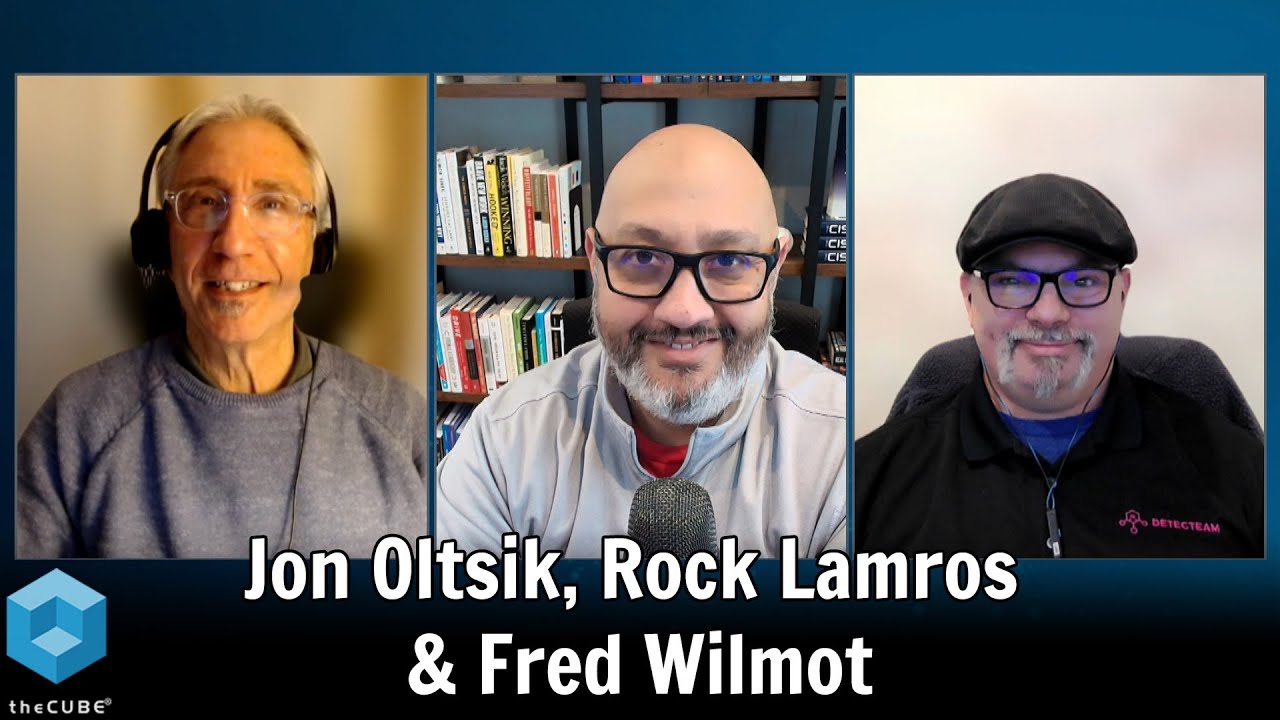
>> Hello again. This was day two of the Cyber Resiliency Summit, and we heard from distinguished analysts, John Olsik from CISOs, like Merritt Bayer, executives and experts from Cohesity, FujiFilm, KnowBe4, Vercel, Cloudflare and Broadcom. This is also the conclusion of the Cube Cyber Resiliency Summit. In the past couple of days, we covered a lot of ground with these experts and they really covered so many facets of cyber resiliency that I wouldn't be able to summarize all the ground we've actually covered. So stay tuned because it is such a vast topic that you can expect us, you can expect me, to keep covering this in detail. And in the next few weeks, I will actually share some fresh research I'm working on with you. So thank you for watching and please don't hesitate to get in touch. My name is Christophe Bertrand, Principal Analyst at theCUBEResearch.>> You get resilient by doing the right things and a product can help you get there, but the most important thing is also the skills and the operational outcomes, the processes that you build around that product. Because with the best products in the world, if you're not using it in the right way and you're not doing the right things with people that know how to use it, you're never going to achieve that utopia of being resilient to the kind of attacks that we see today.>> Where tape fits in, it really supports the three, two, what we call, well, three, two, one, but now we call it three, two, one, one, zero. Three copies of data for redundancy. Two different types of media for diversity. One copy off-site, one copy offline. And that's really where tape I think plays a critical role. And then...>> You operate, maintain five arrays. These are located in North Atlantic and the North Pacific off Greenland, off North Carolina, off Oregon and Washington and in the Gulf of Alaska. And each one of those arrays contains fixed and mobile platforms, and we attach hundreds of sensors to those platforms. And we've been doing this for about 10 years now.>> Always something within human nature that will take over. And so human risk management is all about understanding human nature at its core in building programs and even technology-based guardrails and measurement systems, that understand humanity at its core and work with human nature rather than against it.>> Hello everyone. I'm John Olsik, Analyst-at-Large, and welcome to the Cybersecurity Resilience Summit. I'm here and I'm joined with two good friends and serial CISOs, Rock Lambros and Fred Wilmot. Welcome guys, and please introduce yourself. Rock you start.>> Everyone's the security expert. No one's the security expert. And so that's the challenge with that overly shared responsibility. You do need people on point. You do need to have the confidence. And I'm a firm believer just like Russel in the shared responsibility model, so understand...>> I think resiliency is hugely important. We always forget that in the CIA triad, to the extent that we accept that as one of the definitions of security where it's confidentiality, integrity, availability, that, that availability piece is actually really critical. And that your data that is so well protected might not mean anything to the business unless you can actually access the infrastructure. And I think...>> So much interesting traffics, huge customers that rely on us every day to run their business comes through our network. And I think when you think about that, it's this amazing job, this amazing technology. We use our own technology, that's part of Customer Zero. We use our own technology to defend ourself, which also helps make our products better, which is very cool.>> What is fascinating for me, and also what's interesting for me is that as an infrastructure provider in Broadcom, we have to sort of evolve our infrastructure, our protection to ensure that we not only look at the legacy way of protecting against attacks, but also keeping up to date with the new ways of protecting against attacks. So that's what we do at Broadcom.