We just sent you a verification email. Please verify your account to gain access to
Cyber Resiliency Summit. If you don’t think you received an email check your
spam folder.
In order to sign in, enter the email address you used to registered for the event. Once completed, you will receive an email with a verification link. Open this link to automatically sign into the site.
Register For Cyber Resiliency Summit
Please fill out the information below. You will recieve an email with a verification link confirming your registration. Click the link to automatically sign into the site.
You’re almost there!
We just sent you a verification email. Please click the verification button in the email. Once your email address is verified, you will have full access to all event content for Cyber Resiliency Summit.
I want my badge and interests to be visible to all attendees.
Checking this box will display your presense on the attendees list, view your profile and allow other attendees to contact you via 1-1 chat. Read the Privacy Policy. At any time, you can choose to disable this preference.
Select your Interests!
add
Upload your photo
Uploading..
OR
Connect via Twitter
Connect via Linkedin
EDIT PASSWORD
Share
Forgot Password
Almost there!
We just sent you a verification email. Please verify your account to gain access to
Cyber Resiliency Summit. If you don’t think you received an email check your
spam folder.
In order to sign in, enter the email address you used to registered for the event. Once completed, you will receive an email with a verification link. Open this link to automatically sign into the site.
Sign in to gain access to Cyber Resiliency Summit
Please sign in with LinkedIn to continue to Cyber Resiliency Summit. Signing in with LinkedIn ensures a professional environment.
During the Cyber Resiliency Summit, Christophe Bertrand of theCUBE Research and Rich Gadomski, head of tape evangelism, data Storage solutions at Fujifilm North America, explore the latest advancements in tape technology, including ATOMM, NANOCUBIC and Barium Ferrite.
Gadomski highlights the significant capabilities of LTO-9 tape, which boasts an 18 TB native capacity and scales to over 1.4 PB with compression. He...Read more
exploreKeep Exploring
What is the role of FUJIFILM in the context of tape technology, specifically regarding their advancements in media technology and their roadmap for future developments?add
What advantages does the small size and high storage capacity of tape cartridges offer in terms of data storage and cyber resiliency?add
What are the benefits of using LTO-9 data cartridges compared to legacy tapes for moving petabytes of data offline offsite?add
What is one of the best ways to avoid making a ransom payment in cybersecurity?add
>> Hello and welcome back to the continuing coverage of theCUBE's Cyber Resiliency Summit. My name is Christophe Bertrand, Principal Analyst with theCUBE Research. I'm very pleased to be joined for this conversation by Rich Gadomski, an old friend who's the Head of Tape Evangelism at FUJIFILM. And Rich, why don't you introduce yourself for our audience?
Rich Gadomski
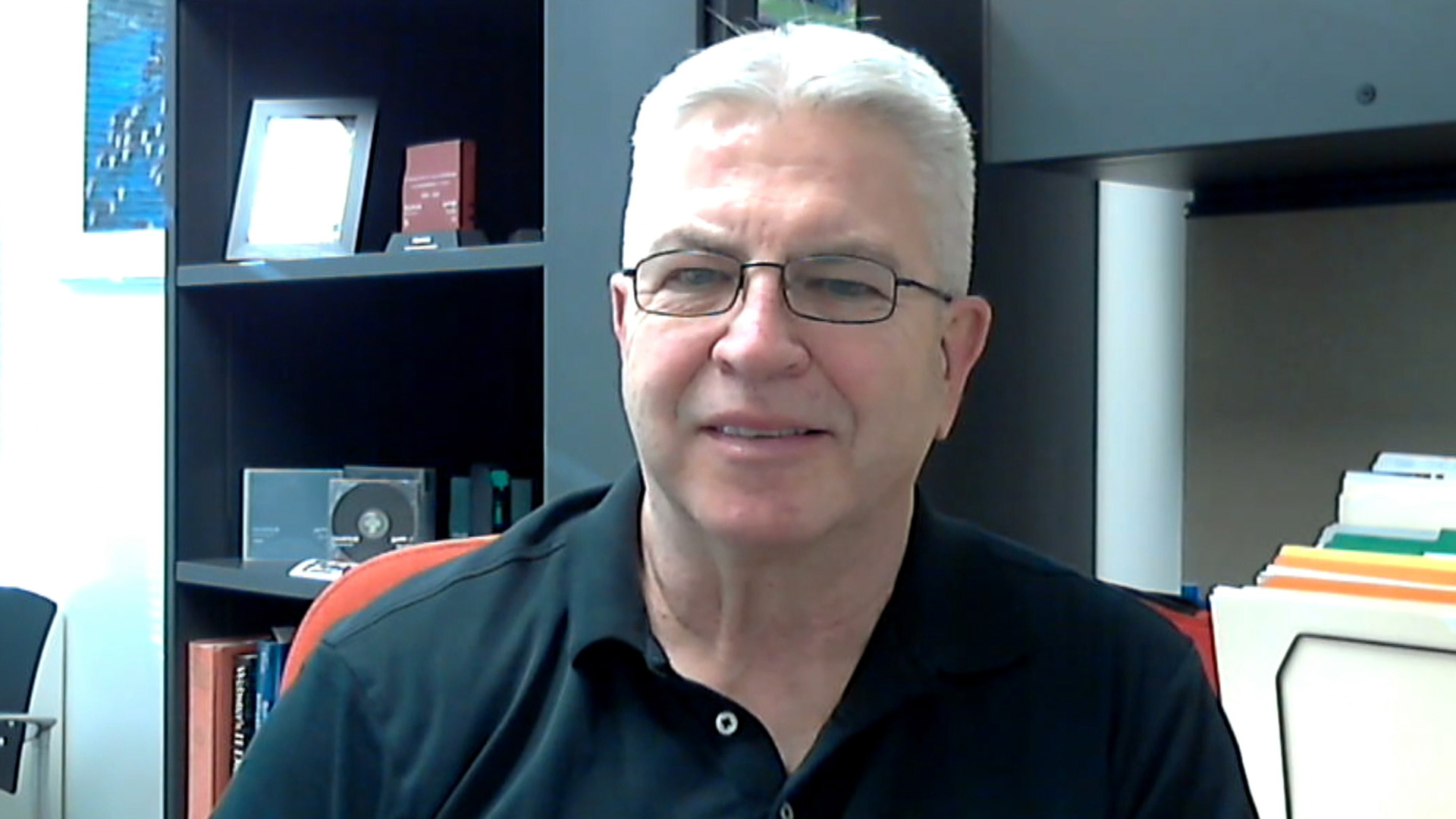
>> Yeah, thank you very much, Christophe. As you mentioned, my name is Rich Gadomski with FUJIFILM North America Corporation, data Storage solutions, and I'm the Head of Tape Evangelism. And what I do is promote the value proposition of tape to end users, channel partners, industry press, work with our OEMs in promoting tape. And I've been with FUJIFILM for more than 20 years now, so it's been a great ride and looking forward to many more years of promoting tape technology.
Christophe Bertrand
>> Yeah, so needless to say a couple of things about tape and its use cases. Through the years, a year and a half, I've talked quite a bit around data protection, obviously storage archiving, but really there's a lot of history with tape. And we'll connect the dots here in this conversation in terms of how it applies to cyber resiliency because there is a very, very important role for tape to play. Before we go there, I think it may be a good idea, Rich, to just take a little step back and talk about what tape technology really is, what does it mean and where is it going? So without going through the whole history, maybe looking at where we're at today and what's coming up in the next few years, what you have in on the roadmap and the role of FUJIFILM in the context of tape, more specifically, obviously it's a pretty important one.
Rich Gadomski
>> Right, yes. We consider ourselves definitely a leader in the development of media technology. We had several different breakthrough technologies. For example, ATOMM Technology, which developed the DLT product line. Now, NANOCUBIC and Barium Ferrite are really the building blocks for linear tape-open or LTO technology. So today's advanced modern tape technologies being used for backup, for archive. Some of the cloud service providers are using it for cold archive, for example, deep storage. We have an extended roadmap. Currently, we're on linear tape or LTO-9, which is an 18 terabyte native capacity, 45 terabytes compressed. And LTO-9 extends all the way up to LTO-14 in the future, which would actually be over 1.4 petabytes with data compression. So we continue to develop the technology, and one of the key things about tape is that the aerial density compared to HDD is very, very low. So that means that we have room to increase the aerial density in the future, and therefore that allows us to increase capacity as the roadmap demonstrates. And as we increase capacity, the cost of ownership will continue to be very, very competitive.
Christophe Bertrand
>> Right. So let's break this down because there's a lot of technology involved here, and you brought up a couple of important points, and I failed to mention there's also a whole green dimension to this. So the first point is for our viewers, if you have cold storage in the cloud, it's tape. So let's be clear about that. And if you think about the best recommendations out there in terms of what you need to do for backup and recovery in a context especially of cyber resiliency, you want immutability, you probably want object storage for some of that. And you also want a medium that's not going to be accessible to the bad guys and really protected from the production environment. And actually turns out by design by chance, things have evolved quite a bit in the past few years with cyber attacks, but tape is a great medium. Rich, you mentioned capacities, and I think people may not realize that the tape cartridge is the size of a notebook. It's really small. Exactly.
Rich Gadomski
>> Yeah, hand-held.
Christophe Bertrand
>> Yeah, exactly. A small notebook. A notebook, actually. I remember the bigger ones from a few years ago, and it's getting smaller and smaller. And the density piece is where the storage capacity comes from on top of other advantages. But the point is in something that holds in your hand, you'll be able to have petabytes of data moving forward, at least over a petabyte. So you think about that and you think about the space you need in your data center, or if you are using a cloud provider or a partner that provides services for you for storage, the advantages are pretty interesting. And now I go back to cyber resiliency. Why this matters is that you can actually have your whole environment on tape and you're only going to have more data, especially with the emergence of AI and other data generating type of technologies. And you're going to be able to protect everything on tape or should have it as part of your strategy. So Rich, can you walk us through where tape actually fits in a cyber resiliency strategy for any organization really, but maybe let's start with the enterprise and then talk about smaller organizations after that.
Rich Gadomski
>> Okay. I'm probably preaching to the choir here, and as we sit here at the beginning of 2025, the final numbers for 2024 aren't in yet, but it figures to be an even more dramatic year in terms of ransomware attacks, certainly in the number of ransoms that were paid and in data loss that companies experience. So ransomware is still a really, really big issue. Personally, I think that the shiny new thing like AI has taken cyber crime and ransomware out of the spotlight, but it still is a very, very significant problem. And in fact, AI is just enabling the cyber criminals to be even more effective. So where tape fits in, it really supports, the 32, what we call, well, 321, but now we call it 32110, three copies of data for redundancy, two different types of media for diversity, one copy off site, one copy offline and that's really where tape I think plays a critical role. And then the zero is before the copy goes offline, make sure it doesn't have any errors or any viruses included. But the one copy offline, when you look at the recommendations for FBI, for SISA, for Department of Homeland Security, they all strongly recommend not only offsite copies but offline copies. And the problem with offsite copies is they can still be connected to the network. So really to kind of thwart the hackers and the ransomware guys, having that data isolated offline, not connected to the network, it means that it cannot be compromised. It cannot be reached by them. Tape was always designed to be portable and removable, as you can see, it's easily held in your hand, ejected from a tape library system, move it offsite, move it offline, and it's affordable so you can actually afford to do that. Christophe, you mentioned petabytes in your hand. Yeah, that'll be in the future. But today, to move one petabyte of data on LTO-9 requires just 22 of these data cartridges with data compression. So compared to legacy tapes of the past, moving a petabyte offline offsite would've taken hundreds of cartridges. So the TCO for doing one petabyte offline is extremely low, 60, 70% lower than if you're doing that on disk or cloud. You mentioned the energy component tape consumes 80% less energy, 97% less COâ‚‚ e-carbon footprint. So there's a lot of advantages. The whole thing about fighting ransomware and cybersecurity is that it is truly a multifaceted discipline. You can't just rely on any one aspect to protect yourself. And of course, you need to keep the cyber criminals out of the front door in the first place. Don't click on that email if it's suspicious. So it is multifaceted, it's multilayered and having a solid copy, backup copy, offline gives a lot of companies the confidence not to pay the ransom. And that's really key.
Christophe Bertrand
>> Absolutely. And the other thing I think that should be pointed out is most, actually everyone in the backup and recovery community space, most solutions today fully support tape and tape automation, et cetera. So that's really not an issue. But what's interesting here is that there is also a lot of technology involved in making this very usable. Literally, you have the ability to mount a tape or a system or even just one tape if you're a small company, a small autoloader to your Windows operating system or your Mac, and then it's actually used quite heavily in the number of professions where you need to save the data and need to put it away. And because your IP, and maybe you're a small shop, you're small office, you're remote office, you're a satellite branch type of thing. So I think there's a lot of technology involved here, and that sometimes doesn't get as much visibility as I think it should get. And when it comes to cyber resiliency, I'm definitely a very strong proponent to your point of having this multifaceted approach. That includes tape, especially as you talk about the need to really protect the data and make it absolutely unreachable. So to do that though, you can't just do it alone as FUJIFILM. You mentioned an ecosystem, you have a number of partners, manufacturers, OEMs. Can you tell us more about who you work with, who the key names might be? And I know it's a long list, so maybe you don't forget anyone, but just in general terms, and then what type of initiatives do you have as an industry when it comes to cyber resiliency and adjacent technologies like object storage and other technologies that help in the context?
Rich Gadomski
>> Sure. Well, we work very closely with the technology provider companies, what we call the TPCs, and that includes IBM, HPE, and Quantum. They all market tape drives and tape libraries as well as software. So they have a website called LTO.org. And I urge everybody to go there because there's a tremendous amount of resources available on this very subject of ransomware, tape air gap. Just recently they posted an excellent white paper from David Balcar who's a expert ethical hacker, and he's got a lot of great recommendations. So we work very closely with the TPCs, but there are so many more companies in the ecosystem, people like Spectra Logic and QStar, Qualstar and many others. It really runs the gamut, Zendata. There are others that service the media and entertainment market. Some specialize in oil and entertainment, federal government, really almost all industries. Anybody who's creating data needs to store protect it, copy it, are using tape systems. So it's a pretty broad ecosystem, but definitely as an excellent resource for listeners would be very simply LTO.org.
Christophe Bertrand
>> Absolutely. It's a great site. I certainly know it well, and there are lots of white papers and other resources. Some interesting reports as well and research. So definitely something I would urge our viewers here to really go take a look at. Rich, you've seen a lot of customers build solutions around tape through the partnerships, through the ecosystem. If we double click on the ransomware piece and read cyber resiliency piece and really think about what has worked best for those customers, what type of recommendations would you have? What would you say, if I'm an end user, maybe I'm in a mid-sized business or I'm in an enterprise, what should I be doing to consider or build more presence in terms of my tape protection? Are there some gotchas? Are there some things that really people should consider?
Rich Gadomski
>> Well, I'm not sure about gotchas. There's a price point and a system from desktop right on up to enterprise. So LTO technology is affordable and available to any size user. So I don't think it's a gotchu there, but what I wanted to say was if you really want to incorporate tape into your cybersecurity plan, fill out an application for cyber insurance and just go through the questions that they ask. And one of the first questions they will ask is, do you have off-site, offline backups? Because that really is one of the best ways at the end of the day to avoid that ransom payment. There's lots of resources available again on LTO.org, and there's a product from desktop to autoloader to small library, midsize library, large library. Some of the largest data storage users in the world have significant tape libraries. But you look at media, entertainment industry, a lot of those guys are using desktop pieces. So I think that there's a solution for the broader market.
Christophe Bertrand
>> Right, and I will say the economic piece you mentioned a few times is important because why cyber resiliency I think is one of the use cases, I know you and I have talked quite a bit through the years about other use cases like compliance, which by the way is really part of cyber resiliency, archiving, long-term archiving, short-term archiving, etc. And there is also a lot of capacity and a lot of throughput available through the systems from your ecosystem partners. So I think again, a lot of the capabilities afforded by tape are critical for cyber resiliency. I'm very happy that we had a chance Rich to spend some time and educate our viewers here if they didn't know about tape, and maybe reconsider it. They thought, well, I had tape in the past, maybe... It's actually a great technology. It's a very modern cyber resiliency tool, which has seen a lot of evolution in the past few years and has a very aggressive roadmap based on the capacities you mentioned and certainly the price point advantages. So Rich, I'd like to thank you so much for your time today.
Rich Gadomski
>> Thank you very much for having me, Christophe.
Christophe Bertrand
>> And stay tuned for more coverage for what we're going to do here to help you build a cyber resilient environment. This is theCUBE's Cyber Resiliency Summit. My name is Christophe Bertrand, Principal Analyst with theCUBE Research. Stay tuned.