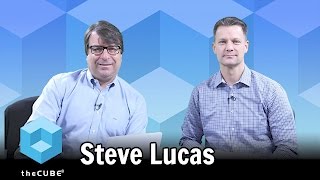
Chris Cummings, Chasm Institute & Peter Smails, Datos IO | CUBE Conversation with John Furrier
#CUBEConversation #theCUBE
https://siliconangle.com/2017/11/21/surviving-digital-disruption-promote-internal-ideas-thecube-cubeconversation/
Surviving the digital disruption by promoting more internal ideas
With data expanding rapidly outside the traditional four-wall data centers that have long sufficed for processing, traditional paradigms simply can’t hold up in the digital transformation. Enterprises now face the challenge of balancing new demands with existing infrastructure, shifting org structure and business strategy alike.
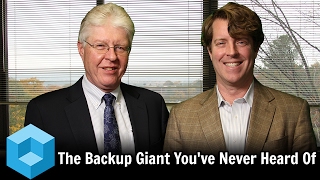
“You’ve got the challenge of trying to support your digital transformation initiatives, and it’s throwing all the underlying infrastructure foundations that an entire generation of IT [information technolgy] professionals has known into disarray,” said Peter Smails (pictured), VP of marketing and business development at Datos IO Inc. Rapid advancements in digital transformation are impacting businesses across industries in tremendous and unforeseen ways, and driving orgs to reinvent employee roles to promote a more data-driven enterprise.
Peter Smails and Chris Cummings, senior advisor to new technology ventures at Chasm Institute LLC, paid a visit to theCUBE, SiliconANGLE Media’s mobile livestreaming studio, and spoke with host John Furrier (@furrier) at SiliconANGLE’s Palo Alto studio in California to talk about these transformations and offer insights, as well as predictions on where they’ll take the business in the future.
Collaborations key to transformation
As storage transitions from traditional data centers to elastic computing, infrastructure isn’t the only system that needs updating. Customers, organizations, and individual roles within IT teams are changing, and companies must adapt to secure the benefits of newly available tech.
“You see chief transformation officers, you see chief digital officers, you see system architects and DBAs, getting a more prominent role in the conversation,” Smails said. The proliferation of new personas can provide a challenge, and successful enterprises must focus on fostering collaborations from the onset to ensure streamlined work across teams and gain an edge in the disruption.
Further challenging IT teams is the fundamental re-architecting of the underlying stack vendors are pursuing in an effort to become more customer driven. “What used to be a monolithic-oriented, traditional, relational, on-prem database is now running in a microservices highly distributed configuration. … IT is challenged with … keeping up with that pace of change,” Smails said.
The pressure to migrate data to the cloud often stems from the idea that it will be far cheaper than previous processes systems, which is not universally true for all businesses. The move must be made strategically, and founded in a deep consideration for the value some variation on cloud or hybrid cloud can bring the company. “They’ve got to take what they were spending and move it to the things that are going to make money for them,” Cummings said.
For those just beginning their journey toward reinvention, Smails recommends maintaining core data in traditional processes and pushing ancillary data to the cloud to make room for innovation. “If you do it right, the cloud actually can give you architectural independence,” he said.
Taking a step toward the cloud is a smart move for businesses in any industry, as the trend toward digital transformation appears poised for even more growth. “The traditional IT stack is being disrupted, and it’s all about embracing this application-centric, data-driven view of the world,” Smails concluded.
Watch the complete video interview below, and be sure to check out more of SiliconANGLE’s and theCUBE’s coverage.
Forgot Password
Almost there!
We just sent you a verification email. Please verify your account to gain access to
Wikibon & CUBEconversations 2016 | Palo Alto & Marlborough. If you don’t think you received an email check your
spam folder.
Sign in to Wikibon & CUBEconversations 2016 | Palo Alto & Marlborough.
In order to sign in, enter the email address you used to registered for the event. Once completed, you will receive an email with a verification link. Open this link to automatically sign into the site.
Please fill out the information below. You will recieve an email with a verification link confirming your registration. Click the link to automatically sign into the site.
You’re almost there!
We just sent you a verification email. Please click the verification button in the email. Once your email address is verified, you will have full access to all event content for Wikibon & CUBEconversations 2016 | Palo Alto & Marlborough.
I want my badge and interests to be visible to all attendees.
Checking this box will display your presense on the attendees list, view your profile and allow other attendees to contact you via 1-1 chat. Read the Privacy Policy. At any time, you can choose to disable this preference.
Select your Interests!
add
Upload your photo
Uploading..
OR
Connect via Twitter
Connect via Linkedin
EDIT PASSWORD
Share
Forgot Password
Almost there!
We just sent you a verification email. Please verify your account to gain access to
Wikibon & CUBEconversations 2016 | Palo Alto & Marlborough. If you don’t think you received an email check your
spam folder.
Sign in to Wikibon & CUBEconversations 2016 | Palo Alto & Marlborough.
In order to sign in, enter the email address you used to registered for the event. Once completed, you will receive an email with a verification link. Open this link to automatically sign into the site.
Sign in to gain access to Wikibon & CUBEconversations 2016 | Palo Alto & Marlborough
Please sign in with LinkedIn to continue to Wikibon & CUBEconversations 2016 | Palo Alto & Marlborough. Signing in with LinkedIn ensures a professional environment.
Are you sure you want to remove access rights for this user?
Details
Manage Access
email address
Community Invitation
Chris Cummings, Chasm Institute & Peter Smails, Datos IO | CUBE Conversation Nov 2017
Chris Cummings, Chasm Institute & Peter Smails, Datos IO | CUBE Conversation with John Furrier
#CUBEConversation #theCUBE
https://siliconangle.com/2017/11/21/surviving-digital-disruption-promote-internal-ideas-thecube-cubeconversation/
Surviving the digital disruption by promoting more internal ideas
With data expanding rapidly outside the traditional four-wall data centers that have long sufficed for processing, traditional paradigms simply can’t hold up in the digital transformation. Enterprises now face the challenge of balancing new demands with existing infrastructure, shifting org structure and business strategy alike.
“You’ve got the challenge of trying to support your digital transformation initiatives, and it’s throwing all the underlying infrastructure foundations that an entire generation of IT [information technolgy] professionals has known into disarray,” said Peter Smails (pictured), VP of marketing and business development at Datos IO Inc. Rapid advancements in digital transformation are impacting businesses across industries in tremendous and unforeseen ways, and driving orgs to reinvent employee roles to promote a more data-driven enterprise.
Peter Smails and Chris Cummings, senior advisor to new technology ventures at Chasm Institute LLC, paid a visit to theCUBE, SiliconANGLE Media’s mobile livestreaming studio, and spoke with host John Furrier (@furrier) at SiliconANGLE’s Palo Alto studio in California to talk about these transformations and offer insights, as well as predictions on where they’ll take the business in the future.
Collaborations key to transformation
As storage transitions from traditional data centers to elastic computing, infrastructure isn’t the only system that needs updating. Customers, organizations, and individual roles within IT teams are changing, and companies must adapt to secure the benefits of newly available tech.
“You see chief transformation officers, you see chief digital officers, you see system architects and DBAs, getting a more prominent role in the conversation,” Smails said. The proliferation of new personas can provide a challenge, and successful enterprises must focus on fostering collaborations from the onset to ensure streamlined work across teams and gain an edge in the disruption.
Further challenging IT teams is the fundamental re-architecting of the underlying stack vendors are pursuing in an effort to become more customer driven. “What used to be a monolithic-oriented, traditional, relational, on-prem database is now running in a microservices highly distributed configuration. … IT is challenged with … keeping up with that pace of change,” Smails said.
The pressure to migrate data to the cloud often stems from the idea that it will be far cheaper than previous processes systems, which is not universally true for all businesses. The move must be made strategically, and founded in a deep consideration for the value some variation on cloud or hybrid cloud can bring the company. “They’ve got to take what they were spending and move it to the things that are going to make money for them,” Cummings said.
For those just beginning their journey toward reinvention, Smails recommends maintaining core data in traditional processes and pushing ancillary data to the cloud to make room for innovation. “If you do it right, the cloud actually can give you architectural independence,” he said.
Taking a step toward the cloud is a smart move for businesses in any industry, as the trend toward digital transformation appears poised for even more growth. “The traditional IT stack is being disrupted, and it’s all about embracing this application-centric, data-driven view of the world,” Smails concluded.
Watch the complete video interview below, and be sure to check out more of SiliconANGLE’s and theCUBE’s coverage.