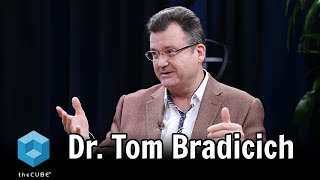
Seth Ravin, @RiminiStreet, Co-Founder & CEO at Rimini Street sits down with Jeff Frick for a CUBEConversation at theCUBE Studio in Palo Alto, CA.
https://siliconangle.com/2018/12/28/qa-rimini-street-helps-enterprise-put-system-operating-costs-back-into-innovation-cubeconversations/
Q&A: Rimini Street helps put operating costs back into innovation
The rapid advancements of digital evolution are driving business growth through new systems capabilities and efficiencies, but keeping pace with the constant maintenance around software patching and upgrades can actually hinder the productivity these systems are built to encourage.
That’s why Seth Ravin (pictured), chief executive officer of Rimini Street Inc., a provider of enterprise software support products and services, created a support system to eliminate unnecessary operating costs and enable businesses to allocate funds toward innovation.
Ravin sat down with Jeff Frick (@JeffFrick), host of theCUBE, SiliconANGLE Media’s mobile livestreaming studio, at theCUBE’s studio in Palo Alto, California. They discussed the challenges of working within the constraints of expensive release cycles and how Rimini Street handles maintenance at a lower cost with unique customer needs in mind.
[Editor’s note: The following answers have been condensed for clarity.]
Give us a quick overview [of] what your core business model is.
Ravin: The enterprise software space has about $160 billion that’s spent every year on annual maintenance fees, but this market has not been a competitive market. Those companies drive north of 90 percent profit margins, and their customers are not all that happy with the service. So we came in and offered a service at 50 percent off that provides a better service overall.
What are some of the things that should be included in that maintenance fee?
Ravin: Tax, legal and reg updates, which everybody needs when you’re running a global company. When things break, you need to get them fixed. You also need advice and counsel in these very complex, large systems. We don’t offer upgrades. We don’t offer new versions of the product. We extend the life of these existing products for 15 to 20 years beyond what the vendor would consider their normal support life.
You could take your car to the dealer, [or] you could take it to your local mechanic who you might think is better at fixing that system. Do you go down the vendor’s roadmap, which includes upgrades, updates and costs that are very expensive [and] designed around what the vendor wants to do? Or, do you choose to go down a business-driven roadmap, which is focused around competitive advantage and growth? We are the company that works on the business-driven roadmaps.
We have hundreds of engineers around the world, and we are good at fixing these core systems and providing the updates needed to keep them moving forward. Instead of paying a 20 percent annual fee just for maintenance, they can [put] half of that money into new innovation.
How’d you come up with the idea?
Ravin: I was in a business where I had to try and force customers to take these upgrades, move people forward onto these new releases. I had an epiphany one day that said, “I am tired of selling people things they don’t want.”
The products that we deal with are so mature that they don’t need to be changed out that frequently. We want to move away from what the vendor wants and focus on what is right for the company to allow them to shift more spending into these systems of innovation. The mission of IT is to support competitive advantage and growth now, not just to run a data center.
When things need to be changed proactively, like a tax, legal and regulatory update, they have a very fast turnaround with an assigned engineer. Our customers call their engineers directly, which allows them to get support from senior people very quickly.
Many customers wind up spending 90 percent of their budget keeping the lights on, paying maintenance bills, running a data center, and that leaves very little money for innovation, which they need for that competitive advantage and growth. We are helping them shift money from the side of keeping the lights on into innovation.
Where do you guys go next?
Ravin: Today, we replace the vendor’s maintenance. Tomorrow, we may do more of the work inside the IT organization, expanding the definition of support so that we can provide freed-up capital, time and resources to focus on innovation. In today’s world, you’re either growing or you’re dying. We are helping companies make sure they keep their competitive edge and gain new ones.
#theCUBE #RiminiStreet #SiliconANGLE @SiliconANGLE theCUBE
Forgot Password
Almost there!
We just sent you a verification email. Please verify your account to gain access to
CUBE Conversations 2018 | Palo Alto and Boston. If you don’t think you received an email check your
spam folder.
Sign in to CUBE Conversations 2018 | Palo Alto and Boston.
In order to sign in, enter the email address you used to registered for the event. Once completed, you will receive an email with a verification link. Open this link to automatically sign into the site.
Register For CUBE Conversations 2018 | Palo Alto and Boston
Please fill out the information below. You will recieve an email with a verification link confirming your registration. Click the link to automatically sign into the site.
You’re almost there!
We just sent you a verification email. Please click the verification button in the email. Once your email address is verified, you will have full access to all event content for CUBE Conversations 2018 | Palo Alto and Boston.
I want my badge and interests to be visible to all attendees.
Checking this box will display your presense on the attendees list, view your profile and allow other attendees to contact you via 1-1 chat. Read the Privacy Policy. At any time, you can choose to disable this preference.
Select your Interests!
add
Upload your photo
Uploading..
OR
Connect via Twitter
Connect via Linkedin
EDIT PASSWORD
Share
Forgot Password
Almost there!
We just sent you a verification email. Please verify your account to gain access to
CUBE Conversations 2018 | Palo Alto and Boston. If you don’t think you received an email check your
spam folder.
Sign in to CUBE Conversations 2018 | Palo Alto and Boston.
In order to sign in, enter the email address you used to registered for the event. Once completed, you will receive an email with a verification link. Open this link to automatically sign into the site.
Sign in to gain access to CUBE Conversations 2018 | Palo Alto and Boston
Please sign in with LinkedIn to continue to CUBE Conversations 2018 | Palo Alto and Boston. Signing in with LinkedIn ensures a professional environment.
Are you sure you want to remove access rights for this user?
Details
Manage Access
email address
Community Invitation
Seth Ravin, Rimini Street | CUBE Conversation, December 2018
Seth Ravin, @RiminiStreet, Co-Founder & CEO at Rimini Street sits down with Jeff Frick for a CUBEConversation at theCUBE Studio in Palo Alto, CA.
https://siliconangle.com/2018/12/28/qa-rimini-street-helps-enterprise-put-system-operating-costs-back-into-innovation-cubeconversations/
Q&A: Rimini Street helps put operating costs back into innovation
The rapid advancements of digital evolution are driving business growth through new systems capabilities and efficiencies, but keeping pace with the constant maintenance around software patching and upgrades can actually hinder the productivity these systems are built to encourage.
That’s why Seth Ravin (pictured), chief executive officer of Rimini Street Inc., a provider of enterprise software support products and services, created a support system to eliminate unnecessary operating costs and enable businesses to allocate funds toward innovation.
Ravin sat down with Jeff Frick (@JeffFrick), host of theCUBE, SiliconANGLE Media’s mobile livestreaming studio, at theCUBE’s studio in Palo Alto, California. They discussed the challenges of working within the constraints of expensive release cycles and how Rimini Street handles maintenance at a lower cost with unique customer needs in mind.
[Editor’s note: The following answers have been condensed for clarity.]
Give us a quick overview [of] what your core business model is.
Ravin: The enterprise software space has about $160 billion that’s spent every year on annual maintenance fees, but this market has not been a competitive market. Those companies drive north of 90 percent profit margins, and their customers are not all that happy with the service. So we came in and offered a service at 50 percent off that provides a better service overall.
What are some of the things that should be included in that maintenance fee?
Ravin: Tax, legal and reg updates, which everybody needs when you’re running a global company. When things break, you need to get them fixed. You also need advice and counsel in these very complex, large systems. We don’t offer upgrades. We don’t offer new versions of the product. We extend the life of these existing products for 15 to 20 years beyond what the vendor would consider their normal support life.
You could take your car to the dealer, [or] you could take it to your local mechanic who you might think is better at fixing that system. Do you go down the vendor’s roadmap, which includes upgrades, updates and costs that are very expensive [and] designed around what the vendor wants to do? Or, do you choose to go down a business-driven roadmap, which is focused around competitive advantage and growth? We are the company that works on the business-driven roadmaps.
We have hundreds of engineers around the world, and we are good at fixing these core systems and providing the updates needed to keep them moving forward. Instead of paying a 20 percent annual fee just for maintenance, they can [put] half of that money into new innovation.
How’d you come up with the idea?
Ravin: I was in a business where I had to try and force customers to take these upgrades, move people forward onto these new releases. I had an epiphany one day that said, “I am tired of selling people things they don’t want.”
The products that we deal with are so mature that they don’t need to be changed out that frequently. We want to move away from what the vendor wants and focus on what is right for the company to allow them to shift more spending into these systems of innovation. The mission of IT is to support competitive advantage and growth now, not just to run a data center.
When things need to be changed proactively, like a tax, legal and regulatory update, they have a very fast turnaround with an assigned engineer. Our customers call their engineers directly, which allows them to get support from senior people very quickly.
Many customers wind up spending 90 percent of their budget keeping the lights on, paying maintenance bills, running a data center, and that leaves very little money for innovation, which they need for that competitive advantage and growth. We are helping them shift money from the side of keeping the lights on into innovation.
Where do you guys go next?
Ravin: Today, we replace the vendor’s maintenance. Tomorrow, we may do more of the work inside the IT organization, expanding the definition of support so that we can provide freed-up capital, time and resources to focus on innovation. In today’s world, you’re either growing or you’re dying. We are helping companies make sure they keep their competitive edge and gain new ones.
#theCUBE #RiminiStreet #SiliconANGLE @SiliconANGLE theCUBE