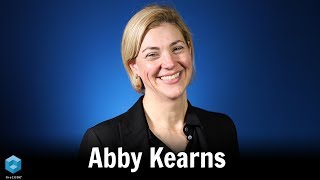
Abby Kearns, Cloud Foundry Foundation & Blair Hanley Frank, Principal Analyst at ISG sits down with John Furrier & special co-host, Abby Kearns, for a CUBEConversation at theCUBE Studios in Palo Alto, CA.
#CUBEConversation #theCUBE #BlairHanleyFrank
https://siliconangle.com/2019/04/05/hybrid-businesses-beware-shiny-pennies-in-rush-to-cloud-nirvana-cubeconversations/
Businesses must beware shiny pennies in the rush to the cloud
Many companies in hybrid computing limbo are in a rush to move to all-in cloud nirvana. But there are a lot of shiny pennies to stumble on along the path.
Enterprise information technology leaders know their names — microservices, containers and Kubernetes, to name a few temptations. But ask them exactly what’s useful about them, and they may have surprisingly little to say. They need research and realistic expectations to avoid disappointment, headaches and high costs. Take the cloud itself.
“If you’re a bank, and you tell me your goal is to be on the cloud … I’m like, ‘You’ve got the wrong goal,'” said Abby Kearns (pictured, left), executive director of the Cloud Foundry Foundation. But isn’t cloud always better than on-premises — more agile, elastic and the like?
That’s all-or-nothing thinking, she said, and it leads businesses to force round applications onto square infrastructure with poor results. “Your goal should be: How am I writing more applications and getting them out into the hands of my customer and changing my business faster?”
In two interviews, Kearns and Blair Hanley Frank (right), principal analyst at Information Services Group, spoke with John Furrier, host of theCUBE, SiliconANGLE Media’s video studio, at theCUBE’s studio in Palo Alto, California. They discussed smart ways for enterprises to adopt new tech (the full video interviews with transcripts are here and here).
Here’s the complete video interview with Abby Kearns:
Cloud may or may not be the right tool for the job. For example, when companies are end-of-lifing old hardware, moving applications to public cloud may be the perfect choice. At other times, the application would be better off on-premises.
There are, however, multiple factors today that won’t allow companies to run slow, rusty, outdated apps. Modern digital business demands highly available apps. Consumers expect frequent updates, constant availability, and enhanced user experience via data analytics, artificial intelligence and the like.
Rapid updating and iterating is difficult with monolithic legacy applications. However, transforming every application into a spanking-new cloud-native, microservices machine isn’t feasible for many companies.
For the foreseeable future, most companies will have to straddle hybrid environments with some workloads on-prem and some in cloud. They can benefit from new technologies if they do their research, keep their expectations realistic, and don’t overinvest in one trendy technology.
Not-so-microservices and lift-and-shift mania
There are many new technologies that might get companies in over their heads if they’re not prepared. One is microservices architectures for cloud-native apps. Frank recounted a conversation with one startup that went microservices crazy.
“They were like, ‘We’re going to go to microservices. That’s what we want to do because that’s the future. That’s what a modern application looks like.’ And they started … what I would call radically decomposing their application,” Frank said.
When developers go down to the atomic level, the number of services can get too high to handle. “What they figured out was that it was a massive headache. And so they actually then took it and sort of recomposed the application into not microservice,s but what they called mega-services,” he said. Taking a step back from the cutting edge resulted in high-performing apps that were easier to build and run.
Here’s the complete video interview with Blair Hanley Frank and Abby Kearns:
Companies moving to cloud-native architectures also face a skills shortage. That is why Kearns recommends “reskilling” existing developers in cloud-native methods rather than bidding for scarce, expensive, ready-made experts.
Containers (a virtualized method for running distributed apps) are often viewed as a way to magically turn legacy apps to cloud apps. The open-source container orchestrator Kubernetes is also hailed as an easy ticket to cloud. This is “shiny penny” thinking, according to Kearns.
They might get apps to cloud. But by themselves they don’t by make them cloud-native, and they don’t make teams more agile or iterative. “The work is the culture part and the team part and really figuring out the applications I need to create and how do I iterate on those applications,” she said.
Forgot Password
Almost there!
We just sent you a verification email. Please verify your account to gain access to
CUBE Conversation - Q2 2019. If you don’t think you received an email check your
spam folder.
In order to sign in, enter the email address you used to registered for the event. Once completed, you will receive an email with a verification link. Open this link to automatically sign into the site.
Register For CUBE Conversation - Q2 2019
Please fill out the information below. You will recieve an email with a verification link confirming your registration. Click the link to automatically sign into the site.
You’re almost there!
We just sent you a verification email. Please click the verification button in the email. Once your email address is verified, you will have full access to all event content for CUBE Conversation - Q2 2019.
I want my badge and interests to be visible to all attendees.
Checking this box will display your presense on the attendees list, view your profile and allow other attendees to contact you via 1-1 chat. Read the Privacy Policy. At any time, you can choose to disable this preference.
Select your Interests!
add
Upload your photo
Uploading..
OR
Connect via Twitter
Connect via Linkedin
EDIT PASSWORD
Share
Forgot Password
Almost there!
We just sent you a verification email. Please verify your account to gain access to
CUBE Conversation - Q2 2019. If you don’t think you received an email check your
spam folder.
In order to sign in, enter the email address you used to registered for the event. Once completed, you will receive an email with a verification link. Open this link to automatically sign into the site.
Sign in to gain access to CUBE Conversation - Q2 2019
Please sign in with LinkedIn to continue to CUBE Conversation - Q2 2019. Signing in with LinkedIn ensures a professional environment.
Are you sure you want to remove access rights for this user?
Details
Manage Access
email address
Community Invitation
Abby Kearns, Cloud Foundry Foundation & Blair Hanley Frank, ISG | CUBEConversation, March 2019
Abby Kearns, Cloud Foundry Foundation & Blair Hanley Frank, Principal Analyst at ISG sits down with John Furrier & special co-host, Abby Kearns, for a CUBEConversation at theCUBE Studios in Palo Alto, CA.
#CUBEConversation #theCUBE #BlairHanleyFrank
https://siliconangle.com/2019/04/05/hybrid-businesses-beware-shiny-pennies-in-rush-to-cloud-nirvana-cubeconversations/
Businesses must beware shiny pennies in the rush to the cloud
Many companies in hybrid computing limbo are in a rush to move to all-in cloud nirvana. But there are a lot of shiny pennies to stumble on along the path.
Enterprise information technology leaders know their names — microservices, containers and Kubernetes, to name a few temptations. But ask them exactly what’s useful about them, and they may have surprisingly little to say. They need research and realistic expectations to avoid disappointment, headaches and high costs. Take the cloud itself.
“If you’re a bank, and you tell me your goal is to be on the cloud … I’m like, ‘You’ve got the wrong goal,'” said Abby Kearns (pictured, left), executive director of the Cloud Foundry Foundation. But isn’t cloud always better than on-premises — more agile, elastic and the like?
That’s all-or-nothing thinking, she said, and it leads businesses to force round applications onto square infrastructure with poor results. “Your goal should be: How am I writing more applications and getting them out into the hands of my customer and changing my business faster?”
In two interviews, Kearns and Blair Hanley Frank (right), principal analyst at Information Services Group, spoke with John Furrier, host of theCUBE, SiliconANGLE Media’s video studio, at theCUBE’s studio in Palo Alto, California. They discussed smart ways for enterprises to adopt new tech (the full video interviews with transcripts are here and here).
Here’s the complete video interview with Abby Kearns:
Cloud may or may not be the right tool for the job. For example, when companies are end-of-lifing old hardware, moving applications to public cloud may be the perfect choice. At other times, the application would be better off on-premises.
There are, however, multiple factors today that won’t allow companies to run slow, rusty, outdated apps. Modern digital business demands highly available apps. Consumers expect frequent updates, constant availability, and enhanced user experience via data analytics, artificial intelligence and the like.
Rapid updating and iterating is difficult with monolithic legacy applications. However, transforming every application into a spanking-new cloud-native, microservices machine isn’t feasible for many companies.
For the foreseeable future, most companies will have to straddle hybrid environments with some workloads on-prem and some in cloud. They can benefit from new technologies if they do their research, keep their expectations realistic, and don’t overinvest in one trendy technology.
Not-so-microservices and lift-and-shift mania
There are many new technologies that might get companies in over their heads if they’re not prepared. One is microservices architectures for cloud-native apps. Frank recounted a conversation with one startup that went microservices crazy.
“They were like, ‘We’re going to go to microservices. That’s what we want to do because that’s the future. That’s what a modern application looks like.’ And they started … what I would call radically decomposing their application,” Frank said.
When developers go down to the atomic level, the number of services can get too high to handle. “What they figured out was that it was a massive headache. And so they actually then took it and sort of recomposed the application into not microservice,s but what they called mega-services,” he said. Taking a step back from the cutting edge resulted in high-performing apps that were easier to build and run.
Here’s the complete video interview with Blair Hanley Frank and Abby Kearns:
Companies moving to cloud-native architectures also face a skills shortage. That is why Kearns recommends “reskilling” existing developers in cloud-native methods rather than bidding for scarce, expensive, ready-made experts.
Containers (a virtualized method for running distributed apps) are often viewed as a way to magically turn legacy apps to cloud apps. The open-source container orchestrator Kubernetes is also hailed as an easy ticket to cloud. This is “shiny penny” thinking, according to Kearns.
They might get apps to cloud. But by themselves they don’t by make them cloud-native, and they don’t make teams more agile or iterative. “The work is the culture part and the team part and really figuring out the applications I need to create and how do I iterate on those applications,” she said.