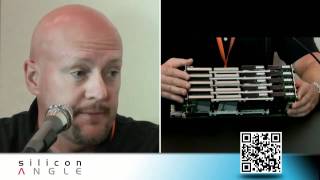
Tal Klein, Director of Technical Marketing at Citrix Systems, goes live inside theCube at Citrix Synergy 2011 to discuss virtualization and cloud computing.
In today’s world, every day is Bring Your Own Computer to work day. But the mobile scene is stretching into corporate environments with workers roping in smartphones and tablets under the Computer umbrella. And there’s not much anyone can do about it, including management and IT. We all know that coworker that pre-ordered their iPad, their face constantly aglow from the light of their smartphone. Business apps are jumping all over this mobility trend, launching Office suites, cloud file management and flow chart apps for the Apple App Store and Android Market. But is this really shifting corporate culture, or are we still just a bunch of geeky consumers that merely carry our devices to the office with us? A study commissioned by Citrix looked at whether or not these trends in mobility have gone mainstream yet, and the answer is yes–they’re on their way. Organizations are recognizing the benefits of adopting BYO device policies in the workplace, enabling a company to keep up with IT consumerization trends, and setting standards around forward-thinking strategies to attract tech-savvy employees that appreciate the promise of productivity and a happy work life. The survey, which was conducted independently by Vanson Bourne in May 2011, based its findings on responses from 700 IT professionals across seven markets. Some 100 IT professionals were surveyed in each market, spanning Austrailia, Canada, Germany, India, the Netherlands, the U.S. and the U.K. For each country, half of the respondents represented companies of 500-1,000 employees, while the other half work for companies of 1,000+ employees. And it turns out, 92% of IT organizations are at least aware of workers using their own devices in the workplace. That’s a start. Ninety-four percent of survey respondents intend to have a formal BYO policy in place by mid-2013, which is up from 44% today. The research listed two primary reasons for an organization’s plans for implementing a BYO policy, which the VP of Desktop Marketing & Strategy for Citrix, Mick Hollison, outlines:
“There are those who are using BYO to keep up with the rapid consumerization of IT and then there are forward-thinking CIOs who have embraced BYO as a way to attract the best talent, encourage a flexible working environment and raise productivity levels.”
While there’s a pretty big jump in the number of organizations hoping to have a BYO strategy in place by 2013, 62% of respondents indicate they already have invested or plan to invest in desktop virtualization. This is a particular area of interest for businesses, with 80% of those organizations intending to leverage desktop virtualization investments to support employee-owned devices. Desktop virtualization addresses the two key challenges cited by participants–security and device management. Seems easy enough when it comes to desktop virtualization, but what about employee-owned devices? There’s some evolution still anticipated in the device sector, as connected gadgets will only grow in popularity. Laptops are still commonplace for employees to bring to work, but tablets are centralizing themselves as the primary personal computing device for about 23% of workers by 2013, as opposed to 8% today. That leaves a pretty wide range of devices to manage, spanning a few different mobile operating systems, including iOS, Android, BlackBerry and Windows. Desktop virtualization technology will really come into play here, helping IT to manage the myriad of devices and platforms that make up the mobile ecosystem of tomorrow. A universal solution will certainly be required, but what will it look like? Citrix has an idea, as its virtualization products already address the main issues around network security and cloud access. The company’s most recent product pushlooked at several developing trends in this space, and sought to provide solutions for them all. From XenDesktop to GoToMeeting, virtualization is a key driver in Citrix’s long-term offerings, and developing out this space will further position Citrix for the workplace of tomorrow.
e
Forgot Password
Almost there!
We just sent you a verification email. Please verify your account to gain access to
Citrix Synergy 2011 | San Francisco. If you don’t think you received an email check your
spam folder.
In order to sign in, enter the email address you used to registered for the event. Once completed, you will receive an email with a verification link. Open this link to automatically sign into the site.
Register For Citrix Synergy 2011 | San Francisco
Please fill out the information below. You will recieve an email with a verification link confirming your registration. Click the link to automatically sign into the site.
You’re almost there!
We just sent you a verification email. Please click the verification button in the email. Once your email address is verified, you will have full access to all event content for Citrix Synergy 2011 | San Francisco.
I want my badge and interests to be visible to all attendees.
Checking this box will display your presense on the attendees list, view your profile and allow other attendees to contact you via 1-1 chat. Read the Privacy Policy. At any time, you can choose to disable this preference.
Select your Interests!
add
Upload your photo
Uploading..
OR
Connect via Twitter
Connect via Linkedin
EDIT PASSWORD
Share
Forgot Password
Almost there!
We just sent you a verification email. Please verify your account to gain access to
Citrix Synergy 2011 | San Francisco. If you don’t think you received an email check your
spam folder.
In order to sign in, enter the email address you used to registered for the event. Once completed, you will receive an email with a verification link. Open this link to automatically sign into the site.
Sign in to gain access to Citrix Synergy 2011 | San Francisco
Please sign in with LinkedIn to continue to Citrix Synergy 2011 | San Francisco. Signing in with LinkedIn ensures a professional environment.
Are you sure you want to remove access rights for this user?
Details
Manage Access
email address
Community Invitation
Tal Klein - Citrix Synergy 2011 - theCUBE
Tal Klein, Director of Technical Marketing at Citrix Systems, goes live inside theCube at Citrix Synergy 2011 to discuss virtualization and cloud computing.
In today’s world, every day is Bring Your Own Computer to work day. But the mobile scene is stretching into corporate environments with workers roping in smartphones and tablets under the Computer umbrella. And there’s not much anyone can do about it, including management and IT. We all know that coworker that pre-ordered their iPad, their face constantly aglow from the light of their smartphone. Business apps are jumping all over this mobility trend, launching Office suites, cloud file management and flow chart apps for the Apple App Store and Android Market. But is this really shifting corporate culture, or are we still just a bunch of geeky consumers that merely carry our devices to the office with us? A study commissioned by Citrix looked at whether or not these trends in mobility have gone mainstream yet, and the answer is yes–they’re on their way. Organizations are recognizing the benefits of adopting BYO device policies in the workplace, enabling a company to keep up with IT consumerization trends, and setting standards around forward-thinking strategies to attract tech-savvy employees that appreciate the promise of productivity and a happy work life. The survey, which was conducted independently by Vanson Bourne in May 2011, based its findings on responses from 700 IT professionals across seven markets. Some 100 IT professionals were surveyed in each market, spanning Austrailia, Canada, Germany, India, the Netherlands, the U.S. and the U.K. For each country, half of the respondents represented companies of 500-1,000 employees, while the other half work for companies of 1,000+ employees. And it turns out, 92% of IT organizations are at least aware of workers using their own devices in the workplace. That’s a start. Ninety-four percent of survey respondents intend to have a formal BYO policy in place by mid-2013, which is up from 44% today. The research listed two primary reasons for an organization’s plans for implementing a BYO policy, which the VP of Desktop Marketing & Strategy for Citrix, Mick Hollison, outlines:
“There are those who are using BYO to keep up with the rapid consumerization of IT and then there are forward-thinking CIOs who have embraced BYO as a way to attract the best talent, encourage a flexible working environment and raise productivity levels.”
While there’s a pretty big jump in the number of organizations hoping to have a BYO strategy in place by 2013, 62% of respondents indicate they already have invested or plan to invest in desktop virtualization. This is a particular area of interest for businesses, with 80% of those organizations intending to leverage desktop virtualization investments to support employee-owned devices. Desktop virtualization addresses the two key challenges cited by participants–security and device management. Seems easy enough when it comes to desktop virtualization, but what about employee-owned devices? There’s some evolution still anticipated in the device sector, as connected gadgets will only grow in popularity. Laptops are still commonplace for employees to bring to work, but tablets are centralizing themselves as the primary personal computing device for about 23% of workers by 2013, as opposed to 8% today. That leaves a pretty wide range of devices to manage, spanning a few different mobile operating systems, including iOS, Android, BlackBerry and Windows. Desktop virtualization technology will really come into play here, helping IT to manage the myriad of devices and platforms that make up the mobile ecosystem of tomorrow. A universal solution will certainly be required, but what will it look like? Citrix has an idea, as its virtualization products already address the main issues around network security and cloud access. The company’s most recent product pushlooked at several developing trends in this space, and sought to provide solutions for them all. From XenDesktop to GoToMeeting, virtualization is a key driver in Citrix’s long-term offerings, and developing out this space will further position Citrix for the workplace of tomorrow.
e