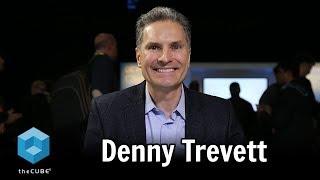
Jose de Castro, CTO, Cognitive Collaboration at Cisco, talks with John Furrier & Stu Miniman at Cisco Live 2018 in Barcelona, Spain.
#CLEUR #theCUBE
https://siliconangle.com/2018/02/06/the-hardware-software-data-trifecta-in-ciscos-enterprise-ai-cleur-thecube-guestoftheweek/
The hardware-software-data trifecta in Cisco’s enterprise AI
Artificial intelligence assistants like Amazon Echo combine a hardware device with software models trained on big data. But not many companies have the necessary chops in all key areas to build a highly intelligent device. Could Cisco Systems Inc.’s position as a legacy hardware provider transitioning to a software platform plant the company in the AI-assistant sizzle spot?
“We went from hardware to software; now we’re going from software to being a platform company in many ways,” said Jose de Castro (pictured), chief technology officer of cognitive collaboration and Spark platform at Cisco Systems.
The company is pulling together different elements of its portfolio to offer a range of applications and services for collaboration within enterprises. “We think of ourselves as building the operating system for teams,” de Castro said, who spoke with John Furrier (@furrier) and Stu Miniman (@stu), co-hosts of theCUBE, SiliconANGLE Media’s mobile livestreaming studio, during the Cisco Live event in Barcelona, Spain. (* Disclosure below.)
This week, theCUBE spotlights Jose de Castro as our Guest of the Week.
Spark AI soup
At the center of the platform taking shape is the company’s collaboration suite, Cisco Spark (not to be confused with the open-source Apache Spark platform for managing large data sets). Additional pieces include Cisco’s WebEx video and web conferencing solution and its TelePresence immersive collaboration tools.
“Our goal has been to make those three prongs of the strategy work really well together, and we’re not there yet,” said de Castro. Over the next few months, Cisco will roll out a number of new solutions expected to help the trio gel.
Two recent acquisitions nurtured Spark’s evolution and gave rise to the new Spark Assistant — an enterprise-ready voice assistant designed for meetings. In 2015, Ciso acquired Tropo Inc. to build out its developer ecosystem and boost its collaboration as a service business. Then last May, the company bought MindMeld Inc., an AI chat and voice platform.
“Spark is a digital assistant, just like Amazon Alexa or Apple Siri, but built for the enterprise with Cisco security behind it,” de Castro said.
Hard realities of enterprise AI
Cisco’s existing hardware presence in many companies will give it an easy in with customers, de Castro believes. “That is the single biggest asset that we have at Cisco in order to sort of penetrate this digital assistant, voice assistant market,” he said. “For us, it’s a software upgrade.”
Cisco does have devices with AI baked in, like its Room 70 all-in-one codec-quad, camera-70-inch single or dual display device with integrated speakers and microphones. The Cisco Spark Board for wireless presentation, digital whiteboarding and video conferencing was built with Nvidia Corp.’s Jetson TX1 visual and AI computing platform that also powers robots and drones.
The hardware question is mapping the AI assistant market in interesting ways. Some speculate that Amazon.com Inc.’s lack of a smartphone will cost it its lead. It’s Alexa-powered Echo device now has about 71 percent of smart-speaker market share, according to analysts. But Alexa does not have a smartphone built for it like Google Assistant (Pixel phones) and Bixby 2.0 (Samsung Galaxy phones), for instance. The Alexa app is downloadable, but this seems a bit counterintuitive for users of phones with an assistant already built in.
Cisco is aiming specifically for enterprise AI, not individual consumers. While Amazon introduced Alexa for Business recently, de Castro believes that Cisco has the upper hand against it and other competitors. “We already have the hardware in place,” he said. “For some of these other companies to kind of get into the conference room, they first have to convince IT, facilities and everyone to kind of install this new thing that is an unknown quantity.”
...
Watch the complete video interview below, and be sure to check out more of SiliconANGLE’s and theCUBE’s coverage of Cisco Live Barcelona 2018. (* Disclosure: Cisco Systems Inc. sponsored this segment of theCUBE. Neither Could Cisco Systems nor other sponsors have editorial control over content on theCUBE or SiliconANGLE.)
Forgot Password
Almost there!
We just sent you a verification email. Please verify your account to gain access to
Cisco Live EU 2018 | Barcelona. If you don’t think you received an email check your
spam folder.
In order to sign in, enter the email address you used to registered for the event. Once completed, you will receive an email with a verification link. Open this link to automatically sign into the site.
Register For Cisco Live EU 2018 | Barcelona
Please fill out the information below. You will recieve an email with a verification link confirming your registration. Click the link to automatically sign into the site.
You’re almost there!
We just sent you a verification email. Please click the verification button in the email. Once your email address is verified, you will have full access to all event content for Cisco Live EU 2018 | Barcelona.
I want my badge and interests to be visible to all attendees.
Checking this box will display your presense on the attendees list, view your profile and allow other attendees to contact you via 1-1 chat. Read the Privacy Policy. At any time, you can choose to disable this preference.
Select your Interests!
add
Upload your photo
Uploading..
OR
Connect via Twitter
Connect via Linkedin
EDIT PASSWORD
Share
Forgot Password
Almost there!
We just sent you a verification email. Please verify your account to gain access to
Cisco Live EU 2018 | Barcelona. If you don’t think you received an email check your
spam folder.
In order to sign in, enter the email address you used to registered for the event. Once completed, you will receive an email with a verification link. Open this link to automatically sign into the site.
Sign in to gain access to Cisco Live EU 2018 | Barcelona
Please sign in with LinkedIn to continue to Cisco Live EU 2018 | Barcelona. Signing in with LinkedIn ensures a professional environment.
Are you sure you want to remove access rights for this user?
Details
Manage Access
email address
Community Invitation
Jose de Castro, Cisco | Cisco Live EU 2018
Jose de Castro, CTO, Cognitive Collaboration at Cisco, talks with John Furrier & Stu Miniman at Cisco Live 2018 in Barcelona, Spain.
#CLEUR #theCUBE
https://siliconangle.com/2018/02/06/the-hardware-software-data-trifecta-in-ciscos-enterprise-ai-cleur-thecube-guestoftheweek/
The hardware-software-data trifecta in Cisco’s enterprise AI
Artificial intelligence assistants like Amazon Echo combine a hardware device with software models trained on big data. But not many companies have the necessary chops in all key areas to build a highly intelligent device. Could Cisco Systems Inc.’s position as a legacy hardware provider transitioning to a software platform plant the company in the AI-assistant sizzle spot?
“We went from hardware to software; now we’re going from software to being a platform company in many ways,” said Jose de Castro (pictured), chief technology officer of cognitive collaboration and Spark platform at Cisco Systems.
The company is pulling together different elements of its portfolio to offer a range of applications and services for collaboration within enterprises. “We think of ourselves as building the operating system for teams,” de Castro said, who spoke with John Furrier (@furrier) and Stu Miniman (@stu), co-hosts of theCUBE, SiliconANGLE Media’s mobile livestreaming studio, during the Cisco Live event in Barcelona, Spain. (* Disclosure below.)
This week, theCUBE spotlights Jose de Castro as our Guest of the Week.
Spark AI soup
At the center of the platform taking shape is the company’s collaboration suite, Cisco Spark (not to be confused with the open-source Apache Spark platform for managing large data sets). Additional pieces include Cisco’s WebEx video and web conferencing solution and its TelePresence immersive collaboration tools.
“Our goal has been to make those three prongs of the strategy work really well together, and we’re not there yet,” said de Castro. Over the next few months, Cisco will roll out a number of new solutions expected to help the trio gel.
Two recent acquisitions nurtured Spark’s evolution and gave rise to the new Spark Assistant — an enterprise-ready voice assistant designed for meetings. In 2015, Ciso acquired Tropo Inc. to build out its developer ecosystem and boost its collaboration as a service business. Then last May, the company bought MindMeld Inc., an AI chat and voice platform.
“Spark is a digital assistant, just like Amazon Alexa or Apple Siri, but built for the enterprise with Cisco security behind it,” de Castro said.
Hard realities of enterprise AI
Cisco’s existing hardware presence in many companies will give it an easy in with customers, de Castro believes. “That is the single biggest asset that we have at Cisco in order to sort of penetrate this digital assistant, voice assistant market,” he said. “For us, it’s a software upgrade.”
Cisco does have devices with AI baked in, like its Room 70 all-in-one codec-quad, camera-70-inch single or dual display device with integrated speakers and microphones. The Cisco Spark Board for wireless presentation, digital whiteboarding and video conferencing was built with Nvidia Corp.’s Jetson TX1 visual and AI computing platform that also powers robots and drones.
The hardware question is mapping the AI assistant market in interesting ways. Some speculate that Amazon.com Inc.’s lack of a smartphone will cost it its lead. It’s Alexa-powered Echo device now has about 71 percent of smart-speaker market share, according to analysts. But Alexa does not have a smartphone built for it like Google Assistant (Pixel phones) and Bixby 2.0 (Samsung Galaxy phones), for instance. The Alexa app is downloadable, but this seems a bit counterintuitive for users of phones with an assistant already built in.
Cisco is aiming specifically for enterprise AI, not individual consumers. While Amazon introduced Alexa for Business recently, de Castro believes that Cisco has the upper hand against it and other competitors. “We already have the hardware in place,” he said. “For some of these other companies to kind of get into the conference room, they first have to convince IT, facilities and everyone to kind of install this new thing that is an unknown quantity.”
...
Watch the complete video interview below, and be sure to check out more of SiliconANGLE’s and theCUBE’s coverage of Cisco Live Barcelona 2018. (* Disclosure: Cisco Systems Inc. sponsored this segment of theCUBE. Neither Could Cisco Systems nor other sponsors have editorial control over content on theCUBE or SiliconANGLE.)