Can you prevent financial disasters with data analysis? | #MITCDOIQ
by Brittany Greaner | Jul 14, 2016
It’s easy to get into a heated discussion over what’s most important when it comes to data analytics. But according to David Blaszkowsky, former senior VP and head of data governance at State Street Bank, what’s most important is something easily overlooked in the hustle and bustle of everyday work life: the data culture within your organization. You can instill and try to enforce as many rules regarding the collection of data as you like, but if you don’t have a culture within the organization that truly believes in the importance of data, it will eventually fall by the wayside.
This means organizations truly have to understand what their goals and missions with the data are. “It’s so much easier if from the beginning you’re thinking about what that data ought to be, what it ought to mean, how you want to use it, and what the implications are to how you should collect it and maintain it,” said Blaszkowsky. You can have plenty of well-crafted analytics systems in place, but what it really comes down to is the data itself and what you intend to do with it.
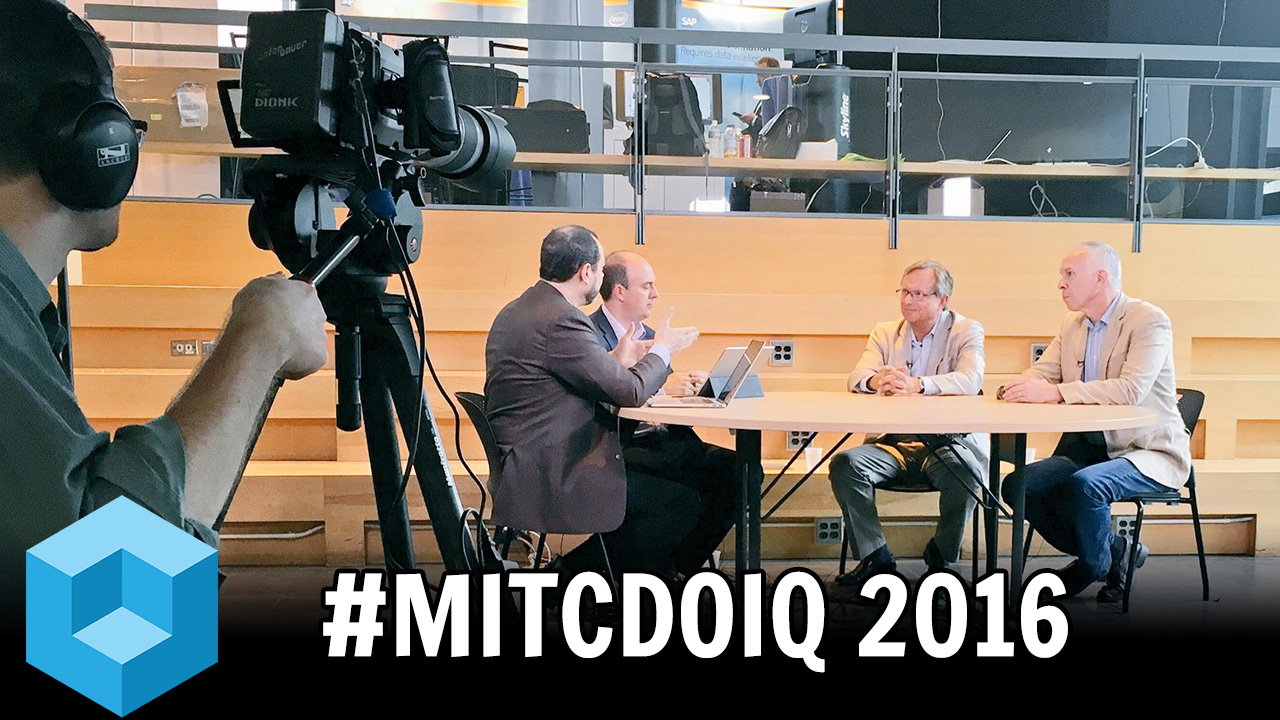
Blaszkowsky spoke with Stu Miniman (@stu), host of theCUBE, from the SiliconANGLE Media team, during the MIT CDOIQ Symposium taking place at the MIT Campus in Cambridge, MA.
Analytics that identify risk
When asked how to predict future financial disasters, Blaszkowsky emphasized that you can’t predict such a thing with any certainty, but you can identify when risk factors are emerging.
“First, identify the types of analytics required to identify risk, then standardize the data needed to populate those analytics,” he said.
However, cleaning up effectively after a disaster is something learned over time, he added. Using Blaszkowsky’s strategy is a great way to prepare for such a disaster, as well as having systems in place if there is an unfortunate event.
The evolution of the MIT CDOIQ Symposium
As someone who’s attended many of the MIT CDOIQ Symposiums over the years, Blaszkowsky has seen it grow, as the questions changed from ‘How do we find our data?’ to evaluating use cases.
Another reason he really enjoys the conference each year is the sharing of information and best practices between public, private and academic sectors alike. “It’s phenomenal,” he added.
#MITCDIOIQ
#theCUBE
Forgot Password
Almost there!
We just sent you a verification email. Please verify your account to gain access to
MIT Chief Data Officer and Information Quality Symposium (CDOIQ) 2016 | Cambridge. If you don’t think you received an email check your
spam folder.
Sign in to MIT Chief Data Officer and Information Quality Symposium (CDOIQ) 2016 | Cambridge.
In order to sign in, enter the email address you used to registered for the event. Once completed, you will receive an email with a verification link. Open this link to automatically sign into the site.
Register For MIT Chief Data Officer and Information Quality Symposium (CDOIQ) 2016 | Cambridge
Please fill out the information below. You will recieve an email with a verification link confirming your registration. Click the link to automatically sign into the site.
You’re almost there!
We just sent you a verification email. Please click the verification button in the email. Once your email address is verified, you will have full access to all event content for MIT Chief Data Officer and Information Quality Symposium (CDOIQ) 2016 | Cambridge.
Thanks for confirming your account. Now you can access MIT Chief Data Officer and Information Quality Symposium (CDOIQ) 2016 | Cambridge with this email address.
I want my badge and interests to be visible to all attendees.
Checking this box will display your presense on the attendees list, view your profile and allow other attendees to contact you via 1-1 chat. Read the Privacy Policy. At any time, you can choose to disable this preference.
Select your Interests!
add
Upload your photo
Uploading..
OR
Connect via Twitter
Connect via Linkedin
EDIT PASSWORD
Share
Forgot Password
Almost there!
We just sent you a verification email. Please verify your account to gain access to
MIT Chief Data Officer and Information Quality Symposium (CDOIQ) 2016 | Cambridge. If you don’t think you received an email check your
spam folder.
Sign in to MIT Chief Data Officer and Information Quality Symposium (CDOIQ) 2016 | Cambridge.
In order to sign in, enter the email address you used to registered for the event. Once completed, you will receive an email with a verification link. Open this link to automatically sign into the site.
Sign in to gain access to MIT Chief Data Officer and Information Quality Symposium (CDOIQ) 2016 | Cambridge
Please sign in with LinkedIn to continue to MIT Chief Data Officer and Information Quality Symposium (CDOIQ) 2016 | Cambridge. Signing in with LinkedIn ensures a professional environment.
Are you sure you want to remove access rights for this user?
Details
Manage Access
email address
Community Invitation
David Blaskowsky, Financial Semantics Collaborative | MIT CDOIQ 2016
Can you prevent financial disasters with data analysis? | #MITCDOIQ
by Brittany Greaner | Jul 14, 2016
It’s easy to get into a heated discussion over what’s most important when it comes to data analytics. But according to David Blaszkowsky, former senior VP and head of data governance at State Street Bank, what’s most important is something easily overlooked in the hustle and bustle of everyday work life: the data culture within your organization. You can instill and try to enforce as many rules regarding the collection of data as you like, but if you don’t have a culture within the organization that truly believes in the importance of data, it will eventually fall by the wayside.
This means organizations truly have to understand what their goals and missions with the data are. “It’s so much easier if from the beginning you’re thinking about what that data ought to be, what it ought to mean, how you want to use it, and what the implications are to how you should collect it and maintain it,” said Blaszkowsky. You can have plenty of well-crafted analytics systems in place, but what it really comes down to is the data itself and what you intend to do with it.
Blaszkowsky spoke with Stu Miniman (@stu), host of theCUBE, from the SiliconANGLE Media team, during the MIT CDOIQ Symposium taking place at the MIT Campus in Cambridge, MA.
Analytics that identify risk
When asked how to predict future financial disasters, Blaszkowsky emphasized that you can’t predict such a thing with any certainty, but you can identify when risk factors are emerging.
“First, identify the types of analytics required to identify risk, then standardize the data needed to populate those analytics,” he said.
However, cleaning up effectively after a disaster is something learned over time, he added. Using Blaszkowsky’s strategy is a great way to prepare for such a disaster, as well as having systems in place if there is an unfortunate event.
The evolution of the MIT CDOIQ Symposium
As someone who’s attended many of the MIT CDOIQ Symposiums over the years, Blaszkowsky has seen it grow, as the questions changed from ‘How do we find our data?’ to evaluating use cases.
Another reason he really enjoys the conference each year is the sharing of information and best practices between public, private and academic sectors alike. “It’s phenomenal,” he added.
#MITCDIOIQ
#theCUBE