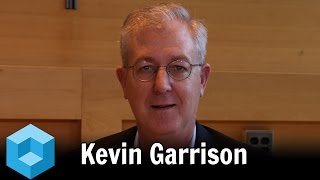
01. Justin Litz, SAP, Visits #theCUBE!. (00:19)
02. Henrique Pinto, SAP, Visits #theCUBE!. (00:30)
03. What Does The Enterprise Data Management Team Do. (00:39)
04. Why Is SAP Here At The Conference. (01:15)
05. What Are You Hearing From Customers On The CEO Journey. (02:04)
06. How Does The CEO Journey Affect The Go To Market. (03:49)
07. How Do You Implement A Data Governance Model. (05:46)
08. How Do You Maintain Quality In An Environment Where Data Is Streaming. (07:49)
09. How Are You Helping Customers Meet The Mandates. (11:38)
10. What Are Customers Asking You To Do On Top Of Hadoop. (13:17)
Track List created with http://www.vinjavideo.com.
--- ---
Data-driven decision making increases demand for analytics and governance services | #MITCDOIQ
by Amber Johnson | Jul 13, 2016
SAP SE has been on a journey that required quite a lot of information sharing with its customers. Justin Litz, global VP of Enterprise Data Management at SAP SE, said that conversations with customers generally revolve around the customer’s journey, but also comparing best practices. The goal is simple: to have “no breakage” in data. Litz wants to ensure data is “what it needs to be.”
Litz and Henrique Pinto, director of Global HANA COE at SAP, spoke with Stu Miniman (@stu) and Paul Gillin (@pgillin), cohosts of theCUBE, from the SiliconANGLE Media team, at MIT CDOIQ Symposium 2016 in Cambridge, MA. Pinto described how the industry is being effected by data-driven decision making, which has led to increasing demands for analytics and other governance services.
The data council
Litz explained that several data managers helped “build out” SAP SE from software to data governance. Nevertheless, the company is a sales organization and thereby rooted in business. This background has allowed SAP SE to “speak that business speak,” which has been useful, as executive sponsorship of any given project can change.
Internally, Litz remarked the “aha! moment” with data governance was that multiple fields need managing. After that, the process became determining which were most business critical. Litz said that call came down to answering, “What are we going after?” The answer was sales. They began with a top 20 list of the most relevant or business-critical fields of data governance. That list has evolved into 75. Each of those fields is a “line of business,” and each has its responsibility, Litz explained. He said these fields meet as a “data council” in order to share “roadmaps.”
Hadoop and HANA
Pinto commented that the “Hadoop standard” has dictated many aspects of data in the past 10 years. In response, he has seen quality being “built into the app” — essentially, to the end of having the application run on top of Hadoop. The difference between Hadoop and SAP HANA is clear: Hadoop is for storage, and HANA is for processing.
HANA “understands what businesses need,” explained Pinto. Thus, Hadoop and HANA work well together.
#MITCDIOIQ
#theCUBE
Forgot Password
Almost there!
We just sent you a verification email. Please verify your account to gain access to
MIT Chief Data Officer and Information Quality Symposium (CDOIQ) 2016 | Cambridge. If you don’t think you received an email check your
spam folder.
Sign in to MIT Chief Data Officer and Information Quality Symposium (CDOIQ) 2016 | Cambridge.
In order to sign in, enter the email address you used to registered for the event. Once completed, you will receive an email with a verification link. Open this link to automatically sign into the site.
Register For MIT Chief Data Officer and Information Quality Symposium (CDOIQ) 2016 | Cambridge
Please fill out the information below. You will recieve an email with a verification link confirming your registration. Click the link to automatically sign into the site.
You’re almost there!
We just sent you a verification email. Please click the verification button in the email. Once your email address is verified, you will have full access to all event content for MIT Chief Data Officer and Information Quality Symposium (CDOIQ) 2016 | Cambridge.
Thanks for confirming your account. Now you can access MIT Chief Data Officer and Information Quality Symposium (CDOIQ) 2016 | Cambridge with this email address.
I want my badge and interests to be visible to all attendees.
Checking this box will display your presense on the attendees list, view your profile and allow other attendees to contact you via 1-1 chat. Read the Privacy Policy. At any time, you can choose to disable this preference.
Select your Interests!
add
Upload your photo
Uploading..
OR
Connect via Twitter
Connect via Linkedin
EDIT PASSWORD
Share
Forgot Password
Almost there!
We just sent you a verification email. Please verify your account to gain access to
MIT Chief Data Officer and Information Quality Symposium (CDOIQ) 2016 | Cambridge. If you don’t think you received an email check your
spam folder.
Sign in to MIT Chief Data Officer and Information Quality Symposium (CDOIQ) 2016 | Cambridge.
In order to sign in, enter the email address you used to registered for the event. Once completed, you will receive an email with a verification link. Open this link to automatically sign into the site.
Sign in to gain access to MIT Chief Data Officer and Information Quality Symposium (CDOIQ) 2016 | Cambridge
Please sign in with LinkedIn to continue to MIT Chief Data Officer and Information Quality Symposium (CDOIQ) 2016 | Cambridge. Signing in with LinkedIn ensures a professional environment.
Are you sure you want to remove access rights for this user?
Details
Manage Access
email address
Community Invitation
Justin Litz & Henrique Pinto, SAP | MIT CDOIQ 2016
01. Justin Litz, SAP, Visits #theCUBE!. (00:19)
02. Henrique Pinto, SAP, Visits #theCUBE!. (00:30)
03. What Does The Enterprise Data Management Team Do. (00:39)
04. Why Is SAP Here At The Conference. (01:15)
05. What Are You Hearing From Customers On The CEO Journey. (02:04)
06. How Does The CEO Journey Affect The Go To Market. (03:49)
07. How Do You Implement A Data Governance Model. (05:46)
08. How Do You Maintain Quality In An Environment Where Data Is Streaming. (07:49)
09. How Are You Helping Customers Meet The Mandates. (11:38)
10. What Are Customers Asking You To Do On Top Of Hadoop. (13:17)
Track List created with http://www.vinjavideo.com.
--- ---
Data-driven decision making increases demand for analytics and governance services | #MITCDOIQ
by Amber Johnson | Jul 13, 2016
SAP SE has been on a journey that required quite a lot of information sharing with its customers. Justin Litz, global VP of Enterprise Data Management at SAP SE, said that conversations with customers generally revolve around the customer’s journey, but also comparing best practices. The goal is simple: to have “no breakage” in data. Litz wants to ensure data is “what it needs to be.”
Litz and Henrique Pinto, director of Global HANA COE at SAP, spoke with Stu Miniman (@stu) and Paul Gillin (@pgillin), cohosts of theCUBE, from the SiliconANGLE Media team, at MIT CDOIQ Symposium 2016 in Cambridge, MA. Pinto described how the industry is being effected by data-driven decision making, which has led to increasing demands for analytics and other governance services.
The data council
Litz explained that several data managers helped “build out” SAP SE from software to data governance. Nevertheless, the company is a sales organization and thereby rooted in business. This background has allowed SAP SE to “speak that business speak,” which has been useful, as executive sponsorship of any given project can change.
Internally, Litz remarked the “aha! moment” with data governance was that multiple fields need managing. After that, the process became determining which were most business critical. Litz said that call came down to answering, “What are we going after?” The answer was sales. They began with a top 20 list of the most relevant or business-critical fields of data governance. That list has evolved into 75. Each of those fields is a “line of business,” and each has its responsibility, Litz explained. He said these fields meet as a “data council” in order to share “roadmaps.”
Hadoop and HANA
Pinto commented that the “Hadoop standard” has dictated many aspects of data in the past 10 years. In response, he has seen quality being “built into the app” — essentially, to the end of having the application run on top of Hadoop. The difference between Hadoop and SAP HANA is clear: Hadoop is for storage, and HANA is for processing.
HANA “understands what businesses need,” explained Pinto. Thus, Hadoop and HANA work well together.
#MITCDIOIQ
#theCUBE