Anthony Brooks-Williams, CEO of HVR sits down with Dave Vellante for a Digital CUBE Conversation.
#theCUBE #CUBEConversation @SiliconANGLE theCUBE
https://siliconangle.com/2020/09/23/qa-hvrs-secret-sauce-quickly-securely-moving-data-cloud-scale-cubeconversations/
Q&A: HVR’s secret sauce for quickly and securely moving data to the cloud at scale
BY BETSY AMY-VOGT
Having data is one thing; having it where you want it is another. Moving data at scale is a problem that causes headaches for even the most experienced, data-first companies. It’s not like there’s a “man with a van” to call for fast, secure transport from the data center to the cloud … or multiple clouds. Or maybe there is.
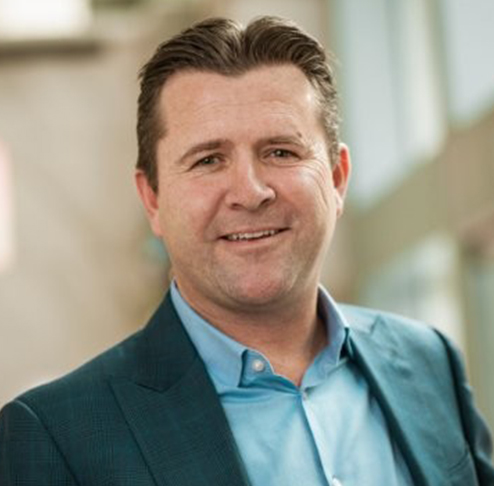
“Data really is the lifeblood of organizations today, and if that stops moving, or stops circulating, well, there’s a problem,” said Anthony Brooks-Williams (pictured), chief executive officer of HVR Software Inc. “So what we do is we move critical business data around these organizations.”
Brooks-Williams spoke with Dave Vellante, host of theCUBE, SiliconANGLE Media’s livestreaming studio, for a digital CUBE Conversation about HVR’s capabilities for high-volume data replication powered by log-based change data capture. (* Disclosure below.)
[Editor’s note: The following content has been condensed for clarity.]
So we should think about you as a high-speed kind of data mover; efficiency at scale. Is that right?
Brooks-Williams: At our core, we are CDC — change data capture — moving incremental workloads of data, moving the updates across the network, combined with the distributed architecture that’s highly flexible and extensible. So it’s moving as much data as possible but in a very efficient way.
So really the problem that you’re solving is getting all that data to a place where it actually can be acted on and turned into insights.
Brooks-Williams: Absolutely. Data is created in a number of different source systems, and our ability to support each of those in this very efficient way, using these techniques such as CDCs, is to go and capture the data at source and then move it together into some consolidated platform where [a company] can do the type of analysis they need to do on that. And, obviously, the cloud is the predominant target system of choice.
So we support a number of different technologies in there. But yes, it’s about getting all that data together so they can make decisions on all areas of the business.
It’s hard to move data at scale. So what’s the secret sauce that that allows you to be so effective at this?
Brooks-Williams: It starts with how you are going to acquire data. You want to do that in the least obtrusive way to the database. So we’ll actually go in and we read the transaction logs of each of these databases. Then, if you want to move data across a wide area network, the technique that a few companies use, such as ourselves, is change data capture. And you’re moving incremental updates, incremental workloads, the change data across a network.
But then combine that with the ability that we have around some of the compression techniques that we use, and then just into very distributed architecture and seeing that how that really fits in today’s world of real time and cloud. Those are table stakes things.
Now, of course, you’ve got to initially seed the target. You use data-reduction techniques so that you’re minimizing the amount of data. And then what?
Brooks-Williams: There’s an initial concept where you take a copy of all of that data that sits in that source system, and replicating that over to the target system, you turn on that CDC mechanism, which is then moving that change data. At the same time, you’re compressing it, you’re encrypting it, you’re making sure it’s highly secure and loading that in the most efficient way into their target systems.
The key thing is that we also have this compare-and-repair ability that’s built into the product. So we will move data across, and we make sure that data that gets moved from A to B is absolutely accurate. People want to know that their data can move fast, they want it to be efficient, but they also want it to be secure. They want to know that they have a peace of mind to make decisions on accurate data. The whole aim is to make sure that the customer feels safe, that the data that is moving is highly secure.
Are you running in the cloud, on-premises, or both? Or across multiple clouds? How does that work?
...
Watch the complete video interview below, and be sure to check out more of SiliconANGLE’s and theCUBE’s CUBE Conversations (* Disclosure: HVR Software Inc. sponsored this CUBE Conversation. Neither HVR nor other sponsors have editorial control over content on theCUBE or SiliconANGLE.)
Forgot Password
Almost there!
We just sent you a verification email. Please verify your account to gain access to
CUBE Conversations 2020 | Boston. If you don’t think you received an email check your
spam folder.
In order to sign in, enter the email address you used to registered for the event. Once completed, you will receive an email with a verification link. Open this link to automatically sign into the site.
Register For CUBE Conversations 2020 | Boston
Please fill out the information below. You will recieve an email with a verification link confirming your registration. Click the link to automatically sign into the site.
You’re almost there!
We just sent you a verification email. Please click the verification button in the email. Once your email address is verified, you will have full access to all event content for CUBE Conversations 2020 | Boston.
I want my badge and interests to be visible to all attendees.
Checking this box will display your presense on the attendees list, view your profile and allow other attendees to contact you via 1-1 chat. Read the Privacy Policy. At any time, you can choose to disable this preference.
Select your Interests!
add
Upload your photo
Uploading..
OR
Connect via Twitter
Connect via Linkedin
EDIT PASSWORD
Share
Forgot Password
Almost there!
We just sent you a verification email. Please verify your account to gain access to
CUBE Conversations 2020 | Boston. If you don’t think you received an email check your
spam folder.
In order to sign in, enter the email address you used to registered for the event. Once completed, you will receive an email with a verification link. Open this link to automatically sign into the site.
Sign in to gain access to CUBE Conversations 2020 | Boston
Please sign in with LinkedIn to continue to CUBE Conversations 2020 | Boston. Signing in with LinkedIn ensures a professional environment.
Are you sure you want to remove access rights for this user?
Details
Manage Access
email address
Community Invitation
Anthony Brooks-Williams, HVR | CUBE Conversation, September 2020
Anthony Brooks-Williams, CEO of HVR sits down with Dave Vellante for a Digital CUBE Conversation.
#theCUBE #CUBEConversation @SiliconANGLE theCUBE
https://siliconangle.com/2020/09/23/qa-hvrs-secret-sauce-quickly-securely-moving-data-cloud-scale-cubeconversations/
Q&A: HVR’s secret sauce for quickly and securely moving data to the cloud at scale
BY BETSY AMY-VOGT
Having data is one thing; having it where you want it is another. Moving data at scale is a problem that causes headaches for even the most experienced, data-first companies. It’s not like there’s a “man with a van” to call for fast, secure transport from the data center to the cloud … or multiple clouds. Or maybe there is.
“Data really is the lifeblood of organizations today, and if that stops moving, or stops circulating, well, there’s a problem,” said Anthony Brooks-Williams (pictured), chief executive officer of HVR Software Inc. “So what we do is we move critical business data around these organizations.”
Brooks-Williams spoke with Dave Vellante, host of theCUBE, SiliconANGLE Media’s livestreaming studio, for a digital CUBE Conversation about HVR’s capabilities for high-volume data replication powered by log-based change data capture. (* Disclosure below.)
[Editor’s note: The following content has been condensed for clarity.]
So we should think about you as a high-speed kind of data mover; efficiency at scale. Is that right?
Brooks-Williams: At our core, we are CDC — change data capture — moving incremental workloads of data, moving the updates across the network, combined with the distributed architecture that’s highly flexible and extensible. So it’s moving as much data as possible but in a very efficient way.
So really the problem that you’re solving is getting all that data to a place where it actually can be acted on and turned into insights.
Brooks-Williams: Absolutely. Data is created in a number of different source systems, and our ability to support each of those in this very efficient way, using these techniques such as CDCs, is to go and capture the data at source and then move it together into some consolidated platform where [a company] can do the type of analysis they need to do on that. And, obviously, the cloud is the predominant target system of choice.
So we support a number of different technologies in there. But yes, it’s about getting all that data together so they can make decisions on all areas of the business.
It’s hard to move data at scale. So what’s the secret sauce that that allows you to be so effective at this?
Brooks-Williams: It starts with how you are going to acquire data. You want to do that in the least obtrusive way to the database. So we’ll actually go in and we read the transaction logs of each of these databases. Then, if you want to move data across a wide area network, the technique that a few companies use, such as ourselves, is change data capture. And you’re moving incremental updates, incremental workloads, the change data across a network.
But then combine that with the ability that we have around some of the compression techniques that we use, and then just into very distributed architecture and seeing that how that really fits in today’s world of real time and cloud. Those are table stakes things.
Now, of course, you’ve got to initially seed the target. You use data-reduction techniques so that you’re minimizing the amount of data. And then what?
Brooks-Williams: There’s an initial concept where you take a copy of all of that data that sits in that source system, and replicating that over to the target system, you turn on that CDC mechanism, which is then moving that change data. At the same time, you’re compressing it, you’re encrypting it, you’re making sure it’s highly secure and loading that in the most efficient way into their target systems.
The key thing is that we also have this compare-and-repair ability that’s built into the product. So we will move data across, and we make sure that data that gets moved from A to B is absolutely accurate. People want to know that their data can move fast, they want it to be efficient, but they also want it to be secure. They want to know that they have a peace of mind to make decisions on accurate data. The whole aim is to make sure that the customer feels safe, that the data that is moving is highly secure.
Are you running in the cloud, on-premises, or both? Or across multiple clouds? How does that work?
...
Watch the complete video interview below, and be sure to check out more of SiliconANGLE’s and theCUBE’s CUBE Conversations (* Disclosure: HVR Software Inc. sponsored this CUBE Conversation. Neither HVR nor other sponsors have editorial control over content on theCUBE or SiliconANGLE.)