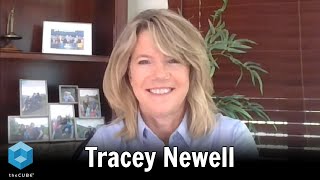
Beth Stewart, Founder & CEO of Trewstar sits down with theCUBE's Jeff Frick for a Digital CUBE Conversation.
Visit thecube.net for our full catalog of interviews.
#theCUBE #CUBEConversation #Trewstar @SiliconANGLE theCUBE
https://siliconangle.com/2020/06/24/forget-the-old-white-guys-in-suits-diversity-in-the-boardroom-brings-more-dynamic-decision-making-cubeconversations/
Diversity in the boardroom brings more dynamic decision-making
COVID-19 is forcing corporations to tackle digital transformation in record time. But while business operations may be modernizing, the board of directors calling the shots is often a diversity throwback to the 1990s. Sixty-six percent of Fortune 500 board members are still white and male.
“You can speak to anybody on a board and they know who it is that shouldn’t be there anymore,” said Beth Stewart (pictured), founder and chief executive officer of Trewstar Corporate Board Services. “It doesn’t require a whole process and bringing in outsiders and doing exhaustive studies. It’s just whether there’s somebody who’s willing to have those difficult conversations. The dirty little secret in corporate boards [is] this unwillingness of people to either ask somebody to move on or to move on themselves.”
Stewart spoke with Jeff Frick, host of theCUBE, SiliconANGLE Media’s livestreaming studio, for a digital CUBE Conversation on creating diversity in the boardroom.
Directors need to be dynamic
For almost a past decade, Trewstar has been helping corporations fill open board positions with new, diverse members. “We spend all day every day thinking about and sourcing and meeting with and getting referrals from people about diversity candidates,” Stewart stated.
Dynamic boards happen only when members offer a wide range of expertise and points of view, according to Stewart. “It’s incumbent on [boards] to get new perspectives and new information and skills and have [membership] be a better blend,” she said.
One problem limiting turnover is that board members have no incentive to leave. “Being on a board is a great thing. You get paid a lot. You’re at the top of the hierarchy. It’s the pinnacle of somebody’s career,” Stewart said.
She understands the reluctance to move on, but being a board member is a job not a privilege. Being on a board is not about personal prowess, but the business’s success: “We’re supposed to be doing what’s right for the company and the shareholders,” she stated.
Grassroots change comes from the bottom up, but creating a diverse board and diverse workforce “really has to come from the top,” according to Stewart. She cited one example of powerful leadership making a difference as those at State Street Global Advisors — which placed the Fearless Girl statue on Wall Street. Another example is Goldman Sachs. In January 2020, Goldman Sachs’ Chief Executive Officer David Solomon issued a statement that said: “Effective July 1, Goldman Sachs will only underwrite IPOs in the U.S. and Europe of private companies that have at least one diverse board member. And starting in 2021, we will raise this target to two diverse candidates for each of our IPO clients.”
Black Lives Matter is impacting board hires
While women have been slowly gaining ground in the boardroom, the majority of them were still white. The 2018 “Missing Pieces Report” by Deloitte showed that out of the 26% women holding seats on the board of Fortune 500 companies, 19.1% were Caucasian/white and only 5.8% other ethnicities.
A groundswell call for that to change has begun, in part, thanks to the Black Lives Matter movement, according to Stewart. “Of the new calls that we’ve been getting, I’d say 60 or 70% of them don’t want anything other than a racially diverse man or woman,” she said.
One search for board members that Trewstar recently undertook for a large media company turned up 21 African American women who met the company’s criteria.
But is the current call for black board members just companies jumping on the #BLM bandwagon? One test of the sincerity of a board to truly want change versus wanting to hire token diversity members is to look at the diversity of the workforce as a whole, according to Stewart. She quotes a colleague who is a senior African-American male board member: “ If all you’ve got is a black woman in diversity and inclusion, I don’t think you’re sincere,” he told her. “I don’t want to go on a board and check the box. I want to go on a board because I’m part of a company trying to make strides in these areas and where I can add value.”
Choosing diverse candidates doesn’t mean lowering standards
While diversity is Trewstar’s goal, it doesn’t come at the expense of candidate caliber. The company’s policy is to present a slate of highly qualified choices, all of whom just happen to be from an underrepresented group.
...
Watch the complete video interview below, and be sure to check out more of SiliconANGLE’s and theCUBE’s CUBE Conversations.
Forgot Password
Almost there!
We just sent you a verification email. Please verify your account to gain access to
CUBE Conversations 2020 | Palo Alto. If you don’t think you received an email check your
spam folder.
In order to sign in, enter the email address you used to registered for the event. Once completed, you will receive an email with a verification link. Open this link to automatically sign into the site.
Register For CUBE Conversations 2020 | Palo Alto
Please fill out the information below. You will recieve an email with a verification link confirming your registration. Click the link to automatically sign into the site.
You’re almost there!
We just sent you a verification email. Please click the verification button in the email. Once your email address is verified, you will have full access to all event content for CUBE Conversations 2020 | Palo Alto.
I want my badge and interests to be visible to all attendees.
Checking this box will display your presense on the attendees list, view your profile and allow other attendees to contact you via 1-1 chat. Read the Privacy Policy. At any time, you can choose to disable this preference.
Select your Interests!
add
Upload your photo
Uploading..
OR
Connect via Twitter
Connect via Linkedin
EDIT PASSWORD
Share
Forgot Password
Almost there!
We just sent you a verification email. Please verify your account to gain access to
CUBE Conversations 2020 | Palo Alto. If you don’t think you received an email check your
spam folder.
In order to sign in, enter the email address you used to registered for the event. Once completed, you will receive an email with a verification link. Open this link to automatically sign into the site.
Sign in to gain access to CUBE Conversations 2020 | Palo Alto
Please sign in with LinkedIn to continue to CUBE Conversations 2020 | Palo Alto. Signing in with LinkedIn ensures a professional environment.
Are you sure you want to remove access rights for this user?
Details
Manage Access
email address
Community Invitation
Beth Stewart, Trewstar | CUBE Conversation, June 2020
Beth Stewart, Founder & CEO of Trewstar sits down with theCUBE's Jeff Frick for a Digital CUBE Conversation.
Visit thecube.net for our full catalog of interviews.
#theCUBE #CUBEConversation #Trewstar @SiliconANGLE theCUBE
https://siliconangle.com/2020/06/24/forget-the-old-white-guys-in-suits-diversity-in-the-boardroom-brings-more-dynamic-decision-making-cubeconversations/
Diversity in the boardroom brings more dynamic decision-making
COVID-19 is forcing corporations to tackle digital transformation in record time. But while business operations may be modernizing, the board of directors calling the shots is often a diversity throwback to the 1990s. Sixty-six percent of Fortune 500 board members are still white and male.
“You can speak to anybody on a board and they know who it is that shouldn’t be there anymore,” said Beth Stewart (pictured), founder and chief executive officer of Trewstar Corporate Board Services. “It doesn’t require a whole process and bringing in outsiders and doing exhaustive studies. It’s just whether there’s somebody who’s willing to have those difficult conversations. The dirty little secret in corporate boards [is] this unwillingness of people to either ask somebody to move on or to move on themselves.”
Stewart spoke with Jeff Frick, host of theCUBE, SiliconANGLE Media’s livestreaming studio, for a digital CUBE Conversation on creating diversity in the boardroom.
Directors need to be dynamic
For almost a past decade, Trewstar has been helping corporations fill open board positions with new, diverse members. “We spend all day every day thinking about and sourcing and meeting with and getting referrals from people about diversity candidates,” Stewart stated.
Dynamic boards happen only when members offer a wide range of expertise and points of view, according to Stewart. “It’s incumbent on [boards] to get new perspectives and new information and skills and have [membership] be a better blend,” she said.
One problem limiting turnover is that board members have no incentive to leave. “Being on a board is a great thing. You get paid a lot. You’re at the top of the hierarchy. It’s the pinnacle of somebody’s career,” Stewart said.
She understands the reluctance to move on, but being a board member is a job not a privilege. Being on a board is not about personal prowess, but the business’s success: “We’re supposed to be doing what’s right for the company and the shareholders,” she stated.
Grassroots change comes from the bottom up, but creating a diverse board and diverse workforce “really has to come from the top,” according to Stewart. She cited one example of powerful leadership making a difference as those at State Street Global Advisors — which placed the Fearless Girl statue on Wall Street. Another example is Goldman Sachs. In January 2020, Goldman Sachs’ Chief Executive Officer David Solomon issued a statement that said: “Effective July 1, Goldman Sachs will only underwrite IPOs in the U.S. and Europe of private companies that have at least one diverse board member. And starting in 2021, we will raise this target to two diverse candidates for each of our IPO clients.”
Black Lives Matter is impacting board hires
While women have been slowly gaining ground in the boardroom, the majority of them were still white. The 2018 “Missing Pieces Report” by Deloitte showed that out of the 26% women holding seats on the board of Fortune 500 companies, 19.1% were Caucasian/white and only 5.8% other ethnicities.
A groundswell call for that to change has begun, in part, thanks to the Black Lives Matter movement, according to Stewart. “Of the new calls that we’ve been getting, I’d say 60 or 70% of them don’t want anything other than a racially diverse man or woman,” she said.
One search for board members that Trewstar recently undertook for a large media company turned up 21 African American women who met the company’s criteria.
But is the current call for black board members just companies jumping on the #BLM bandwagon? One test of the sincerity of a board to truly want change versus wanting to hire token diversity members is to look at the diversity of the workforce as a whole, according to Stewart. She quotes a colleague who is a senior African-American male board member: “ If all you’ve got is a black woman in diversity and inclusion, I don’t think you’re sincere,” he told her. “I don’t want to go on a board and check the box. I want to go on a board because I’m part of a company trying to make strides in these areas and where I can add value.”
Choosing diverse candidates doesn’t mean lowering standards
While diversity is Trewstar’s goal, it doesn’t come at the expense of candidate caliber. The company’s policy is to present a slate of highly qualified choices, all of whom just happen to be from an underrepresented group.
...
Watch the complete video interview below, and be sure to check out more of SiliconANGLE’s and theCUBE’s CUBE Conversations.