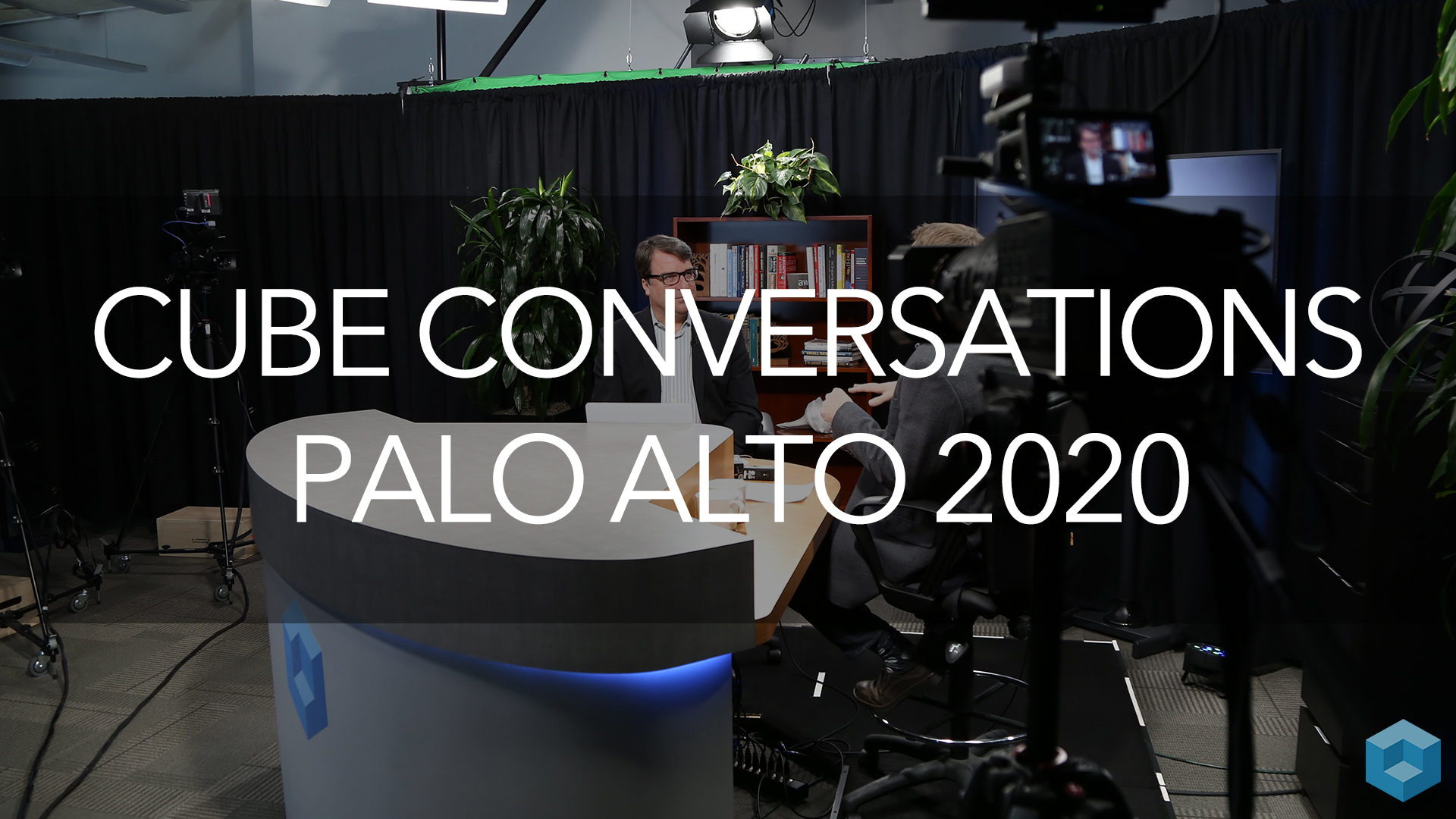
Rudy Burger, Managing Partner of Woodside Capital, sits down with Don Klein for a CUBE Conversation in the Palo Alto studios.
#CUBEConversation #theCUBE
https://siliconangle.com/2020/02/26/dont-bet-the-farm-on-lidar-and-other-predictions-for-the-autonomous-vehicle-market-cubeconversations/
Don’t bet the farm on lidar, and other predictions for the autonomous vehicle market
The world waits with anticipation as the forces driving technological change focus on transforming the automobile. Tesla Motors Inc. has set the bar for electric engines. But there are still safety questions surrounding the roll-out of autonomous vehicles.
Just how soon we will be commuting in an all-electric, autonomous car? It’s coming, said Rudy Burger (pictured), managing partner of Woodside Capital Partners and autonomous technology market expert. But it might not be the magic reveal we all expect.
“It’s better to think about autonomous vehicles as not being a revolutionary technology but much more of an evolutionary technology,” Burger said.
Rather than an overnight sensation, cars will evolve “year by year until one year we wake up and: ‘Yep, my car will actually drive me all the way from home to work without me intervening,’” he added.
Burger joined Donald Klein, host of theCUBE, SiliconANGLE Media’s mobile livestreaming studio, for a CUBE Conversation at theCUBE’s studio in Palo Alto, California. They discussed the market for autonomous vehicles and ecosystem suppliers looking to tap into autonomous capabilities.
Prediction: Robo-taxis will beat personal autonomous cars to the streets
Thinking of an autonomous vehicle as a replacement for the personal car is only seeing half the equation, according to Burger. There are two distinct markets: personal and public transport.
While consumer vehicles that use automated driver-assist systems are the use case that many are eagerly anticipating, they are the less important market, according to Burger. He believes that robo-taxis — autonomous cars that are used in addition to or instead of traditional public transportation options — will be the first mainstream use cases.
“We’ve been misdirected to thinking about autonomous vehicles as a replacement for the car we drive to work every day,” Burger said. “I think that autonomous vehicles are going to show up in the market as an extension of public transportation.”
He gives the example of a commuter taking the train to work, then having a driverless car take him or her the last few miles.
Prediction: Uber will quit developing autonomous vehicles
One key player in the transportation market is Uber Technologies Inc. A pioneer in ride-share services, Uber is investing heavily in developing its own self-driving vehicles. The reason is simple: profit.
“If you can replace the driver with a computer, you can keep that vehicle on the road 24 by seven. And you can keep 100% of the revenue,” Burger said.
But this strategy is a mistake, according to Burger. He predicts that 2020 will be the year that Uber realizes that the funds currently spent on autonomous vehicle research and development are better spent elsewhere.
“My view, personal view, is that what Uber should be doing is saying, ‘That’s not our business,’” he said. Instead, the company, and others in the same sector, should wait and adopt the technology once it has been established as safe and reliable, he further explained.
Key technologies aim to imitate human eyes and brain
Just as humans use their eyes and brains to navigate around, so bringing autonomous vehicles into mainstream use requires the perfection of two technologies: artificial intelligence-infused software to be the “brains” of the vehicle and sensors that enable the computer vision, or “eyesight” of the car.
Sensors are a key feature of any self-driving vehicle, but the developers are going overboard with the number and variety that are used, according to Burger. Lidar, radar, ultrasound, and thermal imaging are all used in addition to cameras using complementary metal-oxide semiconductor chips — known as CMOS.
While some technologies have specific use cases — such as thermal imaging to see in the dark — the market is currently oversaturated with image sensors, according to Burger. This liberal “sprinkling” of sensors is due to safety concerns and overcompensation for technology that hasn’t yet matched the capabilities of the human eye.
Prediction: Lidar loses to CMOS
“My belief is that CMOS image sensors will evolve to a point at which they will replace the need for lidar in most applications,” Burger stated.
This controversial opinion is based on the fact that CMOS is the current market standard for image processing. CMOS chips are already embedded in millions of cameras worldwide. This makes the technology the obvious contender to win out in the autonomous vehicle market, according to Burger.
...
Forgot Password
Almost there!
We just sent you a verification email. Please verify your account to gain access to
CUBE Conversations 2020 | Palo Alto. If you don’t think you received an email check your
spam folder.
In order to sign in, enter the email address you used to registered for the event. Once completed, you will receive an email with a verification link. Open this link to automatically sign into the site.
Register For CUBE Conversations 2020 | Palo Alto
Please fill out the information below. You will recieve an email with a verification link confirming your registration. Click the link to automatically sign into the site.
You’re almost there!
We just sent you a verification email. Please click the verification button in the email. Once your email address is verified, you will have full access to all event content for CUBE Conversations 2020 | Palo Alto.
I want my badge and interests to be visible to all attendees.
Checking this box will display your presense on the attendees list, view your profile and allow other attendees to contact you via 1-1 chat. Read the Privacy Policy. At any time, you can choose to disable this preference.
Select your Interests!
add
Upload your photo
Uploading..
OR
Connect via Twitter
Connect via Linkedin
EDIT PASSWORD
Share
Forgot Password
Almost there!
We just sent you a verification email. Please verify your account to gain access to
CUBE Conversations 2020 | Palo Alto. If you don’t think you received an email check your
spam folder.
In order to sign in, enter the email address you used to registered for the event. Once completed, you will receive an email with a verification link. Open this link to automatically sign into the site.
Sign in to gain access to CUBE Conversations 2020 | Palo Alto
Please sign in with LinkedIn to continue to CUBE Conversations 2020 | Palo Alto. Signing in with LinkedIn ensures a professional environment.
Are you sure you want to remove access rights for this user?
Details
Manage Access
email address
Community Invitation
Rudy Burger, Woodside Capital | CUBE Conversation February 2020
Rudy Burger, Managing Partner of Woodside Capital, sits down with Don Klein for a CUBE Conversation in the Palo Alto studios.
#CUBEConversation #theCUBE
https://siliconangle.com/2020/02/26/dont-bet-the-farm-on-lidar-and-other-predictions-for-the-autonomous-vehicle-market-cubeconversations/
Don’t bet the farm on lidar, and other predictions for the autonomous vehicle market
The world waits with anticipation as the forces driving technological change focus on transforming the automobile. Tesla Motors Inc. has set the bar for electric engines. But there are still safety questions surrounding the roll-out of autonomous vehicles.
Just how soon we will be commuting in an all-electric, autonomous car? It’s coming, said Rudy Burger (pictured), managing partner of Woodside Capital Partners and autonomous technology market expert. But it might not be the magic reveal we all expect.
“It’s better to think about autonomous vehicles as not being a revolutionary technology but much more of an evolutionary technology,” Burger said.
Rather than an overnight sensation, cars will evolve “year by year until one year we wake up and: ‘Yep, my car will actually drive me all the way from home to work without me intervening,’” he added.
Burger joined Donald Klein, host of theCUBE, SiliconANGLE Media’s mobile livestreaming studio, for a CUBE Conversation at theCUBE’s studio in Palo Alto, California. They discussed the market for autonomous vehicles and ecosystem suppliers looking to tap into autonomous capabilities.
Prediction: Robo-taxis will beat personal autonomous cars to the streets
Thinking of an autonomous vehicle as a replacement for the personal car is only seeing half the equation, according to Burger. There are two distinct markets: personal and public transport.
While consumer vehicles that use automated driver-assist systems are the use case that many are eagerly anticipating, they are the less important market, according to Burger. He believes that robo-taxis — autonomous cars that are used in addition to or instead of traditional public transportation options — will be the first mainstream use cases.
“We’ve been misdirected to thinking about autonomous vehicles as a replacement for the car we drive to work every day,” Burger said. “I think that autonomous vehicles are going to show up in the market as an extension of public transportation.”
He gives the example of a commuter taking the train to work, then having a driverless car take him or her the last few miles.
Prediction: Uber will quit developing autonomous vehicles
One key player in the transportation market is Uber Technologies Inc. A pioneer in ride-share services, Uber is investing heavily in developing its own self-driving vehicles. The reason is simple: profit.
“If you can replace the driver with a computer, you can keep that vehicle on the road 24 by seven. And you can keep 100% of the revenue,” Burger said.
But this strategy is a mistake, according to Burger. He predicts that 2020 will be the year that Uber realizes that the funds currently spent on autonomous vehicle research and development are better spent elsewhere.
“My view, personal view, is that what Uber should be doing is saying, ‘That’s not our business,’” he said. Instead, the company, and others in the same sector, should wait and adopt the technology once it has been established as safe and reliable, he further explained.
Key technologies aim to imitate human eyes and brain
Just as humans use their eyes and brains to navigate around, so bringing autonomous vehicles into mainstream use requires the perfection of two technologies: artificial intelligence-infused software to be the “brains” of the vehicle and sensors that enable the computer vision, or “eyesight” of the car.
Sensors are a key feature of any self-driving vehicle, but the developers are going overboard with the number and variety that are used, according to Burger. Lidar, radar, ultrasound, and thermal imaging are all used in addition to cameras using complementary metal-oxide semiconductor chips — known as CMOS.
While some technologies have specific use cases — such as thermal imaging to see in the dark — the market is currently oversaturated with image sensors, according to Burger. This liberal “sprinkling” of sensors is due to safety concerns and overcompensation for technology that hasn’t yet matched the capabilities of the human eye.
Prediction: Lidar loses to CMOS
“My belief is that CMOS image sensors will evolve to a point at which they will replace the need for lidar in most applications,” Burger stated.
This controversial opinion is based on the fact that CMOS is the current market standard for image processing. CMOS chips are already embedded in millions of cameras worldwide. This makes the technology the obvious contender to win out in the autonomous vehicle market, according to Burger.
...