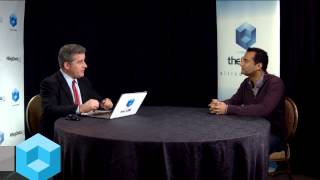
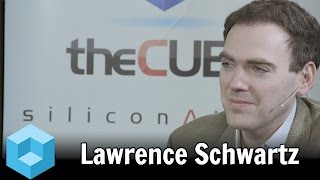
01. John Cardente, EMC, visits theCUBE . (00:30)
02. Climate Data Lake. (00:47)
03. Data Lake as an Analytics Environment. (02:59)
04. One Week Expedition in Acadia National Park. (04:46)
05. At Scale Collaborative Analytics. (06:32)
06. Becoming a Hub for Researchers. (07:60)
07. Expanding to Support Other Societal Issues. (08:52)
#theCUBE #EMC #BigDataSV #SiliconANGLE
--- ---
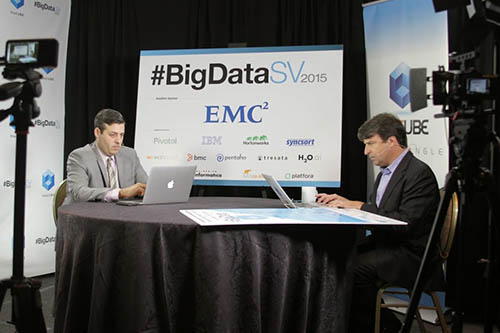
John Cardente, EMC, at BigDataSV 2015 with Jeff Frick and Jeff Kelly
@theCUBE
#bigdatasv
The only way to scale is to let citizens collect data. That’s the guiding principle behind EMC‘s sustainability project, providing citizen scientists and environmental non-profits a collective platform for sharing and analyzing flora and fauna data. But the feel-good project doesn’t come without the real challenges of delivering analytics services at scale, as we learn from one EMC executive.
The goal to democratize data
In a live interview with SiliconANGLE’s roving news desk theCUBE, Distinguished Engineer John Cardante from EMC’s Corporate CTO Office speaks on his company’s collaboration with the National Parks Service, Earthwatch, and a variety of environmental non-profits to “bring tech to bear on something meaningful for the climate.”
The problem, he described, is that right now,” the data sets to dig into this are all separated.” EMC data lake technology allows scientists to collaborate much more easily, he added.
EMC data lake technology is particularly well suited to this type of task because it’s “an analytics environment,” Cardente said. For this particular project, he continued, the data lake is ideal because it allows the pool of data to scale. And the “only way to scale is to allow citizens to collect data,” he added.
Challenges: lack of access to tech, infrequent data updates
.
Cardente then shed some light on the challenges EMC faces with this project. Having participated in a one week expedition to Acadia National Park in October to bring the people and science together. While enlightening, the trip revealed some of the difficulties this project has to overcome: “A big proportion of citizen scientists are elderly, or don’t have access to technology,” Cardente explained, so EMC is “actively working to figure out how to accommodate those folks,” and “overcome the lack of technology.” Cardente remarked that EMC hopes to develop a system of alerts that will enable citizen scientists to observe significant environmental events, like bird migrations.
At present, the scale of the data set EMC is working with is mostly “one time dumps” from non-profits. EMC is “working with partners to make connectors and feeds so we can get incremental updates.” In that way, he hopes to “Act as a cleaning house and a hub” through which scientists and citizen scientists can share data.
When asked why EMC decided to lend its efforts to climate change, Cardente commented wryly: “100 percent of our customers live on this planet.” While EMC is “really excited to build something meaningful,” Cardente added that this project “is a great proving ground to try some technology.” It’s a win-win, he implied, saying “it gives us a good demo vehicle for our technology, but also [the chance] to give back to the community.”
Forgot Password
Almost there!
We just sent you a verification email. Please verify your account to gain access to
BigData SV 2015 | San Jose. If you don’t think you received an email check your
spam folder.
In order to sign in, enter the email address you used to registered for the event. Once completed, you will receive an email with a verification link. Open this link to automatically sign into the site.
Register For BigData SV 2015 | San Jose
Please fill out the information below. You will recieve an email with a verification link confirming your registration. Click the link to automatically sign into the site.
You’re almost there!
We just sent you a verification email. Please click the verification button in the email. Once your email address is verified, you will have full access to all event content for BigData SV 2015 | San Jose.
I want my badge and interests to be visible to all attendees.
Checking this box will display your presense on the attendees list, view your profile and allow other attendees to contact you via 1-1 chat. Read the Privacy Policy. At any time, you can choose to disable this preference.
Select your Interests!
add
Upload your photo
Uploading..
OR
Connect via Twitter
Connect via Linkedin
EDIT PASSWORD
Share
Forgot Password
Almost there!
We just sent you a verification email. Please verify your account to gain access to
BigData SV 2015 | San Jose. If you don’t think you received an email check your
spam folder.
In order to sign in, enter the email address you used to registered for the event. Once completed, you will receive an email with a verification link. Open this link to automatically sign into the site.
Sign in to gain access to BigData SV 2015 | San Jose
Please sign in with LinkedIn to continue to BigData SV 2015 | San Jose. Signing in with LinkedIn ensures a professional environment.
Are you sure you want to remove access rights for this user?
Details
Manage Access
email address
Community Invitation
John Cardente, EMC | Big Data Silicon Valley 2015
01. John Cardente, EMC, visits theCUBE . (00:30)
02. Climate Data Lake. (00:47)
03. Data Lake as an Analytics Environment. (02:59)
04. One Week Expedition in Acadia National Park. (04:46)
05. At Scale Collaborative Analytics. (06:32)
06. Becoming a Hub for Researchers. (07:60)
07. Expanding to Support Other Societal Issues. (08:52)
#theCUBE #EMC #BigDataSV #SiliconANGLE
--- ---
John Cardente, EMC, at BigDataSV 2015 with Jeff Frick and Jeff Kelly
@theCUBE
#bigdatasv
The only way to scale is to let citizens collect data. That’s the guiding principle behind EMC‘s sustainability project, providing citizen scientists and environmental non-profits a collective platform for sharing and analyzing flora and fauna data. But the feel-good project doesn’t come without the real challenges of delivering analytics services at scale, as we learn from one EMC executive.
The goal to democratize data
In a live interview with SiliconANGLE’s roving news desk theCUBE, Distinguished Engineer John Cardante from EMC’s Corporate CTO Office speaks on his company’s collaboration with the National Parks Service, Earthwatch, and a variety of environmental non-profits to “bring tech to bear on something meaningful for the climate.”
The problem, he described, is that right now,” the data sets to dig into this are all separated.” EMC data lake technology allows scientists to collaborate much more easily, he added.
EMC data lake technology is particularly well suited to this type of task because it’s “an analytics environment,” Cardente said. For this particular project, he continued, the data lake is ideal because it allows the pool of data to scale. And the “only way to scale is to allow citizens to collect data,” he added.
Challenges: lack of access to tech, infrequent data updates
.
Cardente then shed some light on the challenges EMC faces with this project. Having participated in a one week expedition to Acadia National Park in October to bring the people and science together. While enlightening, the trip revealed some of the difficulties this project has to overcome: “A big proportion of citizen scientists are elderly, or don’t have access to technology,” Cardente explained, so EMC is “actively working to figure out how to accommodate those folks,” and “overcome the lack of technology.” Cardente remarked that EMC hopes to develop a system of alerts that will enable citizen scientists to observe significant environmental events, like bird migrations.
At present, the scale of the data set EMC is working with is mostly “one time dumps” from non-profits. EMC is “working with partners to make connectors and feeds so we can get incremental updates.” In that way, he hopes to “Act as a cleaning house and a hub” through which scientists and citizen scientists can share data.
When asked why EMC decided to lend its efforts to climate change, Cardente commented wryly: “100 percent of our customers live on this planet.” While EMC is “really excited to build something meaningful,” Cardente added that this project “is a great proving ground to try some technology.” It’s a win-win, he implied, saying “it gives us a good demo vehicle for our technology, but also [the chance] to give back to the community.”