01. Mark Shainman, Teradata, Visits #theCUBE!. (00:21)
02. Stephanie McReynolds, Alation, Visits #theCUBE!. (00:27)
03. What's Happening At The Show And With Your Companies. (00:41)
04. Do You Have A Team That Spots The Next Big Trends. (03:03)
05. Where Are We With The Data Lake. (03:43)
06. How Does The Relationship You Have Bring Governance To The Data. (05:54)
07. Can You Be A Chief Data Officer And Not Have A Catalog In Place. (08:31)
08. If I'm A CIO Can I Service My Data That A CEO Would Put Together. (10:42)
09. What's Going On With Teradata And Big Data. (12:30)
10. How Did The Partnership Start. (14:26)
11. Give Us The Last Word On The Week. (16:45)
Track List created with http://www.vinjavideo.com.
--- ---
Collaborating to drive data cataloging | #BigDataNYC
by Bev Terrell | Sep 29, 2016
The exponential growth of data by volume and type makes it necessary to provide referential resources for collaboration among enterprise users, and one team up is taking on the challenge. With Q4 plans to release a new connectivity layer that catalogs queries from popular compute engines like SparkSQL and IBM Watson DataWorks, Alation, Inc. has caught the eye of Teradata Corp. for a re-sell partnership.
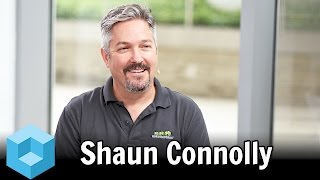
Stephanie McReynolds, VP of Marketing at Alation, and Mark Shainman, marketing director at Teradata, joined Dave Vellante (@dvellante) and Peter Burris (@plburris), cohosts of theCUBE, from the SiliconANGLE Media team, during BigDataNYC 2016 to discuss their partnership, how Data Catalog works for customers and how to handle big data.
Do you have a data lake or a data swamp?
Vellante brought up the point that while there is much complaining about Hadoop, including its data lake concept, it did get the data to where it needed to be. How companies deal with that data after collecting it is the issue, and that’s where Alation and Teradata come into play.
“Is it a data lake or a data swamp? … Different organizations are [all] at different phases of figuring out the data lake … [but they all] need governance,” said McReynolds. The more users that come into the lake, if there’s no way for them to see what’s already in the lake and what the quality of that information is, that data, so carefully collected, can be useless. So it’s necessary to have “a catalog that reads and interprets data … as we get more people running queries … we need something like a data catalog to see and understand what’s in there,” continued McReynolds.
Presto (an open source SQL query engine that Facebook developed) was designed and written for interactive analytics and approaches the speed of commercial data warehouses, while scaling to the size of organizations. “[Presto was built by Facebook], then they open-sourced it. [Teradata] is a major contributor to the code base,” said Shainman. Teradata sees Presto as filling a specific niche, primarily running interactive queries against large sets of data with low latency and many users.
Handing Big Data
The discussion moved to Teradata’s play in Big Data. Vellante asked, “What’s the most important part of your Big Data?”
Shainman answered: “Hadoop and Big Data are all synergistic to the data warehouse … [we realize] that multiple platforms are going to exist in one organization. … We’ve moved away from this silo[ed] set up … Alation brings in the governance and cataloging.”
#BigDataNYC
#theCUBE
Forgot Password
Almost there!
We just sent you a verification email. Please verify your account to gain access to
BigData NYC 2016 | New York. If you don’t think you received an email check your
spam folder.
In order to sign in, enter the email address you used to registered for the event. Once completed, you will receive an email with a verification link. Open this link to automatically sign into the site.
Register For BigData NYC 2016 | New York
Please fill out the information below. You will recieve an email with a verification link confirming your registration. Click the link to automatically sign into the site.
You’re almost there!
We just sent you a verification email. Please click the verification button in the email. Once your email address is verified, you will have full access to all event content for BigData NYC 2016 | New York.
I want my badge and interests to be visible to all attendees.
Checking this box will display your presense on the attendees list, view your profile and allow other attendees to contact you via 1-1 chat. Read the Privacy Policy. At any time, you can choose to disable this preference.
Select your Interests!
add
Upload your photo
Uploading..
OR
Connect via Twitter
Connect via Linkedin
EDIT PASSWORD
Share
Forgot Password
Almost there!
We just sent you a verification email. Please verify your account to gain access to
BigData NYC 2016 | New York. If you don’t think you received an email check your
spam folder.
In order to sign in, enter the email address you used to registered for the event. Once completed, you will receive an email with a verification link. Open this link to automatically sign into the site.
Sign in to gain access to BigData NYC 2016 | New York
Please sign in with LinkedIn to continue to BigData NYC 2016 | New York. Signing in with LinkedIn ensures a professional environment.
Are you sure you want to remove access rights for this user?
Details
Manage Access
email address
Community Invitation
Mark Shainman, Teradata & Stephanie McReynolds, Alation | BigDataNYC 2016
01. Mark Shainman, Teradata, Visits #theCUBE!. (00:21)
02. Stephanie McReynolds, Alation, Visits #theCUBE!. (00:27)
03. What's Happening At The Show And With Your Companies. (00:41)
04. Do You Have A Team That Spots The Next Big Trends. (03:03)
05. Where Are We With The Data Lake. (03:43)
06. How Does The Relationship You Have Bring Governance To The Data. (05:54)
07. Can You Be A Chief Data Officer And Not Have A Catalog In Place. (08:31)
08. If I'm A CIO Can I Service My Data That A CEO Would Put Together. (10:42)
09. What's Going On With Teradata And Big Data. (12:30)
10. How Did The Partnership Start. (14:26)
11. Give Us The Last Word On The Week. (16:45)
Track List created with http://www.vinjavideo.com.
--- ---
Collaborating to drive data cataloging | #BigDataNYC
by Bev Terrell | Sep 29, 2016
The exponential growth of data by volume and type makes it necessary to provide referential resources for collaboration among enterprise users, and one team up is taking on the challenge. With Q4 plans to release a new connectivity layer that catalogs queries from popular compute engines like SparkSQL and IBM Watson DataWorks, Alation, Inc. has caught the eye of Teradata Corp. for a re-sell partnership.
Stephanie McReynolds, VP of Marketing at Alation, and Mark Shainman, marketing director at Teradata, joined Dave Vellante (@dvellante) and Peter Burris (@plburris), cohosts of theCUBE, from the SiliconANGLE Media team, during BigDataNYC 2016 to discuss their partnership, how Data Catalog works for customers and how to handle big data.
Do you have a data lake or a data swamp?
Vellante brought up the point that while there is much complaining about Hadoop, including its data lake concept, it did get the data to where it needed to be. How companies deal with that data after collecting it is the issue, and that’s where Alation and Teradata come into play.
“Is it a data lake or a data swamp? … Different organizations are [all] at different phases of figuring out the data lake … [but they all] need governance,” said McReynolds. The more users that come into the lake, if there’s no way for them to see what’s already in the lake and what the quality of that information is, that data, so carefully collected, can be useless. So it’s necessary to have “a catalog that reads and interprets data … as we get more people running queries … we need something like a data catalog to see and understand what’s in there,” continued McReynolds.
Presto (an open source SQL query engine that Facebook developed) was designed and written for interactive analytics and approaches the speed of commercial data warehouses, while scaling to the size of organizations. “[Presto was built by Facebook], then they open-sourced it. [Teradata] is a major contributor to the code base,” said Shainman. Teradata sees Presto as filling a specific niche, primarily running interactive queries against large sets of data with low latency and many users.
Handing Big Data
The discussion moved to Teradata’s play in Big Data. Vellante asked, “What’s the most important part of your Big Data?”
Shainman answered: “Hadoop and Big Data are all synergistic to the data warehouse … [we realize] that multiple platforms are going to exist in one organization. … We’ve moved away from this silo[ed] set up … Alation brings in the governance and cataloging.”
#BigDataNYC
#theCUBE