What happens when Big Data tech goes wrong? | #BigDataNYC
by Marlene Den Bleyker | Oct 1, 2015
Gartner, Inc. is among the world’s leading information technology research and advisory companies, and it has the pulse on the industry. So what are the trends, the issues and the players in the ever-changing ecosystem?
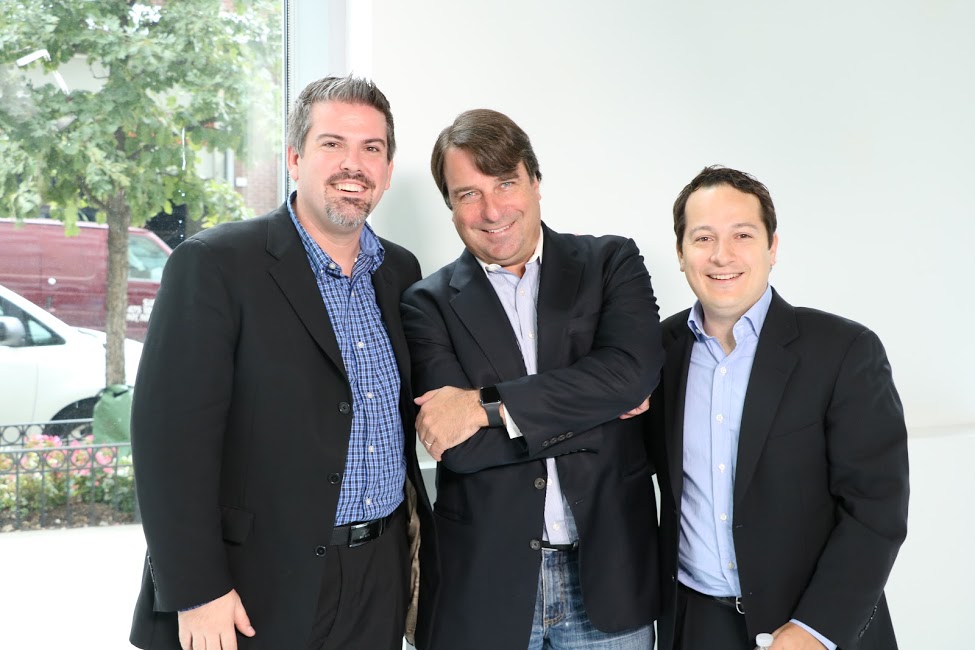
Merv Adrian, vice president of research for Gartner, dropped by to speak with John Furrier and Dave Vellante, cohosts of theCube, from the SiliconANGLE Media team, at BigDataNYC 2015 to give the statistical pulse of the industry.
The trends
Adrian told the hosts that the crowd at the show was trending to a business-focused audience. He said, “There is a lot of technical content here but there’s an awful lot of business people.” He elaborated by saying that business people really don’t want to hear about the technical aspects of the business; instead the question is, what can you do for me, and how easy is it going to be?
Another interesting trend Adrian noted is that there are many vendors whose sole purpose of attending the show is to uncover how to make Hadoop and Spark easy to deploy because it is still hard.
Barriers to adoption
According to Adrian, the key barrier to adoption is skill level. He sees vendors investing aggressively to solve the problem by offering training and certification. However, he pointed out that in three years the number hasn’t gone down. While there was a dip last year, the numbers came right back up in 2015.
He also indicated that there is a supply problem. “You can’t move fast enough in ecosystem when customers want product now,” he said. He went on to explain what is slowing the market. “We have an audience intently focused on solutions not technology, but the technology is different this year from last year. The people that have to deliver it haven’t even got their story together and the skills of the people who deliver it are not yet in place, he said.
RELATED: Nexenta sees opportunities in Dell-EMC merger |
The numbers
Gartner uses a research circle of thousands of companies, who participate in interviews about a variety of technology issues. Adrian believes that there are two relevant surveys, one on Big Data and Hadoop.
According to the first survey, 76 percent of organizations are investing already or planning to invest in Big Data and the number continues to rise.
The Hadoop survey indicated that 42 percent were going to invest in Big Data. According to Adrian, “That is because not everybody thinks that Hadoop equals Big Data, and they are right.” He continued, in fact, when you ask people, “What technology do you want to use for Fig Data?” the answer is enterprise data warehouse. The second answer is cloud, and the third is Hadoop. Only 9 percent of respondents even knew what Spark was.
The Store
Adrian asked the question, “What happens when tech goes wrong?” His answer is that these things depend on whether they are working from a set of fixed rules that ran a year ago or whether they are running on real-time data that adapts to real-time conditions. He believes the industry needs to address this problem.
“Databases are not enough. Things don’t get into the database until we are done. We need database and stream so you get the fabric of compute, the fabric of engines and a fabric of stores,” he explained.
Adrian’s bumper sticker for the show: The store and simplicity is what’s happening. He closed by saying, “If we can keep it simple, make it deployable and remain solution focused, this market has a lot of legs.”
@theCUBE
#BigDataNYC
Forgot Password
Almost there!
We just sent you a verification email. Please verify your account to gain access to
BigData NYC 2015 | New York. If you don’t think you received an email check your
spam folder.
In order to sign in, enter the email address you used to registered for the event. Once completed, you will receive an email with a verification link. Open this link to automatically sign into the site.
Register For BigData NYC 2015 | New York
Please fill out the information below. You will recieve an email with a verification link confirming your registration. Click the link to automatically sign into the site.
You’re almost there!
We just sent you a verification email. Please click the verification button in the email. Once your email address is verified, you will have full access to all event content for BigData NYC 2015 | New York.
I want my badge and interests to be visible to all attendees.
Checking this box will display your presense on the attendees list, view your profile and allow other attendees to contact you via 1-1 chat. Read the Privacy Policy. At any time, you can choose to disable this preference.
Select your Interests!
add
Upload your photo
Uploading..
OR
Connect via Twitter
Connect via Linkedin
EDIT PASSWORD
Share
Forgot Password
Almost there!
We just sent you a verification email. Please verify your account to gain access to
BigData NYC 2015 | New York. If you don’t think you received an email check your
spam folder.
In order to sign in, enter the email address you used to registered for the event. Once completed, you will receive an email with a verification link. Open this link to automatically sign into the site.
Sign in to gain access to BigData NYC 2015 | New York
Please sign in with LinkedIn to continue to BigData NYC 2015 | New York. Signing in with LinkedIn ensures a professional environment.
What happens when Big Data tech goes wrong? | #BigDataNYC
by Marlene Den Bleyker | Oct 1, 2015
Gartner, Inc. is among the world’s leading information technology research and advisory companies, and it has the pulse on the industry. So what are the trends, the issues and the players in the ever-changing ecosystem?
Merv Adrian, vice president of research for Gartner, dropped by to speak with John Furrier and Dave Vellante, cohosts of theCube, from the SiliconANGLE Media team, at BigDataNYC 2015 to give the statistical pulse of the industry.
The trends
Adrian told the hosts that the crowd at the show was trending to a business-focused audience. He said, “There is a lot of technical content here but there’s an awful lot of business people.” He elaborated by saying that business people really don’t want to hear about the technical aspects of the business; instead the question is, what can you do for me, and how easy is it going to be?
Another interesting trend Adrian noted is that there are many vendors whose sole purpose of attending the show is to uncover how to make Hadoop and Spark easy to deploy because it is still hard.
Barriers to adoption
According to Adrian, the key barrier to adoption is skill level. He sees vendors investing aggressively to solve the problem by offering training and certification. However, he pointed out that in three years the number hasn’t gone down. While there was a dip last year, the numbers came right back up in 2015.
He also indicated that there is a supply problem. “You can’t move fast enough in ecosystem when customers want product now,” he said. He went on to explain what is slowing the market. “We have an audience intently focused on solutions not technology, but the technology is different this year from last year. The people that have to deliver it haven’t even got their story together and the skills of the people who deliver it are not yet in place, he said.
RELATED: Nexenta sees opportunities in Dell-EMC merger |
The numbers
Gartner uses a research circle of thousands of companies, who participate in interviews about a variety of technology issues. Adrian believes that there are two relevant surveys, one on Big Data and Hadoop.
According to the first survey, 76 percent of organizations are investing already or planning to invest in Big Data and the number continues to rise.
The Hadoop survey indicated that 42 percent were going to invest in Big Data. According to Adrian, “That is because not everybody thinks that Hadoop equals Big Data, and they are right.” He continued, in fact, when you ask people, “What technology do you want to use for Fig Data?” the answer is enterprise data warehouse. The second answer is cloud, and the third is Hadoop. Only 9 percent of respondents even knew what Spark was.
The Store
Adrian asked the question, “What happens when tech goes wrong?” His answer is that these things depend on whether they are working from a set of fixed rules that ran a year ago or whether they are running on real-time data that adapts to real-time conditions. He believes the industry needs to address this problem.
“Databases are not enough. Things don’t get into the database until we are done. We need database and stream so you get the fabric of compute, the fabric of engines and a fabric of stores,” he explained.
Adrian’s bumper sticker for the show: The store and simplicity is what’s happening. He closed by saying, “If we can keep it simple, make it deployable and remain solution focused, this market has a lot of legs.”
@theCUBE
#BigDataNYC