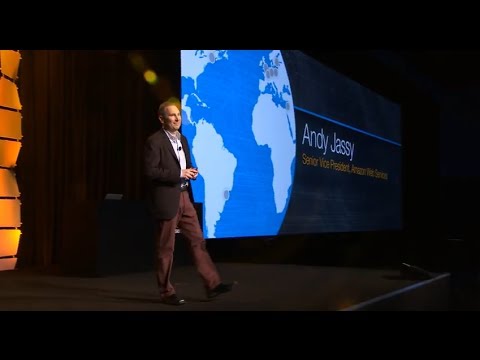
Barry Russell, AWS, at AWS Summit 2014 with Jeff Frick
@thecube
#AWSSummit
During our exclusive coverage of #AWSSummit 2014 last week, Barry Russell, Head of Business Development for AWS Marketplace, stopped by #theCUBE to discuss some pretty interesting things that are happening in his line of work. One interesting note from the interview was just how fast the AWS Marketplace has grown. When launched in April of 2012, the Marketplace had a couple hundred vendors or ISVs (Independent Software Vendors). Today, customers in the marketplace can search over 1,400 vendors.
The make-up of those 1,400 vendors is quite expansive too; from start-ups like JasperSoft, all the way up to bigger companies like Adobe and Cisco. Russell mentions how Adobe released its media server product, and Cisco released its crowd router product in the Marketplace at #AWSSummit this year. One takeaway for potential vendors of the Marketplace that was clear from his interview was this: There is a new sales channel for ISVs on AWS's infrastructure. AWS Marketplace offers a new opportunity to reach a customer base that is adopting the plug-and-play method of an open marketplace built on top of AWS.
Getting started is a cinch, according to Russell. ISVs package up software in a format that AWS calls an Amazon Machine Image, or AMI. Even for large vendors, the entire process usually takes under a month, with most deployments going live in as little as two weeks. After a couple days of testing, the vendor provides some meta data about the product and the product goes live in the marketplace. From there, customers all over the globe can immediately buy and begin using the software.
A unique aspect of the AMI format is that customers can purchase an instance of the software. That means that the price they pay is associated with the software and the instance size they want to launch and what feature of that instance they want to launch. In essence, they're only paying for specifically what they need. Russell explains:
"We have this feature called one click, which is pretty cool. It enables the customer to literally just hit a button, and sit back and a few minutes later the product is actually up and running in a production-ready mode, fully configured to run optimized on AWS. It takes away a lot of the friction and error out of launching software that normally a customer feels on prem., and literally reduces it to minutes."
The AWS Marketplace offers a couple of different pricing models too. Vendors can charge by the month, or map to how EC2 (Amazon Elastic Compute Cloud) is consumed and charge by the hour.
"what we find is that customers like having some control over how they consume the process," Russell points out.
Forgot Password
Almost there!
We just sent you a verification email. Please verify your account to gain access to
AWS Summit 2014 | San Francisco. If you don’t think you received an email check your
spam folder.
In order to sign in, enter the email address you used to registered for the event. Once completed, you will receive an email with a verification link. Open this link to automatically sign into the site.
Register For AWS Summit 2014 | San Francisco
Please fill out the information below. You will recieve an email with a verification link confirming your registration. Click the link to automatically sign into the site.
You’re almost there!
We just sent you a verification email. Please click the verification button in the email. Once your email address is verified, you will have full access to all event content for AWS Summit 2014 | San Francisco.
I want my badge and interests to be visible to all attendees.
Checking this box will display your presense on the attendees list, view your profile and allow other attendees to contact you via 1-1 chat. Read the Privacy Policy. At any time, you can choose to disable this preference.
Select your Interests!
add
Upload your photo
Uploading..
OR
Connect via Twitter
Connect via Linkedin
EDIT PASSWORD
Share
Forgot Password
Almost there!
We just sent you a verification email. Please verify your account to gain access to
AWS Summit 2014 | San Francisco. If you don’t think you received an email check your
spam folder.
In order to sign in, enter the email address you used to registered for the event. Once completed, you will receive an email with a verification link. Open this link to automatically sign into the site.
Sign in to gain access to AWS Summit 2014 | San Francisco
Please sign in with LinkedIn to continue to AWS Summit 2014 | San Francisco. Signing in with LinkedIn ensures a professional environment.
Are you sure you want to remove access rights for this user?
Details
Manage Access
email address
Community Invitation
Barry Russell | AWS Summit 2014
Barry Russell, AWS, at AWS Summit 2014 with Jeff Frick
@thecube
#AWSSummit
During our exclusive coverage of #AWSSummit 2014 last week, Barry Russell, Head of Business Development for AWS Marketplace, stopped by #theCUBE to discuss some pretty interesting things that are happening in his line of work. One interesting note from the interview was just how fast the AWS Marketplace has grown. When launched in April of 2012, the Marketplace had a couple hundred vendors or ISVs (Independent Software Vendors). Today, customers in the marketplace can search over 1,400 vendors.
The make-up of those 1,400 vendors is quite expansive too; from start-ups like JasperSoft, all the way up to bigger companies like Adobe and Cisco. Russell mentions how Adobe released its media server product, and Cisco released its crowd router product in the Marketplace at #AWSSummit this year. One takeaway for potential vendors of the Marketplace that was clear from his interview was this: There is a new sales channel for ISVs on AWS's infrastructure. AWS Marketplace offers a new opportunity to reach a customer base that is adopting the plug-and-play method of an open marketplace built on top of AWS.
Getting started is a cinch, according to Russell. ISVs package up software in a format that AWS calls an Amazon Machine Image, or AMI. Even for large vendors, the entire process usually takes under a month, with most deployments going live in as little as two weeks. After a couple days of testing, the vendor provides some meta data about the product and the product goes live in the marketplace. From there, customers all over the globe can immediately buy and begin using the software.
A unique aspect of the AMI format is that customers can purchase an instance of the software. That means that the price they pay is associated with the software and the instance size they want to launch and what feature of that instance they want to launch. In essence, they're only paying for specifically what they need. Russell explains:
"We have this feature called one click, which is pretty cool. It enables the customer to literally just hit a button, and sit back and a few minutes later the product is actually up and running in a production-ready mode, fully configured to run optimized on AWS. It takes away a lot of the friction and error out of launching software that normally a customer feels on prem., and literally reduces it to minutes."
The AWS Marketplace offers a couple of different pricing models too. Vendors can charge by the month, or map to how EC2 (Amazon Elastic Compute Cloud) is consumed and charge by the hour.
"what we find is that customers like having some control over how they consume the process," Russell points out.