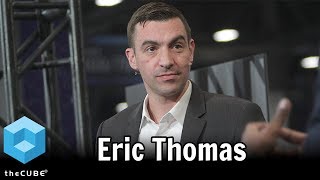
Scott Masepohl, Director of the CTO Office, Intel PSG | AWS re:Invent 2017
#reInvent #theCUBE
https://siliconangle.com/2017/12/06/fpga-chips-could-be-the-brains-for-ai-at-the-iot-edge-reinvent/
FPGA chips could be the brains for AI at the IoT edge
Within 10 years, 99 percent of the data from “internet of things” systems will live and die at the edge of the network, according to Wikibon.com analyst David Floyer. This means that edge device hardware will have to become a lot more hospitable to data analytics for artificial intelligence applications like autonomous vehicles and digital personal assistants. Some say graphics processing units are the answer, but field programmable gate arrays, or FPGAs, may be the more powerful and versatile chips.
“It’s very difficult to actually create customized chips for specific markets,” said Scott Masepohl (pictured), director of the chief technology officer’s office, Programmable Solutions Group, at Intel.
Tailoring chips for a special purpose is quite time-consuming; once the task is complete, the current problem in that market may already have shifted, according to Masepohlid. FPGAs provide a route around this issue since they are fully programmable.
“You can actually create the solution on the fly, and if the solution’s not correct, you can go and you can actually change that,” he said.
Masepohl spoke with John Furrier (@furrier), host of theCUBE, SiliconANGLE Media’s mobile livestreaming studio, and guest host Keith Townsend (@CTOAdvisor), principal at The CTO Advisor, during the recent AWS re:Invent conference in Las Vegas, Nevada.
FPGAs pack data and memory punch
Aside from being customizable, FPGA perform better than GPUs in AI use cases, Masepohl explained. “They have a lot of memory on the inside of the device, and you can actually do the compute and the memory right next to where it needs to be,” he said.
That proximity is very important for keeping latency low in inference making. “And there’s just a phenomenal amount of bandwidth inside of an FPGA today. There’s over 60 terabytes a second of bandwidth in our mid-range Stratix 10 [FPGA and system-on-chip] device. And when you couple that together with the unique math capabilities, you can really build exactly what you want,” he said.
FPGAs can give internet of things edge devices the data capacity they need to make analytics inferences on the spot, according to Masepohl. “You can kind of put them toward the edge so that they can actually process the data so that you don’t have to dump the full stream of data that gets generated down off to some other processing vehicle,” he said. “So you can actually do a ton of the processing and then send limited packets off of that.”
Intel has introduced tools to simplify software development on FPGAs, Masepohl concluded.
Watch the complete video interview below, and be sure to check out more of SiliconANGLE’s and theCUBE’s coverage of AWS re:Invent. (* Disclosure: Intel Corp. sponsored this segment of theCUBE. Neither Intel nor other sponsors have editorial control over content on theCUBE or SiliconANGLE.)
Forgot Password
Almost there!
We just sent you a verification email. Please verify your account to gain access to
AWS re:Invent 2017 | Las Vegas. If you don’t think you received an email check your
spam folder.
In order to sign in, enter the email address you used to registered for the event. Once completed, you will receive an email with a verification link. Open this link to automatically sign into the site.
Register For AWS re:Invent 2017 | Las Vegas
Please fill out the information below. You will recieve an email with a verification link confirming your registration. Click the link to automatically sign into the site.
You’re almost there!
We just sent you a verification email. Please click the verification button in the email. Once your email address is verified, you will have full access to all event content for AWS re:Invent 2017 | Las Vegas.
I want my badge and interests to be visible to all attendees.
Checking this box will display your presense on the attendees list, view your profile and allow other attendees to contact you via 1-1 chat. Read the Privacy Policy. At any time, you can choose to disable this preference.
Select your Interests!
add
Upload your photo
Uploading..
OR
Connect via Twitter
Connect via Linkedin
EDIT PASSWORD
Share
Forgot Password
Almost there!
We just sent you a verification email. Please verify your account to gain access to
AWS re:Invent 2017 | Las Vegas. If you don’t think you received an email check your
spam folder.
In order to sign in, enter the email address you used to registered for the event. Once completed, you will receive an email with a verification link. Open this link to automatically sign into the site.
Sign in to gain access to AWS re:Invent 2017 | Las Vegas
Please sign in with LinkedIn to continue to AWS re:Invent 2017 | Las Vegas. Signing in with LinkedIn ensures a professional environment.
Are you sure you want to remove access rights for this user?
Details
Manage Access
email address
Community Invitation
Scott Masepohl, Intel PSG | AWS re:Invent 2017
Scott Masepohl, Director of the CTO Office, Intel PSG | AWS re:Invent 2017
#reInvent #theCUBE
https://siliconangle.com/2017/12/06/fpga-chips-could-be-the-brains-for-ai-at-the-iot-edge-reinvent/
FPGA chips could be the brains for AI at the IoT edge
Within 10 years, 99 percent of the data from “internet of things” systems will live and die at the edge of the network, according to Wikibon.com analyst David Floyer. This means that edge device hardware will have to become a lot more hospitable to data analytics for artificial intelligence applications like autonomous vehicles and digital personal assistants. Some say graphics processing units are the answer, but field programmable gate arrays, or FPGAs, may be the more powerful and versatile chips.
“It’s very difficult to actually create customized chips for specific markets,” said Scott Masepohl (pictured), director of the chief technology officer’s office, Programmable Solutions Group, at Intel.
Tailoring chips for a special purpose is quite time-consuming; once the task is complete, the current problem in that market may already have shifted, according to Masepohlid. FPGAs provide a route around this issue since they are fully programmable.
“You can actually create the solution on the fly, and if the solution’s not correct, you can go and you can actually change that,” he said.
Masepohl spoke with John Furrier (@furrier), host of theCUBE, SiliconANGLE Media’s mobile livestreaming studio, and guest host Keith Townsend (@CTOAdvisor), principal at The CTO Advisor, during the recent AWS re:Invent conference in Las Vegas, Nevada.
FPGAs pack data and memory punch
Aside from being customizable, FPGA perform better than GPUs in AI use cases, Masepohl explained. “They have a lot of memory on the inside of the device, and you can actually do the compute and the memory right next to where it needs to be,” he said.
That proximity is very important for keeping latency low in inference making. “And there’s just a phenomenal amount of bandwidth inside of an FPGA today. There’s over 60 terabytes a second of bandwidth in our mid-range Stratix 10 [FPGA and system-on-chip] device. And when you couple that together with the unique math capabilities, you can really build exactly what you want,” he said.
FPGAs can give internet of things edge devices the data capacity they need to make analytics inferences on the spot, according to Masepohl. “You can kind of put them toward the edge so that they can actually process the data so that you don’t have to dump the full stream of data that gets generated down off to some other processing vehicle,” he said. “So you can actually do a ton of the processing and then send limited packets off of that.”
Intel has introduced tools to simplify software development on FPGAs, Masepohl concluded.
Watch the complete video interview below, and be sure to check out more of SiliconANGLE’s and theCUBE’s coverage of AWS re:Invent. (* Disclosure: Intel Corp. sponsored this segment of theCUBE. Neither Intel nor other sponsors have editorial control over content on theCUBE or SiliconANGLE.)