Can an application really live in seven places? Defining ‘the new hybrid cloud’ | #reInvent
“Hybrid cloud,” “hybrid infrastructure” and “hybrid IT” are all terms bandied around Silicon Valley lately. Industry experts say that businesses will need a mix of on-prem, public cloud and private cloud to enter the Digital Age. But, practically speaking, what does this really mean? Can an application really live in several different places?
John Furrier (@furrier) and Stu Miniman (@stu), co-hosts of theCUBE*, from the SiliconANGLE Media team, spoke to Sanjay Poonen, chief operating officer of VMware Inc., during day two of the AWS re:Invent event to try and breakdown hybrid IT in real world terms.
“Most applications don’t live in seven places,” Miniman said. He added that Amazon’s definition of hybrid is more about building on applications rather than dividing them across environments.
This may entail taking VMware [virtual machines], hosting them on AWS and then putting server-less devices on the edge, not just for IoT, but for other applications as well. This “new hybrid,” as Miniman put it, “is definitely very interesting, and there’s a lot of nuance there.”
Poonen spoke enthusiastically about the company’s recent deal to run the VMware cloud on AWS.
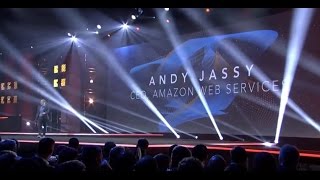
He stated the result of this synergy is to bring developers and IT operations together to “take an existing application, extend it into the cloud and then build a bunch of the developer services that Andy [Jassy, Amazon Web Services Inc. CEO] and the team are doing such a prolific job of expanding.”
Database turf war
Poonen said his takeaway from the re:Invent keynote is that Amazon is going after the database business in a big way.
Furrier noted the extra staying power a database foothold will give them along with APIs. “The world is certainly API driven. The database and APIs seem to be quote ‘sticky, lock-in specs,’ if you will. Competitively, that’s an advantage,” he argued.
#reInvent
#theCUBE
Forgot Password
Almost there!
We just sent you a verification email. Please verify your account to gain access to
AWS re:Invent 2016 | Las Vegas. If you don’t think you received an email check your
spam folder.
In order to sign in, enter the email address you used to registered for the event. Once completed, you will receive an email with a verification link. Open this link to automatically sign into the site.
Register For AWS re:Invent 2016 | Las Vegas
Please fill out the information below. You will recieve an email with a verification link confirming your registration. Click the link to automatically sign into the site.
You’re almost there!
We just sent you a verification email. Please click the verification button in the email. Once your email address is verified, you will have full access to all event content for AWS re:Invent 2016 | Las Vegas.
I want my badge and interests to be visible to all attendees.
Checking this box will display your presense on the attendees list, view your profile and allow other attendees to contact you via 1-1 chat. Read the Privacy Policy. At any time, you can choose to disable this preference.
Select your Interests!
add
Upload your photo
Uploading..
OR
Connect via Twitter
Connect via Linkedin
EDIT PASSWORD
Share
Forgot Password
Almost there!
We just sent you a verification email. Please verify your account to gain access to
AWS re:Invent 2016 | Las Vegas. If you don’t think you received an email check your
spam folder.
In order to sign in, enter the email address you used to registered for the event. Once completed, you will receive an email with a verification link. Open this link to automatically sign into the site.
Sign in to gain access to AWS re:Invent 2016 | Las Vegas
Please sign in with LinkedIn to continue to AWS re:Invent 2016 | Las Vegas. Signing in with LinkedIn ensures a professional environment.
Are you sure you want to remove access rights for this user?
Details
Manage Access
email address
Community Invitation
Sanjay Poonen | AWS re:Invent 2016
Can an application really live in seven places? Defining ‘the new hybrid cloud’ | #reInvent
“Hybrid cloud,” “hybrid infrastructure” and “hybrid IT” are all terms bandied around Silicon Valley lately. Industry experts say that businesses will need a mix of on-prem, public cloud and private cloud to enter the Digital Age. But, practically speaking, what does this really mean? Can an application really live in several different places?
John Furrier (@furrier) and Stu Miniman (@stu), co-hosts of theCUBE*, from the SiliconANGLE Media team, spoke to Sanjay Poonen, chief operating officer of VMware Inc., during day two of the AWS re:Invent event to try and breakdown hybrid IT in real world terms.
“Most applications don’t live in seven places,” Miniman said. He added that Amazon’s definition of hybrid is more about building on applications rather than dividing them across environments.
This may entail taking VMware [virtual machines], hosting them on AWS and then putting server-less devices on the edge, not just for IoT, but for other applications as well. This “new hybrid,” as Miniman put it, “is definitely very interesting, and there’s a lot of nuance there.”
Poonen spoke enthusiastically about the company’s recent deal to run the VMware cloud on AWS.
He stated the result of this synergy is to bring developers and IT operations together to “take an existing application, extend it into the cloud and then build a bunch of the developer services that Andy [Jassy, Amazon Web Services Inc. CEO] and the team are doing such a prolific job of expanding.”
Database turf war
Poonen said his takeaway from the re:Invent keynote is that Amazon is going after the database business in a big way.
Furrier noted the extra staying power a database foothold will give them along with APIs. “The world is certainly API driven. The database and APIs seem to be quote ‘sticky, lock-in specs,’ if you will. Competitively, that’s an advantage,” he argued.
#reInvent
#theCUBE