Rob Harris, VP of Solutions Consulting, Stardog, sits down with John Furrier for the AWS Startup Showcase: Innovations with CloudData & CloudOps
#CubeOnCloudStartups #CloudInnovation #theCUBE
https://siliconangle.com/2021/03/24/knowledge-graphs-provide-smart-database-management-across-hybrid-computing-environment-cubeoncloudawsstartups/
Knowledge graphs provide smart database management across hybrid computing environment
BY BETSY AMY-VOGT
The next challenge in data management is accessing data resources that are dispersed across a hybrid computing environment. Companies have invested in master data management solutions, breaking down silos and centralizing resources to simplify access. But moving data is costly, and silos serve a purpose by isolating secure data and allowing local control and governance.
Gaining a comprehensive view of data across locations from on-premises out to the edge requires the merger of human and machine intelligence in solutions that connect data and leverage it to provide context in situ.
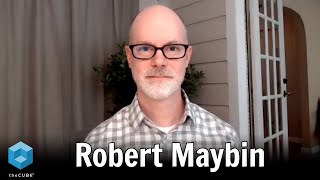
“What we do differently than everyone else is by allowing you to keep the data in its existing data silos, … we allow you to connect to that data where it is, cross-zone, whether it’s on-prem or on the cloud,” said Rob Harris (pictured), vice president of solutions consulting at Stardog Union Inc.
Harris spoke with John Furrier, host of theCUBE, SiliconANGLE Media’s livestreaming studio, during the AWS Startup Showcase Event: Innovators in Cloud Data. They discussed how data fabric and knowledge graph technology is connecting data in a hybrid world. (* Disclosure below.)
Unifying data regardless of location
The answer to unifying data across silos is to stitch it together into a data fabric, which unites the disparate data sources at the compute layer. Forming that fabric is the job of the knowledge graph.
By tying together customer data, the Stardog Enterprise Knowledge Graph unifies data access in real time across multiple applications. This enables companies to find, search and understand the context and relationship of all the data within their organization. Pivotal is the ability to manage not only the data itself, but the relationships between bits of data.
“What we look for is the horizontal-type solution where you have a lot of systems that you want to tie together or you want to have that understanding of your data all within context throughout your organization,” Harris said.
Knowledge graphs present a major business opportunity. The global data analytics market has a current compound annual growth rate of 28.9%, according to market research, and is expected to reach a market value of $133 billion by 2026. Graphing database management solutions have consistently outpaced all other database models in popularity, according to ranking statistics on db-engines.com, and were named by Gartner as a top data and analytics trend for 2021. According to the same Gartner report, 50% of the organization’s client inquiries on artificial intelligence involve a discussion on graph technology.
“A lot of people have gone down this path of trying to create these large repositories, data lakes, data warehouses. We try to provide the additional value on top of them by not forcing you to continue to invest in moving and centralizing all your data together, but connecting it and providing context while leaving and leveraging where it is,” Harris stated.
Semantic modeling and automated management infrastructure
As well as unifying data regardless of location, the Stardog Knowledge Graph platform has the benefit of representing the data with a flexible, reusable semantic model. This is key to efficient, successful data strategy, according to Stardog’s founder and Chief executive officer Kendall Clark.
“Relational data was never designed to support complex business processes with changing requirements, particularly with the incredible data variety we see today,” Clark stated in a blog post in January. “Semantic graph … is the natural way to represent data that is natively stored in other structures.”
Semantic technology also solves the constant need to spin up new repositories for each question, which is a common failing in analytics, according to Harris. “By starting with the semantic graph, we allow you to incrementally invest in building out your model and then being able to reuse that model as you go through your implementations,” he said. “I think it’s time for that to hit mainstream.”
...
“The bottom line is you want to try to get more value out of your data at a lower cost and make it easier and faster to do,” Harris stated. “As people try to figure out how [to] handle this large amount of data without having to generate all the additional costs about moving it around, we look at how do I push that compute down to the storage layers where the data already exists.”
Forgot Password
Almost there!
We just sent you a verification email. Please verify your account to gain access to
AWS Startup Showcase: Innovations with Cloud Data. If you don’t think you received an email check your
spam folder.
Sign in to AWS Startup Showcase: Innovations with Cloud Data.
In order to sign in, enter the email address you used to registered for the event. Once completed, you will receive an email with a verification link. Open this link to automatically sign into the site.
Register For AWS Startup Showcase: Innovations with Cloud Data
Please fill out the information below. You will recieve an email with a verification link confirming your registration. Click the link to automatically sign into the site.
You’re almost there!
We just sent you a verification email. Please click the verification button in the email. Once your email address is verified, you will have full access to all event content for AWS Startup Showcase: Innovations with Cloud Data.
I want my badge and interests to be visible to all attendees.
Checking this box will display your presense on the attendees list, view your profile and allow other attendees to contact you via 1-1 chat. Read the Privacy Policy. At any time, you can choose to disable this preference.
Select your Interests!
add
Upload your photo
Uploading..
OR
Connect via Twitter
Connect via Linkedin
EDIT PASSWORD
Share
Forgot Password
Almost there!
We just sent you a verification email. Please verify your account to gain access to
AWS Startup Showcase: Innovations with Cloud Data. If you don’t think you received an email check your
spam folder.
Sign in to AWS Startup Showcase: Innovations with Cloud Data.
In order to sign in, enter the email address you used to registered for the event. Once completed, you will receive an email with a verification link. Open this link to automatically sign into the site.
Sign in to gain access to AWS Startup Showcase: Innovations with Cloud Data
Please sign in with LinkedIn to continue to AWS Startup Showcase: Innovations with Cloud Data. Signing in with LinkedIn ensures a professional environment.
Are you sure you want to remove access rights for this user?
Details
Manage Access
email address
Community Invitation
Rob Harris, Stardog | AWS Startup Showcase: Innovations with CloudData & CloudOps
Rob Harris, VP of Solutions Consulting, Stardog, sits down with John Furrier for the AWS Startup Showcase: Innovations with CloudData & CloudOps
#CubeOnCloudStartups #CloudInnovation #theCUBE
https://siliconangle.com/2021/03/24/knowledge-graphs-provide-smart-database-management-across-hybrid-computing-environment-cubeoncloudawsstartups/
Knowledge graphs provide smart database management across hybrid computing environment
BY BETSY AMY-VOGT
The next challenge in data management is accessing data resources that are dispersed across a hybrid computing environment. Companies have invested in master data management solutions, breaking down silos and centralizing resources to simplify access. But moving data is costly, and silos serve a purpose by isolating secure data and allowing local control and governance.
Gaining a comprehensive view of data across locations from on-premises out to the edge requires the merger of human and machine intelligence in solutions that connect data and leverage it to provide context in situ.
“What we do differently than everyone else is by allowing you to keep the data in its existing data silos, … we allow you to connect to that data where it is, cross-zone, whether it’s on-prem or on the cloud,” said Rob Harris (pictured), vice president of solutions consulting at Stardog Union Inc.
Harris spoke with John Furrier, host of theCUBE, SiliconANGLE Media’s livestreaming studio, during the AWS Startup Showcase Event: Innovators in Cloud Data. They discussed how data fabric and knowledge graph technology is connecting data in a hybrid world. (* Disclosure below.)
Unifying data regardless of location
The answer to unifying data across silos is to stitch it together into a data fabric, which unites the disparate data sources at the compute layer. Forming that fabric is the job of the knowledge graph.
By tying together customer data, the Stardog Enterprise Knowledge Graph unifies data access in real time across multiple applications. This enables companies to find, search and understand the context and relationship of all the data within their organization. Pivotal is the ability to manage not only the data itself, but the relationships between bits of data.
“What we look for is the horizontal-type solution where you have a lot of systems that you want to tie together or you want to have that understanding of your data all within context throughout your organization,” Harris said.
Knowledge graphs present a major business opportunity. The global data analytics market has a current compound annual growth rate of 28.9%, according to market research, and is expected to reach a market value of $133 billion by 2026. Graphing database management solutions have consistently outpaced all other database models in popularity, according to ranking statistics on db-engines.com, and were named by Gartner as a top data and analytics trend for 2021. According to the same Gartner report, 50% of the organization’s client inquiries on artificial intelligence involve a discussion on graph technology.
“A lot of people have gone down this path of trying to create these large repositories, data lakes, data warehouses. We try to provide the additional value on top of them by not forcing you to continue to invest in moving and centralizing all your data together, but connecting it and providing context while leaving and leveraging where it is,” Harris stated.
Semantic modeling and automated management infrastructure
As well as unifying data regardless of location, the Stardog Knowledge Graph platform has the benefit of representing the data with a flexible, reusable semantic model. This is key to efficient, successful data strategy, according to Stardog’s founder and Chief executive officer Kendall Clark.
“Relational data was never designed to support complex business processes with changing requirements, particularly with the incredible data variety we see today,” Clark stated in a blog post in January. “Semantic graph … is the natural way to represent data that is natively stored in other structures.”
Semantic technology also solves the constant need to spin up new repositories for each question, which is a common failing in analytics, according to Harris. “By starting with the semantic graph, we allow you to incrementally invest in building out your model and then being able to reuse that model as you go through your implementations,” he said. “I think it’s time for that to hit mainstream.”
...
“The bottom line is you want to try to get more value out of your data at a lower cost and make it easier and faster to do,” Harris stated. “As people try to figure out how [to] handle this large amount of data without having to generate all the additional costs about moving it around, we look at how do I push that compute down to the storage layers where the data already exists.”