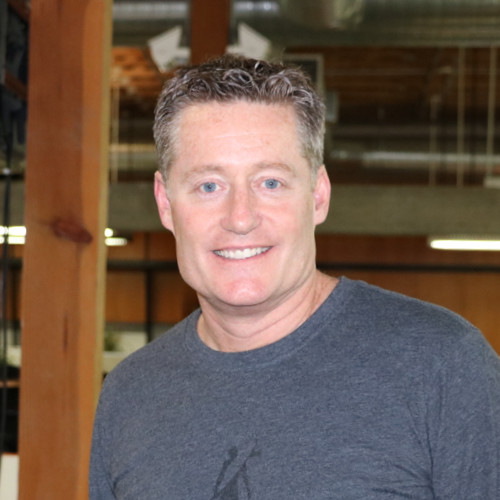
Steve Mullaney, President & CEO, Aviatrix, sits down with John Furrier for AWS re:Invent 2019 at the Sands Expo & Convention Center in Las Vegas, NV.
#reInvent #Aviatrix #theCUBE
https://siliconangle.com/2019/12/09/qa-riding-thousand-foot-wave-transforming-computing-works-reinvent/
Q&A: Riding the thousand-foot wave transforming how computing works
Computation, storage and networking are being carried away by this massive wave. But rather than staring at it or ignoring it, Steve Mullaney (pictured), president and chief executive officer of Aviatrix Systems Inc, advises riding it. This massive wave is about to transform how the enterprise builds and consumes IT … for good.
The success of the early adopters, which have been riding this wave for quite some time, has left some clues. Now, we see the majority — and even laggards — transitioning and moving to the cloud. Although data centers are still being built and will not die anytime soon, the new center of gravity will lean toward the cloud, according to Mullaney. Sure, we will still rely on on-premises infrastructure, but this time, it will be on the side of internet of things and edge computing — everything with the purpose of bringing on-prem closer to the cloud.
“… This is a thousand-foot wave, and it’s 10 times bigger than what I saw in client-server,” Mullaney said. “It’s the biggest opportunity of value creation and innovation that I have ever seen and ever will see in my life. I think this year … got serious, like really serious, in terms of big enterprises coming in.”
Mullaney spoke with John Furrier (@furrier), host of theCUBE, SiliconANGLE Media’s mobile livestreaming studio, during the AWS re:Invent event in Las Vegas. They discussed data being reborn in the cloud, transitioning versus transforming, multicloud, and consuming versus building.
[Editor’s note: The following has been condensed for clarity.]
Furrier: What Andy Jassy was talking about in his keynote today, that there are new kinds of companies, there are the ones born in the cloud, then there are enterprises reborning in the cloud. This is the new game, and if you’re not on that side of the street you could be out of business.
Mullaney: The thing that really got me excited about a year ago was watching enterprises make that transition and say, “You know what, the center of gravity has gone from architectures inside the on-prem data center and now moved into the cloud.” So cloud 1.0 and 2.0 were really more about taking my architecture that was on-prem and pushing it into the cloud. So, the change that’s happened is now everybody realizes that the center of gravity is in the cloud. The architecture of the cloud now [is] actually pushing out and extending into on-premises.
Furrier: Multicloud is a reality. What’s your vision, and how do you see the multicloud playing out as people start becoming more cloud operations-based?
Mullaney: So, first off, it’s the very beginning, early days. Second thing is, AWS has done incredibly well with the developers and the “born-in-the-cloud people,” [but with] enterprises, not so much. And, you know what? Microsoft understands enterprises. So I think we’re going to be set up for a little bit of battle here. And it’s, by no means, over.
Furrier: [In the cloud] there’s a build-out level and then there’s a consumption level. So there’s having all that capability, but also the customer’s consumption has to be addressed, i.e., solutions packaging, ease of use. What’s your take on those two dynamics?
Mullaney: The phrase “Go build” is great for an early adopter. You go tell that to an enterprise — here’s the power tools, go build your house — they’ll go … “I don’t want to go build anything, I want to consume.” So I think you’re going to see them [AWS] changing their tune a little bit, because the markets evolved. And I think it’s caught them a little bit by surprise as well. I think Microsoft because they know the enterprise, they won’t say, “Go build.” They’re going to say, “Come consume.” And I think that’s going to resonate with enterprises.
Furrier: So you’ve got a lot of buzz in the analyst community around a phrase I’ve heard you say: “There’s no more food left in the data center, and the animals are leaving the data center.” So if there’s no food in the data center, what’s happening? What does that mean?
Mullaney: The center of gravity has moved into the cloud; that’s where the food is. So you’re going to see a lot of cloud-naive legacy vendors put “cloud” on things. It’s the same crap they had; they’re just going to put “cloud” on it. Because like I said, what do animals do when they run out of food? They go find where the food is, right?
...
Forgot Password
Almost there!
We just sent you a verification email. Please verify your account to gain access to
AWS re:Invent 2019 | Las Vegas. If you don’t think you received an email check your
spam folder.
In order to sign in, enter the email address you used to registered for the event. Once completed, you will receive an email with a verification link. Open this link to automatically sign into the site.
Register For AWS re:Invent 2019 | Las Vegas
Please fill out the information below. You will recieve an email with a verification link confirming your registration. Click the link to automatically sign into the site.
You’re almost there!
We just sent you a verification email. Please click the verification button in the email. Once your email address is verified, you will have full access to all event content for AWS re:Invent 2019 | Las Vegas.
I want my badge and interests to be visible to all attendees.
Checking this box will display your presense on the attendees list, view your profile and allow other attendees to contact you via 1-1 chat. Read the Privacy Policy. At any time, you can choose to disable this preference.
Select your Interests!
add
Upload your photo
Uploading..
OR
Connect via Twitter
Connect via Linkedin
EDIT PASSWORD
Share
Forgot Password
Almost there!
We just sent you a verification email. Please verify your account to gain access to
AWS re:Invent 2019 | Las Vegas. If you don’t think you received an email check your
spam folder.
In order to sign in, enter the email address you used to registered for the event. Once completed, you will receive an email with a verification link. Open this link to automatically sign into the site.
Sign in to gain access to AWS re:Invent 2019 | Las Vegas
Please sign in with LinkedIn to continue to AWS re:Invent 2019 | Las Vegas. Signing in with LinkedIn ensures a professional environment.
Are you sure you want to remove access rights for this user?
Details
Manage Access
email address
Community Invitation
Steve Mullaney, Aviatrix | AWS re:Invent 2019
Steve Mullaney, President & CEO, Aviatrix, sits down with John Furrier for AWS re:Invent 2019 at the Sands Expo & Convention Center in Las Vegas, NV.
#reInvent #Aviatrix #theCUBE
https://siliconangle.com/2019/12/09/qa-riding-thousand-foot-wave-transforming-computing-works-reinvent/
Q&A: Riding the thousand-foot wave transforming how computing works
Computation, storage and networking are being carried away by this massive wave. But rather than staring at it or ignoring it, Steve Mullaney (pictured), president and chief executive officer of Aviatrix Systems Inc, advises riding it. This massive wave is about to transform how the enterprise builds and consumes IT … for good.
The success of the early adopters, which have been riding this wave for quite some time, has left some clues. Now, we see the majority — and even laggards — transitioning and moving to the cloud. Although data centers are still being built and will not die anytime soon, the new center of gravity will lean toward the cloud, according to Mullaney. Sure, we will still rely on on-premises infrastructure, but this time, it will be on the side of internet of things and edge computing — everything with the purpose of bringing on-prem closer to the cloud.
“… This is a thousand-foot wave, and it’s 10 times bigger than what I saw in client-server,” Mullaney said. “It’s the biggest opportunity of value creation and innovation that I have ever seen and ever will see in my life. I think this year … got serious, like really serious, in terms of big enterprises coming in.”
Mullaney spoke with John Furrier (@furrier), host of theCUBE, SiliconANGLE Media’s mobile livestreaming studio, during the AWS re:Invent event in Las Vegas. They discussed data being reborn in the cloud, transitioning versus transforming, multicloud, and consuming versus building.
[Editor’s note: The following has been condensed for clarity.]
Furrier: What Andy Jassy was talking about in his keynote today, that there are new kinds of companies, there are the ones born in the cloud, then there are enterprises reborning in the cloud. This is the new game, and if you’re not on that side of the street you could be out of business.
Mullaney: The thing that really got me excited about a year ago was watching enterprises make that transition and say, “You know what, the center of gravity has gone from architectures inside the on-prem data center and now moved into the cloud.” So cloud 1.0 and 2.0 were really more about taking my architecture that was on-prem and pushing it into the cloud. So, the change that’s happened is now everybody realizes that the center of gravity is in the cloud. The architecture of the cloud now [is] actually pushing out and extending into on-premises.
Furrier: Multicloud is a reality. What’s your vision, and how do you see the multicloud playing out as people start becoming more cloud operations-based?
Mullaney: So, first off, it’s the very beginning, early days. Second thing is, AWS has done incredibly well with the developers and the “born-in-the-cloud people,” [but with] enterprises, not so much. And, you know what? Microsoft understands enterprises. So I think we’re going to be set up for a little bit of battle here. And it’s, by no means, over.
Furrier: [In the cloud] there’s a build-out level and then there’s a consumption level. So there’s having all that capability, but also the customer’s consumption has to be addressed, i.e., solutions packaging, ease of use. What’s your take on those two dynamics?
Mullaney: The phrase “Go build” is great for an early adopter. You go tell that to an enterprise — here’s the power tools, go build your house — they’ll go … “I don’t want to go build anything, I want to consume.” So I think you’re going to see them [AWS] changing their tune a little bit, because the markets evolved. And I think it’s caught them a little bit by surprise as well. I think Microsoft because they know the enterprise, they won’t say, “Go build.” They’re going to say, “Come consume.” And I think that’s going to resonate with enterprises.
Furrier: So you’ve got a lot of buzz in the analyst community around a phrase I’ve heard you say: “There’s no more food left in the data center, and the animals are leaving the data center.” So if there’s no food in the data center, what’s happening? What does that mean?
Mullaney: The center of gravity has moved into the cloud; that’s where the food is. So you’re going to see a lot of cloud-naive legacy vendors put “cloud” on things. It’s the same crap they had; they’re just going to put “cloud” on it. Because like I said, what do animals do when they run out of food? They go find where the food is, right?
...