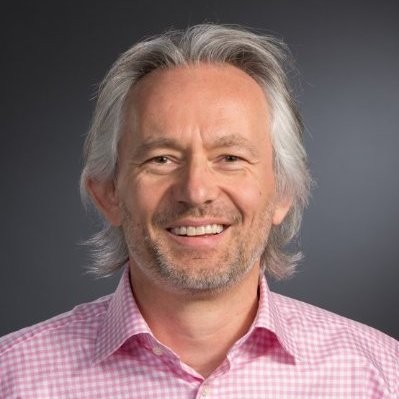
Fernando Brandao, Head of Quantum Algorithms at AWS and Bren Professor at Caltech & Richard Moulds, GM, Amazon Braket, AWS Quantum Computing connect virtually with John Furrier AWS re:Invent 2020
#theCUBE #reInvent #AWS
https://siliconangle.com/2020/12/17/aws-braket-powers-simulators-and-hybrid-systems-to-accelerate-quantum-computing-reinvent/
AWS Braket powers simulators and hybrid systems to accelerate quantum computing
VIDEO EXCLUSIVE BY SILVIA FREGONI
Quantum computing has the potential to solve computational problems that are beyond the reach of classical computers by harnessing the laws of quantum mechanics to process information in new ways. But like all early technology, significant practical challenges must be overcome before this large-scale impact is achievable.
While the technology is not yet widely accessible, researchers and developers can get started with it, explore and build quantum algorithms, and then test them on circuit simulators using Amazon Braket, a fully managed quantum computing service.
“The goal of Bracket is to fundamentally give customers the ability to go test some of those notions, to explore the technology and to just start planning for the future,” said Richard Moulds (pictured, left), general manager of Amazon Braket at Amazon Web Service Inc.
Moulds and Fernando Brandao (right), head of quantum algorithms at AWS and Bren Professor of theoretical physics at Caltech, spoke with John Furrier, host of theCUBE, SiliconANGLE Media’s livestreaming studio, during AWS re:Invent. They discussed the prospects for quantum computing, the problems that still need to be solved and how AWS Braket allows for the research and development of quantum algorithms. (* Disclosure below.)
Helping to develop the technology
Until recently, it was difficult for companies to get access to quantum computing because machines with the specific technology belonged mainly to startups or physics labs and universities, according to Moulds. But the interest in the solution is growing rapidly, so AWS decided to launch Braket to further develop the technology.
“It’s early, but it’s an exciting time to be doing quantum computing,” Brandao said. “And it’s very interesting to see the interest of industries growing and customers, for example, coming from AWS, willing to take part in this journey with us in the development of the technology.”
To make progress in quantum computing, AWS put together a team of experts to work to find new use cases and build more powerful quantum hardware. The AWS center for quantum computing is based on the California Institute of Technology.
“This comes from AWS’ belief that quantum computing is key, and so [it is necessary to] stay close to fresh ideas and to the latest scientific developments,” Brandao said. “And Caltech is a pioneer in quantum computing, so it was the ideal place for doing this.”
AWS announced new features for Braket during AWS re:Invent that were primarily focused on more powerful simulators and an easier way to use hybrid systems that incorporate classical computing with quantum machinery, according to Moulds.
“Right now, the machines are far from perfect, and the way we can try to squeeze as much value out of these devices today is to run them in tandem with classical systems,” Moulds explained. “We think of the notion of a self-learning quantum algorithm, where you use classic optimization techniques, such as we see with machine learning, to tweak and tune the parameters of a quantum algorithm to try to iterate and converge on the best answer and try to overcome some of these issues surrounding errors.”
Here’s the complete video interview, part of SiliconANGLE’s and theCUBE’s coverage of AWS re:Invent. (* Disclosure: Amazon Web Services sponsored this segment of theCUBE. Neither AWS nor other sponsors have editorial control over content on theCUBE or SiliconANGLE.)
Forgot Password
Almost there!
We just sent you a verification email. Please verify your account to gain access to
AWS re:Invent 2020 . If you don’t think you received an email check your
spam folder.
In order to sign in, enter the email address you used to registered for the event. Once completed, you will receive an email with a verification link. Open this link to automatically sign into the site.
Register For AWS re:Invent 2020
Please fill out the information below. You will recieve an email with a verification link confirming your registration. Click the link to automatically sign into the site.
You’re almost there!
We just sent you a verification email. Please click the verification button in the email. Once your email address is verified, you will have full access to all event content for AWS re:Invent 2020 .
I want my badge and interests to be visible to all attendees.
Checking this box will display your presense on the attendees list, view your profile and allow other attendees to contact you via 1-1 chat. Read the Privacy Policy. At any time, you can choose to disable this preference.
Select your Interests!
add
Upload your photo
Uploading..
OR
Connect via Twitter
Connect via Linkedin
EDIT PASSWORD
Share
Forgot Password
Almost there!
We just sent you a verification email. Please verify your account to gain access to
AWS re:Invent 2020 . If you don’t think you received an email check your
spam folder.
In order to sign in, enter the email address you used to registered for the event. Once completed, you will receive an email with a verification link. Open this link to automatically sign into the site.
Sign in to gain access to AWS re:Invent 2020
Please sign in with LinkedIn to continue to AWS re:Invent 2020 . Signing in with LinkedIn ensures a professional environment.
Are you sure you want to remove access rights for this user?
Details
Manage Access
email address
Community Invitation
Fernando Brandao, AWS & Richard Moulds, AWS Quantum Computing | AWS re:Invent 2020
Fernando Brandao, Head of Quantum Algorithms at AWS and Bren Professor at Caltech & Richard Moulds, GM, Amazon Braket, AWS Quantum Computing connect virtually with John Furrier AWS re:Invent 2020
#theCUBE #reInvent #AWS
https://siliconangle.com/2020/12/17/aws-braket-powers-simulators-and-hybrid-systems-to-accelerate-quantum-computing-reinvent/
AWS Braket powers simulators and hybrid systems to accelerate quantum computing
VIDEO EXCLUSIVE BY SILVIA FREGONI
Quantum computing has the potential to solve computational problems that are beyond the reach of classical computers by harnessing the laws of quantum mechanics to process information in new ways. But like all early technology, significant practical challenges must be overcome before this large-scale impact is achievable.
While the technology is not yet widely accessible, researchers and developers can get started with it, explore and build quantum algorithms, and then test them on circuit simulators using Amazon Braket, a fully managed quantum computing service.
“The goal of Bracket is to fundamentally give customers the ability to go test some of those notions, to explore the technology and to just start planning for the future,” said Richard Moulds (pictured, left), general manager of Amazon Braket at Amazon Web Service Inc.
Moulds and Fernando Brandao (right), head of quantum algorithms at AWS and Bren Professor of theoretical physics at Caltech, spoke with John Furrier, host of theCUBE, SiliconANGLE Media’s livestreaming studio, during AWS re:Invent. They discussed the prospects for quantum computing, the problems that still need to be solved and how AWS Braket allows for the research and development of quantum algorithms. (* Disclosure below.)
Helping to develop the technology
Until recently, it was difficult for companies to get access to quantum computing because machines with the specific technology belonged mainly to startups or physics labs and universities, according to Moulds. But the interest in the solution is growing rapidly, so AWS decided to launch Braket to further develop the technology.
“It’s early, but it’s an exciting time to be doing quantum computing,” Brandao said. “And it’s very interesting to see the interest of industries growing and customers, for example, coming from AWS, willing to take part in this journey with us in the development of the technology.”
To make progress in quantum computing, AWS put together a team of experts to work to find new use cases and build more powerful quantum hardware. The AWS center for quantum computing is based on the California Institute of Technology.
“This comes from AWS’ belief that quantum computing is key, and so [it is necessary to] stay close to fresh ideas and to the latest scientific developments,” Brandao said. “And Caltech is a pioneer in quantum computing, so it was the ideal place for doing this.”
AWS announced new features for Braket during AWS re:Invent that were primarily focused on more powerful simulators and an easier way to use hybrid systems that incorporate classical computing with quantum machinery, according to Moulds.
“Right now, the machines are far from perfect, and the way we can try to squeeze as much value out of these devices today is to run them in tandem with classical systems,” Moulds explained. “We think of the notion of a self-learning quantum algorithm, where you use classic optimization techniques, such as we see with machine learning, to tweak and tune the parameters of a quantum algorithm to try to iterate and converge on the best answer and try to overcome some of these issues surrounding errors.”
Here’s the complete video interview, part of SiliconANGLE’s and theCUBE’s coverage of AWS re:Invent. (* Disclosure: Amazon Web Services sponsored this segment of theCUBE. Neither AWS nor other sponsors have editorial control over content on theCUBE or SiliconANGLE.)