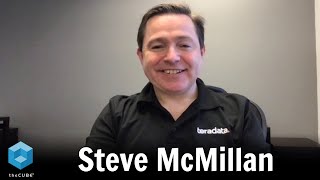
Brett McMillen, Director US Federal, AWS connects virtually with Lisa Martin for AWS re:Invent 2020
#theCUBE #reInvent #AWS
https://siliconangle.com/2020/12/10/aws-hosts-genomic-data-curing-issues-like-covid-19-democratizing-scientific-data-reinvent/
AWS hosts genomic data for curing COVID-19 and other health issues
VIDEO EXCLUSIVE BY TERYN O'BRIEN
Amazon Web Services Inc. recently announced that the AWS Open Data Sponsorship Program will begin hosting the National Institutes of Health Sequence Read Archive, or SRA, data — a large sequence of genomic data.
During the COVID-19 pandemic health crisis the world is facing right now, this is a huge deal, according to Brett McMillen (pictured), director of U.S. federal at AWS.
“It’s got not only human genomic data, but all life forms or all branches of life … to include viruses,” he said. “And that’s really important here during the pandemic. It’s one of the largest and oldest … sequence genomic data sets that are out there, and yet it’s very modern. It has been designed for next-generation sequencing, so it’s growing.”
McMillen spoke with Lisa Martin, host of theCUBE, SiliconANGLE Media’s livestreaming studio, during AWS re:Invent. They discussed why the SRA data is so important and why AWS is helping the scientists at NIH during this pivotal moment in time. (* Disclosure below.)
Using AWS to democratize of scientific data
AWS has been working with NIH since 2012, according to McMillen. Making this SRA data to scientists worldwide is extremely important because studying the genomic code is what helps scientists find cures for human health issues, including heart disease, diabetes and cancer — and even viruses that can cause pandemics. AWS is working within NIH with the National Center for Biotechnology Information to make the SRA an open data set.
“It’s all about increasing the speed for scientific discovery,” McMillen said. “I personally think that in the fullness of time, the scientists will come up with cures for just about all of the human ailments that are out there, and it’s our job at AWS to put into the hands of the scientists the tools they need to make things happen quickly or in our lifetime.”
SRA is a very large data set of 45 petabytes, and this is so large that if it were all human data, it would be equivalent to 90% of everybody living in New York City, according to McMillen. This is why keeping the this data in the cloud is so important, and it is available on Amazon S3, a popular storage solution in the scientific community.
“One of our goals here is go back to a democratization of research,” McMillen described. “For example, the very first … vaccine that came out was … done by a rural country doctor using essentially test tubes and a microscope. It’s gotten hard to do that because data sets are so large you need so much compute. By using the power of the cloud, we’ve re-democratized it, and now anybody can do it.”
Here’s the complete video interview, part of SiliconANGLE’s and theCUBE’s coverage of AWS re:Invent. (* Disclosure: Amazon Web Services sponsored this segment of theCUBE. Neither AWS nor other sponsors have editorial control over content on theCUBE or SiliconANGLE.)
Forgot Password
Almost there!
We just sent you a verification email. Please verify your account to gain access to
AWS re:Invent 2020 . If you don’t think you received an email check your
spam folder.
In order to sign in, enter the email address you used to registered for the event. Once completed, you will receive an email with a verification link. Open this link to automatically sign into the site.
Register For AWS re:Invent 2020
Please fill out the information below. You will recieve an email with a verification link confirming your registration. Click the link to automatically sign into the site.
You’re almost there!
We just sent you a verification email. Please click the verification button in the email. Once your email address is verified, you will have full access to all event content for AWS re:Invent 2020 .
I want my badge and interests to be visible to all attendees.
Checking this box will display your presense on the attendees list, view your profile and allow other attendees to contact you via 1-1 chat. Read the Privacy Policy. At any time, you can choose to disable this preference.
Select your Interests!
add
Upload your photo
Uploading..
OR
Connect via Twitter
Connect via Linkedin
EDIT PASSWORD
Share
Forgot Password
Almost there!
We just sent you a verification email. Please verify your account to gain access to
AWS re:Invent 2020 . If you don’t think you received an email check your
spam folder.
In order to sign in, enter the email address you used to registered for the event. Once completed, you will receive an email with a verification link. Open this link to automatically sign into the site.
Sign in to gain access to AWS re:Invent 2020
Please sign in with LinkedIn to continue to AWS re:Invent 2020 . Signing in with LinkedIn ensures a professional environment.
Are you sure you want to remove access rights for this user?
Details
Manage Access
email address
Community Invitation
Brett McMillen, AWS | AWS re:Invent 2020
Brett McMillen, Director US Federal, AWS connects virtually with Lisa Martin for AWS re:Invent 2020
#theCUBE #reInvent #AWS
https://siliconangle.com/2020/12/10/aws-hosts-genomic-data-curing-issues-like-covid-19-democratizing-scientific-data-reinvent/
AWS hosts genomic data for curing COVID-19 and other health issues
VIDEO EXCLUSIVE BY TERYN O'BRIEN
Amazon Web Services Inc. recently announced that the AWS Open Data Sponsorship Program will begin hosting the National Institutes of Health Sequence Read Archive, or SRA, data — a large sequence of genomic data.
During the COVID-19 pandemic health crisis the world is facing right now, this is a huge deal, according to Brett McMillen (pictured), director of U.S. federal at AWS.
“It’s got not only human genomic data, but all life forms or all branches of life … to include viruses,” he said. “And that’s really important here during the pandemic. It’s one of the largest and oldest … sequence genomic data sets that are out there, and yet it’s very modern. It has been designed for next-generation sequencing, so it’s growing.”
McMillen spoke with Lisa Martin, host of theCUBE, SiliconANGLE Media’s livestreaming studio, during AWS re:Invent. They discussed why the SRA data is so important and why AWS is helping the scientists at NIH during this pivotal moment in time. (* Disclosure below.)
Using AWS to democratize of scientific data
AWS has been working with NIH since 2012, according to McMillen. Making this SRA data to scientists worldwide is extremely important because studying the genomic code is what helps scientists find cures for human health issues, including heart disease, diabetes and cancer — and even viruses that can cause pandemics. AWS is working within NIH with the National Center for Biotechnology Information to make the SRA an open data set.
“It’s all about increasing the speed for scientific discovery,” McMillen said. “I personally think that in the fullness of time, the scientists will come up with cures for just about all of the human ailments that are out there, and it’s our job at AWS to put into the hands of the scientists the tools they need to make things happen quickly or in our lifetime.”
SRA is a very large data set of 45 petabytes, and this is so large that if it were all human data, it would be equivalent to 90% of everybody living in New York City, according to McMillen. This is why keeping the this data in the cloud is so important, and it is available on Amazon S3, a popular storage solution in the scientific community.
“One of our goals here is go back to a democratization of research,” McMillen described. “For example, the very first … vaccine that came out was … done by a rural country doctor using essentially test tubes and a microscope. It’s gotten hard to do that because data sets are so large you need so much compute. By using the power of the cloud, we’ve re-democratized it, and now anybody can do it.”
Here’s the complete video interview, part of SiliconANGLE’s and theCUBE’s coverage of AWS re:Invent. (* Disclosure: Amazon Web Services sponsored this segment of theCUBE. Neither AWS nor other sponsors have editorial control over content on theCUBE or SiliconANGLE.)