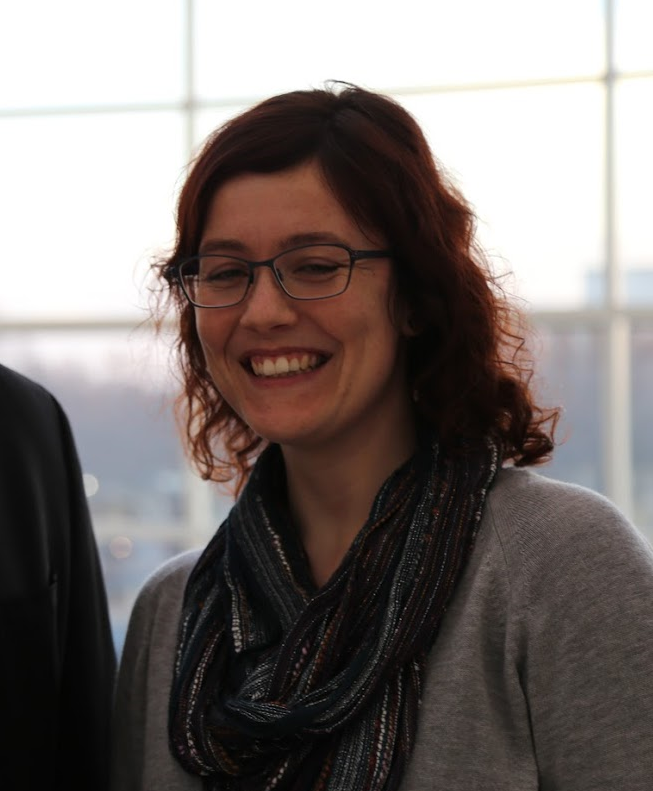
Tania Pinto talks with John Furrier at AWS Public Sector in Washington DC
#AWSSummit #theCUBE
https://siliconangle.com/2018/02/26/it-takes-a-tech-village-to-tackle-the-worlds-energy-crisis-at-scale-awspublicsector-womenintech/
It takes a tech village to tackle the world’s energy crisis at scale
It sounds like a fairly basic solution for today’s energy crisis. Take large amounts of organic waste, convert it to biogas, generate electricity and heat, and store the excess for later use, making life easier for millions of people without access to sources of reliable energy. Simple.
Yet, behind this basic approach from a startup called SEaB Energy Ltd. lies a more complicated and fundamental issue. The world is a big place with a lot of people and many problems that can’t be quickly or easily solved. How exactly can technology play a role and make a meaningful difference in the lives of citizens around the globe?
Finding a way to convert waste (plenty of it everywhere) to reliable energy (not so much) is a good place to start. An estimated 1.2 billion people lack access to the world’s energy, with a significant number of them located in developing Asia or sub-Saharan Africa. Nearly 80 percent of them reside in rural regions.
SEaB, a participant in the PeaceTech Accelerator program supported by Amazon Web Services Inc., C5 Capital and SAP NSz, offers an intriguing glimpse into the potential for technology to make a difference in the energy sector as other firms take on equally significant tasks, such as improving education or enhancing the quality of life in cities throughout the world.
For SEaB, it starts by taking the technology on the road. The firm has organized a Kickstarter campaign to convert waste to energy in remote communities in India.
“We are doing the Kickstarter to fund the first two systems we would like to deploy there,” said Tania Pinto (pictured, right), sales and marketing executive at SEaB Energy. “After we’re in the first two villages, our goal is to find local manufacturers and actually expand to all of the remote places that have no access to energy.”
Pinto spoke with John Furrier (@furrier), host of theCUBE, SiliconANGLE Media’s mobile livestreaming studio, at the PeaceTech Lab at the United States Institute of Peace in Washington, D.C., as part of theCUBE’s special AWS Public Sector CUBE Conversation series. They discussed the motivation for starting her company, the science and technology behind waste conversion, and the support of AWS for her startup’s initiative.
This week, theCUBE spotlights Tania Pinto in our Women in Tech feature.
Converting poop into energy
The genesis for SEaB’s waste conversion model came from one of life’s common occurrences. The founders stepped in it.
At their farm in the English countryside, Nick and Sandra Sassow tended horses that generated more than enough waste product to go around, according to Pinto. After stepping in a pile of manure, Sandra challenged her partner to find a way to use what was lying on the ground around them. So he did.
SEaB’s process involves using modular, odor-free, anaerobic digesters in 20-foot shipping containers to process organic waste. The resulting biogas can be used to create electricity or heat water. “We came up with waste power in a box, appliances that are made to tackle climate change,” Pinto explained. “Essentially, it’s a biological process.”
By offering self-contained units where waste can be processed and turned into energy onsite, the company eliminates the less-than-green situation where the material must be trucked to large-scale conversion facilities. Early customers included a U.K. hospital and a supermarket in Portugal. More recently, the company installed one of its anaerobic digestion systems at a U.S. naval base in California.
Watch the complete video interview with Pinto below:
Forgot Password
Almost there!
We just sent you a verification email. Please verify your account to gain access to
AWS Public Sector Preview 2018 | Washington DC. If you don’t think you received an email check your
spam folder.
Sign in to AWS Public Sector Preview 2018 | Washington DC.
In order to sign in, enter the email address you used to registered for the event. Once completed, you will receive an email with a verification link. Open this link to automatically sign into the site.
Register For AWS Public Sector Preview 2018 | Washington DC
Please fill out the information below. You will recieve an email with a verification link confirming your registration. Click the link to automatically sign into the site.
You’re almost there!
We just sent you a verification email. Please click the verification button in the email. Once your email address is verified, you will have full access to all event content for AWS Public Sector Preview 2018 | Washington DC.
I want my badge and interests to be visible to all attendees.
Checking this box will display your presense on the attendees list, view your profile and allow other attendees to contact you via 1-1 chat. Read the Privacy Policy. At any time, you can choose to disable this preference.
Select your Interests!
add
Upload your photo
Uploading..
OR
Connect via Twitter
Connect via Linkedin
EDIT PASSWORD
Share
Forgot Password
Almost there!
We just sent you a verification email. Please verify your account to gain access to
AWS Public Sector Preview 2018 | Washington DC. If you don’t think you received an email check your
spam folder.
Sign in to AWS Public Sector Preview 2018 | Washington DC.
In order to sign in, enter the email address you used to registered for the event. Once completed, you will receive an email with a verification link. Open this link to automatically sign into the site.
Sign in to gain access to AWS Public Sector Preview 2018 | Washington DC
Please sign in with LinkedIn to continue to AWS Public Sector Preview 2018 | Washington DC. Signing in with LinkedIn ensures a professional environment.
Are you sure you want to remove access rights for this user?
Details
Manage Access
email address
Community Invitation
Tania Pinto, SEaB Energy | AWS Public Sector Q1 2018
Tania Pinto talks with John Furrier at AWS Public Sector in Washington DC
#AWSSummit #theCUBE
https://siliconangle.com/2018/02/26/it-takes-a-tech-village-to-tackle-the-worlds-energy-crisis-at-scale-awspublicsector-womenintech/
It takes a tech village to tackle the world’s energy crisis at scale
It sounds like a fairly basic solution for today’s energy crisis. Take large amounts of organic waste, convert it to biogas, generate electricity and heat, and store the excess for later use, making life easier for millions of people without access to sources of reliable energy. Simple.
Yet, behind this basic approach from a startup called SEaB Energy Ltd. lies a more complicated and fundamental issue. The world is a big place with a lot of people and many problems that can’t be quickly or easily solved. How exactly can technology play a role and make a meaningful difference in the lives of citizens around the globe?
Finding a way to convert waste (plenty of it everywhere) to reliable energy (not so much) is a good place to start. An estimated 1.2 billion people lack access to the world’s energy, with a significant number of them located in developing Asia or sub-Saharan Africa. Nearly 80 percent of them reside in rural regions.
SEaB, a participant in the PeaceTech Accelerator program supported by Amazon Web Services Inc., C5 Capital and SAP NSz, offers an intriguing glimpse into the potential for technology to make a difference in the energy sector as other firms take on equally significant tasks, such as improving education or enhancing the quality of life in cities throughout the world.
For SEaB, it starts by taking the technology on the road. The firm has organized a Kickstarter campaign to convert waste to energy in remote communities in India.
“We are doing the Kickstarter to fund the first two systems we would like to deploy there,” said Tania Pinto (pictured, right), sales and marketing executive at SEaB Energy. “After we’re in the first two villages, our goal is to find local manufacturers and actually expand to all of the remote places that have no access to energy.”
Pinto spoke with John Furrier (@furrier), host of theCUBE, SiliconANGLE Media’s mobile livestreaming studio, at the PeaceTech Lab at the United States Institute of Peace in Washington, D.C., as part of theCUBE’s special AWS Public Sector CUBE Conversation series. They discussed the motivation for starting her company, the science and technology behind waste conversion, and the support of AWS for her startup’s initiative.
This week, theCUBE spotlights Tania Pinto in our Women in Tech feature.
Converting poop into energy
The genesis for SEaB’s waste conversion model came from one of life’s common occurrences. The founders stepped in it.
At their farm in the English countryside, Nick and Sandra Sassow tended horses that generated more than enough waste product to go around, according to Pinto. After stepping in a pile of manure, Sandra challenged her partner to find a way to use what was lying on the ground around them. So he did.
SEaB’s process involves using modular, odor-free, anaerobic digesters in 20-foot shipping containers to process organic waste. The resulting biogas can be used to create electricity or heat water. “We came up with waste power in a box, appliances that are made to tackle climate change,” Pinto explained. “Essentially, it’s a biological process.”
By offering self-contained units where waste can be processed and turned into energy onsite, the company eliminates the less-than-green situation where the material must be trucked to large-scale conversion facilities. Early customers included a U.K. hospital and a supermarket in Portugal. More recently, the company installed one of its anaerobic digestion systems at a U.S. naval base in California.
Watch the complete video interview with Pinto below: