Dr. Chelle Gentemann, Senior Scientist at the Farallon Institute sits down with theCUBE's John Furrier for a Digital CUBE Conversation as part of the AWS Public Sector Online Summit.
#AWSPSSummit #AWS #theCUBE @Amazon Web Services
https://siliconangle.com/2020/06/30/cloud-computing-advances-science-by-facilitating-data-use-and-collaboration-awspssummit/
Cloud computing opens Pandora’s Box for scientists sharing data
BY SILVIA FREGONI
Cloud computing is not only changing the way people store and share their photos and how companies back up, manage, and use their data — it is also impacting scientific research.
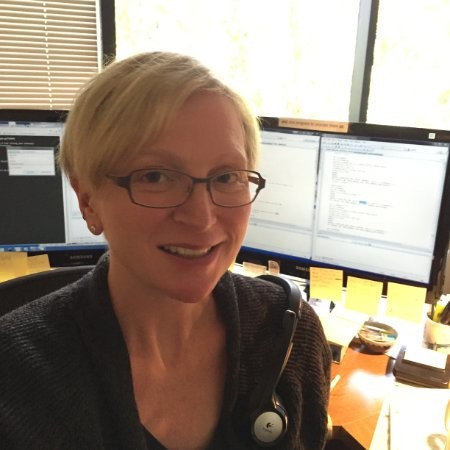
By eliminating the need to store huge data sets on local hard drives and allowing access to information from anywhere in the world, the cloud accelerates and advances science, according to Dr. Chelle Gentemann (pictured), senior scientist at the Farallon Institute Inc.
“Moving onto the cloud and bringing your ideas and your compute to the data set, it opens up this entire Pandora’s box, this beautiful world of how you can do science,” she said. “You’re no longer restricted to what you have downloaded or what you’re able to do because you have this unlimited compute.”
Gentemann spoke with John Furrier, host of theCUBE, SiliconANGLE Media’s livestreaming studio, during the AWS Public Sector Summit event. They discussed the role of cloud computing in scientific research, Farallon Institute’s work using AWS Public Dataset Program, and the relevance of artificial intelligence and machine learning to promote science. (* Disclosure below.)
Former repositories lacked transparency
Before adopting the cloud, large research institutions used to create repositories to download the data sets they were working on, and the problem was that these files were not transparent enough, according to Gentemann.
“You’re trying to do science with these data, but you’re not sure if it’s the most recent version,” she said. “[And] it makes it really hard to do reproducible science, because if you want to share your code, somebody also has to access that data and download it. And these are really big data sets, so downloading it could take quite a long time.”
As the data was moved to the cloud, the researchers were able to get rid of the hard work of downloading the information. “And instantly when I share my code now, people can run the code and just build on it and go right from there, or they can add to it or suggest changes,” Gentemann explained. “That’s a really big advantage for trying to do open science.”
This change also allowed for the combination of different data sets at the same time, opening doors for various types of research with new kinds of information.
Breaking silos to enable inclusion
Another impact of cloud computing on scientific research is to enable collaborative work. Until now, research was organized in silos, following the functioning of funding mechanisms, which inhibited creativity, collaboration, and the advancement of science, according to Gentemann.
Researchers generally build new findings based on research already published, and for that they traditionally had to reproduce the study and recode the entire analysis.
“They’re redoing the work that you did, which is simply not efficient,” Gentemann stated. “So one of the things I’m really excited about with cloud computing is that by bringing our scientific ideas and our compute to the data, it allows us to break out of these silos and collaborate with people outside of our institution, outside of our country, and bring new ideas and new voices and elevate everyone’s ideas to another level.”
A scientific non-profit organization, the Farallon Institute focuses on understanding and preserving healthy marine ecosystems. Gentemann’s research specifically targets the use of satellites to examine how the ocean influences weather and climate.
Using cloud computing, Gentemann is currently working with students from Denmark, Oman, India and France, in addition to the United States. Her latest scientific article was published together with a software that contains the research data and the analysis performed.
“We got a digital firewall for the software, published the software and then containerized it so that when you read our paper, at the bottom of the paper, you get a link,” she explained. “[If] you go to that link, you click on a button and you’re instantly in our compute environment. You can reproduce all of our results. That’s just magical.”
Watch the complete video interview below, and be sure to check out more of SiliconANGLE’s and theCUBE’s coverage of the AWS Public Sector Summit event. (* Disclosure: TheCUBE is a paid media partner for the AWS Public Sector Summit Online event. Neither Amazon Web Services Inc., the sponsor for theCUBE’s event coverage, nor other sponsors have editorial control over content on theCUBE or SiliconANGLE.)
Forgot Password
Almost there!
We just sent you a verification email. Please verify your account to gain access to
AWS Public Sector Summit Online | Digital Event. If you don’t think you received an email check your
spam folder.
Sign in to AWS Public Sector Summit Online | Digital Event.
In order to sign in, enter the email address you used to registered for the event. Once completed, you will receive an email with a verification link. Open this link to automatically sign into the site.
Register For AWS Public Sector Summit Online | Digital Event
Please fill out the information below. You will recieve an email with a verification link confirming your registration. Click the link to automatically sign into the site.
You’re almost there!
We just sent you a verification email. Please click the verification button in the email. Once your email address is verified, you will have full access to all event content for AWS Public Sector Summit Online | Digital Event.
I want my badge and interests to be visible to all attendees.
Checking this box will display your presense on the attendees list, view your profile and allow other attendees to contact you via 1-1 chat. Read the Privacy Policy. At any time, you can choose to disable this preference.
Select your Interests!
add
Upload your photo
Uploading..
OR
Connect via Twitter
Connect via Linkedin
EDIT PASSWORD
Share
Forgot Password
Almost there!
We just sent you a verification email. Please verify your account to gain access to
AWS Public Sector Summit Online | Digital Event. If you don’t think you received an email check your
spam folder.
Sign in to AWS Public Sector Summit Online | Digital Event.
In order to sign in, enter the email address you used to registered for the event. Once completed, you will receive an email with a verification link. Open this link to automatically sign into the site.
Sign in to gain access to AWS Public Sector Summit Online | Digital Event
Please sign in with LinkedIn to continue to AWS Public Sector Summit Online | Digital Event. Signing in with LinkedIn ensures a professional environment.
Are you sure you want to remove access rights for this user?
Details
Manage Access
email address
Community Invitation
Dr. Chelle Gentemann, Farallon Institute | AWS Public Sector Online
Dr. Chelle Gentemann, Senior Scientist at the Farallon Institute sits down with theCUBE's John Furrier for a Digital CUBE Conversation as part of the AWS Public Sector Online Summit.
#AWSPSSummit #AWS #theCUBE @Amazon Web Services
https://siliconangle.com/2020/06/30/cloud-computing-advances-science-by-facilitating-data-use-and-collaboration-awspssummit/
Cloud computing opens Pandora’s Box for scientists sharing data
BY SILVIA FREGONI
Cloud computing is not only changing the way people store and share their photos and how companies back up, manage, and use their data — it is also impacting scientific research.
By eliminating the need to store huge data sets on local hard drives and allowing access to information from anywhere in the world, the cloud accelerates and advances science, according to Dr. Chelle Gentemann (pictured), senior scientist at the Farallon Institute Inc.
“Moving onto the cloud and bringing your ideas and your compute to the data set, it opens up this entire Pandora’s box, this beautiful world of how you can do science,” she said. “You’re no longer restricted to what you have downloaded or what you’re able to do because you have this unlimited compute.”
Gentemann spoke with John Furrier, host of theCUBE, SiliconANGLE Media’s livestreaming studio, during the AWS Public Sector Summit event. They discussed the role of cloud computing in scientific research, Farallon Institute’s work using AWS Public Dataset Program, and the relevance of artificial intelligence and machine learning to promote science. (* Disclosure below.)
Former repositories lacked transparency
Before adopting the cloud, large research institutions used to create repositories to download the data sets they were working on, and the problem was that these files were not transparent enough, according to Gentemann.
“You’re trying to do science with these data, but you’re not sure if it’s the most recent version,” she said. “[And] it makes it really hard to do reproducible science, because if you want to share your code, somebody also has to access that data and download it. And these are really big data sets, so downloading it could take quite a long time.”
As the data was moved to the cloud, the researchers were able to get rid of the hard work of downloading the information. “And instantly when I share my code now, people can run the code and just build on it and go right from there, or they can add to it or suggest changes,” Gentemann explained. “That’s a really big advantage for trying to do open science.”
This change also allowed for the combination of different data sets at the same time, opening doors for various types of research with new kinds of information.
Breaking silos to enable inclusion
Another impact of cloud computing on scientific research is to enable collaborative work. Until now, research was organized in silos, following the functioning of funding mechanisms, which inhibited creativity, collaboration, and the advancement of science, according to Gentemann.
Researchers generally build new findings based on research already published, and for that they traditionally had to reproduce the study and recode the entire analysis.
“They’re redoing the work that you did, which is simply not efficient,” Gentemann stated. “So one of the things I’m really excited about with cloud computing is that by bringing our scientific ideas and our compute to the data, it allows us to break out of these silos and collaborate with people outside of our institution, outside of our country, and bring new ideas and new voices and elevate everyone’s ideas to another level.”
A scientific non-profit organization, the Farallon Institute focuses on understanding and preserving healthy marine ecosystems. Gentemann’s research specifically targets the use of satellites to examine how the ocean influences weather and climate.
Using cloud computing, Gentemann is currently working with students from Denmark, Oman, India and France, in addition to the United States. Her latest scientific article was published together with a software that contains the research data and the analysis performed.
“We got a digital firewall for the software, published the software and then containerized it so that when you read our paper, at the bottom of the paper, you get a link,” she explained. “[If] you go to that link, you click on a button and you’re instantly in our compute environment. You can reproduce all of our results. That’s just magical.”
Watch the complete video interview below, and be sure to check out more of SiliconANGLE’s and theCUBE’s coverage of the AWS Public Sector Summit event. (* Disclosure: TheCUBE is a paid media partner for the AWS Public Sector Summit Online event. Neither Amazon Web Services Inc., the sponsor for theCUBE’s event coverage, nor other sponsors have editorial control over content on theCUBE or SiliconANGLE.)