Lou Pugliese, Sr. Innovation Fellow & Managing Director Technology Innovation Action Lab, Arizona State University talks with Jeff Frick at AWS Imagine 2018 in Seattle, WA.
#ImagineEDU #theCUBE #AWS
https://siliconangle.com/2018/09/07/online-university-assesses-student-digital-footprints-boost-learning-experiences-imagineedu/
Online university assesses student digital footprints to boost learning experiences
While the price of a four-year college degree climbs higher and higher, studies have found that only 19 percent of full-time students achieve their bachelor’s degree within four years. For most students, it’s now taking six years. That’s two more years of potential student loans, two more years of arduous study to get that elusive degree, and a two-year delay to finding and working at a real-world job, courtesy of a degree.
With many traditional four-year schools now offering online courses, Arizona State University established a Technology Innovation Action Lab that uses the digital footprint that its students leave to research their learning experiences, defining how students are succeeding in their studies and helping them achieve success in their online university experience.
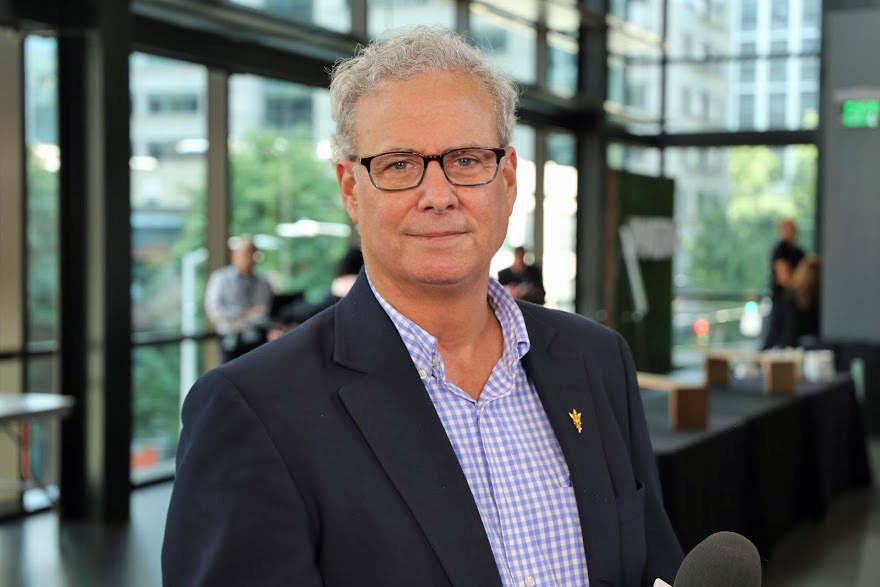
“It’s not necessarily about the technology; it’s [about] how the technology can point and draw a direct line between what the data says and how we create an intervention with students,” said Lou Pugliese (pictured), senior innovation fellow and managing director of the Technology Innovation Action Lab at Arizona State University.
Pugliese spoke with Jeff Frick (@JeffFrick), host of theCUBE, SiliconANGLE Media’s mobile livestreaming studio, during the AWS Imagine: A Better World event in Seattle, Washington. In addition to talking about how the Action Lab benefits students, they also discussed how research helps faculty improve.
Researching how students behave in a digital environment
In early studies, Pugliese explained that the Action Lab looked at how demographic populations succeed or don’t succeed. It found out that there are certain demographics of students that flourish in an online environment, while others don’t.
The Lab then researched the types of design features within a university course, such as the interactions between students, exposing learning objectives, getting students to really understand rubrics of measurement, or how content is being used and paced throughout the curriculum.
“[It’s] a lot of really detailed information that faculty needs to reorient and redesign their instruction, and so we can see a direct predictive value of improvement based on those changes,” Pugliese said.
Watch the complete video interview below, and be sure to check out more of SiliconANGLE’s and theCUBE’s coverage of the AWS Imagine: A Better World event.
Forgot Password
Almost there!
We just sent you a verification email. Please verify your account to gain access to
AWS Imagine EDU 2018 | Seattle. If you don’t think you received an email check your
spam folder.
In order to sign in, enter the email address you used to registered for the event. Once completed, you will receive an email with a verification link. Open this link to automatically sign into the site.
Register For AWS Imagine EDU 2018 | Seattle
Please fill out the information below. You will recieve an email with a verification link confirming your registration. Click the link to automatically sign into the site.
You’re almost there!
We just sent you a verification email. Please click the verification button in the email. Once your email address is verified, you will have full access to all event content for AWS Imagine EDU 2018 | Seattle.
I want my badge and interests to be visible to all attendees.
Checking this box will display your presense on the attendees list, view your profile and allow other attendees to contact you via 1-1 chat. Read the Privacy Policy. At any time, you can choose to disable this preference.
Select your Interests!
add
Upload your photo
Uploading..
OR
Connect via Twitter
Connect via Linkedin
EDIT PASSWORD
Share
Forgot Password
Almost there!
We just sent you a verification email. Please verify your account to gain access to
AWS Imagine EDU 2018 | Seattle. If you don’t think you received an email check your
spam folder.
In order to sign in, enter the email address you used to registered for the event. Once completed, you will receive an email with a verification link. Open this link to automatically sign into the site.
Sign in to gain access to AWS Imagine EDU 2018 | Seattle
Please sign in with LinkedIn to continue to AWS Imagine EDU 2018 | Seattle. Signing in with LinkedIn ensures a professional environment.
Are you sure you want to remove access rights for this user?
Details
Manage Access
email address
Community Invitation
Lou Pugliese, Arizona State University | AWS Imagine 2018
Lou Pugliese, Sr. Innovation Fellow & Managing Director Technology Innovation Action Lab, Arizona State University talks with Jeff Frick at AWS Imagine 2018 in Seattle, WA.
#ImagineEDU #theCUBE #AWS
https://siliconangle.com/2018/09/07/online-university-assesses-student-digital-footprints-boost-learning-experiences-imagineedu/
Online university assesses student digital footprints to boost learning experiences
While the price of a four-year college degree climbs higher and higher, studies have found that only 19 percent of full-time students achieve their bachelor’s degree within four years. For most students, it’s now taking six years. That’s two more years of potential student loans, two more years of arduous study to get that elusive degree, and a two-year delay to finding and working at a real-world job, courtesy of a degree.
With many traditional four-year schools now offering online courses, Arizona State University established a Technology Innovation Action Lab that uses the digital footprint that its students leave to research their learning experiences, defining how students are succeeding in their studies and helping them achieve success in their online university experience.
“It’s not necessarily about the technology; it’s [about] how the technology can point and draw a direct line between what the data says and how we create an intervention with students,” said Lou Pugliese (pictured), senior innovation fellow and managing director of the Technology Innovation Action Lab at Arizona State University.
Pugliese spoke with Jeff Frick (@JeffFrick), host of theCUBE, SiliconANGLE Media’s mobile livestreaming studio, during the AWS Imagine: A Better World event in Seattle, Washington. In addition to talking about how the Action Lab benefits students, they also discussed how research helps faculty improve.
Researching how students behave in a digital environment
In early studies, Pugliese explained that the Action Lab looked at how demographic populations succeed or don’t succeed. It found out that there are certain demographics of students that flourish in an online environment, while others don’t.
The Lab then researched the types of design features within a university course, such as the interactions between students, exposing learning objectives, getting students to really understand rubrics of measurement, or how content is being used and paced throughout the curriculum.
“[It’s] a lot of really detailed information that faculty needs to reorient and redesign their instruction, and so we can see a direct predictive value of improvement based on those changes,” Pugliese said.
Watch the complete video interview below, and be sure to check out more of SiliconANGLE’s and theCUBE’s coverage of the AWS Imagine: A Better World event.