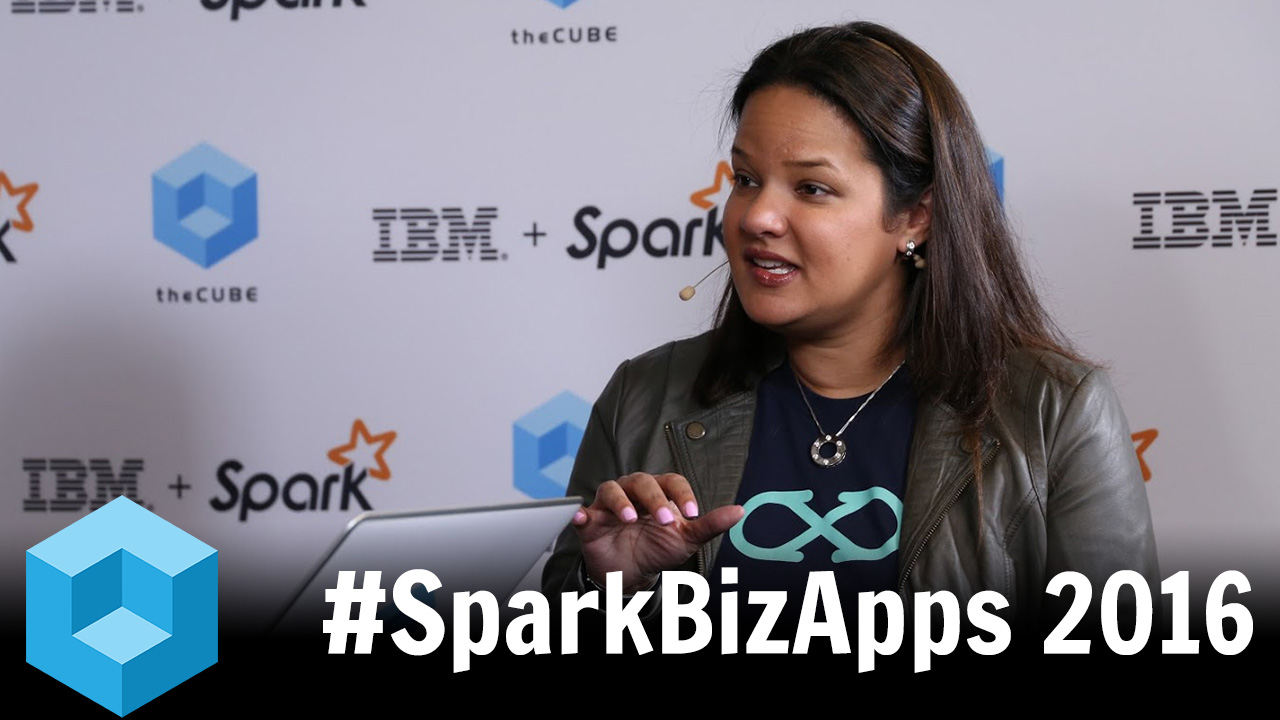
01. Seth Dobrin, Monsanto, Visits #theCUBE!. (00:19)
02. What Are Your Primary Responsibilities. (00:41)
03. What Are You Finding To Be The Big Benefit Of Applying This Tech. (01:23)
04. Tell Us About The Order Of Magnitude That You Can Provide. (04:16)
05. Is Spark Doing The Analysis. (06:18)
06. What Kind Of Time Frame Are We Talking About. (07:29)
07. What Did You Do Before This Technology To Find One Seed That Is Best. (08:22)
08. Do You Have Enough Observations To Show How Much The Yield Has Increased. (09:42)
09. So You Have Done A Corn Geno Yield. (10:40)
10. Tell Us How You've Moved Into An Agricultural Advisor Business. (11:48)
11. What Have You Seen In The Uplift In Yield. (12:59)
Track List created with http://www.vinjavideo.com.
--- ---
New answers to old questions: Using data to make the impossible possible| #SparkBizApps
by R. Danes | Jun 6, 2016
Your pool of data is like a massive brain containing much more information than the brain in your head could ever hold or manipulate at one time. You might liken it to a super genius, answering questions humans never thought they’d receive answers to. Take for example the experiments of genetics founder Gregor Mendel. Using the methods available in his time, he would have had to plant 3 trillion plants to find a specific genetic sequence that agricultural scientists can find in a lab today using data science.
“Leveraging data science and molecular techniques together, we can identify that plant in the lab from a seed, and we can put that seed in the ground, and it will grow,” according to Seth Dobrin, Ph.D., director of Digital Strategies at Monsanto Co. Monsanto is an agricultural biotechnology company that Dobrin said is using data tools to do things that were computationally impossible years ago.
Dorbin told John Walls and George Gilbert (@ggilbert41), cohosts of theCUBE, from the SiliconANGLE Media team, “All of this happens in silico now” using Spark tools for imputation. And, he said, this translates to big savings for farmers and agriculturalists. “We’re saving field work; we’re saving labor; we’re saving natural resources,” he said.
More data, more answers
Dorbin added that the more data types you can aggregate together, the more accurately you can answer your customers’ questions. Introducing a new data set to your existing pool can suddenly make an old problem evaporate.
He said that Monsanto bought The Climate Corp. in San Francisco to address what he calls “black gold syndrome” or the problem of predictions failing because of customers’ differing climates. He said that granular data on different climates and growing conditions will help them deliver exactly what they promise to customers wherever they are.
Forgot Password
Almost there!
We just sent you a verification email. Please verify your account to gain access to
Apache Spark Maker Community Event, by IBM 2016 | San Francisco. If you don’t think you received an email check your
spam folder.
Sign in to Apache Spark Maker Community Event, by IBM 2016 | San Francisco.
In order to sign in, enter the email address you used to registered for the event. Once completed, you will receive an email with a verification link. Open this link to automatically sign into the site.
Register For Apache Spark Maker Community Event, by IBM 2016 | San Francisco
Please fill out the information below. You will recieve an email with a verification link confirming your registration. Click the link to automatically sign into the site.
You’re almost there!
We just sent you a verification email. Please click the verification button in the email. Once your email address is verified, you will have full access to all event content for Apache Spark Maker Community Event, by IBM 2016 | San Francisco.
I want my badge and interests to be visible to all attendees.
Checking this box will display your presense on the attendees list, view your profile and allow other attendees to contact you via 1-1 chat. Read the Privacy Policy. At any time, you can choose to disable this preference.
Select your Interests!
add
Upload your photo
Uploading..
OR
Connect via Twitter
Connect via Linkedin
EDIT PASSWORD
Share
Forgot Password
Almost there!
We just sent you a verification email. Please verify your account to gain access to
Apache Spark Maker Community Event, by IBM 2016 | San Francisco. If you don’t think you received an email check your
spam folder.
Sign in to Apache Spark Maker Community Event, by IBM 2016 | San Francisco.
In order to sign in, enter the email address you used to registered for the event. Once completed, you will receive an email with a verification link. Open this link to automatically sign into the site.
Sign in to gain access to Apache Spark Maker Community Event, by IBM 2016 | San Francisco
Please sign in with LinkedIn to continue to Apache Spark Maker Community Event, by IBM 2016 | San Francisco. Signing in with LinkedIn ensures a professional environment.
01. Seth Dobrin, Monsanto, Visits #theCUBE!. (00:19)
02. What Are Your Primary Responsibilities. (00:41)
03. What Are You Finding To Be The Big Benefit Of Applying This Tech. (01:23)
04. Tell Us About The Order Of Magnitude That You Can Provide. (04:16)
05. Is Spark Doing The Analysis. (06:18)
06. What Kind Of Time Frame Are We Talking About. (07:29)
07. What Did You Do Before This Technology To Find One Seed That Is Best. (08:22)
08. Do You Have Enough Observations To Show How Much The Yield Has Increased. (09:42)
09. So You Have Done A Corn Geno Yield. (10:40)
10. Tell Us How You've Moved Into An Agricultural Advisor Business. (11:48)
11. What Have You Seen In The Uplift In Yield. (12:59)
Track List created with http://www.vinjavideo.com.
--- ---
New answers to old questions: Using data to make the impossible possible| #SparkBizApps
by R. Danes | Jun 6, 2016
Your pool of data is like a massive brain containing much more information than the brain in your head could ever hold or manipulate at one time. You might liken it to a super genius, answering questions humans never thought they’d receive answers to. Take for example the experiments of genetics founder Gregor Mendel. Using the methods available in his time, he would have had to plant 3 trillion plants to find a specific genetic sequence that agricultural scientists can find in a lab today using data science.
“Leveraging data science and molecular techniques together, we can identify that plant in the lab from a seed, and we can put that seed in the ground, and it will grow,” according to Seth Dobrin, Ph.D., director of Digital Strategies at Monsanto Co. Monsanto is an agricultural biotechnology company that Dobrin said is using data tools to do things that were computationally impossible years ago.
Dorbin told John Walls and George Gilbert (@ggilbert41), cohosts of theCUBE, from the SiliconANGLE Media team, “All of this happens in silico now” using Spark tools for imputation. And, he said, this translates to big savings for farmers and agriculturalists. “We’re saving field work; we’re saving labor; we’re saving natural resources,” he said.
More data, more answers
Dorbin added that the more data types you can aggregate together, the more accurately you can answer your customers’ questions. Introducing a new data set to your existing pool can suddenly make an old problem evaporate.
He said that Monsanto bought The Climate Corp. in San Francisco to address what he calls “black gold syndrome” or the problem of predictions failing because of customers’ differing climates. He said that granular data on different climates and growing conditions will help them deliver exactly what they promise to customers wherever they are.