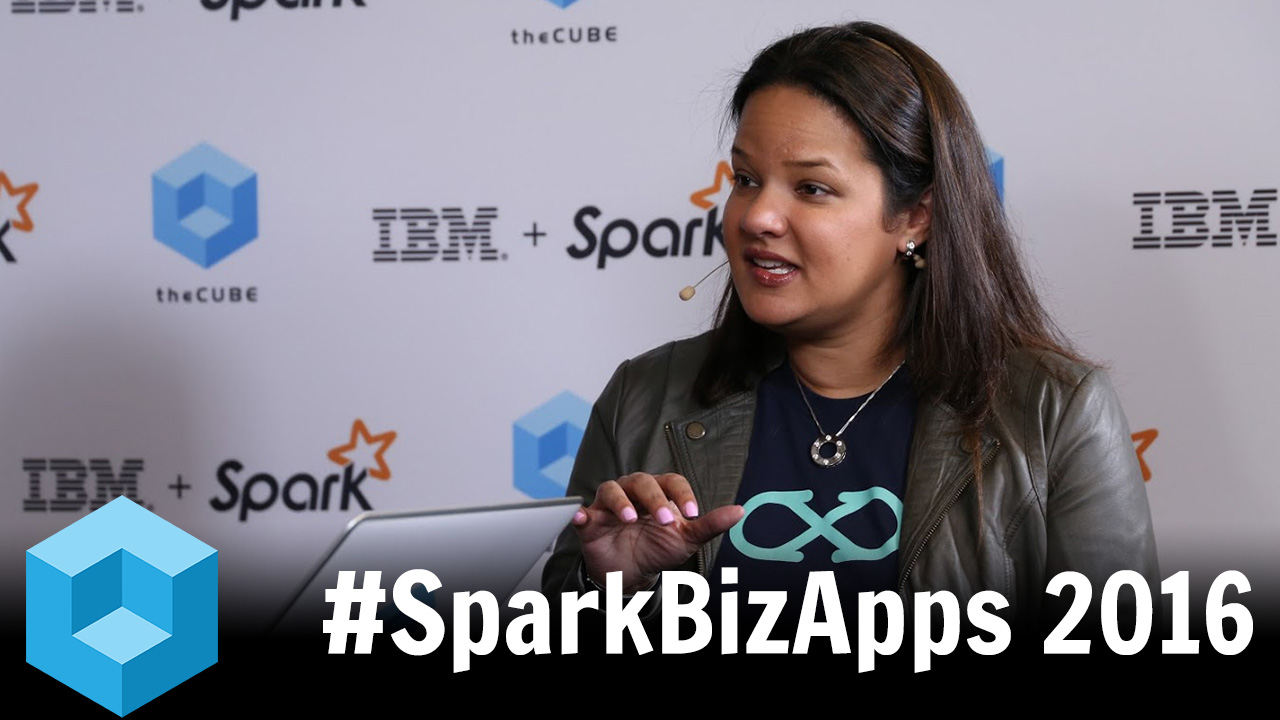
01. Ritika Gunnar, IBM, Visits #theCUBE!. (00:20)
02. Dean Wampler, Lightbend, Visits #theCUBE!. (00:34)
03. What Is The Big Announcement You're Going To Make Today. (00:49)
04. What Is The Different Application That Will Be Used. (02:18)
05. What Does The Data Science Experiment Mean To Lightbend. (03:41)
06. What Do The Different Roles Look Like. (05:04)
07. How Will You Explain The Benefits Of The Integration. (06:44)
08. Would Notebooks Be Able To Able To Provide The Different Experiences. (07:38)
09. How Do You Get Businesses To Be Focused On The End Goal. (08:52)
10. Talk About The Ease Of Use. (10:38)
11. How Do You Make It Work Addressing The Different Roles. (12:13)
12. How Do You Use The New Applications Along With The Old. (13:41)
13. Does The IBM Professional Services Industry Practice Have A Role There. (15:37)
Track List created with http://www.vinjavideo.com.
--- ---
Inside the data paradigm shift: Data is a team sport | #SparkBizApps
by Brittany Greaner | Jun 6, 2016
IBM has some big announcements coming later tonight at its special presentation during its Apache Spark Maker Community event, and the company promises the announcements will be groundbreaking. And you can watch the special presentation right here on theCUBE starting at 6:30 p.m. PT.
“Given the progress we’ve made in the past year, we’re going to continue that momentum and put it into overdrive,” according to Ritika Gunnar, VP of Offering Management, Data and Analytics at IBM. Gunnar, along with Dean Wampler, Office of the CTO, architect for Big Data Products and Services at Lightbend, Inc., talked with John Walls and George Gilbert (@ggilbert41), cohosts of theCUBE, from the SiliconANGLE Media team, during the Apache Spark Maker Community event.
‘An experience for me, built for us’
IBM is collaborating with Lightbend to lead Scala, Reactive Programming, and Apache Spark training in Big Data University curriculum, and Gunnar and Wampler stressed that today’s applications need to be more than just reactive, they need to be insightfully reactive. If a data scientist comes up with 1,000 hypotheses, the application should be able to go through them quickly and narrow it down to 10.
Teamwork and collaboration were stressed by both Gunnar and Wampler as two key elements of successful businesses.
A culture of data
Gunnar and Wampler also discussed what a “culture of data” means. To find a definition, Gunnar mentioned interviewing hundreds of data professionals to narrow the teams down to four main personas: data scientists, data engineers, business analysts and application developers. To have a “culture of data,” therefore, means that it’s a team sport, and the data has to be accessible and applicable across platforms.
They closed the interview with a discussion of a new “data-first” method. This method would allow clients to assess where they are in comparison to where they need to be in regards to data science – and for most it means a form of evolution is necessary. But it’s not just the clients that need to change – Wampler pointed out that there’s currently a divide between giving clients the data they need while also giving them the ability to tweak it without asking for help or permission.
Some professionals have even gone so far as to learn new skills in order to access the data without bothering the data scientists every time.
Forgot Password
Almost there!
We just sent you a verification email. Please verify your account to gain access to
Apache Spark Maker Community Event, by IBM 2016 | San Francisco. If you don’t think you received an email check your
spam folder.
Sign in to Apache Spark Maker Community Event, by IBM 2016 | San Francisco.
In order to sign in, enter the email address you used to registered for the event. Once completed, you will receive an email with a verification link. Open this link to automatically sign into the site.
Register For Apache Spark Maker Community Event, by IBM 2016 | San Francisco
Please fill out the information below. You will recieve an email with a verification link confirming your registration. Click the link to automatically sign into the site.
You’re almost there!
We just sent you a verification email. Please click the verification button in the email. Once your email address is verified, you will have full access to all event content for Apache Spark Maker Community Event, by IBM 2016 | San Francisco.
I want my badge and interests to be visible to all attendees.
Checking this box will display your presense on the attendees list, view your profile and allow other attendees to contact you via 1-1 chat. Read the Privacy Policy. At any time, you can choose to disable this preference.
Select your Interests!
add
Upload your photo
Uploading..
OR
Connect via Twitter
Connect via Linkedin
EDIT PASSWORD
Share
Forgot Password
Almost there!
We just sent you a verification email. Please verify your account to gain access to
Apache Spark Maker Community Event, by IBM 2016 | San Francisco. If you don’t think you received an email check your
spam folder.
Sign in to Apache Spark Maker Community Event, by IBM 2016 | San Francisco.
In order to sign in, enter the email address you used to registered for the event. Once completed, you will receive an email with a verification link. Open this link to automatically sign into the site.
Sign in to gain access to Apache Spark Maker Community Event, by IBM 2016 | San Francisco
Please sign in with LinkedIn to continue to Apache Spark Maker Community Event, by IBM 2016 | San Francisco. Signing in with LinkedIn ensures a professional environment.
Are you sure you want to remove access rights for this user?
Details
Manage Access
email address
Community Invitation
Ritika Gunnar, IBM Analytics & Dean Wampler, Lightbend - Apache Spark Maker Community Event 2016
01. Ritika Gunnar, IBM, Visits #theCUBE!. (00:20)
02. Dean Wampler, Lightbend, Visits #theCUBE!. (00:34)
03. What Is The Big Announcement You're Going To Make Today. (00:49)
04. What Is The Different Application That Will Be Used. (02:18)
05. What Does The Data Science Experiment Mean To Lightbend. (03:41)
06. What Do The Different Roles Look Like. (05:04)
07. How Will You Explain The Benefits Of The Integration. (06:44)
08. Would Notebooks Be Able To Able To Provide The Different Experiences. (07:38)
09. How Do You Get Businesses To Be Focused On The End Goal. (08:52)
10. Talk About The Ease Of Use. (10:38)
11. How Do You Make It Work Addressing The Different Roles. (12:13)
12. How Do You Use The New Applications Along With The Old. (13:41)
13. Does The IBM Professional Services Industry Practice Have A Role There. (15:37)
Track List created with http://www.vinjavideo.com.
--- ---
Inside the data paradigm shift: Data is a team sport | #SparkBizApps
by Brittany Greaner | Jun 6, 2016
IBM has some big announcements coming later tonight at its special presentation during its Apache Spark Maker Community event, and the company promises the announcements will be groundbreaking. And you can watch the special presentation right here on theCUBE starting at 6:30 p.m. PT.
“Given the progress we’ve made in the past year, we’re going to continue that momentum and put it into overdrive,” according to Ritika Gunnar, VP of Offering Management, Data and Analytics at IBM. Gunnar, along with Dean Wampler, Office of the CTO, architect for Big Data Products and Services at Lightbend, Inc., talked with John Walls and George Gilbert (@ggilbert41), cohosts of theCUBE, from the SiliconANGLE Media team, during the Apache Spark Maker Community event.
‘An experience for me, built for us’
IBM is collaborating with Lightbend to lead Scala, Reactive Programming, and Apache Spark training in Big Data University curriculum, and Gunnar and Wampler stressed that today’s applications need to be more than just reactive, they need to be insightfully reactive. If a data scientist comes up with 1,000 hypotheses, the application should be able to go through them quickly and narrow it down to 10.
Teamwork and collaboration were stressed by both Gunnar and Wampler as two key elements of successful businesses.
A culture of data
Gunnar and Wampler also discussed what a “culture of data” means. To find a definition, Gunnar mentioned interviewing hundreds of data professionals to narrow the teams down to four main personas: data scientists, data engineers, business analysts and application developers. To have a “culture of data,” therefore, means that it’s a team sport, and the data has to be accessible and applicable across platforms.
They closed the interview with a discussion of a new “data-first” method. This method would allow clients to assess where they are in comparison to where they need to be in regards to data science – and for most it means a form of evolution is necessary. But it’s not just the clients that need to change – Wampler pointed out that there’s currently a divide between giving clients the data they need while also giving them the ability to tweak it without asking for help or permission.
Some professionals have even gone so far as to learn new skills in order to access the data without bothering the data scientists every time.