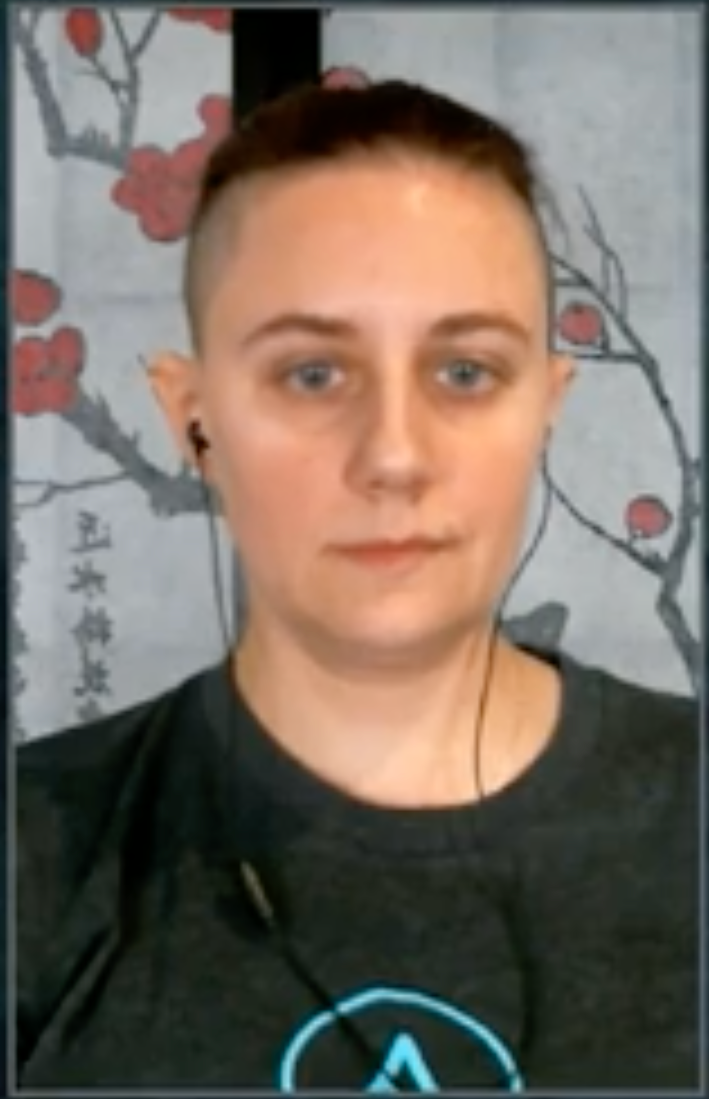
Jill Rouleau, Senior Software Engineer for Ansible Core, Red Hat, Brad Thornton, Senior Principle Software Engineer for Ansible Networking, Red Hat, and Adam Miller, Senior Principle Software Engineer, Red Hat sit down with John Furrier at theCUBE Digital studios for AnsibleFest 2020.
#AnsibleFest #theCUBE @SiliconANGLE theCUBE @Red Hat Videos
https://siliconangle.com/2020/10/14/qa-if-an-automated-robot-does-it-all-whats-left-for-network-engineers-ansiblefest/
Q&A: If an automated robot does it all, what’s left for network engineers?
From checking health to configuring devices, network engineers have always used their fingers on the good, old command-line interface. CLI is fast, outputs lots of details, and gives them a lot of flexibility to push commands. There is no good network engineer that hasn’t spent hours working on the line interface.
But now, with minimal human intervention, an automated robot is capable of login into a network device and run commands. So if, network automation can take over the job of a network engineer or admin, how can they compete with automation?
“I think, over time, network engineers will become data managers, because they become less concerned about the network, the vendor’s specific configuration, and they’re really managing the data that makes up the configuration,” said Brad Thornton, (pictured center), lead architect of Ansible network automation at Red Hat Inc.
Thornton, Adam Miller (pictured right), senior principal software engineer of security automation at Red Hat, and Jill Rouleau (pictured left), senior software engineer for Ansible at Red Hat, spoke with John Furrier, host of theCUBE, SiliconANGLE Media’s livestreaming studio, during AnsibleFest 2020. They discussed Ansible network modules, public/private cloud use cases and security automation. (* Disclosure below.)
[Editor’s note: The following has been condensed for clarity.]
Why are customers successful with Ansible in networking?
Thornton: I think one of the reasons why Ansible has done well in the networking space and why a lot of network engineers find it very easy to use is because you can still see the CLI. But what we have the ability to do is pull information from the same CLI that you were using manually, show that as structured data, and then let you return that structured data and push it back to the configuration. So what you get when you’re using Ansible is a way to programmatically interface and do configuration management across your entire fleet. It brings consistency and stability and speed to network configuration management.
What should customers think about when they look at the engineering and the development challenges around cloud?
Rouleau: If we step back, Cloud just means any sort of distributed applications, whether it’s on-prem in your own data center, on the edge, in a public hosted environment. And automation is critical for making those things work. And there’s now a lot more architectural complexity, no matter where you’re running that. And so I think if you step back and look at it from that perspective, you can actually apply a lot of the same approaches and philosophies to these new challenges as they come up without having to reinvent the wheel of how you think about these applications.
How do you guys look at tools like Terraform, and how does Ansible compare to that because you guys are very popular in the cloud configuration?
Rouleau: So Terraform and tools like that — things like CloudFormation or Heat in the OpenStack world– they do really, really great at things, like deploying your apps and setting up your stack and getting them out there. Ansible is a phenomenal way of getting in there and saying, “I have these instances, I know about them, but maybe I just need to connect out and run an update or add a package or reconfigure a service that’s running on there.” And I think you can glue these things together and use Ansible with these other stack deployment-based tools really, really effectively.
What’s your thoughts on the source of truth when it comes into play for these security appliances?
...
Watch the complete video interview below, and be sure to check out more of SiliconANGLE’s and theCUBE’s coverage of AnsibleFest 2020. (* Disclosure: TheCUBE is a paid media partner for AnsibleFest 2020. Neither Red Hat Inc., the sponsor for theCUBE’s event coverage, nor other sponsors have editorial control over content on theCUBE or SiliconANGLE.)
Forgot Password
Almost there!
We just sent you a verification email. Please verify your account to gain access to
AnsibleFest 2020 | Digital. If you don’t think you received an email check your
spam folder.
In order to sign in, enter the email address you used to registered for the event. Once completed, you will receive an email with a verification link. Open this link to automatically sign into the site.
Register For AnsibleFest 2020 | Digital
Please fill out the information below. You will recieve an email with a verification link confirming your registration. Click the link to automatically sign into the site.
You’re almost there!
We just sent you a verification email. Please click the verification button in the email. Once your email address is verified, you will have full access to all event content for AnsibleFest 2020 | Digital.
I want my badge and interests to be visible to all attendees.
Checking this box will display your presense on the attendees list, view your profile and allow other attendees to contact you via 1-1 chat. Read the Privacy Policy. At any time, you can choose to disable this preference.
Select your Interests!
add
Upload your photo
Uploading..
OR
Connect via Twitter
Connect via Linkedin
EDIT PASSWORD
Share
Forgot Password
Almost there!
We just sent you a verification email. Please verify your account to gain access to
AnsibleFest 2020 | Digital. If you don’t think you received an email check your
spam folder.
In order to sign in, enter the email address you used to registered for the event. Once completed, you will receive an email with a verification link. Open this link to automatically sign into the site.
Sign in to gain access to AnsibleFest 2020 | Digital
Please sign in with LinkedIn to continue to AnsibleFest 2020 | Digital. Signing in with LinkedIn ensures a professional environment.
Are you sure you want to remove access rights for this user?
Details
Manage Access
email address
Community Invitation
Jill Rouleau, Brad Thornton & Adam Miller, Red Hat | AnsibleFest 2020
Jill Rouleau, Senior Software Engineer for Ansible Core, Red Hat, Brad Thornton, Senior Principle Software Engineer for Ansible Networking, Red Hat, and Adam Miller, Senior Principle Software Engineer, Red Hat sit down with John Furrier at theCUBE Digital studios for AnsibleFest 2020.
#AnsibleFest #theCUBE @SiliconANGLE theCUBE @Red Hat Videos
https://siliconangle.com/2020/10/14/qa-if-an-automated-robot-does-it-all-whats-left-for-network-engineers-ansiblefest/
Q&A: If an automated robot does it all, what’s left for network engineers?
From checking health to configuring devices, network engineers have always used their fingers on the good, old command-line interface. CLI is fast, outputs lots of details, and gives them a lot of flexibility to push commands. There is no good network engineer that hasn’t spent hours working on the line interface.
But now, with minimal human intervention, an automated robot is capable of login into a network device and run commands. So if, network automation can take over the job of a network engineer or admin, how can they compete with automation?
“I think, over time, network engineers will become data managers, because they become less concerned about the network, the vendor’s specific configuration, and they’re really managing the data that makes up the configuration,” said Brad Thornton, (pictured center), lead architect of Ansible network automation at Red Hat Inc.
Thornton, Adam Miller (pictured right), senior principal software engineer of security automation at Red Hat, and Jill Rouleau (pictured left), senior software engineer for Ansible at Red Hat, spoke with John Furrier, host of theCUBE, SiliconANGLE Media’s livestreaming studio, during AnsibleFest 2020. They discussed Ansible network modules, public/private cloud use cases and security automation. (* Disclosure below.)
[Editor’s note: The following has been condensed for clarity.]
Why are customers successful with Ansible in networking?
Thornton: I think one of the reasons why Ansible has done well in the networking space and why a lot of network engineers find it very easy to use is because you can still see the CLI. But what we have the ability to do is pull information from the same CLI that you were using manually, show that as structured data, and then let you return that structured data and push it back to the configuration. So what you get when you’re using Ansible is a way to programmatically interface and do configuration management across your entire fleet. It brings consistency and stability and speed to network configuration management.
What should customers think about when they look at the engineering and the development challenges around cloud?
Rouleau: If we step back, Cloud just means any sort of distributed applications, whether it’s on-prem in your own data center, on the edge, in a public hosted environment. And automation is critical for making those things work. And there’s now a lot more architectural complexity, no matter where you’re running that. And so I think if you step back and look at it from that perspective, you can actually apply a lot of the same approaches and philosophies to these new challenges as they come up without having to reinvent the wheel of how you think about these applications.
How do you guys look at tools like Terraform, and how does Ansible compare to that because you guys are very popular in the cloud configuration?
Rouleau: So Terraform and tools like that — things like CloudFormation or Heat in the OpenStack world– they do really, really great at things, like deploying your apps and setting up your stack and getting them out there. Ansible is a phenomenal way of getting in there and saying, “I have these instances, I know about them, but maybe I just need to connect out and run an update or add a package or reconfigure a service that’s running on there.” And I think you can glue these things together and use Ansible with these other stack deployment-based tools really, really effectively.
What’s your thoughts on the source of truth when it comes into play for these security appliances?
...
Watch the complete video interview below, and be sure to check out more of SiliconANGLE’s and theCUBE’s coverage of AnsibleFest 2020. (* Disclosure: TheCUBE is a paid media partner for AnsibleFest 2020. Neither Red Hat Inc., the sponsor for theCUBE’s event coverage, nor other sponsors have editorial control over content on theCUBE or SiliconANGLE.)