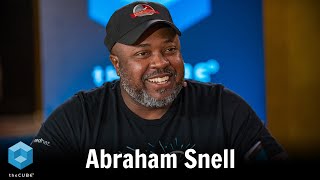
Massimo Ferrari, Product Manager, Ansible Security, Red Hat sits with John Furrier & Stu Miniman at AnsibleFest 2019 in Atlanta, GA
#AnsibleFest #theCUBE
https://siliconangle.com/2019/09/25/red-hat-ansible-enables-enterprise-security-to-fight-fire-with-fire-ansiblefest/
Red Hat Ansible enables enterprise security to fight fire with fire
Automation tools are already in the hands of malicious actors, as evidenced by the self-propagating WannaCry and Petya attacks that have swept the globe in recent years. The use of artificial-intelligence technology is likely not far behind.
Earlier this year, a threat actor dumped 2.2 billion unique usernames and passwords on the Dark Web, raising the potential for even more havoc since AI feeds on data and criminal resources are growing.
With malicious actors using increasingly more sophisticated tools to leverage cyberattacks and data breaches, this has forced companies around the globe to “arm up” in defense. Red Hat Inc.’s Ansible Automation Platform is designed to help the cause.
“What we are seeing is that more and more cyberattacks are using automation and artificial intelligence,” said Massimo Ferrari (pictured), consulting product manager, Ansible Security, at Red Hat. “The result is that the velocity and impact of those are so big that you can’t cope with human operators. We’re in a classic situation of fighting fire with fire.”
Ferrari spoke with John Furrier (@furrier) and Stu Miniman (@stu), co-hosts of theCUBE, SiliconANGLE Media’s mobile livestreaming studio, during the AnsibleFest event in Atlanta, Georgia. They discussed the need to manage multiple security solutions and the rise of open-source as a protection technology (see the full interview with transcript here). (* Disclosure below.)
Layer of security integration
One issue Red Hat is seeking to address involves the growth of multiple security solutions for many enterprise organizations. An industry report recently found that even the smallest businesses are using 15 to 20 security tools on average, with larger firms enabling over 130 solutions.
“Those are great; they protect whatever they have to protect, but there is little or no integration between them,” Ferrari noted. “Security teams have an incredible amount of manual work to do just to correlate data coming from different dashboards or to perform an in-system integration across different perimeters. We propose Ansible as an integrational layer as a glue between all of those different technologies.”
Red Hat’s stake in the security ground with Ansible automation could herald the rise of a greater role among open-source companies in threat protection. Just don’t call them security businesses yet.
“Open-source and security are a fairly new thing,” Ferrari said. “We all know that Red Hat is not a security vendor; we don’t want to be a security vendor. We are automation experts, in the case of Ansible, and we are open-source experts across the board.”
Watch the complete video interview below, and be sure to check out more of SiliconANGLE’s and theCUBE’s coverage of the AnsibleFest event. (* Disclosure: TheCUBE is a paid media partner for AnsibleFest. Neither Red Hat Inc., the sponsor for theCUBE’s event coverage, nor other sponsors have editorial control over content on theCUBE or SiliconANGLE.)
Forgot Password
Almost there!
We just sent you a verification email. Please verify your account to gain access to
AnsibleFest 2019 | Atlanta. If you don’t think you received an email check your
spam folder.
In order to sign in, enter the email address you used to registered for the event. Once completed, you will receive an email with a verification link. Open this link to automatically sign into the site.
Register For AnsibleFest 2019 | Atlanta
Please fill out the information below. You will recieve an email with a verification link confirming your registration. Click the link to automatically sign into the site.
You’re almost there!
We just sent you a verification email. Please click the verification button in the email. Once your email address is verified, you will have full access to all event content for AnsibleFest 2019 | Atlanta.
I want my badge and interests to be visible to all attendees.
Checking this box will display your presense on the attendees list, view your profile and allow other attendees to contact you via 1-1 chat. Read the Privacy Policy. At any time, you can choose to disable this preference.
Select your Interests!
add
Upload your photo
Uploading..
OR
Connect via Twitter
Connect via Linkedin
EDIT PASSWORD
Share
Forgot Password
Almost there!
We just sent you a verification email. Please verify your account to gain access to
AnsibleFest 2019 | Atlanta. If you don’t think you received an email check your
spam folder.
In order to sign in, enter the email address you used to registered for the event. Once completed, you will receive an email with a verification link. Open this link to automatically sign into the site.
Sign in to gain access to AnsibleFest 2019 | Atlanta
Please sign in with LinkedIn to continue to AnsibleFest 2019 | Atlanta. Signing in with LinkedIn ensures a professional environment.
Are you sure you want to remove access rights for this user?
Details
Manage Access
email address
Community Invitation
Massimo Ferrari, Red Hat | AnsibleFest 2019
Massimo Ferrari, Product Manager, Ansible Security, Red Hat sits with John Furrier & Stu Miniman at AnsibleFest 2019 in Atlanta, GA
#AnsibleFest #theCUBE
https://siliconangle.com/2019/09/25/red-hat-ansible-enables-enterprise-security-to-fight-fire-with-fire-ansiblefest/
Red Hat Ansible enables enterprise security to fight fire with fire
Automation tools are already in the hands of malicious actors, as evidenced by the self-propagating WannaCry and Petya attacks that have swept the globe in recent years. The use of artificial-intelligence technology is likely not far behind.
Earlier this year, a threat actor dumped 2.2 billion unique usernames and passwords on the Dark Web, raising the potential for even more havoc since AI feeds on data and criminal resources are growing.
With malicious actors using increasingly more sophisticated tools to leverage cyberattacks and data breaches, this has forced companies around the globe to “arm up” in defense. Red Hat Inc.’s Ansible Automation Platform is designed to help the cause.
“What we are seeing is that more and more cyberattacks are using automation and artificial intelligence,” said Massimo Ferrari (pictured), consulting product manager, Ansible Security, at Red Hat. “The result is that the velocity and impact of those are so big that you can’t cope with human operators. We’re in a classic situation of fighting fire with fire.”
Ferrari spoke with John Furrier (@furrier) and Stu Miniman (@stu), co-hosts of theCUBE, SiliconANGLE Media’s mobile livestreaming studio, during the AnsibleFest event in Atlanta, Georgia. They discussed the need to manage multiple security solutions and the rise of open-source as a protection technology (see the full interview with transcript here). (* Disclosure below.)
Layer of security integration
One issue Red Hat is seeking to address involves the growth of multiple security solutions for many enterprise organizations. An industry report recently found that even the smallest businesses are using 15 to 20 security tools on average, with larger firms enabling over 130 solutions.
“Those are great; they protect whatever they have to protect, but there is little or no integration between them,” Ferrari noted. “Security teams have an incredible amount of manual work to do just to correlate data coming from different dashboards or to perform an in-system integration across different perimeters. We propose Ansible as an integrational layer as a glue between all of those different technologies.”
Red Hat’s stake in the security ground with Ansible automation could herald the rise of a greater role among open-source companies in threat protection. Just don’t call them security businesses yet.
“Open-source and security are a fairly new thing,” Ferrari said. “We all know that Red Hat is not a security vendor; we don’t want to be a security vendor. We are automation experts, in the case of Ansible, and we are open-source experts across the board.”
Watch the complete video interview below, and be sure to check out more of SiliconANGLE’s and theCUBE’s coverage of the AnsibleFest event. (* Disclosure: TheCUBE is a paid media partner for AnsibleFest. Neither Red Hat Inc., the sponsor for theCUBE’s event coverage, nor other sponsors have editorial control over content on theCUBE or SiliconANGLE.)