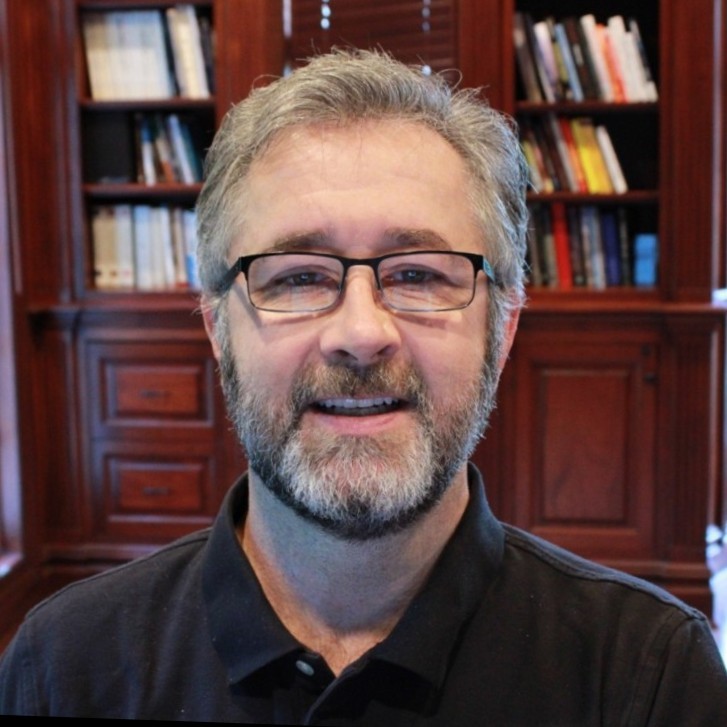
Joe Fitzgerald, Vice President, Management, Red Hat sits with John Furrier & Stu Miniman at AnsibleFest 2019 in Atlanta, GA
#AnsibleFest #theCUBE
https://siliconangle.com/2019/10/07/qa-ansible-boosts-enterprise-automation-help-playbooks-ansiblefest/
Q&A: Ansible boosts enterprise automation with help from playbooks
Starting as an open-source software provisioning and application deployment tool, Ansible was quickly adopted by a strong community of early users. Then Ansible inc. was acquired by Red Hat in 2015 with the intention of creating smoother experiences for those who didn’t have the skills to code for automation.
In recent years, Ansible’s community has grown exponentially and is now not only developing code, but creating content that runs automation.
With Ansible, each of these automations can be either deployed right from a playbook that the community has shared or saved as a playbook to contribute to the community. With the newly available Ansible Automation Platform, the enterprise will be capable of embracing automation with the help from the community and the thousands of available playbooks, according to Joe Fitzgerald, vice president and general manager of the Management Business Unit at Red Hat Inc.
“The innovation, the number of contributors, the amount of Ansible integration modules — playbooks, has exploded,” Fitzgerald said. “You know, teams can be far more productive. It really gives job satisfaction because they can do things that were almost impossible to automate before by using Ansible’s automated network storage and compute in the same playbook.”
Fitzgerald spoke with John Furrier (@furrier) and Stu Miniman (@stu), co-hosts of theCUBE, SiliconANGLE Media’s mobile livestreaming studio, during the AnsibleFest event in Atlanta, Georgia. They discussed the Ansible Automation Platform, the community, cloud 2.0, and automation playbooks (see the full interview with transcript here). (* Disclosure below.)
[Editor’s note: The following answers have been condensed for clarity.]
Furrier: The Ansible Automation Platform is something that’s been going on for a while. Now it’s a platform. What’s in the platform? Why is it important? Why should customers care?
Fitzgerald: In working with a lot of customers, what we saw the need for was really to help them collaborate and scale their automation efforts. Scale who could build, reuse, share, score content, and track it. So, we put a lot of those efforts into the platform to take it to the next level.
Furrier: So, what are you most proud of? What’s the most notable thing? Is it the growth of the Ansible journey?
Fitzgerald: Ansible was this small, Eastern U.S. company with sort of a community-cult following but very small in terms of commercials and reach. Over the past four years, probably the best thing we did that Red Hat is really good at is we let the community do what the community does best. The innovation, the number of contributors, the amount of Ansible integration modules, playbooks has exploded.
So, we didn’t perturb the community; we actually helped it grow, and we’ve been able to help the technology evolve from a config automation product in technology into this very broad spectrum enterprise automation platform that crosses domains.
Furrier: Thinking about cloud complexities as people start looking at the cloud equation hybrid and Cloud 2.0 and the enterprise, how are you guys taking Ansible to the next level? How do you guys look at managing those complexities that are around the corner?
Fitzgerald: If you’re an organization and you’re running multicloud, you’re responsible for automating things that might span these clouds. You don’t want to have different silos and automation tools and teams that only work in one cloud or one environment. Ansible can automate across these on-premise and multiple public clouds across domains, networks, storage, compute, create accounts — do all sorts of things that you’re going to need to do.
Furrier: [Scale] is also changing the people’s equation. I want you to explain your vision on this. People have told us that automation provides great efficiency, good security, but jobs satisfaction is a “people challenge.” Your view on the scale and people?
Fitzgerald: You’ll see some [Ansible] customer testimonials here, where the amount of time goes down from six hours to five minutes. The teams can be far more productive. It really gives job satisfaction because they can do things that were almost impossible to automate before by using Ansible’s automated network storage and compute in the same playbook.
...
(* Disclosure: TheCUBE is a paid media partner for AnsibleFest. Neither Red Hat Inc., the sponsor for theCUBE’s event coverage, nor other sponsors have editorial control over content on theCUBE or SiliconANGLE.)
Forgot Password
Almost there!
We just sent you a verification email. Please verify your account to gain access to
AnsibleFest 2019 | Atlanta. If you don’t think you received an email check your
spam folder.
In order to sign in, enter the email address you used to registered for the event. Once completed, you will receive an email with a verification link. Open this link to automatically sign into the site.
Register For AnsibleFest 2019 | Atlanta
Please fill out the information below. You will recieve an email with a verification link confirming your registration. Click the link to automatically sign into the site.
You’re almost there!
We just sent you a verification email. Please click the verification button in the email. Once your email address is verified, you will have full access to all event content for AnsibleFest 2019 | Atlanta.
I want my badge and interests to be visible to all attendees.
Checking this box will display your presense on the attendees list, view your profile and allow other attendees to contact you via 1-1 chat. Read the Privacy Policy. At any time, you can choose to disable this preference.
Select your Interests!
add
Upload your photo
Uploading..
OR
Connect via Twitter
Connect via Linkedin
EDIT PASSWORD
Share
Forgot Password
Almost there!
We just sent you a verification email. Please verify your account to gain access to
AnsibleFest 2019 | Atlanta. If you don’t think you received an email check your
spam folder.
In order to sign in, enter the email address you used to registered for the event. Once completed, you will receive an email with a verification link. Open this link to automatically sign into the site.
Sign in to gain access to AnsibleFest 2019 | Atlanta
Please sign in with LinkedIn to continue to AnsibleFest 2019 | Atlanta. Signing in with LinkedIn ensures a professional environment.
Are you sure you want to remove access rights for this user?
Details
Manage Access
email address
Community Invitation
Joe Fitzgerald, Red Hat | AnsibleFest 2019
Joe Fitzgerald, Vice President, Management, Red Hat sits with John Furrier & Stu Miniman at AnsibleFest 2019 in Atlanta, GA
#AnsibleFest #theCUBE
https://siliconangle.com/2019/10/07/qa-ansible-boosts-enterprise-automation-help-playbooks-ansiblefest/
Q&A: Ansible boosts enterprise automation with help from playbooks
Starting as an open-source software provisioning and application deployment tool, Ansible was quickly adopted by a strong community of early users. Then Ansible inc. was acquired by Red Hat in 2015 with the intention of creating smoother experiences for those who didn’t have the skills to code for automation.
In recent years, Ansible’s community has grown exponentially and is now not only developing code, but creating content that runs automation.
With Ansible, each of these automations can be either deployed right from a playbook that the community has shared or saved as a playbook to contribute to the community. With the newly available Ansible Automation Platform, the enterprise will be capable of embracing automation with the help from the community and the thousands of available playbooks, according to Joe Fitzgerald, vice president and general manager of the Management Business Unit at Red Hat Inc.
“The innovation, the number of contributors, the amount of Ansible integration modules — playbooks, has exploded,” Fitzgerald said. “You know, teams can be far more productive. It really gives job satisfaction because they can do things that were almost impossible to automate before by using Ansible’s automated network storage and compute in the same playbook.”
Fitzgerald spoke with John Furrier (@furrier) and Stu Miniman (@stu), co-hosts of theCUBE, SiliconANGLE Media’s mobile livestreaming studio, during the AnsibleFest event in Atlanta, Georgia. They discussed the Ansible Automation Platform, the community, cloud 2.0, and automation playbooks (see the full interview with transcript here). (* Disclosure below.)
[Editor’s note: The following answers have been condensed for clarity.]
Furrier: The Ansible Automation Platform is something that’s been going on for a while. Now it’s a platform. What’s in the platform? Why is it important? Why should customers care?
Fitzgerald: In working with a lot of customers, what we saw the need for was really to help them collaborate and scale their automation efforts. Scale who could build, reuse, share, score content, and track it. So, we put a lot of those efforts into the platform to take it to the next level.
Furrier: So, what are you most proud of? What’s the most notable thing? Is it the growth of the Ansible journey?
Fitzgerald: Ansible was this small, Eastern U.S. company with sort of a community-cult following but very small in terms of commercials and reach. Over the past four years, probably the best thing we did that Red Hat is really good at is we let the community do what the community does best. The innovation, the number of contributors, the amount of Ansible integration modules, playbooks has exploded.
So, we didn’t perturb the community; we actually helped it grow, and we’ve been able to help the technology evolve from a config automation product in technology into this very broad spectrum enterprise automation platform that crosses domains.
Furrier: Thinking about cloud complexities as people start looking at the cloud equation hybrid and Cloud 2.0 and the enterprise, how are you guys taking Ansible to the next level? How do you guys look at managing those complexities that are around the corner?
Fitzgerald: If you’re an organization and you’re running multicloud, you’re responsible for automating things that might span these clouds. You don’t want to have different silos and automation tools and teams that only work in one cloud or one environment. Ansible can automate across these on-premise and multiple public clouds across domains, networks, storage, compute, create accounts — do all sorts of things that you’re going to need to do.
Furrier: [Scale] is also changing the people’s equation. I want you to explain your vision on this. People have told us that automation provides great efficiency, good security, but jobs satisfaction is a “people challenge.” Your view on the scale and people?
Fitzgerald: You’ll see some [Ansible] customer testimonials here, where the amount of time goes down from six hours to five minutes. The teams can be far more productive. It really gives job satisfaction because they can do things that were almost impossible to automate before by using Ansible’s automated network storage and compute in the same playbook.
...
(* Disclosure: TheCUBE is a paid media partner for AnsibleFest. Neither Red Hat Inc., the sponsor for theCUBE’s event coverage, nor other sponsors have editorial control over content on theCUBE or SiliconANGLE.)