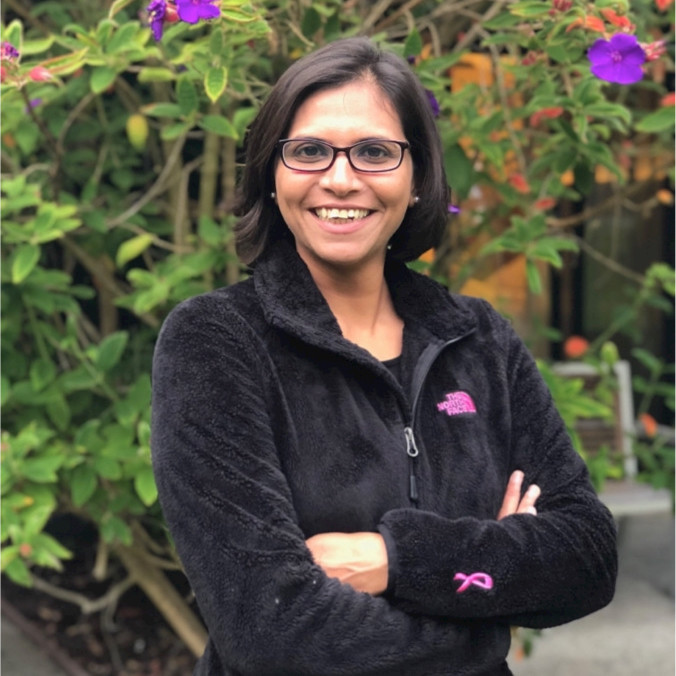
Payal Singh, Principal Solution Engineer, F5 sits with John Furrier & Stu Miniman at AnsibleFest 2019 in Atlanta, GA
#AnsibleFest #theCUBE
https://siliconangle.com/2019/10/07/qa-f5-networks-responds-evolving-ansible-ecosystem-partners-ansiblefest/
Q&A: F5 Networks responds to evolving Ansible ecosystem of partners
The novelty of software-defined networks is already turning heads, especially for networking operations teams that want to automate configurations, management and security. But coding automation doesn’t come that quickly and easily without deep skills. Network engineers depend on programmability expertise, turning to developer-inspired operations or their programmers’ playbook.
App development processes also require a reliable connection and security that only the network gives. DevOps teams are starting to rely on critical programmable network services, such as load balancing, or security, such as DDOS monitoring.
IT professionals using F5 Networks Inc. solutions can now automate and orchestrate with Ansible’s network automation framework, according to Payal Singh (pictured), principal solution engineer at F5 Networks. Countless DevOps and NetOps processes can now be automated — their network and security services modernized and found through thousands of available playbooks, Singh added.
Singh spoke with John Furrier (@furrier) and Stu Miniman (@stu), co-hosts of theCUBE, SiliconANGLE Media’s mobile livestreaming studio, during the AnsibleFest event in Atlanta, Georgia. They discussed F5, DevOps and NetOps collaboration, and more (see the full interview with transcript here). (* Disclosure below.)
[Editor’s note: The following answers have been condensed for clarity.]
Miniman: Are the new collections what people are asking you about? Are there other deployment ways? What are some of the things that are bringing people to talk to F5?
Singh: There are some people who are just starting out with Ansible. They just want to know “How do I write a playbook with F5? How do I get it running?” Others are a little more advanced: “Let’s get into roles; what are we doing with roles?” And then, now, collections are coming on top … we have the first collections out, we’re going to bundle playbooks and a lot of workflows and roles that are going to be easy for customers to just download, use these workflows out of the box and get started with F5.
Furrier: The ecosystem of partners is growing very rapidly for Ansible. This is a nice add-on to the great community, great customers for these guys. What’s the integration like as you work with Ansible?
Singh: Contributing has been a little slow because, firstly, they’ve got to learn Ansible. Then they’ve got to learn what is Ansible Galaxy: “How can I work around it?” And then there’s the networking piece. “How do I now make it work with F5?”
We’re working very closely with NetOps engineers, as well as DevOps engineers to kind of say, whatever you think is a good workflow is good enough to go there.
Miniman: One of the conversations we’ve been having a lot this week has been about the collaboration between teams, and historically that’s been a challenge for networking. How are things changing? Or are they changing enough in your customers’ environments?
Singh: It is changing, but it’s changing slowly. There are still a lot of silos — like NetOps guys are doing their stuff, DevOps guys are doing their stuff — but with automation, it’s kind of tying it in together. We are able to get them in the same room because we talk F5, and then we talk automation, and then they connect.
Miniman: Do you have any specific customer stories you might be able to share?
Singh: We get a lot of use cases for F5 that we want to be able to change an application or the network without incurring any downtime, you know failovers. It could be as broad as between data centers or something simple. But this company did want to failover between data centers. They got into Ansible. They were able to do it in minutes versus hours, and they loved it.
Furrier: How do you guys view this future state of edge? And as the surface area of the network gets larger and the edge is really part of the equation now, there’s a need for automation. What’s your thought on beyond the data center?
Singh: So F5 is on different clouds. It’s in AWS, edge or GCP; it’s all there. We also have … Nginx, which has become a part of F5. So we’re out there. We’re having a lot of conversations with DevOps engineers about Nginx. Some of them are already using it in their day-to-day activities. They do want to see how F5 and Nginx are going to come together and what kind
of solutions we can offer.
...
(* Disclosure: TheCUBE is a paid media partner for AnsibleFest. Neither Red Hat Inc., the sponsor for theCUBE’s event coverage, nor other sponsors have editorial control over content on theCUBE or SiliconANGLE.)
Forgot Password
Almost there!
We just sent you a verification email. Please verify your account to gain access to
AnsibleFest 2019 | Atlanta. If you don’t think you received an email check your
spam folder.
In order to sign in, enter the email address you used to registered for the event. Once completed, you will receive an email with a verification link. Open this link to automatically sign into the site.
Register For AnsibleFest 2019 | Atlanta
Please fill out the information below. You will recieve an email with a verification link confirming your registration. Click the link to automatically sign into the site.
You’re almost there!
We just sent you a verification email. Please click the verification button in the email. Once your email address is verified, you will have full access to all event content for AnsibleFest 2019 | Atlanta.
I want my badge and interests to be visible to all attendees.
Checking this box will display your presense on the attendees list, view your profile and allow other attendees to contact you via 1-1 chat. Read the Privacy Policy. At any time, you can choose to disable this preference.
Select your Interests!
add
Upload your photo
Uploading..
OR
Connect via Twitter
Connect via Linkedin
EDIT PASSWORD
Share
Forgot Password
Almost there!
We just sent you a verification email. Please verify your account to gain access to
AnsibleFest 2019 | Atlanta. If you don’t think you received an email check your
spam folder.
In order to sign in, enter the email address you used to registered for the event. Once completed, you will receive an email with a verification link. Open this link to automatically sign into the site.
Sign in to gain access to AnsibleFest 2019 | Atlanta
Please sign in with LinkedIn to continue to AnsibleFest 2019 | Atlanta. Signing in with LinkedIn ensures a professional environment.
Are you sure you want to remove access rights for this user?
Details
Manage Access
email address
Community Invitation
Payal Singh, F5 | AnsibleFest 2019
Payal Singh, Principal Solution Engineer, F5 sits with John Furrier & Stu Miniman at AnsibleFest 2019 in Atlanta, GA
#AnsibleFest #theCUBE
https://siliconangle.com/2019/10/07/qa-f5-networks-responds-evolving-ansible-ecosystem-partners-ansiblefest/
Q&A: F5 Networks responds to evolving Ansible ecosystem of partners
The novelty of software-defined networks is already turning heads, especially for networking operations teams that want to automate configurations, management and security. But coding automation doesn’t come that quickly and easily without deep skills. Network engineers depend on programmability expertise, turning to developer-inspired operations or their programmers’ playbook.
App development processes also require a reliable connection and security that only the network gives. DevOps teams are starting to rely on critical programmable network services, such as load balancing, or security, such as DDOS monitoring.
IT professionals using F5 Networks Inc. solutions can now automate and orchestrate with Ansible’s network automation framework, according to Payal Singh (pictured), principal solution engineer at F5 Networks. Countless DevOps and NetOps processes can now be automated — their network and security services modernized and found through thousands of available playbooks, Singh added.
Singh spoke with John Furrier (@furrier) and Stu Miniman (@stu), co-hosts of theCUBE, SiliconANGLE Media’s mobile livestreaming studio, during the AnsibleFest event in Atlanta, Georgia. They discussed F5, DevOps and NetOps collaboration, and more (see the full interview with transcript here). (* Disclosure below.)
[Editor’s note: The following answers have been condensed for clarity.]
Miniman: Are the new collections what people are asking you about? Are there other deployment ways? What are some of the things that are bringing people to talk to F5?
Singh: There are some people who are just starting out with Ansible. They just want to know “How do I write a playbook with F5? How do I get it running?” Others are a little more advanced: “Let’s get into roles; what are we doing with roles?” And then, now, collections are coming on top … we have the first collections out, we’re going to bundle playbooks and a lot of workflows and roles that are going to be easy for customers to just download, use these workflows out of the box and get started with F5.
Furrier: The ecosystem of partners is growing very rapidly for Ansible. This is a nice add-on to the great community, great customers for these guys. What’s the integration like as you work with Ansible?
Singh: Contributing has been a little slow because, firstly, they’ve got to learn Ansible. Then they’ve got to learn what is Ansible Galaxy: “How can I work around it?” And then there’s the networking piece. “How do I now make it work with F5?”
We’re working very closely with NetOps engineers, as well as DevOps engineers to kind of say, whatever you think is a good workflow is good enough to go there.
Miniman: One of the conversations we’ve been having a lot this week has been about the collaboration between teams, and historically that’s been a challenge for networking. How are things changing? Or are they changing enough in your customers’ environments?
Singh: It is changing, but it’s changing slowly. There are still a lot of silos — like NetOps guys are doing their stuff, DevOps guys are doing their stuff — but with automation, it’s kind of tying it in together. We are able to get them in the same room because we talk F5, and then we talk automation, and then they connect.
Miniman: Do you have any specific customer stories you might be able to share?
Singh: We get a lot of use cases for F5 that we want to be able to change an application or the network without incurring any downtime, you know failovers. It could be as broad as between data centers or something simple. But this company did want to failover between data centers. They got into Ansible. They were able to do it in minutes versus hours, and they loved it.
Furrier: How do you guys view this future state of edge? And as the surface area of the network gets larger and the edge is really part of the equation now, there’s a need for automation. What’s your thought on beyond the data center?
Singh: So F5 is on different clouds. It’s in AWS, edge or GCP; it’s all there. We also have … Nginx, which has become a part of F5. So we’re out there. We’re having a lot of conversations with DevOps engineers about Nginx. Some of them are already using it in their day-to-day activities. They do want to see how F5 and Nginx are going to come together and what kind
of solutions we can offer.
...
(* Disclosure: TheCUBE is a paid media partner for AnsibleFest. Neither Red Hat Inc., the sponsor for theCUBE’s event coverage, nor other sponsors have editorial control over content on theCUBE or SiliconANGLE.)