In this interview from the AI Cybersecurity & Resilience Summit 2026, Vince Kellen, chief information officer of The Texas A&M University System, joins Casey Bryan, chief information officer of Texas A&M Engineering Experiment Station, to talk with theCUBE Research's Krista Case about building secure, sovereign foundations for AI-driven research. Kellen explains how AI functions as a platform for discovery, compressing time to discovery from years to days while expanding the surface area of research across disciplines such as molecular science and materials engineering. Bryan details IGNITE, a state-funded GPU computing initiative built with Dell and AMD, designed to give researchers shared, scalable infrastructure for data-intensive work spanning healthcare, energy, national security and hypersonic research, complementing the system's existing VISION and Grace clusters.
The conversation explores how Texas A&M embeds security by design into IGNITE, aligning with NIST 800-53, NIST 800-171, state TAC 202 requirements and a path toward CMMC Level 2 readiness. Bryan outlines four pillars of sovereignty — data, infrastructure, capability and governance — that let researchers innovate while sensitive and controlled data remains protected and continuously monitored. Kellen highlights the resurgence of on-premise computing, driven by both security and cost advantages, and previews a future linking core and edge AI across Texas A&M's statewide network, with quantum computing emerging as an adjacent research frontier. Both leaders stress that power availability and early security planning are the defining lessons for universities beginning their own AI journeys, offering a roadmap for building resilient, trusted research infrastructure at scale.
Forgot Password
Almost there!
We just sent you a verification email. Please verify your account to gain access to
AI Cybersecurity & Resilience Summit. If you don’t think you received an email check your
spam folder.
In order to sign in, enter the email address you used to registered for the event. Once completed, you will receive an email with a verification link. Open the link to automatically sign into the site.
Register for AI Trust & Cyber Resiliency Summit
Please fill out the information below. You will receive an email with a verification link confirming your registration. Click the link to automatically sign into the site.
You’re almost there!
We just sent you a verification email. Please click the verification button in the email. Once your email address is verified, you will have full access to all event content for AI Trust & Cyber Resiliency Summit.
I want my badge and interests to be visible to all attendees.
Checking this box will display your presense on the attendees list, view your profile and allow other attendees to contact you via 1-1 chat. Read the Privacy Policy. At any time, you can choose to disable this preference.
Select your Interests!
add
Upload your photo
Uploading..
OR
Connect via Twitter
Connect via Linkedin
EDIT PASSWORD
Share
Forgot Password
Almost there!
We just sent you a verification email. Please verify your account to gain access to
AI Cybersecurity & Resilience Summit. If you don’t think you received an email check your
spam folder.
In order to sign in, enter the email address you used to registered for the event. Once completed, you will receive an email with a verification link. Open the link to automatically sign into the site.
Sign in to gain access to AI Cybersecurity & Resilience Summit
Please sign in with LinkedIn to continue to AI Cybersecurity & Resilience Summit. Signing in with LinkedIn ensures a professional environment.
Are you sure you want to remove access rights for this user?
Details
Manage Access
email address
Community Invitation
How Texas A&M is Building a Secure AI Foundation with Dell
In this interview from the AI Cybersecurity & Resilience Summit 2026, Xiong Xiong, vice president of information technology at Ascend Performance Materials, joins theCUBE Research's Krista Case to discuss how the manufacturer moved from uncertainty around data recoverability to operational confidence through its partnership with Dell. Xiong details how a recurring failure to complete nightly backups and migrate them to a recovery site left the company exposed, despite working with a well-regarded prior supplier. He explains how Dell proved its technology side-by-side with existing systems, delivered white-glove rack installation and configuration, and sized backup and storage correctly for global deployment. The approach was tested in real time when Ascend's Florida plant prepared for a hurricane, validating local backups and recovery readiness under pressure.
The conversation also explores how AI is reshaping Ascend's risk calculus, from seeking AI-embedded defenses that counter AI-driven threats to tightening segmentation and limiting AI access across corporate and manufacturing environments. Xiong notes that manufacturing teams are eager to adopt AI but require education on balancing enthusiasm with caution, particularly given Coast Guard-regulated sites where safety documentation must remain locally accessible rather than cloud-only. He describes how resolving backup and recovery gaps has freed the organization to focus on unlocking data value instead of managing storage constraints, directly supporting its broader AI strategy. Xiong closes with a lesson for IT peers: prioritize trusted partners willing to prove their technology and stand behind it, since relationships — not just technology — determine whether resilience investments truly pay off.
play_circle_outlineMoving from physical experiments to in-silico/theoretical simulation (example: hypersonics)
replyShare Clip
play_circle_outlineSecurity by Design: Elastic MDR, Continuous Monitoring, Data Protection, Resilience, NIST/CMMC Compliance, In-House Knowledge Transfer
replyShare Clip
play_circle_outlineData, infrastructure, model, and governance sovereignty pillars
replyShare Clip
play_circle_outlineStudent workforce development: hands-on experience with diverse HPC, AI, and quantum technologies
How Texas A&M is Building a Secure AI Foundation with Dell
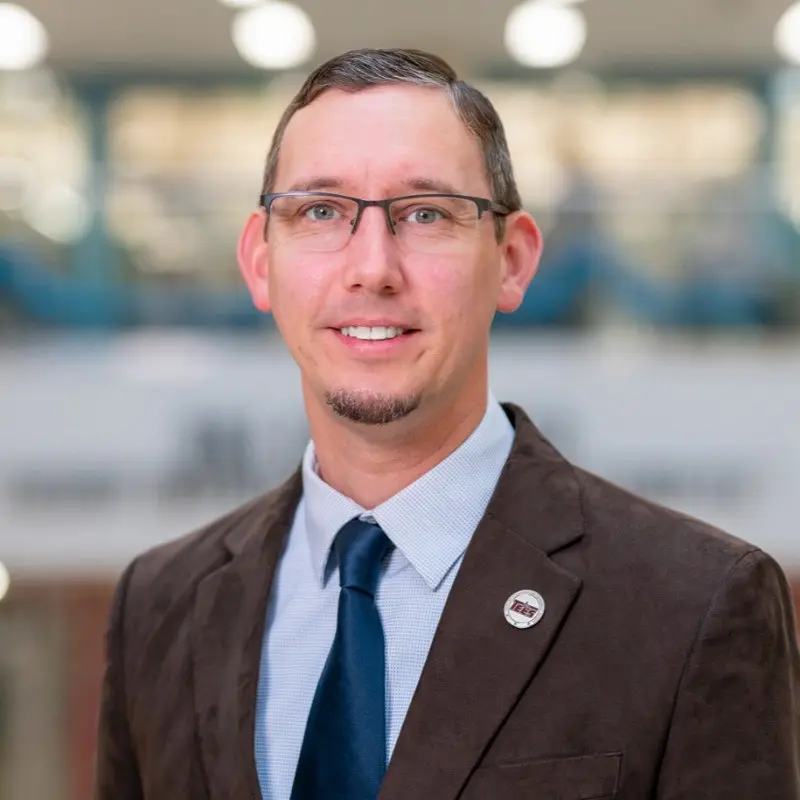
Casey Bryan
CIOTexas A&M Engineering Experiment Station (TEES)
Vince Kellen PhD
CIOTexas A&M University System
In this interview from the AI Cybersecurity & Resilience Summit 2026, Vince Kellen, chief information officer of The Texas A&M University System, joins Casey Bryan, chief information officer of Texas A&M Engineering Experiment Station, to talk with theCUBE Research's Krista Case about building secure, sovereign foundations for AI-driven research. Kellen explains how AI functions as a platform for discovery, compressing time to discovery from years to days while expanding the surface area of research across disciplines such as molecular science and materials e...Read more
exploreKeep Exploring
How will TEES help bring this vision to life, and what leadership role will it play in implementing initiatives like IGNITE?add
What role does IGNITE play in the Texas A&M System's AI and high-performance computing strategy, and how does it complement existing resources like the Grace cluster and the VISION supercomputer to support data-intensive research?add
How can one move from physical experimentation into theoretical and high‑precision computational research in hypersonic development?add
How can an organization enable rapid experimentation and research with sensitive and controlled data while maintaining security, governance, and compliance?add
How will you ensure data, infrastructure, model (capability), and governance sovereignty when deploying this capability, and why did you choose to partner with Dell Technologies, AMD, and Equinix?add
What would success look like for the IGNITE project?add
How Texas A&M is Building a Secure AI Foundation with Dell
search
(INTRO)
Krista Case
>> Hey, welcome back to theCUBE's AI, Cybersecurity, and Resilience Summit. I'm Krista Case, Principal Analyst. I'll be your host for this segment. And we've got a really great one for you because we have seen that organizations are using AI in a number of ways to really transform a number of things. And this is a great story around how an educational institution is using AI to transform the way it does research. But really taking a step back and digging into the secure foundation that is required in order to do that. I'm joined here today by Dr. Vince Kellen, CIO for Texas A&M University System, as well as Mr. Casey Bryan, CIO for Texas A&M Engineering Experiment Station. Vince and Casey, welcome to theCUBE and welcome to our summit here.
Vince Kellen PhD
>> Good to be here.
Casey Bryan
>> Excellent. Likewise. Fantastic to be here. Yeah,
Krista Case
>> absolutely. So let's jump into it. Vince, maybe we can start with you to take a step back and evaluate Texas A&M's research and education mission, but more specifically, how you see AI beginning to factor in that future that you're building.
Vince Kellen PhD
>> Yeah, actually, if you really stand back and look at universities like ours, which are strong research and education universities as well as mission, we have a strong agency mission, which Casey will be talking about. Learning is at the heart of it because if you think about it, researchers are learning. They're all trying to learn things and apply things. Students are trying to learn. And what does AI do? AI is a platform for thought. It's a platform for discovery. So AI kind of undergirds all of what we're going to be doing in the future, certainly what we're doing in the present now. So in that regard, AI is a very strong supporting technology for expanding our missions in both research and education.
Krista Case
>> Thanks, Vince. It really is. But as I was mentioning a minute ago, naturally we do need that secure foundation to make that a reality. So Casey, could you talk a little bit about bringing this vision to life and what you see the TEES leading in order to make this possible?
Casey Bryan
>> Absolutely. And I think let's talk a lot about IGNITE, right? That's one of the big projects we have going on. And at its core, IGNITE is the building of a high-performance GPU computational facility. But there's so much more to it. In fact, IGNITE itself is an acronym that reads Innovative Growth in Next Generation AI Technology Ecosystem, and it's designed to be a comprehensive initiative that positions Texas and TEES as a leader in artificial intelligence and machine learning, as well as high-performance GPU computation-driven initiatives. It is a state-funded initiative, but some of the workloads will support a number of research areas, including healthcare, energy, national security, robotics, advanced manufacturing, and materials discovery. So the possibilities are really endless, and our goal is to enhance our current capabilities to meet the needs of our researchers' demands and the sponsors that we have that go along with it.
Krista Case
>> So that's a very significant charge, Casey, and really interested to kind of see where IGNITE goes. Vince, maybe we could talk about a little bit more detail around what you're trying to make possible through AI that would be difficult or otherwise impossible to achieve without AI.
Vince Kellen PhD
>> Right, and for us, it's going to be the infrastructure, and it's about time to discovery. In the business world, you hear about time to market. Here in research, as well as time to discovery, meaning how quickly can we discover things. So it's two elements. The AI platforms we have now dramatically shrink the time to discovery. Things that took a year now take a week or a few days. But it's also what I call dramatically expanding the surface area of discovery, meaning we can go after more and more problems as the surface area expands. And so AI is a critical productivity-enhancing tool to, increasing our rate of innovation, and AI is the tool for doing that.
Krista Case
>> And so I guess, where do you see some of the greatest near-term opportunities, Vince? Would those be in research alone? Would it also be maybe in collaboration, the overall education program, or even potentially competing for some new programs?
Vince Kellen PhD
>> It's all the above. The platform here will help us compete for new programs for sure. It will help us in educating our learners for sure. I think if you follow the thread in research and you just look at molecules, molecules are such a promising strand that unites many disciplines simultaneously. And certainly in the area of materials engineering and many engineering disciplines, molecules are at the core. So how can AI help us simulate molecules or manipulate the creation of molecules or trial in silico the experiments with molecules? So I think that's probably a very proximal area of research for us.
Krista Case
>> Absolutely. So Casey, Vince was talking about, the ways in which to use AI to expand productivity, things like time to discovery, expand the surface area. I'd like to double-click on that with you. What you're seeing in terms of the researchers and teams using IGNITE, What is this actually looking like in practice these days?
Casey Bryan
>> Absolutely. And let me zoom out for a second too. I think we're at a really exciting time where the A&M System as a whole is building some incredible capability in this space. You have the Texas A&M University College Station campus under the Vice President of Research that's refreshing our Grace cluster, which is a more classic HPC infrastructure that's being enhanced for the next generation of use. You also have the system's investment in the VISION supercomputer, which is an H200 NVIDIA-based cluster that is going online right now. And then we have IGNITE coming around the corner that is an AMD-based cluster that is intended to further enhance that ecosystem, which is a TEES-led initiative. And so we have all these different groups coming together to provide these new capabilities. But IGNITE specifically is really intended to provide this shared AI and high-performance computing capability for data-intensive research initiatives. Objectives that teams could either not easily replicate or build alone. Part of our current challenge is that existing resources, while they are performing some of that work, are severely underpowered, meaning research is getting done but could be helped by capacity and scale, which I think IGNITE's going to bring to that table. A common environment also helps researchers collaborate and then reuse successful approaches and move from experimentation towards repeatable capability. The platform is also designed to work across multiple disciplines. There will be many— you hear about many capabilities like this being built that are being built for either a specific or a small set of specific purposes. For IGNITE, we will always have a wide range of use cases. And we talked earlier about healthcare, energy, national security, robotics, advanced manufacturing. Materials discovery is a particular place that we're interested in right now, and we're looking at time to discovery to rapidly decrease that time to discovery. So this system, this ecosystem, it must support leading-edge research alongside the practical requirements of operating with sensitive and controlled data, especially. So kind of getting into the security angle.
Krista Case
>> Yeah, absolutely, Casey. Like you say, the need to kind of protect data security, but also open up new opportunities for things like collaboration, potentially even across teams. Is there maybe one specific example you could give us how IGNITE is, I guess, allowing teams to approach, a research or a collaboration problem differently?
Casey Bryan
>> Absolutely. One of the great ones I love talking about is moving from physical experimentation into the theoretical world. So take hypersonic research, for example. While we've had physical hypersonic capabilities for a while, and in fact, we're building a large-scale equivalent of that at the Texas A&M RELLIS campus right now, ribbon cut sometime later this year. Those capabilities have hard parameters that you can only go so far with the physical experiment. So how can we take that physical experiment world and move it into a theoretical-based world where we can hypothesize what other parameters can we adjust to get even more from that experiment? And so we're also looking to IGNITE for that part of it, especially on the high-precision computational side.
Krista Case
>> So, Casey, thank you. That's fascinating. I'd love to dig a little bit more into again, the infrastructure and underlying capabilities that are making this a reality. Vince, from the perspective of the overall university, when you were thinking about the technologies and tools needed to bring this to life, what were you looking for in a partner?
Vince Kellen PhD
>> Well, the number one thing we look for in our partners is competitiveness. We want them to be able to compete. We want them to innovate. We want to have them deliver the service and demonstrate that and show commitment. And so that's probably the number one trait we're looking for is that competitiveness. And then we're also looking for the breadth and depth of services that that partner can provide, especially in this realm. You're going to need some broader set of services from what we call day 2 and beyond support services as well as engineering and build services to build these clusters out. But I would have to say the number one thing that we look for is competitiveness.
Krista Case
>> That's great, Vince. So, can you talk a little bit about Dell and why Dell and AMD became the right choice for IGNITE specifically?
Vince Kellen PhD
>> Yeah, I'll use a simple metaphor. Our job is to get all of our partners into the ballgame and at the plate, we throw the pitch and we see who hits one out of the park, and Dell hit it out of the park. Dell's a very strong competitor. They've been competing a long time in this space for a few decades now, so they know how to compete. And so I think Dell did a fantastic job competing.
Krista Case
>> And Vince, when we think about partnerships, naturally it's important to be a long-term strategic partner. And when you think about IGNITE in particular, this is going to be an implementation that probably needs to— or that is definitely, I should say, going to need to evolve over time. So how important was it to you that Dell could not only stand behind this initial build, but also help to evolve the environment over time.
Vince Kellen PhD
>> Absolutely. Yeah, absolutely. And we do look for that strength from the partner to think with a longer time horizon. Hard these days, especially with the rush in AI and shipping of hardware around AI and quarterly results that are needed. And so we really appreciate it when our partners can stand back and think for the long term. Dell does that, they've done that for a long time. And then having the breadth of experience to say, hey, as we come around in year 2 and 3, we should be thinking X, Y, Z and partnering with us on that. Those are all important characteristics as well.
Krista Case
>> I would absolutely agree, Vince. So, naturally this summit is all about security and resilience. So I'd like to now talk a little bit more specifically about those topics. Casey, a couple of moments ago, you kind of mentioned data security, and Texas A&M is trying to give researchers access to not only very powerful AI capabilities, but also the ability to incorporate sensitive and controlled data, as you mentioned. So how do you think about enabling that speed and experimentation without giving up the security and control that are so fundamental?
Casey Bryan
>> Now, that's a great question. I think that's our fundamental core principle design for security is meeting the researchers where they are and where their needs and their sponsors are. We have an enormous number of research sponsors that have entrusted us with the protection of their data, and that's what we need to make sure we extend that into any capability that we build. So IGNITE is certainly no exception to that. And I think you nailed it right. It's sensitive and controlled data and intellectual property. And how can that data, those datasets be separated, governed, and protected by design. So when the researcher comes to the capability, they put their data in and the capability meets them where that need is. So if we appropriately classify that or label it, then we can make sure that the system protects that as a part of it. The other goal is secure, scalable, and sovereign foundation that supports leading-edge research without weakening institutional or government requirements. So we just talked about many of those right now. But as a state agency, we have a lot of inheritance. Inheritance begins at the federal level. It moves down to the state level. Our own Texas A&M University System has further guidance and direction on our security program and of course, our agency ourselves. So there's a lot of controls we have to inherit, but our researchers shouldn't have to think about all those. It should be absolutely seamless when they go to use the capabilities. So some of those frameworks that we adhere to are like a lot of the NIST frameworks, NIST 800-53, NIST 800-171. We certainly have the state TAC 202 requirements. We are also looking for this capability to be CMMC Level 2 ready. So that's been the charge, and that was part of our initial offering in terms of the RFP process. Those are the partners we were looking for to help us make that and achieve that goal. And IGNITE will also be onboarded into several compliancy tools that we already use today, like Elastic, for example. It'll become seamlessly a part of our managed detection and response capability. Among other security protections, we'll add capability. And then also we have to make sure that those things that we implement for IGNITE, there's successful knowledge transfer in building lasting in-house capability rather than permanent outside dependency. Because at some point we'll have other capabilities that we need to secure in a similar manner. And so that's also what we're looking for.
Krista Case
>> So Casey, you mentioned sovereignty, and I wanted to talk to you about that in more detail because it's a very important piece of this AI security story that we're seeing, the ability to keep things like data and infrastructure under your control while also enabling this collaboration and innovation. So can you expand a little bit on how you're thinking about balancing your requirements for sovereignty with, again, allowing for that collaboration?
Casey Bryan
>> No, that's a fantastic question. And I think that strikes at the heart of why we selected to partner with entities like Dell Technologies, AMD, and Equinix, because adhering to those different areas requires effort from all of those teams. And I kind of see it in 4 key pillars. The first one's data sovereignty. So once the data is inside the capability, how do we keep it safe? How do we keep it protected? How do we make sure it gets used for the right projects? And in the right security context. The second one is infrastructure sovereignty. And so it's keeping the compute capability itself physically safe and secure. That's where partners like Equinix can come in with that physical security protection, among other things. The third pillar is capability and model sovereignty. So think about building models and open source, or whether open source or licensed development remains, and that remains under internal control. The fourth pillar is governance sovereignty. That's where the firm connectivity to the institution, the agency, is housed, where decisions and policy are checked and input from multiple sources is not only encouraged but a requirement. So getting feedback from our staff, faculty, and students is key. And I think that's— to answer the last part of your question, that's the required part to make sure that we do this in a way that's achievable and usable by the research community. So if we don't listen to those business requirements, we might develop a capability that can't be used in the real world. And so those two have to match at some point.
Krista Case
>> That makes sense, Casey. And I am interested about another topic, which is the topic of resilience, naturally in recovery. So as these systems become more autonomous and more deeply embedded in your research processes, From your perspective, what do you need to be able to either trust, recover, or reconstruct that you maybe didn't have to think about before?
Casey Bryan
>> Yeah, so I think that we have to look at, what does security by design mean for the researchers who simply want to get the work done? And so part of that is building an ecosystem that can meet the needs where they are. It's building in processes that can not only onboard them securely, but also verify and continuously monitor that compliance while they're in the capability. So whether they're building a large-scale large language model or whether they're doing hyper— high-precision hypersonic calculations, there have to be security controls at all layers of the capability to help make sure that those stay in check.
Krista Case
>> Thank you, Casey. So we've talked a lot about what the environment and the state of the business or the state of the organization, I should say, looks like today. I'd like to maybe look ahead and talk about what IGNITE and this utilization of AI will enable next. So Vince, we'll start with you. Once this foundation is in place, what can Texas A&M pursue that would have been more difficult to pursue before?
Vince Kellen PhD
>> Well, I think the first thing is science at scale, at the next level of scale. This is a big leap in our ability to scale science. So, and this is first of more steps to come down the road. I'm gonna get back a little bit to this notion of sovereign as well, because with all the attention on neoclouds and cloud providers out there, it's been not quite apparent to the public how much this on-premise data center world has been growing significantly. And it's growing for a couple reasons. One, all the security controls that Casey had mentioned, but also from a cost standpoint. Because of the premium that's being placed on what I call the retail value of these things, it's crowding out our ability to do science. There's no way we could take the science to your classic neocloud provider today and conduct the same thing. It just, it's 5 to 10x the cost. We're able to compress our cost rather significantly by gaining control over these assets. That's going to enable us to grow faster. We also are spread across the state with a good high-performing regional network connecting us. So I think down the road, this notion between core AI and edge AI will become a very big research opportunity. Especially in the area of things like agriculture, emergency response, and all sorts of distributed applications. So I think IGNITE and our VISION platform and our Grace platform set the stage for expansion of AI across a larger network. And I think this is where partners like Equinix come in because their ability to link together multiple data centers with exquisite networking capabilities is yet still an untapped asset that we can take advantage of, a resource. This is going to enable very interesting distributed science problems as well across large geographies. And the profile of that, the performance profile of that, the security profile of that, these are things to be discovered and to be understood in the future. So I see this as step one of probably another 2 to 3 steps. I'm going to add one more step in there down the road in quantum. Quantum computing is now AI-adjacent as well. It's used as part of an AI training run in many cases. And so I think we're going to see more and more of the fusion, not totally, but partially of quantum technologies with this class of research. So we're setting the stage and setting up the system very well for expansion into the future.
Krista Case
>> Interesting, Vince. Thank you. And Casey, from your perspective, looking ahead, what do you think success will look like for researchers and students, not just IT or security teams?
Casey Bryan
>> That's another great question. So success for our students is getting access to and exposure to all of these different types of capabilities. So imagine the student that graduates and they know how to use NVIDIA-based clusters, AMD-based clusters. They may have even gotten an opportunity to see a quantum computer in action, right? So the more versatile they are, the more marketable they are as students in that growing workforce. For the research community, it's just like what Vince was talking about. It's complementing our existing research capabilities without rebuilding the foundation for every single project. So meeting that scale demand that they have. So enhancing their ability, they've got maybe a small version of what they need in their local lab, but then things like IGNITE, VISION, Grace, they add to those capabilities and enable that research to happen faster. And of course, we want a capability that meets the security demands of the work. We talked a lot about that and what each research security requirement is in terms of what the sponsors require for those projects. The other big thing is meeting the trust that our state legislators and representatives have put in us, TEES and the A&M System, in building these type of capabilities. So making sure we're making the best of those state dollars that we've been entrusted with. And so as we can pair, we can bundle all those things up, the research needs, the security requirements, the ability to be fiscally responsible with the funds we've been given. And all those packaged up together is a success story for IGNITE.
Krista Case
>> Absolutely, Casey, thank you. So I'd like to leave the audience with some recommendations. Vince, we'll start with you. If you were speaking with a university leader that is beginning their AI journey, what is one key lesson that you've learned that you would leave them with?
Vince Kellen PhD
>> I think the number one lesson everybody in the area of research and universities have to be thinking about is where am I going to get my power for my AI? And that's a fundamental question. Here in Texas, we're blessed with a lot of it. Not all states are so. So the number one lesson is you got to find a partner who can deliver you the data center and the power to help in your research. And I think across the entire country, every researcher is grappling with that question right now.
Krista Case
>> It is a big question for sure, Vince. And Casey, from your perspective, I know Vince was just talking about power Are there any other, I guess more operational or security-focused lessons that you would lead a university leader who's beginning their AI journey with?
Casey Bryan
>> Nope. You stole my thunder. I was going to say start with security early. We have an amazing Dell implementation team. And as we sat down to start scheduling the implementation workshops for IGNITE, we started with security. And the idea was to build that security foundation with which all of the other operational components could be built and referenced back to. And so that, I think, was one of the most pivotal decisions that we made earlier on, and it's paid off dividends now. So we actually just had an architecture review board meeting for the IGNITE capability, and one of the first set of things we decided was to affirm direction in security space. And so the different security capabilities that we added, and so those, all the other decisions that came after referenced those different ones. And so, yeah, I would say at its core, start with security early, get it embedded in the process earlier on, and it's much easier to keep it baked in at the beginning than have to worry about adding that at the end.
Krista Case
>> Vince, Casey, this is a really interesting and impactful use of AI. Really appreciate you both taking the time here to share your insights and really bring this real-world story to our audience. So thank you so much.
Vince Kellen PhD
>> Thank you.
Casey Bryan
>> Absolutely. Thank you.
Krista Case
>> Okay. All right. Make sure you stick around. We have much more coming from theCUBE's AI Cybersecurity and Resilience Summit. I'm Krista Case, and you're watching theCUBE, the leader in enterprise tech news and analysis.










 Krista Case